index, follow Skip to main content
Skip to main content

Author: TJ Hennessy

TJ Hennessy leads Stack and is CEO of its parent company, Brick Dynamics. Before Stack, he spent more than four years as VP of Global Revenue at Bird. He was named to the Forbes 30 Under 30 list in 2017 and studied at the University of Southern California's Marshall School of Business.

How to Pack Coat Hangers

Packing coat hangers may not seem like a big deal, but if done incorrectly, these hangers can take up a lot of space, become tangled, and create a huge mess. With a little planning, you can keep everything organized and make unpacking way easier.

To pack your coat hangers properly, align the hooks to face the same direction, then bundle them together with a rubber band, twist tie, or zip tie. It’s a simple step that can make moving day much smoother by protecting your hangers from damage.

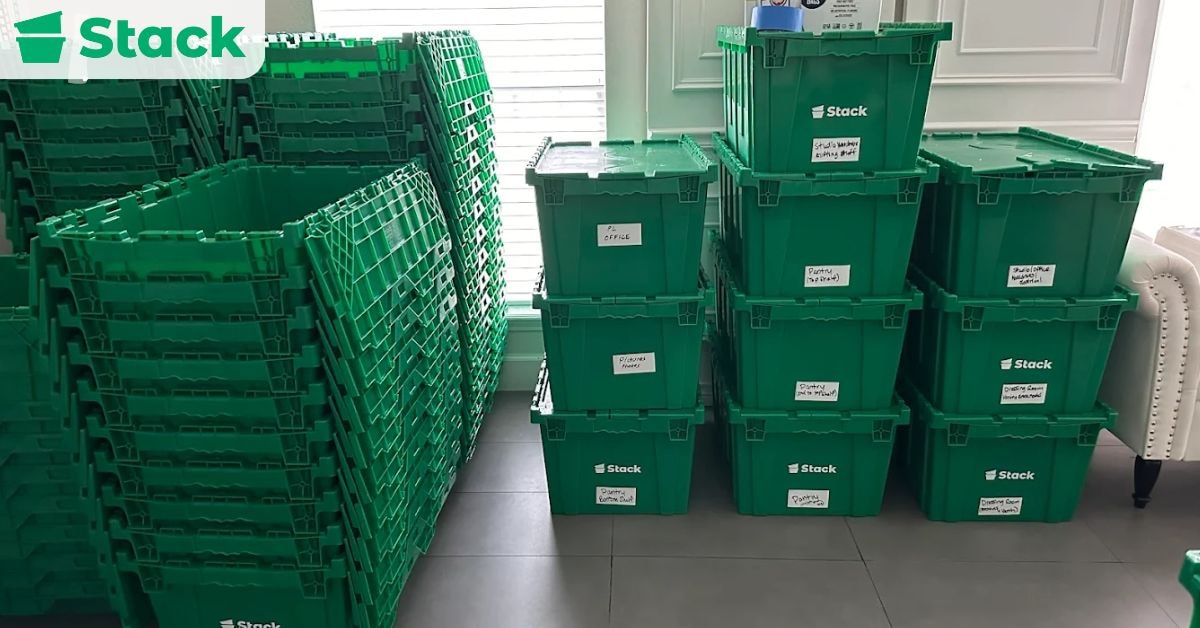
Our eco-friendly moving bins are perfect for transporting awkward closet items like a bunch of hangers. They’re not just sturdy and stackable, but also spacious and easy to carry, making them the best choice for keeping things organized. If you’re looking for a smarter way to pack contact us to rent to your moving boxes today.

In this blog, we will teach you how to store and transport your coat hangers. We will also share tips on how to care for your hangers based on what material they’re made from.

What to Do Before Packing Coat Hangers

What to Do Before Packing Coat Hangers

Before you toss your hangers into a box, take a moment to prep them properly. Sort them by type, clean them up, and organize them to help save space, prevent damage, and make unpacking much easier.

  1. Sort and Declutter: If you’re trying to cut down clutter before a move, your hangers are a good place to start. Start by throwing out anything that’s broken, bent, rusted, or warped. These hangers are more likely to damage your clothes or other belongings. After tossing out the damaged hangers, group the remaining hangers by type, such as wooden hangers in one bundle, velvet hangers in another, and so on. Grouping your hangers like this makes packing easier because similar hangers stack better and fit more neatly into your moving containers.
  2. Clean and Sanitize: This is really important if your hangers have been at the back of your closet or laundry room for a long time. A quick rub down can go a long way because it’ll ensure that you don’t transfer dirt from your hangers to your clothes.For plastic and metal hangers, wipe them with a damp cloth and mild soap to remove dust and grime. Wooden and velvet hangers need gentler handling, so you need to use a dry cloth for wood and a lint roller or fabric brush for velvet to avoid damaging the surface.

How to Pack Coat Hangers

These packing techniques make sure that your hangers stay tangle-free and easy to unpack later.

The Bundle and Wrap Technique

The simplest way to pack your clothes hangers is to bundle them according to type, like plastic or wire, before wrapping them. Stack them on top of each other so they’re all facing the same direction, and then secure them at both ends with a rubber band or twist tie. This stops them from shifting and it makes it easier to move them.

After you’ve tied them, slip them into a garbage bag to prevent them from catching on other items. This works well for lightweight hangers like the ones made out of plastic and wire. It’s a quick, hassle-free way to start packing up your laundry room or closet without making a huge mess.

Use Garment Boxes or Specialty Hanger Boxes

Use Garment Boxes or Specialty Hanger Boxes

Some clothes are better packed hanging, like suits, delicate shirts, and blouses, so that they can stay wrinkle-free. To pack your clothes hanging, you can either use a garment box, popularly called a wardrobe box, or a specialty hanger box. But you can also use these to pack your hangers alone.

Garment boxes come with built-in hanging bars where you can place your hangers. Specialty hanger boxes are designed in a similar way, and they offer enough depth for your padded and velvet hangers.

Pack them in a Suitcase or a Box

For a small collection of hangers, your suitcase or single box will work just fine. Lay the hangers flat, so they can fit snugly in your box. Pad them with a towel or even some folded clothes to protect them from damage and to keep their sharp edges from poking through.

This method works best for a small trip. You can also replicate this with plastic bins. They’re sturdy, stackable, and perfectly suited for awkward items like clothing hangers and even jewelry boxes.

Repurpose a Trash Bag or Large Tote

For a quick fix, you can group your hangers and slide them into a large trash bag or soft tote. Poke a small hole at the top so the hooks can stick out, and then tie the bottom closed to keep everything together. It’s easy to carry, takes up little space, and works well for light, everyday hangers.

Tips for Specialty Hangers

Tips for Specialty Hangers

Some hangers need a little extra care when preparing for your upcoming move. Here’s how to keep your specialty hangers protected:

Wooden Hangers

Wooden hangers are sturdy but bulky, and they can take up a lot of space in your closet. To pack your wooden hangers, start by securing them with a rubber band and then wrapping them in packing paper. Once secured, place them in your moving box and try to fill up the remaining space with additional materials. This prevents them from moving around while on the move and also protects them from scratches.

Velvet Hangers

To keep your velvet hangers in good condition, place them between layers of soft clothing to stop the velvet from rubbing off. Also, keep them away from moisture because any dampness can cause the velvet to peel or stain.

Metal Hangers/Wire Hangers

Metal hangers are slim and can help you save space. However, they bend easily and have sharp edges that can scratch and even damage your other belongings. First things first, secure them tightly with a rubber band or twist tie before packing them into a garment bag. You can also cover them with a towel, packing paper, or anything that can stop them from scratching other items.

Padded Hangers

With padded hangers, you can prevent wrinkles in your delicate clothing. But a downside to using these hangers is that they get crushed easily. To prevent them from getting flattened during transport, start by covering the hanger with bubble wrap, packing paper, or soft items like scarves. Then secure them with a rubber band or twist tie before placing them in a box. Fill any remaining space with packing peanuts to help prevent any shifting while on the move. This will reduce their risk of getting damaged.

How to Store and Transport Clothes Hangers

The easiest way to store your clothes hangers before a move is to bundle them up and tie them with a rubber band. You can group them by type, like metal hangers or padded hangers, then secure both ends of the hanger to prevent them from tangling. This keeps them compact and easier to manage when you start packing.

You can also store your hangers in a garment bag or trash bag by threading the hooks through a small hole. This way, their sharp edges won’t scratch any other items, and it makes them easier to carry. Some people have tried using stretch wrap because it holds everything in place and protects the shape of the hanger.

When you’re ready to move your hangers, place them in a cardboard box or plastic container. Make sure you place them flat and facing the same direction so they don’t get damaged. If you’re tight on space, tuck them between other items packed in the truck to maximize space.

Why Reusable Plastic Moving Bins Work Well for Hangers
Why Reusable Plastic Moving Bins Work Well for Hangers

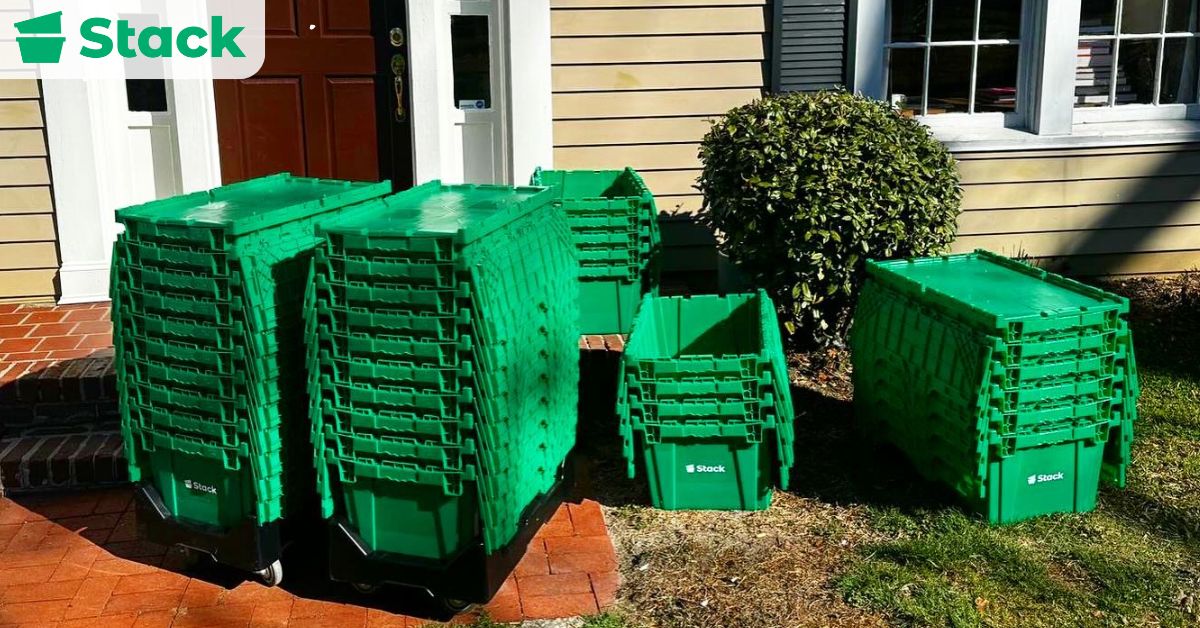
Reusable plastic moving bins can be surprisingly useful for packing coat hangers. Plastic boxes are sturdy, and they can keep your bundled hangers upright without shifting around during transit. Plus, their lids also keep things secure.

Another advantage of packing hangers with plastic totes or boxes is that they are stackable. What this means is that you fill them with your hangers, shoes, and even clothes before stacking them in your moving truck. It’s a smart way to stay organized and avoid the chaos of loosely packed, awkward closet items.

Looking to Rent Plastic Moving Bins?

From bundling and wrapping to using garment bags, there are plenty of ways to pack coat hangers without creating a tangled mess. The key is to group by type, secure them properly, and choose the right container to keep everything in place.

Staying organized while packing won’t just save you space, it’ll also make unpacking in your new home so much easier. And if you’re looking for a convenient way to get it done, Stack Moves can help out.

Our sturdy plastic bins can store all kinds of items, including coat hangers. Plus, when you rent from us, we deliver them to your address, saving you time, money, and stress on moving day. Contact us to rent your plastic moving bin today.

FAQs

Can You Pack Hangers With Clothes Still on Them?

Yes, you can pack hangers with clothes still on them. This is a good way to reduce the amount of time you spend packing, and it also reduces wrinkling. You can use garment bags, wardrobe boxes, or even garbage bags with holes for the hanger hooks.

Are Wire Hangers Recyclable?

It depends on where you take them. They’re generally not recyclable through your standard recycling program, but they can be recycled at a scrap metal facility and some recycling centers. Some dry cleaners will also accept used wire hangers for reuse.

Can You Put Coat Hangers in Your Suitcase?

Yes, you can pack your coat hangers in a suitcase, but it’s important to do so correctly, or you could damage your suitcase. The best way to put coat hangers in a suitcase is to group them together and secure them using rubber bands or tape.

What Is the Best Way to Store Coat Hangers?

The simplest and most effective way to store your coat hangers is with rubber bands. Just organize your hangers into groups of 10 and then wrap a rubber band around each group to keep it in place.


How Much Does It Cost to Hire Movers in NYC

Without a proper moving plan or realistic moving budget, New York City’s unique challenges can lead to delays, added stress, and even unexpected costs. From limited parking to long carry fees, the logistics in this city are no joke. This is why it is important to have a clear idea of what to expect, starting with how much a move usually costs in your city and factors that could influence this cost.

Hiring movers in NYC will cost you anywhere from $500 to $3,500 or more, depending on the size and distance of your move. Other factors that could influence this price include additional services and even what time of the year you’re moving.

Rather than take chances with free moving boxes, consider renting reusable moving boxes from Stack Moves instead. It’s one of the easiest ways to cut down your moving costs without sacrificing convenience or quality. Our boxes are durable, ecofriendly, and come with additional packing supplies like labels. Rent moving boxes in New York City today!

In this blog, we will break down the average cost of hiring movers in NYC, discuss factors that impact moving costs, and share tips that can help you save money.

Is It Cheaper to Hire Movers or Do It Yourself?

Is It Cheaper to Hire Movers or Do It Yourself

While moving yourself is usually cheaper, there are a few trade-offs to consider when choosing this option over using professional movers. An example of a hidden cost associated with a DIY move is how physically exhausting it is. You also run the risk of getting hurt, damaging your belongings, and losing time or money due to poor planning.

Even though hiring a professional mover may cost more upfront, it will save you time, energy, and even stress. They’re equipped and experienced enough to handle everything from packing to maneuvering tight walk-ups. They also have moving insurance, so if something goes wrong, the financial burden won’t fall on you.

At the end of the day, if saving money is important to you and you don’t mind the heavy lifting, a DIY move might work for you. But if you’d like to enjoy a stress-free moving experience, you’ll benefit from hiring professional movers.

How Much Does It Actually Cost to Hire Movers in NYC?

How Much Does It Cost to Hire Movers in NYC

Although the cost of hiring movers in NYC can vary widely, working with a general price range in mind can help you set a realistic budget.

Average Cost by Apartment Size

The size of your apartment has a direct impact on your overall moving cost. This means that beyond what you’ll pay your movers, it will also affect how much you spend on packing materials and added services. Because of this, moving larger homes, which often requires more time, a bigger crew, and sometimes even specialized equipment, tends to cost more.

  • Studio apartment: Hiring movers for a studio apartment typically starts at $500, with total moving costs ranging from $500 to $1000.
  • 1-bedroom apartment: The cost of hiring movers for a 1-bedroom apartment usually falls around $800, while the full moving cost for a 1-bedroom apartment could go up to $1,500.
  • 2-bedroom apartment: This will roughly cost you $1,100, and the total cost for moving a two-bedroom apartment can be as high as $4,000.
  • 3+ bedroom apartment: Expect to pay $1,900 or more to hire a mover for a move of this size, and anything from $4,000 for the whole move.

Local vs. Long-Distance Moves

The cost of moving out of state is much higher than the cost of moving locally, but each move has a unique pricing model.

  • Local moves (within NYC): These are charged hourly and usually involve a crew of 2–3 movers. NYC typically ranges from $200–$2,200 per hour, depending on services, time of day, and access. Expect additional costs for things like long carry fees, tight staircases, or elevator restrictions.
  • Long-distance moves: These are charged based on distance, weight, or volume. For example, a move from NYC to another state may range from $2,500+, depending on how much stuff you’re moving.
  • Flat-rate moves: Some regional long-distance moves, like to Philadelphia or Boston, may qualify for a flat rate that includes truck, labor, tolls, and basic moving insurance.

Hourly Rates for Movers in NYC

Hourly Rates for Movers in NYC

Most professional movers charge by the hour for local moves. Your final bill will depend on how long the job takes and how many crew members you hire. The average move should take about 2-4 hours at the minimum, and with 2-3 movers you should be able to conveniently move your home. Here’s a general estimate of hourly rates:

  • 2 movers + truck: $140–$180 per hour
  • 3 movers + truck: $180–$250 per hour

Flat Rates

You’re more likely to get charged a flat rate if you’re moving over a long distance or when an hourly rate is impractical. If your move includes specialty items, multiple stops, or maybe you’re moving out of state, then a flat rate is more practical.

Most flat-rate moving estimates cover labor, transportation, tolls, fuel, and basic packing materials. Be sure to ask whether there are additional services you’ll need that aren’t covered by your rental fee.

Should You Tip NYC Movers?

Yes, you should. Tipping is a thoughtful way to show your appreciation for the hard work they’ve done, especially if they did a good job and handled your belongings with care. Additionally, while tipping isn’t mandatory, it’s definitely encouraged, especially for jobs involving stairs, long carries, or heavy furniture.

A general guideline for how to tip movers is to tip 10% – 20% of your total moving bill. Cash is usually preferred because the movers can divide it among themselves on the spot. Let’s say your move cost $2,000, a $200 – $400 tip would be appropriate.

What Factors Influence Average Moving Costs in NYC

What Factors Influence Average Moving Costs in NYC

From how far you’re going to what time of year you’re moving, several variables are responsible for how much you spend on a move. Knowing what drives up your moving expenses can help you plan smarter and spend less on your upcoming move.

1. Distance of the Move

You should expect to pay more if you’re moving over a long distance (anything above 100 miles). Local moves, usually within the same borough, are usually charged an hourly rate. On the other hand, long-distance moves are charged a fixed price based on several factors. If you’re moving from another city to NYC, be prepared for fuel surcharges, tolls, and even overnight fees.

2. Size and Type of Move

Large homes usually need more labor and a bigger truck, which means more money. Because of this, moving a studio apartment will cost significantly less than it would to move a three-bedroom apartment.

Business moves also tend to be more expensive than residential moves because of the amount of specialized equipment involved, among other things. Some movers may charge a flat rate for small jobs, but most of the time, their pricing is based on how much stuff you have to move and how long it will take them to move it.

3. Time of Year / Seasonality

Spring and summer are peak moving seasons in NYC, and so prices tend to skyrocket during this period. If you’d like to shave a few dollars off your moving budget, consider moving during off-peak months like November through March.

You may also find that most reputable movers are more available during the slower seasons. However, you should keep in mind that snow or ice during winter months can still impact timing and logistics.

4. Day of the Week and Time of Day

Most people prefer to move over the weekend, which makes moving on weekends more expensive than on a weekday. However, you could enjoy lower rates if you choose to move on a weekday instead and schedule your move date in advance. Early morning moves also tend to be cheaper than late afternoon and evening moves. It also helps to avoid booking your movers at the last minute because there’s a high chance that they’ll bump up the price just to accommodate the short notice.

5. Building Access and Layout

New York City buildings have unique challenges that can influence your moving expenses. Apartments with narrow staircases and more than three flights of stairs often attract higher labor charges. If there’s no elevator, your movers will need more time and manpower to carry those items, especially if they’re heavy.

Another common challenge when moving in NYC is the limited parking access or the need for permits to legally park near your building. Be sure to always provide your movers with an accurate description of your building so they can come prepared and give you a fair quote.

6. Services Requested

The more services you request, the higher your moving costs will be. If you hire full-service movers, they’ll pack, unpack, disassemble, and even reassemble your furniture, but all this comes at a premium price.

Some companies even offer storage services for instances where you need a place to temporarily keep your belongings before you move into your new house. It’s a good idea to ask whether your movers provide boxes or other packing supplies, as this could save you time and money. If you’re looking to save money, consider packing yourself and only paying for the essentials like transportation and loading.

Local vs Interstate Moving Companies

Local vs Interstate Moving Companies

Understanding the difference between local and interstate moving companies can help you choose the right service and avoid unexpected fees.

Local NYC Movers

Local NYC movers specialize in short-distance moves within all five boroughs (The Bronx, Brooklyn, Manhattan, Queens, and Staten Island.) They usually charge hourly rates for as low as $100 per hour, depending on factors like the crew size and the services required.

Local movers often use smaller trucks and work with tight crews to navigate city streets and complex building layouts. A majority of local moves can be completed in a day, typically within a few hours.

But most local movers will charge you extra for having to deal with parking restrictions and carrying items up multiple flights of stairs.

Interstate Movers

Interstate movers are the best people to handle relocations that cross state lines, such as New York to Florida or California. Instead of charging hourly, they charge you based on the weight of your belongings and the distance of the move.

In contrast to local NYC movers, they use larger moving trucks and need detailed planning to successfully complete each move. Interstate moves also take a lot longer; some can take as long as 14 days.

It’s also mandatory for interstate moving companies to be registered with the U.S. Department of Transportation and carry proper insurance to meet federal regulations.

How to Save Money When Hiring Movers in NYC

How to Save Money When Hiring Movers in NYC

Working with movers can get expensive pretty quickly, but there are a few smart ways to keep your costs under control:

  1. Move Mid-Month and Mid-Week: Avoid weekends, summer months, and the beginning or end of the month because this is when demand is highest. Movers are often cheaper during off-peak seasons, which can significantly lower your moving price.
  2. Declutter Before Moving: The more stuff you have, the more you have to pay, so take the time to declutter before packing. You’ll also spend less time on packing and unpacking when you arrive at your new home.
  3. Pack Yourself: The convenience of hiring full-service movers costs a pretty penny, but you can save a significant amount of money if you just pack yourself. Start packing early and use what you already have, like your suitcases. Just make sure everything is labeled clearly.
  4. Compare Multiple Quotes: Instead of contracting the first company you find, contact at least three professional movers and ask for a quote. This will give you a fair picture of the average moving costs in NYC and help you avoid surprise fees like long carry charges.
  5. Rent Plastic Moving Boxes: Your first thought might be to buy boxes, but it’s a lot more affordable to rent moving boxes. For a fraction of the cost of purchasing boxes, you can enjoy sturdy, moving bins when you rent them instead.

Need Reusable Plastic Bins for Your Move?

The average cost of hiring movers in NYC can range from $200 to over $4,000, depending on factors like your apartment size and add-on services requested. Keep in mind that these are just estimates, and your actual moving cost will depend on the details of your move.

What matters more than estimated costs is how well you prepare. The best way to keep your moving costs within a comfortable range is to start planning early, compare quotes, and look for simple ways to save, like handling parts of your move yourself.

Another way to save money when moving is to rent affordable moving bins instead of buying or collecting boxes. These boxes are clean, designed to survive the rigors of moving, and can be stacked on top of each other to take up less space in your moving truck. Make your move less expensive by scheduling moving boxes for rent.

FAQs

How Can You Find Cheap Movers in NYC?

To find an affordable moving company, get multiple quotes and ask about what’s included in that quote. Also, try to plan your move outside of peak moving seasons because prices tend to soar during holidays and weekends.

How Do You Choose a Reputable Moving Company?

The easiest way to find a good moving company is to ask friends and family for recommendations. These companies have been tested and trusted by people you know, which can give you peace of mind. Also note that a reputable mover will be transparent about their pricing, offer written estimates, and won’t pressure you into paying large deposits upfront.

What Is the Average Cost of Movers in NYC?

For local moves, you can expect to spend around $500 – $3,500, but long-distance moves can cost as much as $10,000. The biggest determining factor is the size of your home, followed by the distance of the move, and the season.

How Much Does It Cost to Rent a Moving Truck?

The cost of renting a moving truck varies, but the general range is between $20 $100 a day, depending on the size of the truck and how long you’re renting for. In addition to the base price, you may also be charged mileage fees, insurance fees, and other additional charges.

How to Choose Commercial Movers in Houston?

Houston is a thriving hub for businesses across various industries, from oil and gas giants to tech startups calling the city home. With so much commercial activity, it’s no surprise that companies are constantly expanding or upgrading their workspaces.

When choosing a commercial mover in Houston, look for companies with a proven track record of handling office moves, verify their licensing and insurance, and request a detailed quote. Online reviews and referrals from other businesses can also point you in the right direction.

Corporate moves can get expensive fast. A simple way to save money is to rent corporate moving boxes instead of sourcing these boxes yourself. These boxes are sturdier, stack better, and require less packing materials which cuts down both time and cost. If you’re planning a move in Houston, rent moving boxes in Houston from Stack Moves and enjoy a more efficient move.

In this blog, we will walk you through the services commercial movers in Houston offer, what it typically costs, and how to prepare your business for a successful, stress-free move.

What Do Commercial Movers in Houston Do?

What Do Commercial Movers in Houston Do?

Commercial movers specialize in relocating businesses instead of households. Businesses that usually hire commercial movers include corporate offices, retail stores, warehouses, medical clinics, and even startups that are simply outgrowing their current space.

Their work involves transporting office furniture, delicate equipment, heavy machinery, and even personnel from one location to another. Their goal is to get everything from point A to point B with as little disruption to your business operations as possible.

The major difference between commercial movers and residential movers is in the size and complexity of the move. Moving an office or warehouse often means tighter schedules, bulkier items, and equipment that can’t afford to be out of commission for long.

If your next move is a corporate one, you could benefit from working with commercial movers and implementing simple office relocation solutions such as creating a detailed moving checklist to…

What Commercial Moving Services Are Offered in Houston?

What Commercial Moving Services Are Offered in Houston?

When planning a business move in Houston or any location, it’s important to understand the range of relocation services available in that area.

Local and Long-Distance Commercial Moving

Most professional movers in the area offer both local and long-distance commercial moving, allowing businesses to relocate across town or to an entirely new city while keeping operations on track. These services are designed to keep disruptions minimal and are usually handled by professional movers who understand the ins and outs of business operations.

Office Furniture Disassembly and Reassembly

Another common service offered is office furniture disassembly and reassembly. Your movers will carefully dismantle each piece of furniture or equipment, pack it, and reassemble it at your new location. This can really come in handy when moving large workstations, conference tables, or modular office systems.

IT Relocation Services

For tech-heavy companies, they may benefit more from working with moving companies that specialize in IT relocation services. Experts in this field will handle the disconnection, transportation, and reconnection of all tech equipment at your new space. They ensure that your technology doesn’t just arrive safely, it also functions properly.

Industrial Equipment Moving

Businesses with warehouses or specialized facilities may also need industrial equipment moving. This involves handling heavy machinery and oversized tools. It often requires unique equipment and logistics expertise to successfully transport and install this machinery without damaging it.

Temporary and Long-Term Storage Solutions

These services are particularly useful when the timing between locations doesn’t align perfectly. Many commercial movers offer temporary and long-term storage solutions for companies that need a place to store office furnishings, documents, or equipment between moves.

What to Look for in a Commercial Moving Company in Houston

 What to Look for in a Commercial Moving Company in Houston

To enjoy a smooth, on-schedule business relocation, you have to work with the right moving company. While Houston’s commercial moving market is a competitive one, not every company will offer the same level of professionalism or service. To protect your assets and keep your business operations running with minimal interruption, here are the top qualities to look for:

  • Licensing and Insurance: Make sure the company is properly licensed and insured to handle commercial moves in Texas and outside of Texas. Don’t be scared to ask for proof of coverage, including general liability and cargo insurance. A reputable mover will have no problem sharing this information upfront.
  • Experience with Business Relocations: Not all movers can handle the complexities of a corporate move. Choose a company that has a proven track record with office relocations, especially those involving delicate equipment, heavy machinery, or phased transitions.
  • Equipment and Fleet Capabilities: A reliable moving company should have different-sized trucks, dollies, lifts, and crates to handle any commercial job. Also, pay attention to their fleet size because it indicates whether they can meet tight deadlines or handle multiple locations at once. All this will guarantee their ability to safely transport your office furnishings, IT systems, and specialty items.
  • Trained and Vetted Staff: You’re better off working with a moving team made up of experienced professionals, not just day laborers. The right team will make your move feel more secure and seamless. Be sure to ask whether staff are background-checked, uniformed, and trained in the careful handling of sensitive business equipment.
  • Availability of Additional Services: Aim to work with movers who offer more than just transportation. Services like packing, unpacking, storage, and even furniture assembly can significantly ease the burden of relocating. Bundling these services together can also reduce the need to hire multiple vendors.
  • Positive Customer Reviews and Testimonials: Client feedback provides valuable insight into how a company performs in real life. Look for patterns in reviews like instances where people mentioned the company’s professionalism, punctuality, and how well they protect property. A high rating signals a better chance of a stress-free experience on your moving day.

Top-Rated Commercial Moving Companies in Houston

To help you scale through your upcoming relocation, we’ve compiled a list of highly rated commercial moving companies that serve the Houston area. These movers were selected based on their experience, service offerings, customer reviews, and ability to handle everything from delicate equipment to full-scale business operations

All My Sons Moving & Storage

All My Sons Moving & Storage is a nationally recognized moving company with a strong presence in Houston. They offer local, long-distance, and corporate relocation services. When it comes to specialization, they primarily offer full-service business moves, handling everything from packing to transportation.

These experienced professionals are your best bet for complex commercial moves that involve careful planning to minimize downtime and maintain business operations. If your upcoming relocation involves multiple departments or high-value equipment, All My Sons is a reliable choice.

3 Men Movers

3 Men Movers is another Houston-based company known for its fast and reliable service, making them great for small to mid-sized office moves. These experts know how to carefully handle delicate equipment with protective shrink-wrap and they also offer professional packing services. Plus, their moving team is skilled at navigating Houston’s busy streets and tight office schedules.

Over the years, they’ve built a reputation for speed and customer satisfaction. So if you’re looking to move quickly without endangering your company assets, this is the moving company for you.

BestBox Storage

professional movers

Moves don’t always go as planned, and so there is a possibility that your new location might not be ready on your move-in date. In a situation like that, you’d need a company that offers flexible and secure storage solutions during a move, and Best Box Storage is the moving company for the job. Their facilities feature 24/7 surveillance and a diverse selection of unit sizes that can store documents or furniture.

Einstein Moving Company

Einstein Moving Company operates across Texas from Houston to Dallas. They offer comprehensive commercial relocation services. Einstein Moving Company has built a reputation for handling specialized moves such as IT-heavy workspaces or medical offices. Businesses that have unique requirements or highly sensitive equipment could benefit from working with Einstein’s project managers.

H-Town Movers

H-Town movers provide both local and state-wide comprehensive moving packages. Their moving team is loaded with experienced professionals who manage everything from disassembly to handling heavy machinery. H-Town is a perfect fit for mid-size to large office moves. With their all-inclusive rates and flexibility, they are ideal for any company that wants to relocate without the surprise of hidden fees.

How Much Do Commercial Movers in Houston Cost?

To hire commercial movers in Houston, Texas, you should expect to spend around $75 to $150 per hour, depending on the company, the services rendered, and the size of your move. For larger relocations, like those involving heavy machinery, your total moving cost can reach up to $30,000 or more.

Some movers charge by the hour, while others offer flat-rate pricing based on the size, distance, and scope of your upcoming move. There are several factors that can influence this decision, like the size of your office, how far you’re moving, and the additional services requested.

To avoid surprises, it’s important to request detailed, written estimates from multiple experienced professionals and clarify what’s included in their quotes. A simple way to cut costs is to rent reusable office moving crates instead of buying boxes. These sturdy bins protect your items better, make loading more efficient, and can significantly reduce expenses.

Do Office Movers in Houston Provide Moving Boxes?

Do Office Movers in Houston Provide Moving Boxes?

Yes, many office movers provide moving boxes, but it depends on the company and the specific package you choose. Some professional movers might offer basic packing supplies as part of their moving package, but these may not be suitable for a move that involves delicate equipment and office furnishings.

Additionally, these boxes also come at an additional cost. Because of this, businesses often benefit more from sourcing their own boxes or renting specialized containers that meet the unique requirements of their move.

To enjoy a seamless move, consider using office moving crates instead of regular moving boxes because they are more durable and offer better protection for your assets. Using a moving box calculator can also make your planning easier because with it you can estimate how many crates you’ll need.

How to Prepare for a Successful Corporate Relocation

There are many factors that can impact the success of your business move. Relocating a business goes beyond switching addresses; it involves careful planning, clear communication, and coordination. These simple but useful tips can help you enjoy a stress-free move.

  • Create a Detailed Moving Checklist: Your checklist should include every task leading up to the move, from hiring movers to cleaning your apartment. This will help you make sure nothing slips through the cracks and that you stay on schedule.
  • Assign Internal Move Coordinators: Appointing a point person to oversee the move logistics in every department is a smart move. They can pass along updates and troubleshoot any problems as they arise.
  • Communicate Move Plans to Employees and Clients: Let your staff know how the move will impact their schedules and what you expect from them. Likewise, keep your clients updated about any service disruptions. Doing so builds trust and reduces any confusion during this transition period.
  • Get Good Moving Boxes for Moving: The best bins for moving are plastic ones because they stack neatly and protect your equipment better. For corporate moves, it’s important to invest in high-quality boxes to reduce the risk of damaging or losing your electronics and paperwork.
  • Back Up Important Documents and Data: Before embarking on any move, be sure to back up all your company’s digital data. For your hard copy documents, place them in a clearly marked and waterproof container to protect them from damage during transit. Use encrypted storage devices for your digital files.
  • Label and Inventory Everything: Label each box with its content and department. Also keep a detailed inventory for tracking purposes. This will make it easier for movers to place all items where they should go. Labeling also makes unpacking more efficient, because …

Consider Reusable Moving Boxes?

Choosing the right commercial mover can make or break your relocation experience because the right mover will make your move an efficient, secure, and cost-effective one. For any move to be a successful one, you have to plan carefully, stay organized, and make decisions that keep disruptions minimal while protecting your business assets.

One of the easiest ways to streamline the process and cut costs is by using reusable moving boxes. At Stack Moves, we offer durable, stackable crates that make packing faster and safer for your team. Contact us today to learn how our boxes can support your next commercial move in Houston.

FAQ

How Much Do Movers Charge per Hour in Houston?

Hiring movers in Houston typically costs $75 to $150 for local moves. For long-distance moves you can expect to spend upward of $10,000 for the entire move.

How Much Does It Cost to Move a Commercial Building?

The average cost of moving an office typically ranges from $1,500 – $5,000. How much you spend on your corporate relocation greatly depends on the size of your office. Small offices (under 1,500 sq ft) could fit into the estimate above but a large office (5000+sq ft) can easily exceed $15,000.

How Long Does a Commercial Moving Process in Houston Take?

Relocating an office can take several weeks to a couple of months. For a small or mid-sized office move, you can expect the process to take 2-4 months, while larger moves can take 6-12 months. To stay on top of your move, use an office moving checklist to break the process into manageable steps and ensure everything gets done on time.

How to Label Moving Boxes Like a Pro (Step-by-Step Guide)

One of the biggest frustrations when labeling moving boxes is realizing too late that your system doesn’t actually help you find anything. The best way to label boxes for moving is to use a clear system that combines room names, box numbers, and detailed descriptions so everything is easy to track and unpack. When done right, labeling can shorten your moving time by helping you avoid the stress of digging through random boxes just to find essentials.

Stack Moves is a moving box rental company that helps make packing and organizing your move simpler from the start. With our rental bins, you don’t just get durable moving boxes, you also get labels included, so you can start packing with a consistent system from day one. If you want a simpler, more organized move without the usual hassle, contact us today to reserve your bins and get started.

In this guide, you’ll learn a step-by-step method to label your boxes quickly and unpack without the usual stress.

Step-by-Step Guide to the Best Way to Label Boxes for Moving

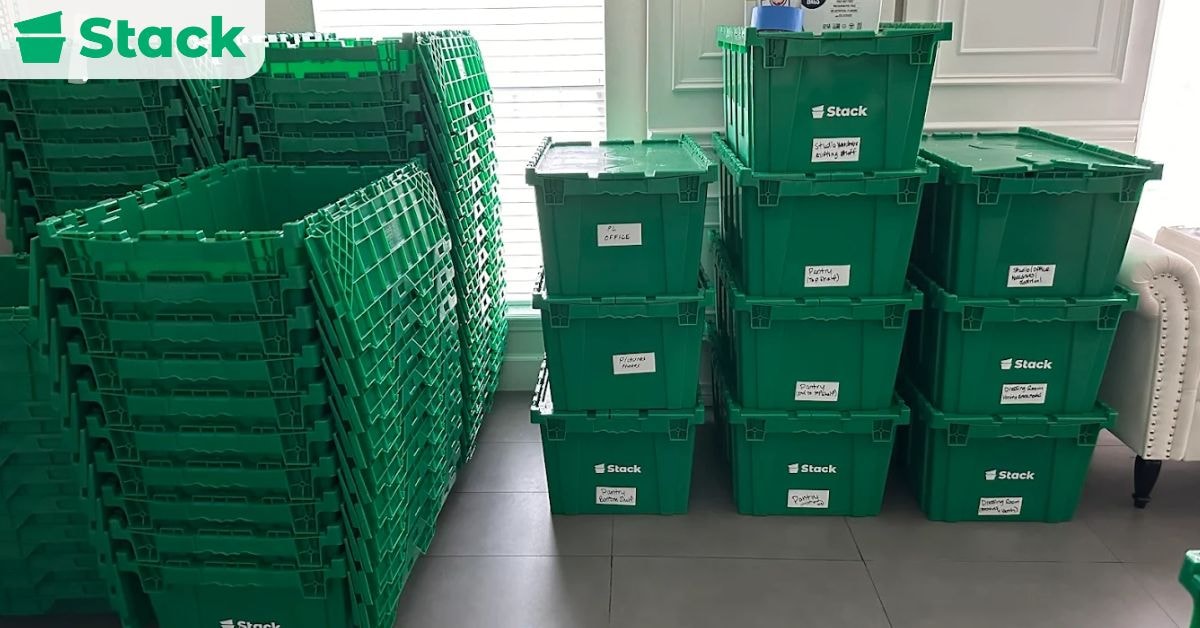
Stack Moves reusable moving box rental service

The key to labeling boxes is to create a method that helps you quickly identify, track, and place every box without second-guessing. Follow these steps to label your boxes efficiently and make both moving day and unpacking far more manageable.

1. Choose a Labeling System

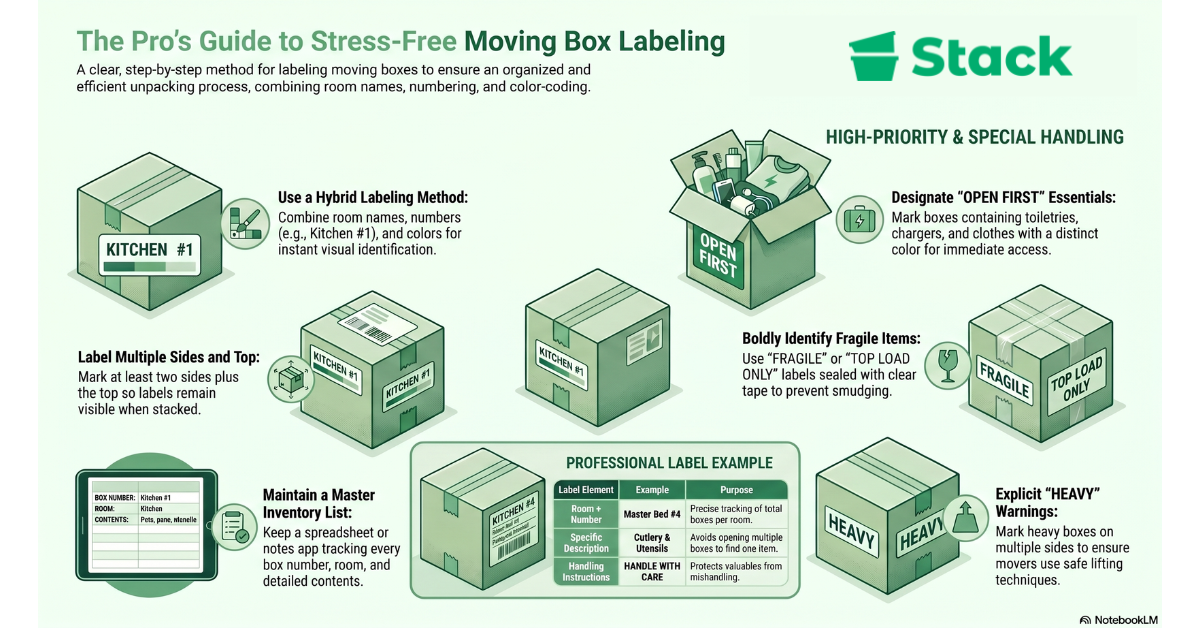
Before you even touch a box, decide how you’re going to label everything. You can label by room, use colors, assign numbers, or combine all three. Keep in mind that it’s important to stay consistent from the very first box to the last. Most people find that a hybrid system works best, for example, labeling by room, adding a number (Kitchen #1, Kitchen #2, etc.), or using a color for quick visual sorting. This way, even if one part of the label isn’t clear at a glance, something else will be. That extra layer of clarity makes it easier for your movers to load and unload

2. Assign Each Box a Room and Number

Every box should have a clear destination. Start by writing the room it belongs to, then assign it a number so you can keep track of how many boxes belong to that space. This becomes especially useful when you’re unloading. If you know there are 12 boxes for the bedroom and only 10 show up, you’ll catch the issue immediately instead of days later. It also helps movers place boxes correctly without constant direction, which speeds everything up, especially when you already know how many boxes you need to move ahead of time.

3. Write Clear, Detailed Descriptions

A label that just says “kitchen” isn’t doing you many favors once you start unpacking. Instead, take a few extra seconds to write what’s actually inside, like “cutlery or cooking utensils” rather than something vague. You don’t need to list every single item, just enough detail so you know what to expect when you pick up that box later. This becomes incredibly helpful when you’re looking for something specific and don’t want to open five different boxes to find it.

4. Label Multiple Sides of Each Box

It’s tempting to label the top of a box and move on, but once boxes start stacking up, that label disappears. Adding labels to at least two sides, along with the top, means you’ll be able to identify boxes no matter how they’re positioned. You won’t need to rotate boxes or dig through stacks just to figure out what’s what.

5. Create a Master Inventory List

As you number your boxes, keep a running list of what each one contains. Your inventory list can be as simple as a notes app or spreadsheet, but it should include the box number, room, and a short description of what’s inside. If something goes missing or gets delayed, you’ll know exactly what you’re looking for instead of guessing. It also makes unpacking more intentional since you can prioritize certain boxes instead of opening things at random.

6. Mark Priority & Special Boxes

Not all boxes should be treated the same, and your labels should reflect that. Set aside boxes that contain essentials, fragile items, or anything heavy, and mark them clearly so they stand out right away. Something like “OPEN FIRST” or “FRAGILE” should be bold and easy to spot, even from a distance. This helps prevent delicate items from being mishandled and makes sure you’re not digging through everything just to find your toothbrush or phone charger on the first night.

Why Labeling Boxes Properly Makes Your Move Easier

Why Labeling Moving Boxes Matters

Labeling moving boxes is important to easily identify items, reduce stress, save time, and protect fragile items for easy identification when moving. Without a clear labeling system, you end up opening multiple boxes just to find one item.

One of the simplest ways to make labeling more effective is to use a color-based system alongside clear written labels. Assigning colors to different rooms, like blue for the kitchen or yellow for the bedroom, helps movers place boxes faster without needing constant direction. When combined with short descriptions and room names, it creates a system that’s easy to follow even in a rushed, moving environment.

The challenge is that most people underestimate how many boxes they’ll need to label and how many supplies that actually takes. That’s where Stack’s moving box rentals help simplify the process. When you rent from us, you get durable boxes along with the right labeling materials, so you’re not scrambling for extras mid-pack.

Tools and Materials Needed for Labeling Moving Boxes

Start with the basics, a good permanent marker for clear, bold writing. Also get some labels or stickers that give you space to include the room, box number, and a brief description of the contents.

From there, you can build a more efficient system with a few extras. Colored tape or color-coded labels are useful if you’re assigning different colors to different rooms, while a tape dispenser helps you seal and reinforce labels so they don’t peel or smudge during the move. If you prefer a more structured approach, printed labels or templates can help keep everything consistent across all your boxes.

Best Practices for Labeling Moving Boxes

Start by sticking to one clear format across all your boxes, whether that’s “Room + Number + Description” or a variation that works for you. When every label looks and reads the same way, it becomes much easier to scan, sort, and unpack without second-guessing anything. If you want to take things a step further, learning how to organize moving boxes can also help you create a system that works before, during, and after the move.

Clarity matters just as much as consistency. Use bold, easy-to-read writing or printed labels, and avoid cramming too much information into a small space. A label should be readable from a few feet away, especially on a busy moving day when boxes are being moved quickly.

Placement is another detail that’s easy to overlook but makes a big difference. Always label more than one side of the box, along with the top, so you can identify it no matter how it’s stacked or carried. This saves you from having to turn boxes around just to figure out where they belong.

Finally, make sure your labels actually last through the move. Smudged ink or peeling labels can undo all your effort, so it’s worth using quality markers and sealing labels with clear packing tape. A few extra seconds here ensures your system holds up from packing to unpacking without falling apart halfway through.

How to Label Different Types of Items

How to Label Boxes for Moving for Maximum Efficiency

While your overall labeling system should stay consistent, certain items need extra clarity so they’re handled properly and easy to find when you need them. It goes without saying that these small adjustments based on what’s inside each box can save you a lot of time and prevent costly mistakes once everything is in motion.

Fragile and Valuable Items

Fragile items need to stand out immediately, not blend in with everything else. Use bold labels like “FRAGILE” and add simple instructions such as “Handle With Care” or “Top Load Only” so there’s no guesswork when the box is being moved. Using a bright, noticeable color can also help these boxes catch attention quickly, especially during a busy move. To make sure the message doesn’t get lost, seal the label with clear tape so it stays visible from start to finish.

Frequently Needed Items

For items that you’ll need immediately upon arrival, you should label the moving boxes as “essentials” or “open first.” These might include things like toiletries, chargers, a change of clothes, or basic kitchen items. Giving these boxes a distinct color or marking makes them easy to spot, even in a room full of boxes.

Heavy and Large Items

Heavy boxes should be labeled in a way that helps people handle them safely. Clearly marking them as “HEAVY” makes it easier for movers or helpers to approach them with the right care from the start. Adding the label on multiple sides ensures it’s visible no matter how the box is lifted or placed. Keeping this information obvious helps prevent strain, damage, and unnecessary back-and-forth during the move.

Common Mistakes to Avoid When Labeling Boxes for Moving

It’s often the small labeling mistakes that cause the biggest headaches once you start unpacking. What looked like a quick fix during the packing phase can easily lead to confusion. That’s why it’s important to know what to avoid for an effective labeling system from the start.

Labeling Only One Side of the Box

It’s easy to write a label on the top of a box and move on, especially when you’re trying to pack quickly. The problem shows up when boxes are stacked or turned sideways and that label is no longer visible. Instead, label at least two sides and the top so you can identify each box from any angle without having to move it around.

Using Vague or Generic Descriptions

Labels like “miscellaneous” or just “bedroom” don’t give you much to work with when it’s time to unpack. People usually do this to save time, but it ends up costing more time later when you’re opening multiple boxes to find one item. Be specific enough to recognize what’s inside at a glance, even if it’s just listing the main items in the box.

Skipping a Numbering or Inventory System

Many people rely on memory or assume they’ll remember what went into each box, especially for smaller moves. Adding numbers to your boxes and keeping a simple inventory list gives you a clear way to track everything and makes unpacking far more organized.

Not Marking Fragile or Special Items Clearly

Fragile items often get packed carefully but labeled poorly, which defeats the purpose. If a box isn’t clearly marked, movers or helpers may handle it like any other box without realizing what’s inside. Use bold labels like “FRAGILE” or “HANDLE WITH CARE,” and make them easy to spot so those boxes get the attention they need.

Being Inconsistent With Your Labeling System

Switching between different labeling styles creates confusion. This usually happens when people don’t plan their system before they start packing. Pick one clear system (or a combination) and stick with it from beginning to end so every box follows the same logic.

Waiting Until the Box Is Full to Label It

A lot of people wait until a box is sealed before thinking about labeling it, which leads to rushed or incomplete labels. By that point, it’s easy to forget exactly what went inside or skip details altogether. Label boxes as you pack them so the information is accurate and you don’t have to rely on memory later.

Want a More Organized, Stress-Free Move?

The Final Double-Check Before Moving

Labeling your moving boxes properly makes the entire moving process smoother from start to finish. When every box is clearly marked with its contents, destination, and any special instructions, you spend less time searching and more time settling into your new home.

Having the right packing supplies makes labeling your boxes even easier. Our moving box rentals come with durable bins and labels included, so you can start packing with a clear, consistent approach from day one. Ready to make your move more organized and stress-free? Contact us today to reserve your boxes and get started.

FAQs

Even with a solid labeling system, there are always a few details that can trip you up once packing begins. Most of these questions come down to making your system clearer, faster, and easier to follow on moving day. Here are practical answers to help you stay organized and avoid unnecessary mix-ups.

Is Color Coding Moving Boxes Really Worth It?

Color coding moving boxes can be a game changer, especially if you’re dealing with multiple different rooms. Assigning a corresponding color to each room makes it easy for movers to quickly sort boxes without reading every label. When done right, it helps avoid confusion and keeps everything moving in the right direction.

How Do You Create a Color Key for Moving Boxes?

A color key is simply a guide that matches each room in your new house to a specific color. You can write this key on colored paper and place it on the wall or keep it on the same page as your inventory list for easy reference. This way, anyone helping with the move can quickly understand which boxes belong in which spaces.

What Is Proper Labeling for Moving Boxes?

Proper labeling means including the room, a brief description of the contents, and any special instructions on every box. This ensures that boxes are placed in the right rooms and unpacked without guesswork. Keeping your format consistent across all boxes is what makes the system actually work.

Should You Use Colored Stickers or Color-Coded Labels?

Both colored stickers and color-coded labels work well, so it really comes down to what’s easier for you to use consistently. Stickers are quick to apply, while labels can include more detailed information alongside the color. Either way, the goal is to make each box instantly recognizable at a glance.

How Do You Avoid Mix-Ups When Labeling Moving Boxes?

Mix ups usually happen when labels are unclear, inconsistent, or missing key details. Sticking to one system and making sure every box follows it helps keep everything organized from start to finish. Adding a contents list also gives you a backup reference if anything gets misplaced.

Do Professional Packers Label Boxes for You?

Yes, professional packers typically handle labeling as part of their packing process. They use structured systems, often combining numbering, color coding, and detailed descriptions to keep everything organized. This level of proper labeling helps ensure a smoother, more stress-free move.

What Should Be Included on a Moving Box Contents List?

A contents list should include the box number, the room it belongs to, and a short description of what’s inside. Keeping this list on the same page or in one place makes it easy to track everything during the move. It also helps you prioritize what to unpack first once you arrive.

Top Office Relocation Solutions to Simplify Your Move

Relocating an office can be a complex process, often accompanied by risks like misplaced documents, damaged equipment, and costly downtime. You can, however, make a stressful relocation into a smooth and well-organized transition if you use the right tactics.

Simple solutions, such as creating a detailed moving checklist, using a reliable transport company, and using sturdy moving containers, can make a huge difference in keeping your move organized and efficient.

Stack Moves helps companies move smarter with durable office moving crates designed to protect your valuable assets and simplify the packing process. Contact us today to get a custom quote for your rental or learn more on how we can support your next relocation.

In this blog, we will go over the most common challenges businesses face during a move and the practical relocation solutions you need to get back to business faster.

What to Consider When Planning Office Relocation

What to Consider When Planning Office Relocation

Anything that could potentially impact the success of your move is a factor to consider when relocating your business. Key factors include:

  • Budget and Cost Estimation

Before you start your move, it’s important to estimate how much you might potentially spend on your move. Your estimate should include moving services, packing materials, insurance, and possible downtime.

With a detailed budget, you can avoid unexpected expenses that could hinder the relocation process. It also increases your chances of reopening your business without facing any financial difficulty. You should be proactive in looking for ways to reduce your moving costs. A good place to start is to compare quotes from multiple companies and schedule your move outside of peak seasons.

  • Timeline and Planning

With a clear timeline, you can execute your move without any delays. Establish key milestones, such as lease signing, furniture installation, and moving day, to track your progress. Be flexible with your timeline in case there are any unexpected issues.

If you’re working with a commercial moving company, they may assign you a project manager to help you stay on track with your timeline.

  • Employee Involvement and Communication

For any office move to be successful, its employees have to be involved. When you keep your employees in the loop by making them a part of the planning process, you strengthen their confidence in the relocation process. Open communication also maintains productivity because it sets clear expectations of who should do what and when.

Encourage feedback and assign persons who will answer all questions regarding the move so your employees feel supported. The goal is to make your employees feel like active participants and not passive bystanders in the relocation journey.

  • IT and Infrastructure Planning

Most people consider relocating their IT infrastructure the most complex part of any commercial move. For this aspect of the move, it’s important to start planning early so that you can back up all your systems, pack, and move them without losing or damaging any data.

For moves like this, we’d advise you to partner with a commercial mover that specializes in IT relocation services to increase your chances of getting back online quickly. If you’re planning a move on a global level, be sure to align your infrastructure plan with country-specific regulations and compliance standards.

Office Relocation Solutions to Simplify Your Move

The right office relocation solutions can help you enjoy a smoother transition into your new space. From planning to transportation, we highlighted the major areas that are needed for an organized move.

Solutions for Relocation Planning

Solutions for Relocation Planning

Without the right systems in place, simply planning for a move can quickly become overwhelming. One of the simplest ways to stay on track is to create a detailed moving checklist and timeline. It’s a step-by-step guide that tells you what should get done and when.

Before the move, conduct a pre-move assessment check. This involves walking around your current office and the new office to figure out what should go where and what can be discarded or replaced. To keep everything organized, consider using project management tools like Trello or Asana

Another key part of a move is open communication. Regularly update your team about the moving plan, their responsibilities, and any changes to the move. This keeps their morale high during the transition. And lastly, build a contingency plan in case things don’t go as planned.

Solutions for Efficient Office Packing

Packing is a time-consuming task that also comes with a lot of risk, and if done poorly, it could lead to loss or damage of property. The first step to packing correctly is to use the right size moving box. A box that’s too big or too small could potentially cause damage to items packed inside.

Office moving crates are a sturdier alternative to cardboard boxes that are much better for protecting valuable items. To avoid having too many or too few boxes, use a moving box calculator to estimate how many boxes you need for a move.

The next step is to invest time in labeling and organizing boxes clearly. Label each box with its content and where it should go. You can even color-code labels by department to make unpacking easier. Use specialized packing strategies for sensitive equipment like servers, computers, and IT systems.

Disassemble large pieces of furniture when possible, and wrap fragile parts to prevent damage. For paperwork, pack files securely in waterproof and lockable containers to keep sensitive information out of reach during transit.

Solutions for Secure Office Transportation

Solutions for Secure Office Transportation

Making sure everything arrives safely should be top priority. How to ship moving boxes usually depends on the size of the office and the items being moved. So, a regular moving truck might not be suitable for all cases.

Large and heavy furniture items or equipment, like filing cabinets and conference tables, need special handling. Professional movers often have dollies and lift gates for moving these items around without damaging them.

Despite these precautions, accidents still happen. So, it’s important to make provisions for insurance and liability. If possible, work with a moving company that covers insurance, or purchase an insurance policy to cover your high-value items.

For added peace of mind, many companies now offer tracking solutions for their transports. Having a clear idea of where your shipments are at all times can help you quickly address any unexpected delays. Plan the best routes ahead of time, accounting for traffic, building access hours, and parking permits. This helps avoid costly delays on moving day.

Solutions for Furniture Assembly and Disassembly

Moving office furniture can be a hassle because of its size. With the help of professional movers, these items can get to their new location with minimal damage and in record time. If your office has any specialized equipment with custom-built installations, it’s best to work with movers who have experience handling these types of items because it prevents costly mistakes.

Before your move, work with a member of your moving team to design a furniture layout for the new office. This will save you a lot of precious time that would have been spent rearranging.

You may need some temporary storage if you are facing timing gaps between your move-out and move-in dates. Look for a secure, climate-controlled storage solution where your furniture and equipment can be safely stored until you’re ready to install them in the new space.

Solutions for Office Space Setup and Organization

How you set up your new office can impact how well your teams settle in. It helps to plan your new office layout in advance. Think about where each team should sit, your meeting spaces, and how people will move around the office.

Another thing to pay special attention to is the kind of workstations you’ve provided for your team. Ergonomic workstations that promote good posture and comfort are a must. They help reduce future health issues and improve overall employee satisfaction.

When it comes to organizing paperwork, an efficient filing and storage system can help prevent chaos. Label shelves and storage rooms clearly, and create a central system for both digital and physical files.

Plan for waste removal. Moving often generates a lot of waste, such as unwanted furniture, old files, and broken equipment. Partner with a recycling company or waste management service to responsibly dispose of anything you’re not taking with you.

Solutions for Post-Relocation Support

Solutions for Post-Relocation Support

People usually say, It’s not over until it’s over. In moving, it’s not over until everything’s unpacked. After your move is completed, address issues that popped up, like missing items, damaged furniture, or technology that isn’t working.

A simple yet effective way to do this is to gather feedback from employees about the move. Use surveys or casual check-ins to find out what worked well and what could be improved for future relocations.

You’ll also want to provide ongoing IT support to troubleshoot tech problems like setting up hardware. And to help your team adapt to the new space, host orientation sessions or tours to help everyone feel at home and learn where everything is.

Solutions for Tech & IT Infrastructure Relocation

First, invest in tools for managing IT assets like trackers that can tell you the location and condition of your tech to prevent loss or damage during the move. To minimize downtime, schedule your IT relocation outside business hours and back up all your systems to avoid data loss. You could also opt for using temporary servers to keep your operations running.

It’s also important to keep your data safe throughout your move. Common security tips include encrypting sensitive files and using secure transportation methods. You should also consider having an IT specialist oversee the move to prevent data breaches.

Follow best practices for relocating servers and network infrastructure. Common ones are shutting down your devices properly, labeling every cable and port, and planning the new server room setup carefully.

Full Office Moving Services vs DIY: Which Is Best for You?

Full Office Moving Services vs DIY: Which Is Best for You?

When deciding what’s best for your business, it’s important to consider your timeline, the resources needed, and the complexity of your move. Many of the best corporate relocation companies offer a range of office relocation services from basic transport to full-service packages, but at a premium price. Whereas, managing the move yourself could save you money, but it requires a lot of planning and manpower to be executed successfully.

Here’s a breakdown of what both options have to offer to help you decide.

Full-Service Office Relocation Providers

Full-service commercial movers take care of everything involved in an office move, from packing your office supplies to setting up IT infrastructure in your new space. Some movers provide moving boxes alongside other necessary packing supplies, saving you the trouble of looking for them yourself.

The benefits of working with business movers include:

  • Efficiency: Experienced movers know how to navigate unexpected hurdles and tight deadlines, making even the most complex moves a breeze.
  • Expertise: You’ll be working with experts who know how to handle delicate tasks like server transfers and furniture installation, without disrupting your business operations.
  • Superior Service: A lot of commercial moving companies offer extra services that help you set up your new office as quickly as possible, like asset management and workplace setup.
  • Peace of Mind: Whether you’re moving to a new country or across town, working with a team of experts gives you peace of mind that nothing critical will fall through the cracks.

DIY Office Relocation

Small to mid-sized companies may opt to manage their moves internally. Handling your own move can offer cost savings, but it comes with trade-offs.

For starters, you’ll be responsible for planning every detail, from creating a moving timeline to coordinating transportation, while keeping daily operations running smoothly. Without the right structure and resources, it’s easy for a seemingly simple move to turn into a major disruption.

On the plus side, organizing the move yourself gives you greater control over decisions, such as the layout in the new space. Not to mention, it will significantly reduce your moving expenses.

But DIY moves come with a lot of risks. Because your team isn’t as experienced as professional movers, there’s a greater chance that someone will get hurt or something will get damaged. This is because they’ll be required to step into the roles of project managers, laborers, and equipment handlers.

If you choose to handle the move internally, you’ll need a clear moving plan, designated team leads, and resources like rented trucks, lift equipment, and sturdy boxes or totes for moving to protect your assets.

Pros:

  • Greater control over the relocation process
  • Significant cost savings, especially for short-distance moves

Cons:

  • Increased responsibility for logistics, packing, transporting, and setting up
  • Higher risk of damage, delays, or misplaced assets without professional support

5 Tips for a Smooth Office Relocation Process

5 Tips for a Smooth Office Relocation Process

These five tips will help you plan a move with minimal disruption to your business operations.

  • Tip 1: Plan Ahead to Avoid Last-Minute Expenses

Procrastination is one of the biggest causes of unexpected costs during an office move. You’re more likely to pay higher fees, get rushed service, or settle for a vendor you don’t really like when you book late.

To avoid this, create a clear relocation timeline that outlines every major task, such as booking movers and packing up workstations, and stick to it. When you plan ahead, you have more freedom and time for comparison shopping. Plus, you can secure better services at better rates.

  • Tip 2: Declutter Before You Move

One of the easiest ways to lower your office moving costs is to move less stuff. Get your team to sort through outdated files, electronics, and unnecessary office supplies before the move. Sell anything that’s still valuable, donate what you can, and responsibly discard the rest. Not only will this cut down your packing time, but it’ll also give more space to work with in your new space.

  • Tip 3: Use Recycled or Cost-Effective Packing Materials

The cost of packing materials can add up quickly, especially when you’re buying in bulk. Instead of buying everything, consider using materials you already have, like old boxes and bubble wrap from previous deliveries.

You can also choose to rent moving boxes instead of buying them. While you can choose between cardboard and plastic bins, we recommend using plastic bins because they are sturdier and more economical than single-use cardboard.

  • Tip 4: Hire Local Movers or DIY Moving Services

If your move is a short distance ( under 50 miles), it makes more sense to hire a local commercial mover because it could significantly reduce your expenses. For small teams, you may be able to handle some of the moving in-house, saving you even more on labor costs.

If you have enough hands on deck, rent a moving van or truck to save money on transportation. This hands-on approach works best for short-distance moves, where downtime can be minimized and logistics are simpler.

  • Tip 5: Get Multiple Quotes and Negotiate

Whether you run a small or big business, it’s never a bad idea to gather at least three quotes from different commercial moving companies. Carefully review what’s included in each package because some office movers include additional services like post-move cleanup.

You shouldn’t be afraid to negotiate either. Ask if there are any discounts available or bundle services to reduce costs. With a little back-and-forth, you might unlock deals that will help you save hundreds of dollars.

Searching for a Stress-Free Moving Solution?

Moving an office is a major project, but with the right office relocation solutions, it can be a hassle-free one. Every step is a lot smoother when you have the right tools, team, and strategies in place. Relocation solutions tailored to your company’s unique needs can minimize downtime, protect your assets, and help your employees settle in faster.
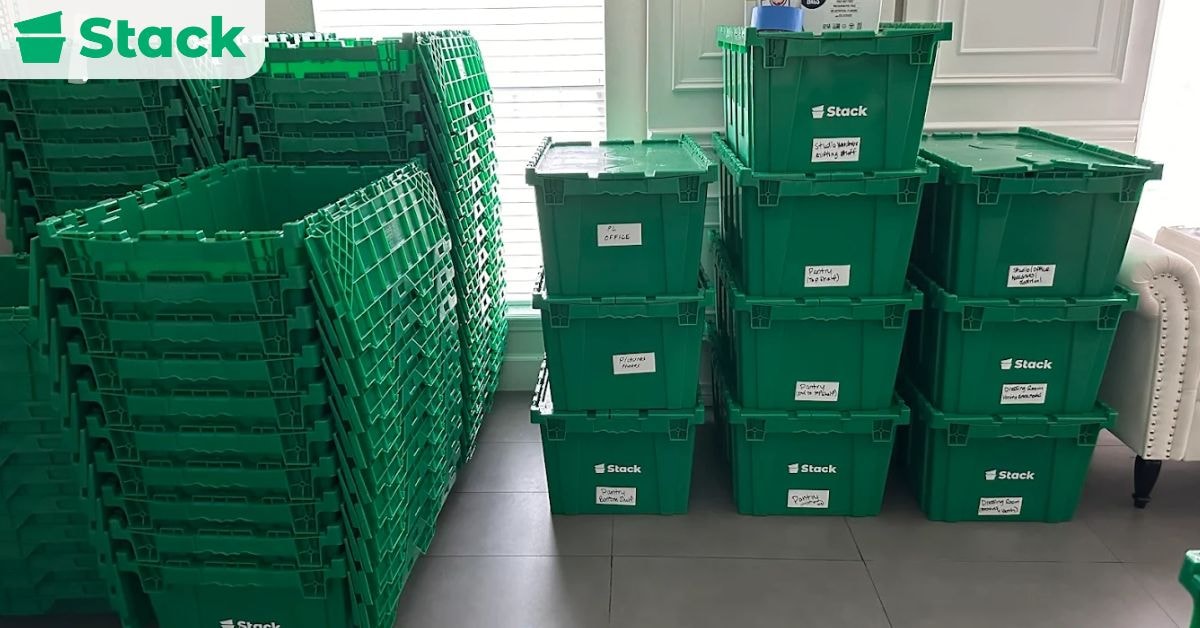
Our specialty at Stack Moves is providing durable, eco-friendly office crates designed to simplify office moves. Our rental solutions help businesses pack, move, and settle into their new space faster while reducing costs and stress along the way.

Ready to make your next move easier? Contact us today to get a customized quote for your office moving crates.

Office IT Relocation Services

Relocating your office is hard enough, but moving your entire IT infrastructure? That’s a different level of stress. IT relocations are arguably one of the most complex parts of a move because equipment like servers, monitors, and cables gets damaged easily if they aren’t handled properly. Which is why investing in a team that specializes in tech-heavy moves is so important.

Your typical IT relocation company will offer services like tech inventory audits, cable mapping, hardware transport, and setup support. Some even provide a dedicated project manager to oversee the process and minimize downtime.

Stack Moves prides itself on making moves safer by renting out durable, plastic moving crates. Their design protects fragile items like cables and adapters during transit. Beyond safety, these crates help you cut down on packing costs since you only pay a fraction of what it would cost to buy them. Book your moving crates today!

In this blog, we will break down the key components of a successful IT relocation. We’ll also guide you on how to safely pack your equipment and how to choose a reliable relocation partner for your move.

What Are Office IT Relocation Services?

What Are Office IT Relocation Services?

These are a specialized category of office relocation services that focus on moving your tech from one location to another. What makes them different from general office moves is that the handlers need to have a good understanding of hardware, network setup, and data protection.

A full-service provider typically helps with hardware transport, server relocation, cable management, data backup, and post-move troubleshooting. They also plan your new IT infrastructure layout in the new office and ensure a smooth switchover to minimize disruptions.

The risk level associated with IT moves is too big to ignore. One mistake could lead to days of downtime or even data loss, which is why protecting your IT systems is one of the most critical factors to consider in any office move.

What’s Included in IT Office Relocation Services?

What’s Included in IT Office Relocation Services?

There’s a lot more to it than simply moving computers and cables – key services are everything needed to set up properly at the new location. Taking advantage of professional relocation services can save you hours on your move.

IT Infrastructure Assessment

Modern office environments are filled with systems that require extra care during relocation. That’s why, before you physically move anything, your IT relocation provider will audit your current setup. They do this because they need to understand what you have and how you use it to design a relocation plan with minimal downtime.

They will also record everything you own so that nothing goes missing during the move. This step also helps you decide if anything needs upgrading or decommissioning before the move. Additionally, they will take note of any system that needs special handling or backup.

Project Planning and Coordination

Without a well-thought-out move plan, your IT relocation experience is bound to be a chaotic one. Work closely with your relocation provider to come up with a moving timeline. This timeline will factor in your company’s needs and possible disruptions that could hinder the success of your move.

Some of the best providers assign a dedicated project manager to coordinate the move and serve as your point of contact. This way, you can enjoy a move with minimal disruption to your team.

Data Backup and Security

Before you even think about unplugging anything, first make sure all your data is backed up. Experienced teams encrypt sensitive files in addition to backing up the data on critical systems so that they remain safe throughout transit.

In the event that your hardware gets damaged or your data is corrupted during the move, you can navigate it knowing that your business’s data is protected. The goal is to move your data safely while keeping it out of the wrong hands.

Network and Server Room Setup

This isn’t as simple as plugging things back in. Your IT relocation team should plan the layout for your new server room in advance. This is where they map out cables, position server racks, and work out access to power outlets.

It’s also their job to ensure that the space meets the cooling and ventilation requirements needed to keep your servers from overheating. Another thing this service covers is assessing the load on the power supply to avoid outages.

Workstation and Device Relocation

Every piece of equipment should be handled with care, whether it’s a phone or a monitor. To keep things organized during the move, clearly label your items so that they arrive at the right desk in your new space. Normally, devices should be packed using anti-static wraps to protect their screens and any other delicate components.

Once they’ve made it to the new office, the team should test each device to make sure it still works. This minimizes disruption and gets employees back to work faster.

Testing and Troubleshooting

Until everything’s up and running, the move isn’t over. A post-move check allows your provider to confirm that all systems are a go. They’ll check for things like your internet connectivity, server access, and software performance.

If anything breaks during the move or doesn’t work as it should, your providers will troubleshoot on the spot to resolve it quickly. Having an experienced team handle this step ensures your business gets back up and running with as little downtime as possible.

How to Choose an IT Relocation Provider

How to Choose an IT Relocation Provider

Start by checking their certifications, because most reputable providers will have industry credentials and a proven track record with tech-heavy moves. Always ask for references and client testimonials to see how they’ve handled similar projects. It’s also important to confirm that the company carries full insurance coverage in case of accidents or damage.

Before you sign anything, ask key questions about their experience with data center relocation, how they handle data backup and recovery, and other relevant details. Their answers will tell you how prepared they are to manage your infrastructure.

We recommend working with a team that offers comprehensive office relocation services so that you don’t have to work with separate vendors for different parts of the move.

A typical average IT relocation service quote should include project planning, packing and transport, cable management, network setup, and post-move testing. Make sure every detail is clearly outlined before moving forward.

Need help comparing providers? Here’s a list of top corporate relocation companies to start with.

How to Properly Pack IT Equipment for an Office Relocation

How to Properly Pack IT Equipment for an Office Relocation

Moving your IT equipment isn’t as simple as just tossing everything into a box. Taking the time to protect your gear reduces the risk of damage, so you can enjoy a smoother transition to your new office.

1. Use the Right Packing Materials

Electronics are sensitive, so start by gathering materials to protect them. You need anti-static bubble wrap, foam inserts, and cable ties. The real game changer is your moving container. We recommend getting plastic over cardboard boxes because they don’t buckle under pressure or get soggy if they get wet.

These plastic bins can hold just about anything, but if you’re not sure what you can or can’t pack in them, consult your moving coordinator.

2. Label Everything Clearly

A surefire way to make your move day chaotic is to skip labeling. That’s why you should label each box with its content and where it should go. Also, label individual devices and cables either with color-coded tags or masking tape and markers. Small steps like this make a difference when setting up your new office space because they save your IT team hours of guesswork when reconnecting workstations and troubleshooting.

3. Protect Sensitive Components

Components like hard drives, motherboards, and exposed ports are very vulnerable when moving. Wrap hard drives individually in anti-static material, and consider placing them in their own padded bins. For desktops or CPUs, ensure internal components are secured to prevent them from shifting in transit. If a machine has fragile ports (like HDMI or USB-C), cap them off or fill them with foam plugs to avoid damage.

4. Create an Inventory List

Before sealing up a single box, take note of what’s going in and where it belongs. This document is called an inventory list, and you can use a spreadsheet or a moving inventory app to log items by category. Number your bins and match them to your list for easy cross-checking when you unpack. This step is especially useful for large offices or shared equipment rooms where multiple teams rely on the same devices.

5. Avoid Common Mistakes

Avoid tossing all your cords into a miscellaneous box; keeping them organized will save you time later when unpacking.

There’s a low chance that your equipment will survive a bumpy road without protection, so don’t take that risk. In the same vein, we won’t advise you to skip anti-static wraps because this could lead to internal damage in your devices.

When it’s time to unpack, leaving devices unlabeled can cause delays and frustration at the new office. Plus, using cheap or worn-out boxes can cause the entire load to shift and get damaged in transit.

What to Expect During an IT Office Relocation?

What to Expect During an IT Office Relocation?

To have a successful IT business relocation, you should compile an in-depth process plan that will be responsible for moving your tech and keeping your business running safely.

Ideally, you should begin planning for your IT relocation several months in advance to allow enough time for site audits, vendor selection, and detailed coordination.

It all begins with a site audit and inventory check. Before you box up anything, the relocation team will visit your current location and the new location for an assessment. During these visits, they will also create a detailed inventory of your IT assets.

Then, they create a moving timeline with the help of your internal team. The goal is to come up with a timeline that aligns with your business operations. This is an important step for businesses that offer 24/7 support or work across different time zones so that downtime can be minimal.

Before disconnecting anything, full backups are performed, locally and to the cloud. Some businesses also opt for encrypted transport to prevent exposure during the move. Relocation support teams usually have recovery protocols in place in case of an emergency.

As moving day approaches, the packing begins. Start with using anti-static materials to protect your equipment and then placing them in durable moving crates. Every cable, every screen, and every device should be tagged so it can be reconnected without second-guessing.

Once everything is packed, the equipment is carefully transported. Vehicles are often GPS-tracked, and delivery is handled with white-glove care because of the high-value or sensitive gear involved. When your tech arrives at the new office, the team gets to work to set the place up.

Now it’s time to test everything before you go live. Every connection, from VoIP lines to internal databases, should be checked. If there are DNS conflicts or connectivity issues, they’re addressed immediately. Until everything is stable, the move isn’t considered complete.

Want to Make Your IT Relocation Safer?

Relocating your IT infrastructure isn’t something to figure out on the fly. Partnering with an IT relocation service reduces the risk of damaging anything important. And while you may not need a full-service mover, you will need the right tools to get the job done right.

Stack Moves has supported countless relocations by providing durable commercial moving boxes that are perfect for sensitive IT equipment. Don’t wait until the last minute to plan for your move. Get a quote today!

How to Plan a Successful Business Relocation

Corporate relocations involve moving your entire business’s operations from one location to another, whether it’s across town or even to a new country. Some common reasons for corporate relocations include expansion, cost reduction, or simply improving accessibility for key stakeholders. When done right, it can mark the beginning of a new phase of growth and productivity.

To successfully move your business, you need to carefully plan for every detail. It starts from choosing the right location, setting a clear moving timeline, and communicating with your stakeholders for the entire move. When you break it down into manageable steps, the process becomes far less overwhelming.

Stack Moves makes office relocations easier by providing heavy-duty office moving crates for rent. These containers are designed with convenience and durability in mind, plus each rental comes with a dolly to make moving your boxes effortless. Rather than blow your budget on single-use boxes, opt for a more cost-effective and ready-to-roll solution. Contact us to get started.

This blog post will teach you everything you need to know to relocate your business with confidence. Our relocation checklist will guide you from planning to setup, and we have included a cost breakdown to help you budget wisely.

Factors to Consider When Relocating a Business

Factors to Consider When Relocating a Business

Anything that could potentially affect how your company operates, earns, or grows is a factor to consider when relocating your business. Your business environment, the tax implications associated with your move, and even access to your suppliers are examples of things to carefully consider before signing a lease. Other important factors to always consider are:

  • Legal and Compliance ConsiderationsReview your current lease agreement to understand what’s expected of you when terminating your contract. Before you sign your new agreement, familiarize yourself with the local laws in that area to be sure your business is permitted there. There may be a need to get new business licenses or amend the current ones you have. To be on the safe side, engage the services of a legal advisor.
  • Financial Planning for Relocation – A move can have a significant impact on your cash flow, which is why it’s necessary for you to create a detailed budget that accounts for everything at the start of your move. Explore funding options outside of your profits, like relocation grants or business loans. Alternatively, look for ways to reduce costs, like downsizing unused space. Also, consider the economic incentives, such as tax breaks and subsidies, available in your new location. They could be used to offset some incurred operational costs.
  • Employee Management and Communication – Your team has a big role to play in ensuring the success of your move. Keep everyone in the loop from the start and give them all the details they’d need to understand how the move will affect their roles and commute. For a smooth transition, offer relocation support or work flexibility to reduce turnover.
  • Customer and Brand Impact – If not handled carefully, a move can be destabilizing for your business partners. Educate your business partners on how the move will benefit them, for example, more space might mean better in-person support. Update your business information across all your channels, including both online and offline channels, such as printed materials.
  • Supply Chain and Vendor Relationships – Moves tend to disrupt logistics when vendors aren’t informed on time. To avoid this, notify your vendors of your new address and update your delivery schedules well in advance. Go over your contracts to see if any changes are needed to make your relocation smoother.
  • Business Growth Opportunities in a New Location – A new location could mean access to untapped markets and emerging business hubs. You may be closer to a more talented labor pool where workforce development initiatives are prioritized. Additionally, you could benefit from tax incentives offered to new businesses in the area. See your move as an opportunity to reintroduce your services or expand your business services.

Business Relocation Checklist for a Smooth Moving Process

Without careful planning, a successful move is impossible. Our office moving checklist covers every step of the moving process, so you can enjoy a seamless move without disrupting your operations.

Determine Why Your Business Needs to Move

Determine Why Your Business Needs to Move

Start by pinpointing the reason you want to relocate your business. Are you looking for more space? Or is it a strategic way to be close to your clients? Whatever the case, knowing your “why” will guide every decision you make for the rest of your move.

Select the Best Location for Your Business

We should also mention that the right office space doesn’t necessarily mean the one that’s available. It’s important for you to carry out your research on the different areas you’re looking to rent in order to find a location that benefits your company activities. This means paying attention to how accessible the area is for your employees, suppliers, and customers, amongst other things.

Create a Detailed Moving Timeline

To avoid any last-minute chaos, you should have a well-structured moving timeline. We suggest appointing one or more of your staff as relocation managers, so that there is someone to oversee the entire process. Break the move into phases like packing, moving equipment, and set up, and assign deadlines for each task.

Set a Realistic Moving Budget

Your office moving cost isn’t limited to the moving company alone. You also have to account for professional movers, space renovations, and IT setup. Also include a buffer to cover unexpected expenses like damages, so you aren’t taken by surprise.

Notify Employees, Clients, and Vendors

Notify Employees, Clients, and Vendors

To enjoy a smooth transition, it’s crucial for you to keep communication between you and your stakeholders open. Hold meetings with your employees, clients, and everyone else who should be aware of your move to get their support.

Pack and Organize Your Business Inventory

When everything is in place, packing can be a breeze. For example, with enough boxes, you don’t have to pause your packing to gather more. A simple tool like a moving box calculator can take out the guesswork. To stay organized, sort your inventory into categories such as furniture, electronics, and documents.

Secure Packing Supplies

Protecting your property is only possible with the right materials. While cardboard boxes are common, plastic bins are more durable and stack better, which is helpful for managing space. Other packing supplies, like packing peanuts and bubble wrap, are also useful for protecting fragile items and minimizing damage during transit.

Protect IT Equipment and Electronics

These deserve extra care because they are crucial for your business’s continuity and are costly to replace. Back up all your data before you set out for your move. If possible, hire a professional IT team to handle this aspect of your move for a seamless transition.

Dispose of or Donate Unused Items

Use this opportunity to declutter your inventory. Donate or sell gently used furniture and properly dispose of hazardous materials according to your local regulations. This will lighten your load and lower your moving costs.

Choose the Right Moving Company

Choose the Right Moving Company

To save time and prevent damage to your property, hire experienced commercial movers. Reach out to multiple companies to get their quotes and secure the best deal. Be sure to confirm if their fee covers essentials like insurance, and also ask about their liability policies. To minimize disruptions, schedule your move outside of peak business hours.

Arrange for Safe Transportation

This should be one of your non-negotiables when relocating your business. The best way to ship moving boxes is to hire a reliable moving service. This guarantees your assets are handled with care from start to finish.

Clearly mark fragile items so that movers handle them with care, and use GPS trackers to monitor your high-value assets. Our office moving crates are built to withstand the rigors of relocation, which keeps your items safe from start to finish. Book your boxes to move with peace of mind.

Transfer Utilities and Business Services

Schedule utility transfers for your electricity, internet, and water in advance. Also, make arrangements for your new space to be cleaned by professionals before move-in day. This way, you and your team can arrive in a fully functional and conducive space from your first day.

Change Your Business Address on Official Records

Update your business address with all relevant parties such as the IRS, tax authorities, banks, insurance companies, vendors, and more. You’ll also need to update some contracts, licenses, and legal documents to reflect this change.

Organize the New Office Layout

Organize the New Office Layout

Before you move into your new office, plan your workspace. Map out workstations, meeting rooms, and other important spaces to ensure everything complies with safety standards applicable in your industry or area while remaining comfortable for your employees. This will make it easier for your team to settle in quickly and stay productive.

Reinstall IT and Communications Systems

Now that you’re in your new space, test all computers, check phone lines, internet connection, and internal network. Confirm that your data protection systems are active and that all your systems, both hardware and software, are running without issues. With this sorted, your business can reopen without any hiccups.

Hold an Employee Orientation at the New Business Location

Provide support for your employees to settle in quickly by offering a tour of the new office space. Address any concerns they may have about the relocation, such as changes in their commute time or transport costs. Use the orientation to review updated policies, emergency procedures, and facility protocols.

Promote Your Business Relocation to Customers

Once you’re all settled in, the last thing to do is to let everyone know you moved. Ideally, you would’ve informed all your stakeholders of your move before now, but after successfully moving, you still need to let them know. Update your online profiles and consider launching a campaign to encourage visits to your new address.

How to Make Packing Office Equipment Easier

How to Make Packing Office Equipment Easier

Before touching a single box, create a comprehensive moving inventory list of everything you plan to move. Take note of everything from your desks to your printers to help you stay organized throughout the move.

Label Everything Clearly – Clearly labeling your boxes will save you hours when it’s time to unpack your load. We recommend using a simple numbering system linked to your inventory list or color-coding your labels. This way, everything ends up exactly where it needs to be in your new office.

Disassemble Large Furniture and Equipment – When possible, large pieces of equipment and furniture should be disassembled. This makes them easier to move and also reduces their risk of getting damaged. Before taking anything apart, be sure to take a quick photo to make reassembly easier. A great tip to try is to store all your screws, nuts, and bolts in a labeled zip-lock bag, then tape the bag to the corresponding piece of furniture it belongs to or in a centralized container.

Maximize Space and Minimize Weight – A golden rule when packing is to keep heavy items in small boxes and lighter but bulky items in large boxes. This makes it easier to lift these boxes without physically straining yourself. Be sure to use durable boxes that can handle the weight of your items without collapsing. To make the most out of your space, fill in gaps between large equipment with small items like notepads.

How Much Does It Cost to Relocate a Business?

How Much Does It Cost to Relocate a Business?

Corporate relocations cost anywhere from $1,500 to $30,000, depending on the size of the office, the distance of the move, and the needs of your business. Businesses with specialized moving needs, such as tech companies with sensitive equipment, should expect to be on the higher end of that range or even exceed it.

Typical relocation costs include:

  • moving expenses like hiring commercial movers, trucks, and packing supplies,
  • new office setup, i.e, furniture, décor, and tech infrastructure,
  • administrative fees such as deposits, permits, and marketing updates,
  • specialized services like IT professionals, consultants, designers, etc.

Don’t forget to include hidden costs like temporary storage, employee relocation assistance, and utility installations in your plan.

Factors That Influence Business Relocation Costs

Multiple factors can affect how much you’ll spend on relocating your business, starting with the size of your company. Large businesses usually have more furniture, equipment, and even staff. This all adds to the cost of your move.

The industry that you operate in also matters. For example, healthcare providers work with a lot of specialized equipment that needs to be specially packed and transported, which adds to the overall expense.

Distance is another major cost driver. Local moves are generally more affordable than long-distance moves since they’re less likely to require multiple days of transport, temporary storage, and additional coordination.

Ready to Make Your Business Move Easier With Bin Rentals?

Relocating your business boils down to proper planning, clear communication, and making smart choices. The more prepared you are, the smoother your move will be. Don’t hesitate to consult experts, because these professionals can help you avoid costly mistakes.

Stack Moves helps you reduce costs while staying organized by offering durable and reusable office moving crates for rent. They’re built to handle the demands of commercial relocations. Plus, your rental would be delivered to your current location and picked up after your move! Contact us to get started.

Frequently Asked Questions

How Can I Reduce the Costs of Relocating My Business?

One way to cut costs is by renting reusable moving crates instead of buying moving boxes. You can also save by decluttering your inventory before the move. Scheduling your move during off-peak seasons or mid-month can help you negotiate lower rates with movers. And handle certain tasks in-house, like packing non-fragile items to reduce outsourcing expenses.

How Long Does a Business Relocation Typically Take?

This could take a few weeks to a full year. You can speed things up by planning early, assigning a relocation manager, and setting clear timelines with your vendors and team.

How Can I Minimize Downtime During a Business Move?

Start by moving in phases to keep important operations running. Then, back up your data and prep your IT team for a fast reinstallation at the new site. Clearly communicate your moving timeline with your clients and vendors, and pack non-essential items first so you’re not disrupting daily work.

How to Pack Hanging Clothes for Moving?

Clothes are one of the trickiest items to move. They’re easy to crease, wrinkle, or even lose if not packed right. To keep your clothes in excellent condition, it’s crucial to pack your clothes for moving correctly.

The best way to pack hanging clothes is with wardrobe boxes because they’re designed to keep your clothes upright and wrinkle-free. But they are bulky and take up space, plus they can be pricey too. A smarter way to pack your hanging clothes is to combine garment bags and plastic bins. When used together, they protect your clothes from dust and wrinkles while keeping them secure throughout the move.

Our rentable moving bins provide a protective and durable container, for your clothing and other delicate belongings. They’re not only affordable, but also stackable making it easier for you to pack without worry. Schedule your box rental today!

In this blog post, we will provide you with a step-by-step guide on how to pack hanging clothes efficiently. We will also talk about the best way to transport your packed clothes and unpack them safely to avoid damage.

What Boxes to Use When Packing Hanging Clothes?

What Boxes to Use When Packing Hanging Clothes?

The type of box you use depends on what you’re packing and your overall packing needs. For instance, to keep your hanging clothes in pristine condition, you’d need a wardrobe box because of its built-in rod. But wardrobe boxes can be bulky and expensive.

Fortunately, you can still pack your clothes safely without hanging them. One way to do this is to roll or fold clothes into a suitcase or a duffel bag.

For an all-purpose packing solution, you should consider plastic storage containers for their versatility and reliability. At Stack Moves, we provide standard-sized bins that measure 27” by 17” at the top, 24.5” by 14.5” at the bottom, and 13” tall. If you’re not sure how many boxes you need to move, our moving box calculator can help you figure out the right quantity based on your home size.

How to Move Hanging Clothes

When preparing for a move, several factors should guide how you pack your hanging clothes. Two major things to think about are the distance of your move and the type of clothing you’re moving. Delicate items and structured garments require additional protection to prevent damage, while long-distance moves call for sturdier boxes that can withstand the rigors of moving. A final factor to consider is efficiency and convenience. Getting your boxes shouldn’t feel like a treasure hunt. Instead, they should be easy for you to source.

How to Move Hanging Clothes With Wardrobe Boxes

How to Move Hanging Clothes With Wardrobe Boxes

Wardrobe boxes are a fantastic solution for moving hanging clothes. They come with built-in hanging rods or hanger hooks that allow you to transfer your clothes directly from your closet without folding them. Because of this, your clothes remain crease-free and maintain their shape. Wardrobe boxes also protect your clothes from damage caused by dust and dirt, ensuring they arrive in the same condition they left.

To pack clothes in a wardrobe box:

  1. Start by assembling the wardrobe box according to the instructions that came with it. Ensure the box is sturdy and securely taped at the bottom to handle the weight of your clothes.
  2. Take your clothes from your closet and hang them on the rod in the wardrobe box, keeping them organized and ready to wear upon arrival.
  3. Once all your clothes are inside the box, ensure they are evenly distributed to avoid shifting. Close the box flaps and tape it securely.
  4. Finally, label the box with its contents and the room it belongs to in your new home. This will make your unpacking process easier and help movers place the box in the correct location.

Using wardrobe boxes simplifies your packing process, keeps your clothes crease-free, and ensures a smooth transition to your new house.

How to Move Hanging Clothes With Garment Bags

How to Move Hanging Clothes With Garment Bags

Garment bags come in various types, ranging from plastic to canvas to vinyl. Lightweight plastic garment bags provide basic protection from dust and are an affordable packing option. Canvas bags are more durable and breathable, making them a better option for short-term storage and transport. Vinyl bags offer the best protection against moisture and damage, making them ideal for your high-value or delicate garments.

You can pack your clothes inside a garment bag by:

  1. Choosing the appropriate garment bag based on the material of your clothes and the level of protection it needs. Valuable clothes should be stored in vinyl, while everyday wear can be stored in plastic or canvas.
  2. Keep your clothes on their hangers and slide them into the garment bags. Ensure the top of each hanger is securely hooked through the top of the bag to prevent slipping during the move.
  3. Once all your clothes are inside, zip up the bag and secure any additional fastenings, such as tying it with a string to ensure it stays closed and that your clothes remain protected.

If you are using a moving company, garment bags alone are not an ideal choice because they do not offer enough protection against the rough handling that occurs during transport. We recommend using your garment bags with plastic bins to ensure maximum protection for your clothes.

How to Move Hanging Clothes With Portable Garment Racks

How to Move Hanging Clothes With Portable Garment Racks

Portable garment racks provide easy access to your clothes during a move. They are especially great for short trips and temporary storage, allowing you to hang your clothes directly without folding them. This method helps you sort clothes easily and locate specific items quickly.

To use a portable garment rack, start by assembling it according to the manufacturer’s instructions, ensuring it is stable and secure. Then, transfer your clothes inside onto the rack, keeping them organized and accessible. Lastly, use garment bags or large plastic sheets to cover the clothes and protect them during transport.

While portable garment racks offer convenience, they are not as protective as plastic bins or boxes. They can be unstable and may not shield your garments from rough handling, making them less ideal for moves involving a moving company.

How to Move Hanging Clothes With Suitcases

How to Move Hanging Clothes With Suitcases

One of the major reasons people hang their clothes is so they remain crease-free and ready to wear. But if you can’t pack your clothes while they’re still on hangers, neatly folding them is your next best option. When done properly, this method can help you manage space and fit more clothes into your suitcase. This works for duffel bags, too. To pack your clothes inside a suitcase:

  1. Fold Your Clothes Carefully: Fold each piece of clothing neatly by smoothing out creases and ensuring they are compact. Another way to pack clothes for moving in suitcases is to roll them, leaving you with more space for more clothes.
  2. Pack Folded Clothes in a Suitcase: Lay the folded clothes in a suitcase or a large box, making the most of your space and keeping your clothes secure.
  3. Use Packing Paper: Place packing paper or tissue paper between layers to prevent wrinkles and add an extra layer of protection.

On the downside, you may not have enough suitcases to accommodate all your clothes. Fortunately, you can still apply this method using plastic bins. Plastic bins are spacious and durable enough to keep your folded clothes organized and safe during the move.

How to Pack Clothes Using the Bundle Wrapping Method

How to Pack Clothes Using the Bundle Wrapping Method

Bundle wrapping is a simple, DIY method to keep your garments together and transport them more easily. It also makes unpacking at your new place quicker.

To bundle wrap your clothes, start by gathering 5-10 hangers with clothes and grouping them together. Then wrap the grouped clothes with a sheet or towel to protect them from dust and minor damage. Lastly, secure your wrap with tape or rubber bands, ensuring it stays in place during transport. Carry the bundles directly to your car for the move.

Despite this method’s convenience and cost-effectiveness, it is not recommended if you are using a moving company. Wrapped/bundled clothes can’t withstand the rough handling associated with moves.

How to Pack Clothes in Heavy-Duty Trash Bags

How to Pack Clothes in Heavy-Duty Trash Bags

Using heavy-duty trash bags or garbage bags is a cost-effective and straightforward method to pack your hanging clothing. This method provides basic protection against dust and dirt while being easy to implement with everyday materials at home.

  1. Gather a Section of Hanging Clothes: Bundle 10-15 clothes at a time to make handling them easier.
  2. Pull a Trash Bag Up from the Bottom of the Clothes: Slide a heavy-duty trash bag up from the bottom, covering the clothes completely until the hangers are left sticking out at the opening of the bag.
  3. Tie the Bag at the Top, Around the Hangers: Gather the top of the bag around the hangers and fasten it securely. This keeps the clothes together and provides a handle for carrying.
  4. Ensure Clothes are Protected: Check that the clothes are completely covered by the bag to protect them from dust and minor damage during the move.
  5. Pack in a Cardboard Box or Plastic Bin: For added protection, place the bags in either plastic bins or cardboard boxes. This prevents the hangers from shifting during the move. The more durable option is plastic bins, especially if you’re looking for something water-resistant.

How to Pack Clothes for Any Type of Move

How to Pack Clothes for Any Type of Move

Whether you’re moving across town or to another state, packing clothes according to your move can make all the difference. Ideally, how you pack your clothes should depend on how far you’re going, how much space you have, and whether you’re packing hanging or non-hanging clothes.

How to Pack Clothes for Moving Long Distance

For long-distance moves, you can pack your hanging clothing in wardrobe boxes to keep them wrinkle-free. However, they’re very bulky and could eat up space in your vehicle. Instead, you can use plastic boxes to move your hanging clothes without worrying about space, thanks to their stackable design.

How to Transport Hanging Clothes in a Car

Place the clothes in garment bags or large trash bags and secure them with a drawstring. Then lay them flat in your car’s trunk or the passenger area. The downside to this is that your clothes could move around a lot; a plastic bin offers better stability and prevents your clothes from shifting during a drive.

How Do You Fly With Hanging Clothes

You can fly with hanging clothes by packing them in a garment bag, either in your luggage or as a carry-on, as they are sleek enough to fit in the overhead compartment. Most airlines allow garment bags as carry-ons, but check with your airline for specific size and weight restrictions. Alternatively, you can fold your clothes neatly in your luggage to save space and avoid any hassle with carry-on limits.

How to Store Hangers When Moving

Group them together and secure them with a rubber band or string, then place them in a large garment bag so they stay organized. You can also stack them inside plastic bins for easy access.

Need Plastic Bins for Rent to Pack Hanging Clothes?

A smooth and efficient move starts with the right preparation. Properly packing your hanging clothes ensures they arrive in excellent condition, reducing the stress of moving. By investing in quality packing materials, you can streamline the packing process and reduce stress on moving day. Options such as sturdy plastic bins offer a reliable solution to protect your wardrobe during transportation, especially when you need to pack non-hanging clothes.

Stack Moves provides an eco-friendly and durable solution for your moving needs by renting out plastic bins and other packing supplies. These boxes are not only sturdy but also stackable, helping you protect your precious clothes and save space. Contact us today to have your pre-assembled bins delivered to your doorstep for a stress-free move.

Plastic Bins vs. Cardboard Boxes – Which Is Best for Moving?

When preparing for a move, one of the first and most crucial decisions you’ll have to make is choosing which type of containers to pack and transport your belongings in. While cardboard boxes have been the norm for most moves for decades, plastic moving bins are rapidly becoming the better, more efficient option.

In general, plastic bins are better for moving because of their superior durability, security, and ability to protect your items from damage and moisture.

Stack Moves is your go-to rental company for sturdy, eco-friendly moving bins, perfect for residential and corporate moves. We make moving easier and more efficient with our affordable pricing. Plus we cater to over 20 locations across the U.S. Schedule your delivery today!

In this blog post, we will explore the benefits of using plastic storage boxes compared to cardboard boxes. At the end of the blog, you will have a clear understanding of the pros and cons of each in order to make the best choice for your move.

Plastic Moving Boxes

Plastic Moving Bins

Plastic containers are sturdy and versatile containers great for transporting and storing belongings during a move. They can be used for both residential and commercial relocations. Plastic bins come in different sizes, with the most common size being 27” by 17” at the top, 24.5” by 14.5” at the bottom, and 13” tall. Their steep purchase price prevents them from being a moving favorite, as they are far more expensive than cardboard boxes. This is why renting plastic moving boxes is a more economical choice. This way, you can enjoy all the benefits of using plastic boxes for a fraction of the price.

Advantages of Using Plastic Bins

One would typically opt for a plastic bin because of its durability. Compared to cardboard boxes, plastic bins provide superior protection against physical damage. Their rigid structure helps safeguard content from impact and compressive forces.

In addition, plastic bins are also water resistant. Because of this, they are ideal for moving during rainy weather or for long-term storage of items in a damp environment. Also, you can reuse plastic bins multiple times, thus reducing waste and resource consumption.

Disadvantages of Using Plastic Bins

Although plastic bins have advantages, there are also downsides to choosing them, like the initial cost. Although reusable, plastic bins can be more expensive upfront compared to cardboard boxes, which may be available for free or at a lower cost.

Another disadvantage of plastic bins is that they take up more space since they don’t fold flat like cardboard boxes. In addition, there are some environmental concerns surrounding the use of plastic bins as their production involves materials that are less eco-friendly than the recycled content of cardboard boxes.

Cardboard Moving Boxes

Cardboard Moving Boxes for Moves

Because of their versatility and availability, cardboard boxes are just as popular for both residential and commercial moves. They come in various types, from standard boxes to specialized ones like cardboard wardrobe boxes for clothing. You can use cardboard boxes to pack a wide range of items like household goods, furniture, and books.

Advantages of Using Cardboard Moving Boxes

An advantage of using cardboard boxes is that they are cost-effective. Cardboard boxes are typically cheaper than plastic tubs. You can often get cardboard boxes at a low cost or even for free from local stores or via online marketplaces.

Cardboard boxes are readily available in many stores, making them a convenient option for last-minute packingAdditionally, they are easily recyclable, making them an environmentally friendly choice for those concerned with sustainability.

Disadvantages of Using Cardboard Moving Boxes

While these boxes have benefits, their biggest issue is durability. Cardboard boxes are susceptible to tearing and can collapse under too much weight, making them less ideal for long-term storage or for very heavy items. Corrugated cardboard boxes were created to counter these durability issues. They offer added durability and are better suited for moving delicate items.

Furthermore, cardboard boxes absorb moisture. Thus, they are susceptible to water damage and cannot be used during the rainy season or in damp environments. Cardboard boxes also lack security as they must be sealed with tape and can be easy to open. They are less secure when compared to plastic boxes that come with locking lids.

Moving Boxes vs. Plastic Bins – Factors to Consider

Moving Boxes vs Plastic Bins - Factors to Consider

When deciding between moving boxes and plastic bins for your relocation, you will need to consider several factors like the nature of the items being moved, the distance of the move, budget constraints, environmental concerns, and storage requirements post-move.

When moving fragile items, it’s better to use plastic bins because they offer better protection, while large and heavy items should be packed in cardboard boxes. However, very heavy items may need the durability of plastic bins to handle the load without tearing.

Cardboard boxes are ideal for short, local moves, but plastic bins are more secure and durable for long-distance moves. While cardboard boxes are often cheaper and sometimes free, their tendency to get damaged makes them less than ideal for the rigor of moving.

From an environmental perspective, cardboard is recyclable, while plastic bins are reusable, reducing the need for continual production and disposal. Another factor to consider would be your storage needs after moving. Cardboard boxes are suitable for temporary storage as they take up less space when not in use. They are fully collapsible when empty, making them suitable for tight spaces. However, plastic bins are better for long periods. Their durability and stackability make them excellent for maintaining the integrity of stored items over time.

Cost Comparison: Which Is More Budget-Friendly?

Cardboard boxes cost $1-$8 depending on size and quality, but they are prone to damage and they may not offer the best protection for your fragile items. Plastic boxes usually cost $10-$30, and even if you need only 15 to move a studio apartment, that would bring your estimated cost to $450. This is why we always recommend renting them instead. For as low as $1.5-$3.0, you can rent a plastic bin for an entire week from rental companies like Stack Moves. This doesn’t just save you money; it also takes away the headache of dealing with storage or disposal after the move.

Feature Comparison Table | Cardboard vs Plastic Bins

Feature Plastic Bins Cardboard Boxes
Durability Won’t tear or collapse Prone to damage
Waterproof Protects against moisture Susceptible to moisture
Reusability Can be used multiple times Typically one-time use
Stackability Secure stacking, no shifting Prone to shifting and collapsing
Eco-Friendliness Durable, reducing the need to frequently replace it Recyclable but often disposed of after use
Convenience Ready to use, no assembly Requires tape & setup
Best For Hassle-free, secure moves Budget-friendly, short-term use

Tips for Efficient Packing Regardless of Choice

Tips for Efficient Packing Regardless of Choice

The best practice for packing boxes and bins starts with choosing the right size of boxes or bins. Heavier items like books should go in small boxes or durable plastic bins to prevent overloading. Lighter items can be packed in larger boxes without the risk of them becoming too heavy. Items should also be packed tightly to prevent movement. However, they should not be packed too tight to cause damage. It helps to use packing materials such as bubble wrap, packing paper, or towels to fill empty spaces and provide cushioning for fragile items.

Additionally, you should always place heavier items at the bottom of the box or bin and lighter items on top to prevent damage. For fragile items, consider using specialty cardboard boxes such as dish packs or wardrobe boxes, which provide greater protection and are designed for specific needs. It is also important to ensure that cardboard boxes are taped securely at the bottom and top. Plastic totes with lids should be closed and secured to prevent them from opening during the move.

Labeling your containers is also necessary for an easier move. To do this, use a bold marker to label every box and bin. Also, include the content and the room it belongs to. For plastic bins, you might use labels or sticky notes since markers can be less visible on surfaces. Aside from using markers, you can also decide to color code. Assign a color to each room and use colored stickers or tape to label the boxes and bins. This visual guide will help movers know where to place each container in the new house.

Additionally, pack a plastic box or bin with the essentials you’ll need on the first day in your new home. These essentials could be toiletries, medications, chargers, snacks, and basic tools. Make sure this is labeled clearly and loaded last so it can be accessed first.

Need Plastic Boxes for Moving?

How smooth or stressful your move turns out largely depends on the boxes you use for your move. Although cardboard boxes are a nice option because of their availability and affordability, they come with various limitations. Plastic bins are sturdier, weather-resistant, easy to stack, and reusable—making them ideal for both short and long-term storage.

But to avoid the financial strain associated with purchasing them, renting presents itself as the ideal solution. Stack Moves offers affordable rental packages designed to fit different move sizes. You get all the benefits of plastic bins without the hefty price tag or the clutter once you’re done. Reach out to us today! 

Moving to Chicago Checklist: Pro Tips for a Smooth Move

Chicago has something for everyone, regardless of their preferred lifestyle or budget. It boasts a beautiful, dynamic urban environment with world-class restaurants, networking opportunities, and nightlife. However, factors like traffic congestion, tax regulations, and harsh winter conditions can make planning a Chicago move more difficult than most. That’s why we suggest you compile a comprehensive moving to Chicago checklist, as it will help you have a smooth transition and avoid feeling overwhelmed.

Your checklist should include pre-move preparations such as proper research into housing arrangements, getting all the necessary moving supplies, understanding Chicago’s climate, gathering all essential documents you’ll need for your move, and many other things!

At Stack Moves, we understand that moving can be costly and challenging, which is why we provide a cost-effective, sturdy packing solution. Our eco-friendly moving bins will help keep your belongings safe even when moving during severe weather conditions like Chicago winters. Contact us today to rent moving boxes and enjoy a hassle-free move.

In this blog, we’ll guide you through your relocation process, from pre-move preparations and budgeting to packing strategies and settling into your new Chicago neighborhood.

Moving to Chicago Checklist for Beginners

Moving to Chicago Checklist for Beginners

Before moving to a big city like Chicago, you need a properly structured checklist for moving out that covers everything from choosing the right neighborhood, setting up utilities and preparing for Chicago’s weather conditions.

Ultimately, your checklist should include the tasks you need to complete before and after moving to this city to stay organized. You need to:

  1. Research and plan your move
  2. Find a place to live
  3. Set a realistic budget for your Chicago move
  4. Prepare for the move
  5. Put your moving day essentials together
  6. Update documents and services after moving
  7. Settle into Chicago and explore the city

Now, let’s break down each of these steps in detail:

1. Research and Plan Your Move (3–6 Months Before Moving)

Research and Plan Your Move (3–6 Months Before Moving)

Research and plan your move to a beautiful city like Chicago 3-6 months before moving to make sure you’re fully prepared for the new location. Early planning allows you to research neighborhoods, compare housing options, and organize all the details needed for a smooth relocation.

Start by choosing a neighborhood. Chicago is the third-largest city in the United States and has over 200 diverse neighborhoods that make up its total 77 community areas. Downtown areas like River North, Lincoln Park, and the Loop have a fun nightlife and are closer to public transit. However, they may not be the best option if you are moving on a tight budget. If you prioritize affordability but still want to maintain a convenient community feel, Hyde Park and Lakeview areas are your top options.

You also need to understand Chicago has a 14% higher cost of living than the national average. Rent prices highly depend on the neighborhood you choose and the apartment size. Beyond rent, prepare a proper budget for other utilities, groceries, transportation, and local taxes. For transportation, get a Ventra card for CTA buses and trains and Metra commuter rail services, which costs $5 for new cards. Food, healthcare, and transportation all have a higher cost in Chicago. Still, it’s expected since it’s one of the US’s largest, high-demand urban cities with a dense population and thriving economy.

Next, explore Chicago’s job market and employment opportunities. The big city has different finance, healthcare, technology, education and manufacturing opportunities. Renowned firms have their headquarters or significant operations in Chicago, which makes the city very competitive for those seeking a job.

Prioritize researching for schools if you plan to move to Chicago city with your family or to pursue further education. Review the performance of different school options using Chicago Public Schools (CPS) ratings. Check out different options like Northwestern University and the University of Chicago for higher education. Before you make your choice, look out for housing options close to these institutions, as commuting long distances is not ideal in the long run.

2. Find a Place to Live (2–4 Months Before Moving)

About 2–4 months before you move to Chicago, start to actively find a place to live to get the best selection and avoid any form of last-minute stress. Chicago has different living options, including apartments and family homes in both lively neighborhoods and quieter residential areas. Before making your final decision, weigh the pros and cons of renting vs. buying a Chicago home carefully.

It’s best to rent if you’re new to the city. However, renting doesn’t give you access to equity. On the other hand, if you plan on settling in Chicago for a long time, buying a home is a better option. It allows you to build equity and enjoy stability in monthly payments. On the downside, homeowners must handle all forms of ongoing maintenance costs.

Use online resources like Zillow, Apartments, and Craigslist to hunt for apartments. You can also consider hiring local realtors who can provide personalized recommendations and assist you with lease agreements if you need one.

3. Set a Realistic Budget for Your Chicago Move

Set a Realistic Budget for Your Chicago Move

Set a realistic budget for your Chicago move to manage your expenses and avoid unexpected financial stress. Make a list of expenses when moving out. Your list should include packing supplies, transportation, movers, deposits, and other upfront expenses.

Decide early if you’d prefer hiring professional movers or handling the move yourself. DIY moves with a moving truck may be a cost-effective option. However, if you include gas, mileage fees, rental insurance, and the physical labor involved, the savings might not be as substantial as you imagined. Hiring professional movers may incur higher costs, but it will save you time, energy, and logistical hassle, especially when relocating from a long distance. 

Before your move to Chicago or as soon as you arrive, open a Chicago bank account if you’re relocating from another state. Opening the account will simplify paying your rent, utilities, and local taxes. As part of your financial planning, don’t forget to research Chicago’s local tax rates, including property taxes, which can vary depending on the neighborhood. Be sure to integrate these costs into your moving budget to avoid surprises later on.

4. Prepare for the Move (1–2 Months Before Moving)

Organize and prepare for your move to Chicago 1-2 months beforehand. To kick off your pre-move preparations, check out the items you’ll want to take with you and declutter the ones you won’t need. 

Use a moving box calculator to estimate the number of boxes you’ll need ahead of time. This tool can help you avoid overspending on unnecessary boxes and prevent you from purchasing too few. Additionally, we recommend that you use plastic bins, as they are by far the best bins for moving.

5. Pack Your Moving Day Essentials Bag

A comprehensive moving checklist also ensures that you prepare properly for your moving day essentials. Make sure you have all the necessary supplies, protect your belongings, and prepare ahead for Chicago’s unique weather conditions. Put together a survival kit so you can have quick and easy access to everything you need during the move. Your kit should contain:

  • Toiletries such as toilet paper, your toothbrush and toothpaste, soap and shower gel, etc.,
  • A change of clothes for the first night in your new Chicago home,
  • Essential documents like your lease agreement, ID, and moving contract,
  • Chargers and power banks to keep your devices powered throughout the move,
  • Snacks and bottled water,
  • Basic cleaning supplies for any last-minute touch-ups as soon as you arrive.

Packing these essentials in a separate survival kit helps to prevent unnecessary stress and allows you to settle in comfortably without digging through multiple boxes. If you also plan to move during the colder months, check the weather forecast way before your move and prepare for sudden changes beforehand. This is because the temperature in Chicago often times goes below zero during the winter season.

Once you arrive in Chicago, check your new place for issues. Inspect all plumbing or electrical appliances and confirm that they are working correctly. If you spot any issues or damage, make sure to take photos and document your concerns.

Focus on unpacking when you are done checking out issues with your new place. Start by unpacking bedding, toiletries, and kitchen items before moving on to non-urgent belongings. Also, contact the moving box suppliers for a pickup if you rented a moving truck and bins for your move.

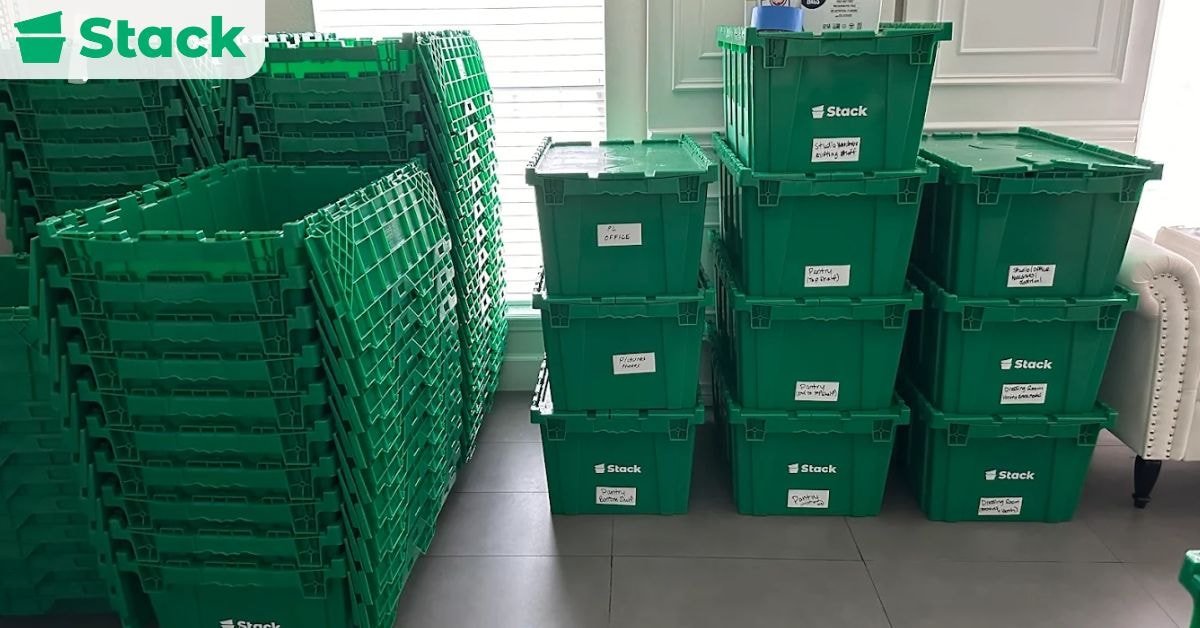
6. Update Documents and Services After Moving (Must Do)

Update Documents and Services After Moving (Must Do)

Update your personal information and services to avoid interruption of service, missing bills, and fines that may come up shortly. Forward a mail to the United States Postal Service (USPS) informing them of your move and requesting a change of address. This would require updating your address with your bank, credit card providers, and insurance providers.

7. Settle Into Chicago After Your Move

Once you’ve moved to Chicago, familiarize yourself with the beautiful city and everything it offers. Understand Chicago’s public transport and how the entire system works. Chicago’s public transport system is also cost-effective compared to the national average. The Chicago Transit Authority (CTA) offers:

  • CTA trains (“The L”) are a fast and reliable service that connects major cities, downtown areas, and airports (O’Hare and Midway) in Chicago.
  • CTA buses complement train service and reach almost every corner of the city.
  • A reloadable Ventra card is used for easy payment on all CTA trains and buses and Metra commuter rail services that connect suburbs with downtown.

If you are moving along with a vehicle, visit an Illinois Secretary of State facility within 30 days of residency so you can obtain an Illinois driver’s license and transfer your vehicle registration. Take your proof of residency and insurance documentation with you, and prepare to pay specific associated fees.

8. Get Involved in the Community

Connect with your new Chicago community to embrace the new suburban life and make the city feel like home. Get involved in the community by joining various groups and events such as:

Social groups and networking opportunities: These groups may occasionally host events tailored to various interests, hobbies, and industries.

Local events, festivals, and entertainment: Chicago hosts different festivals year-round. You can also check out Millennium Park, Navy Pier, and neighborhood street festivals to experience their local culture, food, and lifestyle firsthand. Places like Wicker Park, which is located on the city’s west side, have different bars and restaurants for entertainment.

Making friends and adjusting to life in Chicago: Participate actively in social events like local volunteer programs, community workshops, or neighborhood events so you can connect with people. Many Chicagoans are also known for their friendly and welcoming attitude, so they are more likely to engage with neighbors, coworkers, and fellow newcomers.

What Do I Need to Know Before Moving to Chicago?

What Do I Need to Know Before Moving to Chicago?

There are certain things you should know before settling into the great city of Chicago. You need to fully understand the city’s laws, job market, public transport system, and lifestyle for a smooth move. These are the various factors you need to be aware of:

Understand the Local Laws and Registration Requirements

Chicago has laws and unique regulations regarding residential parking permits, taxes, vehicle registration, and pets. Research early enough to have a hassle-free transition.

For taxes, the national average top rate of state income tax in Illinois is about 4.95%, and Chicago’s taxes are among the highest. The big city requires that Chicagoans pay a sales tax of 10.25%, which is also higher than the national average.

Consider Job Opportunities and the Employment Market

Consider job opportunities and employment prospects if you’re relocating for work or plan to seek new employment when you arrive in the city. Connect with different potential employers or networking groups early enough to have a good advantage.

The Chicago area has a very competitive job market because many Chicagoans are already seeking opportunities across various industries. Research different companies, understand their hiring trends, and organize your resume to fit the expectations of Chicago-based employers. Many companies conduct multiple rounds of interviews so if you decide to wait until after your move to start your application, you may undergo unnecessary delays in securing employment.

Check Out Chicago’s Culture, Entertainment, and Dining Scene

Chicago is also known for its famous dishes, including Italian beef sandwiches and deep-dish pizza. The city also has a vibrant theater scene, annual festivals, and a strong sports culture that brings residents together year-round. Adjust to life in this new city by checking out everything Chicago offers. The more you immerse yourself in these local experiences, the easier it becomes to feel at home.

Explore Different Neighborhoods to Find Your Best Fit

Take time to explore various neighborhoods. This will help you find the ideal community that resonates well with your lifestyle and preferences. Check out different parks, museums, theaters, and shopping centers. You’ll find a host of them in The Loop area. Also, the North side of Chicago is highly recognized for its boutiques and different dining options.

Prepare for Chicago’s Weather Conditions

Make the right preparations for Chicago’s cold temperatures, snow, and icy, challenging periods. Before you move to the city, invest in warm clothing and plan accordingly.

Budget-Friendly Ways For Moving to Chicago

Budget-Friendly Ways For Moving to Chicago

As a newcomer, you should have a strategic plan and budget before you move to Chicago. To make your move smooth without having to sacrifice your convenience or comfort, you need to:

Move During Off-Season

Fall is a good time to schedule your move to Chicago because professional movers offer lower rates during this period, and moving truck rentals are equally more cost-effective than in the summer months. This will help you save significantly compared to moving during the summer months, which is the peak moving season for most Chicago residents.

Declutter and Sell Unwanted Items Before Your Chicago Move

Before you start packing, take time to sort through your belongings and set aside anything you no longer need or use. Downsizing before moving will make your move lighter and more organized. Also, consider selling the things you no longer need, including furniture, clothing, and household goods, online or at garage sales, to offset some of your moving expenses and reduce the number of boxes you’ll need to transport.

Source Free or Discounted Packing Materials

Obtain free packing materials or buy at a discounted price from local grocery stores or retail shops, so you don’t have to overspend on these items.

Compare Multiple Quotes and Negotiate Prices

Request quotes from different Chicago movers or truck rental companies and compare their rates carefully to know the best value that works for you. Don’t also be hesitant to negotiate prices. Most moving companies are open to offering discounts if you have a flexible moving date or would prefer to move during a less busy season.

Plan Utility Setup Strategically

Schedule your utilities properly to avoid overlapping utility payments. Put together disconnect dates at your old place and setup dates at your new home in Chicago so you can avoid paying for duplicate services.

Rent Moving Boxes

Rent eco-friendly moving boxes instead of buying cardboard boxes. Rental options like sturdy plastic moving bins from Stack Moves are very affordable and convenient. When you rent our boxes, they get delivered to your home and picked up afterward.

Packing and Preparation Tips for a Smooth Move to Chicago

Packing and Preparation Tips for a Smooth Move to Chicago

Proper organization will help you reduce stress, save you money, and make sure all your belongings arrive safely. Follow these proven packing and preparation tips for a smooth move to Chicago:

Start Packing Early and Label All the Boxes

Start packing for your move ahead of time. Once you pack up any box, label it clearly with its contents and the room where you’ll eventually want to place them. This will make your unpacking process more straightforward.

Pack an Essentials Bag

Set a bag aside for your toiletries, a change of clothes, medication, chargers, and important documents like your lease agreement, ID, and moving contracts. 

Use Vacuum-Sealed Bags for Bulky Items

Chicago’s winter season demands that you provide bulky clothing, blankets, and bedding. These items should be compressed into vacuum-sealed containers to save space, make transportation easier, and reduce the number of boxes you’ll be moving with.

Protect Fragile Items Creatively

Use towels, blankets, or clothing instead of bubble wrap to shield fragile items like glassware or decor from breakage. This approach will minimize waste and save you money.

Create a Moving Inventory List

If you’ll be hiring professional movers, create a moving inventory list. Note the condition of each item before you pack it, and while unpacking, use the same inventory to check if everything arrived intact.

Research Chicago Parking and Unloading Restrictions

Parking in Chicago can be tricky, most of all when unloading a moving truck. Most neighborhoods require that you have residential parking permits. They also have strict rules about where moving vehicles can park. Check with your new neighborhood or the city’s official website before you arrive to fully understand the parking guidelines, secure the required permits, and avoid fines or delays on moving day.

Need Help With Your Move to Chicago?

A moving checklist will ensure that your move into the big city is smooth and free from stress. Research the neighborhoods and thoroughly prepare your new home setup, including utilities and documents, before you move. You can also avoid any form of disorganization by creating an inventory list, labeling boxes, and preparing ahead for Chicago’s unique climate and regulations.

To simplify your move and reduce moving expenses further, we recommend using eco-friendly moving boxes. This option is hassle-free compared to buying or sourcing cardboard options.

Stack Moves offers durable, reusable plastic moving bins for rent to make packing easy, safe, and affordable. Each of these bins replaces 500+ cardboard boxes in its lifetime and renting them is very quick and convenient. Contact us now to place your order!

Rent Boxes!