
How to Make a Moving Inventory List
Ever wondered how professional movers manage to keep track of hundreds of items without anything going missing? With a well-structured moving inventory list, you’ll never lose another item during your move again. Making one is not as difficult as you might think and in this blog post, we’ll break down exactly how to make a moving inventory list.
At Stack Moves, we’ve found that the people who experience the least stress during a move are often the ones with a reliable packing system. Our reusable moving bins are designed to make labeling and tracking items easier, especially when you’re managing multiple rooms. Contact us today to get started.
By the end of this blog you’ll learn exactly how to create a moving inventory list step by step. We’ll tell you what details to include for different types of items and walk you through common mistakes to avoid.
Table Of Contents
- Step-by-Step Guide to Creating a Moving Inventory List
- What Should Be Included in a Moving Inventory List?
- Common Moving Inventory Mistakes to Avoid
- Tips for Keeping Your Moving Inventory List Updated
- Looking for Moving Boxes That Support Your Inventory System?
- Frequently Asked Questions
- How Detailed Should a Moving Inventory List Be?
- Should I Inventory Every Item Before Moving?
- What Is the Best App for Creating a Moving Inventory List?
- Can a Moving Inventory List Help With Insurance Claims?
- How Do Professional Movers Create Inventory Lists?
- When Should I Start Making a Moving Inventory List?
Step-by-Step Guide to Creating a Moving Inventory List

Having helped customers prepare for moves of all sizes, we’ve seen firsthand how much easier the process becomes when there’s a clear system in place. The following steps are based on practical moving experience and can help you create a moving inventory list that’s actually useful before, during, and after moving day.
1. Declutter Your Belongings
Because one of the factors that influences the overall cost of your move is the amount of things you’re packing, the more you have to move, the more you pay. That’s why one of the first things to do when moving out of your house is to declutter.
You’d be surprised by how many unused, broken, or forgotten items you’d discover when preparing for a move. So before you start documenting your belongings, it pays off to take a moment to decide what actually deserves to follow you to your new location.
As you go through each room, create separate piles for items you want to keep, donate, sell, recycle, or throw away. This process often makes the rest of your inventory much easier to manage because you’re only focusing on belongings that will be coming with you.
2. Choose Your Inventory Method
Some people prefer to keep it simple and create their list with a notebook. Some others may prefer the flexibility of using a spreadsheet or mobile app. A digital spreadsheet makes it easier to sort items, filter your belongings, and update information whenever plans change.
With an inventory app, you have more options like uploading photos, assigning categories, and storing everything in the cloud for easy access. If you’re managing a large household or planning a long-distance move, these features can become especially useful.
3. Categorize Your Belongings Room by Room
Rather than hopping from one room to another, it’s better to focus on completing one space before moving to the next. This approach prevents things from falling through the cracks. It also makes packing easier because items from the same room often end up together.
You can also categorize items within each room, for example, furniture, electronics, decor, or clothing if needed. These smaller groupings make it easier to locate specific items later without searching through dozens of unrelated entries.
4. Document Every Item
What makes a moving inventory list valuable is that it contains useful information about the items you are moving. In addition to making the transition easier, it also provides a useful record of what you own long after the move is complete.
You don’t have to list every spoon you own, but make sure you note down enough information to identify your belongings. It’s best to group similar items together, especially household goods like cutlery. You should include more details for valuable items. This includes brand names, model numbers, serial numbers, purchase dates, and even estimated value.
This information can be extremely helpful if an item is misplaced, damaged, or needs to be included in an insurance claim. Organizations such as the National Association of Insurance Commissioners (NAIC) emphasize the importance of maintaining a home inventory for coverage purposes.
5. Photograph Valuable Belongings
For details you can’t quite describe in your inventory list, a photo can help you record them. A photo is the easiest way to verify an item’s condition before the move. And it can be a lifesaver when damage occurs and you have to prove that the items were not packed that way.
Taking photos also helps you remember exactly what was packed and can make it easier to identify missing items later. We advise you to do this for all your expensive electronics, furniture, artwork, collectibles, and other high-value possessions. Some people even choose to record short videos while opening drawers, cabinets, or storage areas to document their contents.
6. Label and Number Every Box
Your inventory list should act as a tracker for your possessions. When you number and label your boxes, it creates a simple tracking system that allows you to identify their contents without opening them. For instance, if you haven’t unpacked your kitchen yet but need your coffee maker, with your inventory list you should be able to see what box it was packed in.
7. Create a Digital Backup
It’s very possible that your moving inventory list can get lost during the move. With a digital backup of your list, it remains accessible regardless of what happens to the physical copy. Plus, you can view it from any device as needed. This can be particularly useful on moving day when you’re constantly on the move and may not have immediate access to paperwork.
Digital copies are also easier to update as plans change. You can even share them with family members or anyone else who is helping with the relocation. Even if you’re working with professional movers, your movers can check the list and get answers to questions or verify information quickly.
8. Cross-Check While Packing and Unpacking
It’s important to treat your inventory list as a document that remains useful from the start of your move to the end of it. As you pack your boxes, use your inventory list to confirm that everything has been accounted for. Once you’ve arrived at your new location, continue updating the status of each item with your list. This way you can spot missing items much earlier than you would’ve.
If something appears to be missing, you’ll know exactly when it was last accounted for, making it easier to investigate. Cross-checking can also save you the stress and cost of buying anything you forgot you packed.
What Should Be Included in a Moving Inventory List?

At a minimum, your inventory checklist should include the item name, quantity, destination room, and box number. A box number allows you to match each entry to a moving box, shortening your unpacking time significantly.
It’s also smart to record the condition of your belongings before moving day. A detailed description noting scratches, dents, or other distinguishing features creates a clear record of an item’s condition before it enters the moving truck. If damage occurs later, you’ll have documentation that may help support a claim under applicable insurance policies.
If your move includes more valuable items like artwork and appliances, consider making a more detailed moving inventory list. Make sure you include important information such as the brand name, model number, serial number, purchase date, and estimated value. You’ll find these helpful if anything gets lost or damaged and you have to file for insurance.
Sample Moving Inventory List Template
| Box # | Room | Item | Model Number | Quantity | Condition | Estimated Value ($) | Notes |
|---|---|---|---|---|---|---|---|
| LR-04 | Living Room | Samsung 55″ Smart TV | QN55Q80 | 1 | Excellent | 600 | Keep upright during transport |
Common Moving Inventory Mistakes to Avoid
Over the years, we’ve noticed a handful of recurring mistakes that can make it harder to keep track of belongings and stay organized throughout a move. Fortunately, these issues are easy to avoid once you know what to look for.
1. Waiting Until the Last Minute
One of the biggest mistakes you can make is to put off your inventory list until the week of your move date. By this time, the packing process is often in full swing. And it’ll be much more difficult to account for all the items being moved.
If you start earlier, you’ll have enough time to go through each room carefully and document your belongings accurately. It also makes the task feel much less overwhelming than trying to create a moving inventory in a single day.
2. Forgetting Small Items
Small items are the easiest to overlook during a move because most owners put all their efforts into moving items such as furniture. That means your jewelry, collectibles, and other valuable but small possessions could be easily forgotten. Whenever possible, document them with photos and detailed descriptions. Having thorough records can make a significant difference if you ever need to file an insurance claim or prove ownership of a missing item.
Not Numbering Boxes
You can’t enjoy an organized moving inventory list without a reliable labeling system. Without box numbers, it becomes much harder to connect inventory entries to your moving boxes. If you’re trying to find an important item immediately after the move, you’ll end up frustrated. A simple numbering system makes it much easier to keep track of your belongings from one location to the next.
3. Failing to Update the Inventory
Your inventory checklist should evolve as your move progresses. During packing, you may decide to donate nonessential items, purchase new belongings, or make changes to what you’re bringing with you. If these updates aren’t reflected in your inventory, the information quickly becomes outdated. Revisiting your list periodically helps ensure it accurately reflects what is actually being transported to your new house.
4. Keeping Only One Copy
A surprisingly common mistake we see people make is storing all their inventory in one place. Earlier we said you shouldn’t rule out the possibility of losing your inventory list. If your paper copy is misplaced during moving day, your next line of action should be to switch to your digital copy.
You can use Google Sheets to replicate your list. You can also save your documents and photos in a digital folder that can be accessed from your phone.
5. Skipping the Final Walkthrough
Once the moving boxes have been loaded, many people assume the job is done. However, a final walkthrough can help you catch items that may have been overlooked during packing. Closets, cabinets, attics, garages, and storage spaces are common places where belongings get left behind. Comparing your inventory against what’s actually been loaded can help prevent last-minute surprises and contribute to a smoother, more stress-free relocation.
Tips for Keeping Your Moving Inventory List Updated

Creating an inventory is a great start, but keeping it updated is what makes it truly valuable. We’ve found that a few simple habits can make it much easier to maintain an accurate inventory from packing day through unpacking.
- Update Your Inventory After Major Changes: As you start planning your move, you may decide to sell furniture, donate nonessential items, or purchase new belongings for your new space. Make sure you record all these changes in your inventory list as soon as possible. If you wait until moving day to make updates, it can become very overwhelming. However, if you make these little adjustments along the way, you’ll maintain an accurate list.
- Review Your List During the Packing Process: We have to reemphasize that it’s important to use your inventory list throughout the moving process. As you pack, compare it with what’s been recorded in your list. This will help you catch anything that’s been forgotten.
- Update Box Numbers and Room Assignments: Life rarely goes as planned. As your move progresses, you may have to move some items from one box to another. As these changes happen, don’t forget to update your list accordingly. If your moving inventory checklist isn’t accurate, it becomes useless. So it’s very important to record every possible detail that could affect your move.
- Keep Digital Copies of Supporting Documents: Consider maintaining a digital folder containing photos, receipts, warranty information, and important documents related to valuable possessions. This information can be useful for insurance purposes and may help support a claim if items are lost or damaged during transit.
- Use Your Inventory During Unpacking: Many people stop updating their inventory once the moving truck arrives. As boxes are brought into your new house, check them off your moving inventory checklist and verify that they were delivered to the correct room. By doing this, you can identify missing boxes much sooner and make the unpacking process significantly more organized.
- Perform a Final Inventory Review: Before you judge your move complete, conduct one final walkthrough of your new home and compare your belongings against your inventory checklist. Make sure all the items on your list have been delivered, unpacked, or accounted for.
Looking for Moving Boxes That Support Your Inventory System?
One of the best ways to stay organized and keep track of your possessions throughout your move is to create a moving inventory list. A list like this will help you save time and help ensure that items end up in the correct room in your new home.
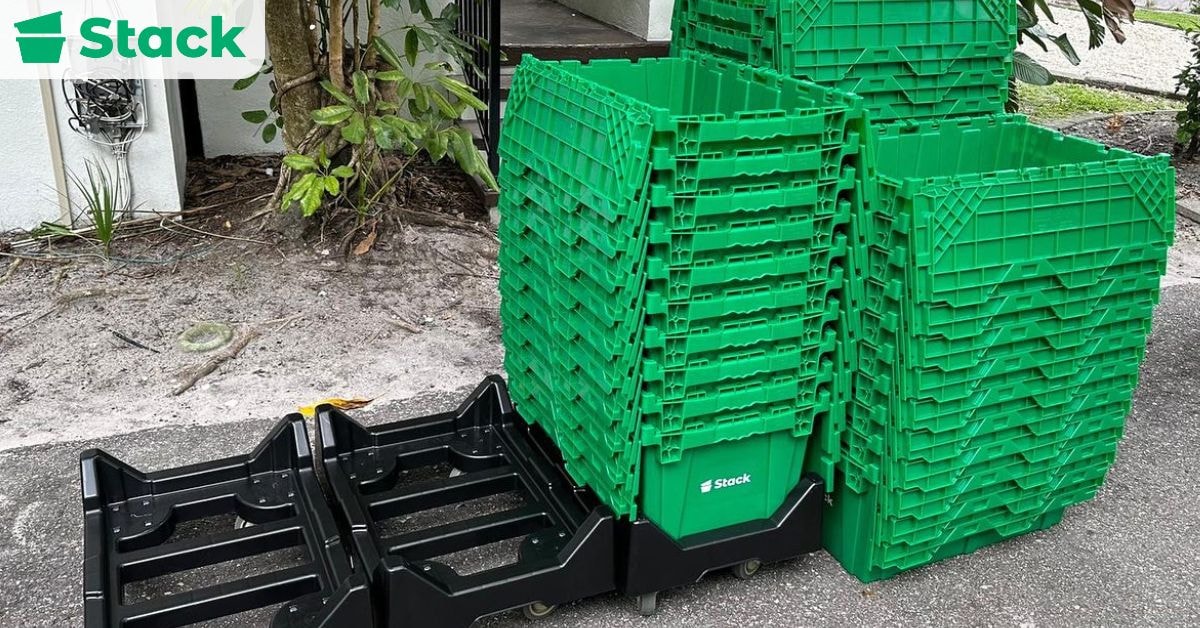
Of course, your inventory is only as effective as the packing system supporting it. At Stack Moves, our reusable moving bins are designed to simplify packing, transportation, and unpacking from start to finish. If you’re planning a move and want a more organized, efficient experience, contact us today to learn more about our moving box rental options and get started.
Frequently Asked Questions
Below are answers to some of the most common questions we hear from customers preparing for an upcoming move. Along with practical advice to help you stay organized and avoid unnecessary stress.
How Detailed Should a Moving Inventory List Be?
Your moving inventory list should be detailed enough to help you find your belongings throughout the moving process. For everyday household goods you can get away with writing down simple descriptions. But when it comes to more valuable items such as furniture, electronic devices, and collectibles, you should include more important details like serial numbers and estimated value. A detailed inventory list makes it easier to keep track of your possessions and can be useful if issues arise later.
Should I Inventory Every Item Before Moving?
Not necessarily. Realistically, it would be extremely time-consuming to attempt documenting every single item before moving. Especially if you live in a large household. It’s much more efficient to group similar items together where it makes sense. This approach helps you stay organized without turning the packing process into an overwhelming task
What Is the Best App for Creating a Moving Inventory List?
It depends. The two major factors that should guide your choice are that you should be able to make it as detailed as you want. And you should be able to update it as easily as your need to. Some apps that meet this criterion are Sortly and MoveAdvisor, which allow you to create a moving inventory, upload photos, and keep everything organized in one place. If you’d prefer to use a spreadsheet, Google Sheets is a flexible option that allows you to customize your inventory list and access it from anywhere.
Can a Moving Inventory List Help With Insurance Claims?
Yes, and that’s a major reason you should have one before moving day. A well-documented inventory list can provide evidence of ownership and help support an insurance claim if items are lost or damaged during the move. Including photos, receipts, and important details about valuable items can make the claims process much smoother for both you and your insurance company.
How Do Professional Movers Create Inventory Lists?
A professional moving company will typically create an inventory list as part of its moving services, especially for long-distance relocations. Movers often assign numbers to items or boxes, record their condition, and document anything that may require special handling. This helps both you and the moving company keep track of belongings throughout the entire moving process.
When Should I Start Making a Moving Inventory List?
Ideally, you should begin several weeks before your move date so you have ample time to sort through belongings, remove nonessential items, and update your moving checklist as plans change. Giving yourself enough time makes it much easier to create an accurate inventory and support a smooth and successful move into your new house.
Rent Plastic Bins for Your Move!
Moving with cardboard boxes is a pain. Get pre-assembled bins delivered to your door and move hassle-free with Stack!
Stack eliminates the need for you to source, break down, or fill up your trash can with cardboard boxes.