
How to Label Moving Boxes Like a Pro (Step-by-Step Guide)
One of the biggest frustrations when labeling moving boxes is realizing too late that your system doesn’t actually help you find anything. The best way to label boxes for moving is to use a clear system that combines room names, box numbers, and detailed descriptions so everything is easy to track and unpack. When done right, labeling can shorten your moving time by helping you avoid the stress of digging through random boxes just to find essentials.
Stack Moves is a moving box rental company that helps make packing and organizing your move simpler from the start. With our rental bins, you don’t just get durable moving boxes, you also get labels included, so you can start packing with a consistent system from day one. If you want a simpler, more organized move without the usual hassle, contact us today to reserve your bins and get started.
In this guide, you’ll learn a step-by-step method to label your boxes quickly and unpack without the usual stress.
Table Of Contents
- Step-by-Step Guide to the Best Way to Label Boxes for Moving
- Why Labeling Boxes Properly Makes Your Move Easier
- Tools and Materials Needed for Labeling Moving Boxes
- Best Practices for Labeling Moving Boxes
- How to Label Different Types of Items
- Common Mistakes to Avoid When Labeling Boxes for Moving
- Want a More Organized, Stress-Free Move?
- FAQs
- Is Color Coding Moving Boxes Really Worth It?
- How Do You Create a Color Key for Moving Boxes?
- What Is Proper Labeling for Moving Boxes?
- Should You Use Colored Stickers or Color-Coded Labels?
- How Do You Avoid Mix-Ups When Labeling Moving Boxes?
- Do Professional Packers Label Boxes for You?
- What Should Be Included on a Moving Box Contents List?
Step-by-Step Guide to the Best Way to Label Boxes for Moving
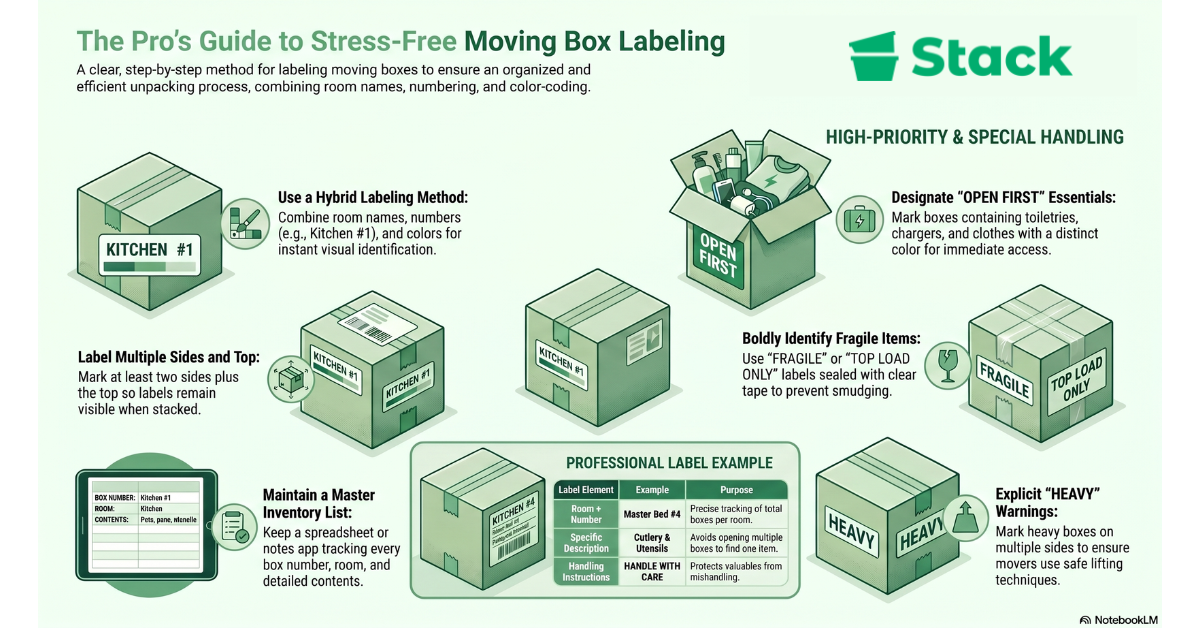
The key to labeling boxes is to create a method that helps you quickly identify, track, and place every box without second-guessing. Follow these steps to label your boxes efficiently and make both moving day and unpacking far more manageable.
1. Choose a Labeling System
Before you even touch a box, decide how you’re going to label everything. You can label by room, use colors, assign numbers, or combine all three. Keep in mind that it’s important to stay consistent from the very first box to the last. Most people find that a hybrid system works best, for example, labeling by room, adding a number (Kitchen #1, Kitchen #2, etc.), or using a color for quick visual sorting. This way, even if one part of the label isn’t clear at a glance, something else will be. That extra layer of clarity makes it easier for your movers to load and unload
2. Assign Each Box a Room and Number
Every box should have a clear destination. Start by writing the room it belongs to, then assign it a number so you can keep track of how many boxes belong to that space. This becomes especially useful when you’re unloading. If you know there are 12 boxes for the bedroom and only 10 show up, you’ll catch the issue immediately instead of days later. It also helps movers place boxes correctly without constant direction, which speeds everything up, especially when you already know how many boxes you need to move ahead of time.
3. Write Clear, Detailed Descriptions
A label that just says “kitchen” isn’t doing you many favors once you start unpacking. Instead, take a few extra seconds to write what’s actually inside, like “cutlery or cooking utensils” rather than something vague. You don’t need to list every single item, just enough detail so you know what to expect when you pick up that box later. This becomes incredibly helpful when you’re looking for something specific and don’t want to open five different boxes to find it.
4. Label Multiple Sides of Each Box
It’s tempting to label the top of a box and move on, but once boxes start stacking up, that label disappears. Adding labels to at least two sides, along with the top, means you’ll be able to identify boxes no matter how they’re positioned. You won’t need to rotate boxes or dig through stacks just to figure out what’s what.
5. Create a Master Inventory List
As you number your boxes, keep a running list of what each one contains. Your inventory list can be as simple as a notes app or spreadsheet, but it should include the box number, room, and a short description of what’s inside. If something goes missing or gets delayed, you’ll know exactly what you’re looking for instead of guessing. It also makes unpacking more intentional since you can prioritize certain boxes instead of opening things at random.
6. Mark Priority & Special Boxes
Not all boxes should be treated the same, and your labels should reflect that. Set aside boxes that contain essentials, fragile items, or anything heavy, and mark them clearly so they stand out right away. Something like “OPEN FIRST” or “FRAGILE” should be bold and easy to spot, even from a distance. This helps prevent delicate items from being mishandled and makes sure you’re not digging through everything just to find your toothbrush or phone charger on the first night.
Why Labeling Boxes Properly Makes Your Move Easier

Labeling moving boxes is important to easily identify items, reduce stress, save time, and protect fragile items for easy identification when moving. Without a clear labeling system, you end up opening multiple boxes just to find one item.
One of the simplest ways to make labeling more effective is to use a color-based system alongside clear written labels. Assigning colors to different rooms, like blue for the kitchen or yellow for the bedroom, helps movers place boxes faster without needing constant direction. When combined with short descriptions and room names, it creates a system that’s easy to follow even in a rushed, moving environment.
The challenge is that most people underestimate how many boxes they’ll need to label and how many supplies that actually takes. That’s where Stack’s moving box rentals help simplify the process. When you rent from us, you get durable boxes along with the right labeling materials, so you’re not scrambling for extras mid-pack.
Tools and Materials Needed for Labeling Moving Boxes
Start with the basics, a good permanent marker for clear, bold writing. Also get some labels or stickers that give you space to include the room, box number, and a brief description of the contents.
From there, you can build a more efficient system with a few extras. Colored tape or color-coded labels are useful if you’re assigning different colors to different rooms, while a tape dispenser helps you seal and reinforce labels so they don’t peel or smudge during the move. If you prefer a more structured approach, printed labels or templates can help keep everything consistent across all your boxes.
Best Practices for Labeling Moving Boxes
Start by sticking to one clear format across all your boxes, whether that’s “Room + Number + Description” or a variation that works for you. When every label looks and reads the same way, it becomes much easier to scan, sort, and unpack without second-guessing anything. If you want to take things a step further, learning how to organize moving boxes can also help you create a system that works before, during, and after the move.
Clarity matters just as much as consistency. Use bold, easy-to-read writing or printed labels, and avoid cramming too much information into a small space. A label should be readable from a few feet away, especially on a busy moving day when boxes are being moved quickly.
Placement is another detail that’s easy to overlook but makes a big difference. Always label more than one side of the box, along with the top, so you can identify it no matter how it’s stacked or carried. This saves you from having to turn boxes around just to figure out where they belong.
Finally, make sure your labels actually last through the move. Smudged ink or peeling labels can undo all your effort, so it’s worth using quality markers and sealing labels with clear packing tape. A few extra seconds here ensures your system holds up from packing to unpacking without falling apart halfway through.
How to Label Different Types of Items

While your overall labeling system should stay consistent, certain items need extra clarity so they’re handled properly and easy to find when you need them. It goes without saying that these small adjustments based on what’s inside each box can save you a lot of time and prevent costly mistakes once everything is in motion.
Fragile and Valuable Items
Fragile items need to stand out immediately, not blend in with everything else. Use bold labels like “FRAGILE” and add simple instructions such as “Handle With Care” or “Top Load Only” so there’s no guesswork when the box is being moved. Using a bright, noticeable color can also help these boxes catch attention quickly, especially during a busy move. To make sure the message doesn’t get lost, seal the label with clear tape so it stays visible from start to finish.
Frequently Needed Items
For items that you’ll need immediately upon arrival, you should label the moving boxes as “essentials” or “open first.” These might include things like toiletries, chargers, a change of clothes, or basic kitchen items. Giving these boxes a distinct color or marking makes them easy to spot, even in a room full of boxes.
Heavy and Large Items
Heavy boxes should be labeled in a way that helps people handle them safely. Clearly marking them as “HEAVY” makes it easier for movers or helpers to approach them with the right care from the start. Adding the label on multiple sides ensures it’s visible no matter how the box is lifted or placed. Keeping this information obvious helps prevent strain, damage, and unnecessary back-and-forth during the move.
Common Mistakes to Avoid When Labeling Boxes for Moving
It’s often the small labeling mistakes that cause the biggest headaches once you start unpacking. What looked like a quick fix during the packing phase can easily lead to confusion. That’s why it’s important to know what to avoid for an effective labeling system from the start.
Labeling Only One Side of the Box
It’s easy to write a label on the top of a box and move on, especially when you’re trying to pack quickly. The problem shows up when boxes are stacked or turned sideways and that label is no longer visible. Instead, label at least two sides and the top so you can identify each box from any angle without having to move it around.
Using Vague or Generic Descriptions
Labels like “miscellaneous” or just “bedroom” don’t give you much to work with when it’s time to unpack. People usually do this to save time, but it ends up costing more time later when you’re opening multiple boxes to find one item. Be specific enough to recognize what’s inside at a glance, even if it’s just listing the main items in the box.
Skipping a Numbering or Inventory System
Many people rely on memory or assume they’ll remember what went into each box, especially for smaller moves. Adding numbers to your boxes and keeping a simple inventory list gives you a clear way to track everything and makes unpacking far more organized.
Not Marking Fragile or Special Items Clearly
Fragile items often get packed carefully but labeled poorly, which defeats the purpose. If a box isn’t clearly marked, movers or helpers may handle it like any other box without realizing what’s inside. Use bold labels like “FRAGILE” or “HANDLE WITH CARE,” and make them easy to spot so those boxes get the attention they need.
Being Inconsistent With Your Labeling System
Switching between different labeling styles creates confusion. This usually happens when people don’t plan their system before they start packing. Pick one clear system (or a combination) and stick with it from beginning to end so every box follows the same logic.
Waiting Until the Box Is Full to Label It
A lot of people wait until a box is sealed before thinking about labeling it, which leads to rushed or incomplete labels. By that point, it’s easy to forget exactly what went inside or skip details altogether. Label boxes as you pack them so the information is accurate and you don’t have to rely on memory later.
Want a More Organized, Stress-Free Move?

Labeling your moving boxes properly makes the entire moving process smoother from start to finish. When every box is clearly marked with its contents, destination, and any special instructions, you spend less time searching and more time settling into your new home.
Having the right packing supplies makes labeling your boxes even easier. Our moving box rentals come with durable bins and labels included, so you can start packing with a clear, consistent approach from day one. Ready to make your move more organized and stress-free? Contact us today to reserve your boxes and get started.
FAQs
Even with a solid labeling system, there are always a few details that can trip you up once packing begins. Most of these questions come down to making your system clearer, faster, and easier to follow on moving day. Here are practical answers to help you stay organized and avoid unnecessary mix-ups.
Is Color Coding Moving Boxes Really Worth It?
Color coding moving boxes can be a game changer, especially if you’re dealing with multiple different rooms. Assigning a corresponding color to each room makes it easy for movers to quickly sort boxes without reading every label. When done right, it helps avoid confusion and keeps everything moving in the right direction.
How Do You Create a Color Key for Moving Boxes?
A color key is simply a guide that matches each room in your new house to a specific color. You can write this key on colored paper and place it on the wall or keep it on the same page as your inventory list for easy reference. This way, anyone helping with the move can quickly understand which boxes belong in which spaces.
What Is Proper Labeling for Moving Boxes?
Proper labeling means including the room, a brief description of the contents, and any special instructions on every box. This ensures that boxes are placed in the right rooms and unpacked without guesswork. Keeping your format consistent across all boxes is what makes the system actually work.
Should You Use Colored Stickers or Color-Coded Labels?
Both colored stickers and color-coded labels work well, so it really comes down to what’s easier for you to use consistently. Stickers are quick to apply, while labels can include more detailed information alongside the color. Either way, the goal is to make each box instantly recognizable at a glance.
How Do You Avoid Mix-Ups When Labeling Moving Boxes?
Mix ups usually happen when labels are unclear, inconsistent, or missing key details. Sticking to one system and making sure every box follows it helps keep everything organized from start to finish. Adding a contents list also gives you a backup reference if anything gets misplaced.
Do Professional Packers Label Boxes for You?
Yes, professional packers typically handle labeling as part of their packing process. They use structured systems, often combining numbering, color coding, and detailed descriptions to keep everything organized. This level of proper labeling helps ensure a smoother, more stress-free move.
What Should Be Included on a Moving Box Contents List?
A contents list should include the box number, the room it belongs to, and a short description of what’s inside. Keeping this list on the same page or in one place makes it easy to track everything during the move. It also helps you prioritize what to unpack first once you arrive.
Rent Plastic Bins for Your Move!
Moving with cardboard boxes is a pain. Get pre-assembled bins delivered to your door and move hassle-free with Stack!
Stack eliminates the need for you to source, break down, or fill up your trash can with cardboard boxes.