
List of Expenses When Moving Out
Moving expenses typically fall into four categories: travel and transportation costs, moving supplies and services, home setup costs, and hidden extras. Put together, these expenses can cost between $1,000 and $3,000 for local moves and well over $10,000 for long-distance moves. The good news is, with the help of a moving cost checklist, you can budget for every expense in time for moving day without missing anything important.
At Stack Moves, we’ve helped movers in the United States plan budget-friendly moves through our plastic bin rental service. Renting moving boxes is one of the easiest and most convenient ways to cut down your moving costs without compromising on quality. Contact us today to secure your moving bins for rent.
In this guide, we’ll walk through every expense category you need to plan for, from transportation and packing supplies to setup costs in your new home. We’ll also flag the hidden costs people tend to forget and share practical tips to keep your move affordable at every stage.
Table Of Contents
- 23 Expenses When Moving Out You Need to Budget For
- 1. Moving Truck/Van Rental
- 2. Fuel and Travel Costs
- 3. Flights and Hotel Stays
- 4. Professional Moving Company Fees
- 5. Professional Packing Services
- 6. Cleaning Services
- 7. Storage
- 8. Packing Supplies
- 9. Moving Equipment Rentals
- 10. Moving Insurance
- 11. Renter’s Insurance
- 12. Security Deposit
- 13. Rental Application Fees
- 14. Utility Setup Fees & Utility Deposits
- 15. Furniture and Appliances
- 16. Household Essentials and Decor
- 17. Repairs and Maintenance
- Hidden Moving Costs to Watch Out For
- One-Time Costs vs. Monthly Living Expenses
- Smart Money-Saving Tips for Moving
- Looking to Lower Your Moving Expenses?
- Frequently Asked Questions
23 Expenses When Moving Out You Need to Budget For

Your goal should be to build a moving-out budget that fits the unique needs of your move. This way you can account for everything and you’ll avoid any last-minute surprises. All figures in this guide are estimated national averages, not quotes; actual costs depend on your city, provider, and move size.
1. Moving Truck/Van Rental
This is the first cost most people think of when planning for a move. For those of you who are planning to DIY your move, it can also be your biggest expense. Most rentals will base your rates off factors such as truck size, moving distance, and how many days you’re renting for. Let’s not forget that you’ll also be covering the fuel costs for these vehicles. It’s very important to book early if you’re moving during peak season (May through September), because trucks get scarce and pricier fast.
2. Fuel and Travel Costs
There’s almost no escaping this one. Even if you aren’t renting a truck, you’d still have to drive from your old address to the new one. And the extra miles you rack up doing multiple trips to move your belongings can quickly inflate your gas bill. If you’re relocating over a long distance, you might be looking at two or three days on the road with fuel stops the whole way.
3. Flights and Hotel Stays
If you’re moving between states, chances are you don’t plan to drive the whole way. Even if you are, you’d still need to book a hotel to spend the night. By the time you throw in other temporary living costs like takeout, you’ve already spent a few hundred dollars before getting your new home. Needless to say, the earlier you book, the lower rates you’ll get.
4. Professional Moving Company Fees
If loading your couch onto a truck doesn’t sound like your cup of tea, it might be a good idea for you to let the pros handle it. Local movers typically charge $80 to $150 per hour for a two-person crew, with rates at the top of that range in major metro areas. It’s always a good idea to get at least three quotes from different professional movers, since the range between the cheapest and priciest movers for the exact same job can be enormous.
One more thing worth budgeting for is tipping. You may or may not have already asked yourself “should I tip my movers?” While it’s not required, it’s usually common practice and can add up to 20% more onto your total moving cost.
5. Professional Packing Services
The cost often depends on the size of your home and the service level you need. While it’s more expensive than packing yourself, professional help ensures your belongings are protected. This is especially true when combined with liability insurance. For many, the peace of mind makes this an investment worth considering.
6. Cleaning Services
Both your old and new homes need to be cleaned, either to leave behind a good impression or to create a fresh, welcoming start. While DIY cleaning keeps costs low, hiring a professional service can save time. It can also deliver a more thorough job, especially if you’re juggling family members, work, or other expenses. Depending on your budget, hiring a professional cleaning service is one of those necessary expenses that save you time when juggling a hectic schedule.
7. Storage
If your move-out and move-in dates don’t align, renting a storage unit may be unavoidable. They’re also helpful if you’re downsizing or trying to arrange temporary housing. While short-term rentals are affordable, using long-term units introduces ongoing costs that can quietly eat into your budget over time. Before paying registration fees and deposits, weigh whether it’s worth keeping everything or letting go of items you no longer need.
8. Packing Supplies
Packing materials are a must-have in any move. The basics include moving boxes, bubble wrap, packing tape, and labels. You may also need extra tools like dollies or straps, which add to the cost but make handling heavy belongings much easier. Most people look for cardboard boxes because they have lower upfront costs. But they tend to break down in humid weather or collapse under heavy weight. Plastic moving bins are a sturdier alternative if you want durability.
9. Moving Equipment Rentals
It’s nearly impossible to get through some moves without much-needed gear such as dollies, furniture sliders, and moving blankets. But the reality is that these do not come included with a basic truck rental. The individual rental prices for this equipment might not cost much, but once you add it up, you’d be in for a shocker.
10. Moving Insurance
The coverage moving companies include by default is minimal. Under federal FMCSA Liability and Protection guidelines, interstate movers are only required to offer free “released value” coverage at $0.60 per pound. What this means is that a 20-pound damaged item is reimbursed at $12, regardless of its actual worth. Full-value protection offers better protection at a higher cost, typically 1% to 2% of your shipment’s declared value. It’s worth it for anything genuinely valuable. Be sure to always read the fine print of your contracts. Don’t just assume your coverage reflects the actual costs of replacing damaged items.
11. Renter’s Insurance
Renters’ insurance is genuinely one of the cheapest ways to protect thousands of dollars in belongings. The Insurance Information Institute puts the national average premium around $171 a year. Many landlords now require it as a lease condition.
12. Security Deposit
Almost every rental requires a security deposit, typically equal to one to two months’ rent. This is meant to be a refundable expense in theory, but in reality, most landlords deduct for damage, excessive wear, or unpaid balances. You’re safer budgeting to never see that money again. Ask upfront exactly what conditions the deposit is contingent on getting back, in writing, before you sign anything.
13. Rental Application Fees
Every apartment you apply to may charge a non-refundable application fee to cover credit and background checks, usually somewhere in the $30–$75 range per application. If you’re applying to multiple places, and most people do, those fees stack up fast for something you’ll never see again if you don’t get approved. It’s wise to budget for a handful of these, not just one.
14. Utility Setup Fees & Utility Deposits
When setting up your new home, activation fees for water, internet, and electricity will temporarily increase your monthly expenses and future utility bills. These may look small, but deposits or same-day/weekend services can quickly raise the total. It’s advisable to contact your provider early so you can plan for these expenses and ensure everything is running smoothly by move-in day.
15. Furniture and Appliances
Big-ticket purchases like furniture and appliances should be budgeted for early. It shouldn’t come as a surprise that your new home doesn’t come with a washer, dryer, or fridge. Outfitting a new home turns into one of your major expenses, so prioritize what you need right away and consider secondhand options to save cash.
16. Household Essentials and Decor
To truly make your house a home, you’ll want to personalize your space with decor and other practical items. Things like curtains, rugs, cleaning supplies, or cookware might not seem significant, but they add up when bought all at once. Planning a checklist for essentials and gradually adding decorative items helps you avoid overspending.
17. Repairs and Maintenance
Setting aside cash for unexpected expenses prevents surprises after you’ve just covered your move. Even in homes that look ready, small issues like leaky faucets, loose outlets, or squeaky doors often surface in the first few weeks. For renters, landlords may cover some repairs, but homeowners must pay out of pocket. These aren’t always optional costs since fixing them improves safety and comfort.
Hidden Moving Costs to Watch Out For

The expenses everyone plans for are rarely the ones that blow a budget. Because most of these won’t show up on a mover’s quote, they’re left unaccounted for. Here’s what tends to catch people off guard:
18. Tolls and Parking Fees
City moves or long-distance trips bring extra charges for bridges, highways, and street parking meters. In busy cities, you may also need to pay for a temporary permit to reserve a spot for the truck outside your building. Skipping this step can lead to parking tickets or force movers to park far away, which wastes time and money.
19. Pet Transportation
Moving with pets brings extra costs like airline fees, crates, and vet visits for updated records. If you drive long distances, hotels often charge additional fees for animals. Even during a local move, paying for a day of pet care keeps your animals safe while doors stay open all day.
20. Childcare on Moving Day
A lot of parents forget to account for babysitting or daycare costs on moving day. Having someone watch your kids allows you to focus on the move without worrying about their safety.
21. Utility Disconnection Fees
People usually expect setup charges at their new place, but utility companies often charge fees to close your old accounts too. These final administrative charges usually show up on your last bill. Checking with your providers ahead of time helps you avoid unexpected charges when you cancel your service.
22. Meals During Unpacking
Food costs usually go up during the first few days because your kitchen supplies are packed in boxes. You will likely rely on delivery, takeout, or restaurants until you unpack and stock your fridge. “People remember to budget for the truck and forget they’ll be ordering takeout for three or four nights straight,” says Sean McGrath. Setting aside money for eating out keeps these quick meals from breaking your budget.
23. Lost Wages or Time Off Work
Taking days off work to manage your move reduces your paycheck if you do not have paid time off. For hourly workers and freelancers, missed hours mean direct financial loss. Having a small financial safety net helps cover those lost wages while you settle in.
One-Time Costs vs. Monthly Living Expenses
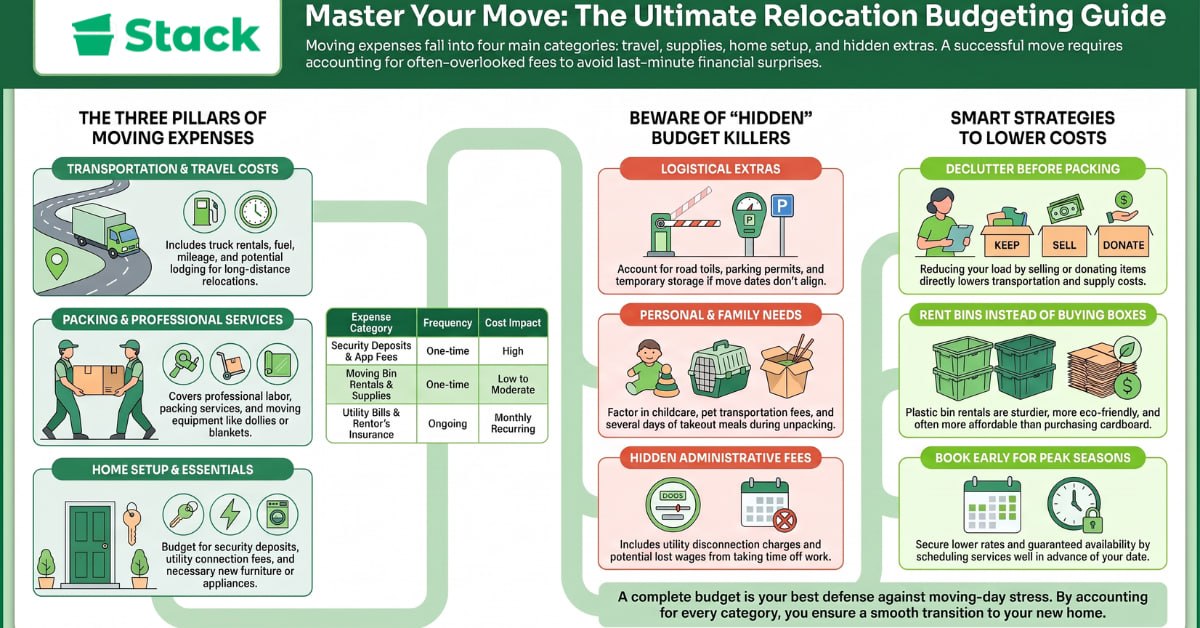
Every dollar you spend on a move falls into one of two buckets. A one-time cost tied to the move itself, or an ongoing monthly expense that becomes part of your regular budget once you’ve settled in. The table below breaks both out side by side, so you can see what the move costs and what it costs to actually live there afterward.
| Expense | Type | Typical Cost |
|---|---|---|
| Professional movers | One-time | $80 – $150 per hour for a two-person crew |
| Packing supplies | One-time | $50 – $200 |
| Security deposit | One-time | 1–2 months’ rent |
| First month’s rent | One-time | $1,749 (national avg.) |
| Application fees | One-time | $30 – $75 per application |
| Utility setup fees | One-time | $50 – $200 per provider |
| Storage unit | Short-term | Varies by unit size and how long you need it |
| Hidden costs (tolls, pet transport, childcare, etc.) | One-time | Varies, often $100 – $500 combined |
| Monthly rent | Ongoing | Varies by home size and location |
| Utility bills | Ongoing | $400 – $610 per month |
| Groceries | Ongoing | $346 – $543 per person, per month |
| Renter’s insurance | Ongoing | About $171 per year |
Figures are estimated averages and will vary by city, home size, and season. Use this as a starting framework, not a fixed quote.
Smart Money-Saving Tips for Moving

Cutting your moving costs comes down to five steps, in this order.
- Declutter before you pack. One of the easiest ways to reduce moving costs is to lighten your load. You can do this by either selling or donating items you no longer need. The fewer items you take with you, the less you’ll spend on packing supplies and transportation.
- Build a realistic budget. Once you know what’s actually coming with you, walk through each category above and put an amount you’d be comfortable spending next to it. As Sean McGrath puts it, “the renters who save the most aren’t the ones who spend the least; they’re the ones who know exactly where their money is going before moving day.”
- Track and control your spending. Moving often comes with small, unexpected costs, and it’s easy to go over budget. Monitoring your expenses as they land and delaying non-essential purchases keeps your finances in check.
- Build an emergency fund. A small cushion covers the unplanned but unavoidable expenses, the repair you didn’t see coming or the extra night in a hotel.
- Rent your moving boxes instead of buying them. Rental services are usually bundled with extras like labels and markers, which cuts your spending on packing supplies at the same time.
Looking to Lower Your Moving Expenses?

With a list of your moving expenses, you can easily plan for your move without the fear of going over budget. However, an incomplete budget could put you at risk of unexpected costs. It’s important to remember that every move is different, and costs can vary depending on distance, services, and personal needs. That’s why the golden rule for creating a realistic budget that reflects your situation is to take all possible expenses into consideration.
If you’re planning your next move on a limited budget, one of the simplest ways to lower your moving expenses is to rent your moving boxes instead of buying them. That’s where Stack Moves comes in. With over 20 service locations across the U.S., our plastic bin rentals are built to help you save costs and cut down on moving-day stress. Schedule your plastic bin rental today!
Frequently Asked Questions
Got questions about budgeting for your big move? We answered some of the most common questions we get from movers planning to move out. Don’t see your question here? Give us a call and we’ll respond.
What Do You Have to Pay For When You Move Out?
When you are moving out, your main upfront housing costs will usually be your first month of rent, a security deposit, and apartment application fees. You will also need to set money aside for moving supplies, truck rentals or professional movers, and initial utility connection charges.
Is $3,000 Enough to Move Out for the First Time?
A $3,000 budget can work for a local move into a small apartment, especially if your rent and security deposit are on the lower side. That said, it can disappear pretty fast if you need to buy big furniture items and handle other major expenses. As a good rule of thumb, it is always a smart idea to build an emergency fund that covers 3 to 6 months of expenses so you are totally covered after you settle in.
What Are Some Hidden Expenses When Moving?
Hidden costs often include cleaning services, storage units, and moving insurance. You may also run into extra fees from moving companies, such as charges for heavy or fragile items.
What Bills Do You Need to Set Up When You Move Out?
You will want to reach out to local providers early enough to set up basic utilities like electricity, gas, water, trash, and internet. It is also super important to get renters insurance sorted out, since most landlords will ask for proof of coverage before handing over your keys. Lastly, remember to update your billing address for car insurance, credit cards, and streaming subscriptions so you don’t miss any important mail.
Is It Better to Rent or Buy Moving Boxes?
Renting plastic moving bins is almost always more affordable and convenient than buying cardboard boxes. Rental companies deliver sturdy, water-resistant bins right to your front door and pick them up when you are done unpacking.
Rent Plastic Bins for Your Move!
Moving with cardboard boxes is a pain. Get pre-assembled bins delivered to your door and move hassle-free with Stack!
Stack eliminates the need for you to source, break down, or fill up your trash can with cardboard boxes.