
Factors to Consider When Relocating a Business
The key factors to consider when relocating a business are cost, location, legal rules, workforce, IT, and customer impact. Each single one has its own price tag, and missing out on any single factor can cause downtime for weeks. Considering all these factors before moving your business helps keep things under budget and ensures that your business operations stay smooth.
If you are planning to move your business and want to simplify the process of packing and moving day, Stack Moves can assist you. Stack delivers reusable plastic moving bins, dollies, and labels to your office, cleaned and sanitized between moves, then picks up the empty bins once you’re unpacked. Contact us today to get your bins scheduled around your move date.
This article covers the factors that shape a business relocation, a step-by-step budget, and answers to common relocation questions.
Key Takeaways
Location decides your taxes, zoning, wages, and utility costs, so research it before you compare rents. The federal minimum wage is $7.25 an hour, but many states set higher rates, which changes payroll after a move. Plan three to six months out, get three written quotes, and back up IT data before anything moves.
Why Businesses Relocate
Companies that relocate in order to expand generally need more space for workstations, storage, or production compared to their current location. Lower housing prices encourage other actions because cheaper space strengthens finances for a long time. Some companies want to get closer to their main suppliers since being nearer reduces both shipping costs and delays. Others strive to get closer to their target customers, which enhances communication and increases customer loyalty. Regardless of why you’re making this move, it should align with your business objectives and also allow for future expansion.
Market Research and Feasibility
Conducting a feasibility study lets you decide if moving forward with something makes sense before spending any money. Market research should cover market demographics, market trends, and local market conditions in each prospective location. Analyzing local demographics and assessing customer demand lets you know if actual customers are close by. Market dynamics such as new competitors or shifting demand tell you whether that advantage will last. Identifying potential risks before you move helps you avoid most of the difficulties that crop up later.
Financial Considerations During Business Relocation

Handling physical assets is only one piece of the picture when it comes to costs, and running expenses and taxes usually play a bigger role. A successful relocation balances financial costs against operational disruption, which takes careful consideration of every line. Evaluate each financial angle before you pack, so surprises don’t hurt the bottom line or your business objectives later.
Cost of Commercial Real Estate
When relocating a business, commercial real estate is typically the biggest single cost involved. Real estate prices can affect operational costs, so look at comparing different neighborhood expenses. Look past the first-year rent to the full lease term, including property taxes and maintenance charges. A space that looks cheap can carry a higher cost once it needs a buildout, new wiring, or extra parking. Small Business Administration notes that prices for property, rental rates, insurance premiums, and utility bills can vary widely depending on location.
Business Tax Implications and Incentives
Changing an address can affect your tax situation from corporate tax rates to sales taxes and local licensing fees. Considering that tax implications impact profitability over many years, you should model those before deciding on your target market. Local governments often offer business incentives, such as tax credits or tax breaks, to attract new employers. Find out about any potential tax incentives from your local office of economic development before signing anything. On the federal side, 26 U.S.C. § 162(a) of the Internal Revenue Code lets a business deduct ordinary and necessary business expenses. Some relocation costs may fall under that rule, but confirm the details with your accountant before tax season.
Moving Expenses and Operational Downtime
Office moving costs pile up quickly once you add in the costs of hiring movers, transportation, insurance, and IT setup. Direct costs show up on quotes, but hidden costs like lease overlaps and specialized moving logistics often do not. Cost overruns are common on relocations, so estimate each line early and keep a cushion in the budget. Downtime brings lost productivity and lost revenue, and it never appears on any quote. Make sure to plan the whole move so that downtime happens as briefly as possible.
Utility and Operating Costs
Utility costs for electricity, gas, and internet vary by region, and they change your operating budget after the move. Reliable utilities are essential services, since an outage at the new site stops business operations cold. Before signing the lease at your new place, get quotes for services so that you know what providers they will allow. Compare both: lower operating costs mean you can offset higher rent costs.
How to Choose the Right New Business Space
Location affects hiring, customer access, and compliance all at once, so it deserves more than a rent comparison. The SBA says where you set up your business affects what taxes apply, what zoning rules impact your business, and what regulations also affect it. An ideal new location supports current operations and also greatly enhances proximity to future target customers.
Local Infrastructure and Access
Quality of infrastructure at this new location directly impacts efficiency and customer satisfaction. Before shortlisting a building, check if you have good, fast internet access, a reliable electricity supply nearby, and convenient storage space available. Having easy access to major highways and reliable public transportation allows packages to get there promptly and also expands your pool of potential hires. Before taking a second look around, make sure to count parking spots because parking is important both for visitors and employees. Zoning ordinances can restrict what activities happen at a property, so confirm the zoning for your type of work.
Quality of Life and Local Culture
The business environment around your office affects employee satisfaction as much as the office does. Safety, quality healthcare, and recreational amenities all shape whether people want to work there long term. Having proximity to schools helps develop your workforce and keeps you constantly replenished with fresh talent. Community engagement and local culture matter too because good alignment with those factors leads to higher job satisfaction and retention.
Legal and Regulatory Guidelines for Moving Your Business
Regulatory compliance is not optional for any business that moves, and rule changes sometimes prompt the move itself. Operating without the right local, state, or federal licenses can bring heavy fines or even a suspension. Zoning rules can lead to penalties or forced closings, and there are also environmental regulations that may apply to manufacturing or storage work. Research every rule that applies at the new location well before moving day.
Labor Laws by State
Employment laws vary by state, and wage rules are where most relocating businesses feel the change first. The federal minimum wage set by the Fair Labor Standards Act, 29 U.S.C. § 206, has been $7.25 per hour since July 2009. Many states have a higher minimum wage, and according to the Department of Labor, as of July 2026, Hawaii has this rate listed at $16.00. Review state rules on wages, overtime, safety standards, and working conditions before the first payroll at the new site.
Registering Your Business in a New State
Your business structure decides how much paperwork a move across state lines requires. Starting a sole proprietorship usually needs only a simple registration in the new state. A corporation can register as a foreign company in this new state rather than dissolve. Dissolving a corporation brings filing fees and possible tax consequences you may not need. An LLC can create a new entity in a new state or merge with an existing one. Ask your attorney which way works for your situation regarding ownership and tax situation.
How to Move Your Business With Less Disruption

Moving a business takes more than packing boxes, and the plan matters more than the truck. Thorough planning of the logistical factors in the relocation process cuts disruption, even for something as basic as organizing office equipment. A phased plan for transition where departments move at different times keeps other parts of the company running smoothly.
How to Hire Professional Movers for Office Relocation
Moving offices is very different from moving homes even if your team has done that before. IT equipment and confidential documents need specialized handling to prevent damage, data loss, or extended downtime. Doing your own packing for desks and supplies cuts costs, but a complete DIY move usually results in broken equipment or delays. General moving companies may lack office experience too, so ask direct questions before hiring professional movers.
Inquire whether movers handle packing and unpacking or if that will be arranged by you and whether they provide moving boxes. Make sure you have short-term or long-term storage options in case the new place isn’t ready on time. Ask how they safeguard their computers, servers, and other electronic devices against physical harm and loss of data. Finally, check if the crew can put computers back together so that your office can get running quickly again.
Professional Movers vs DIY
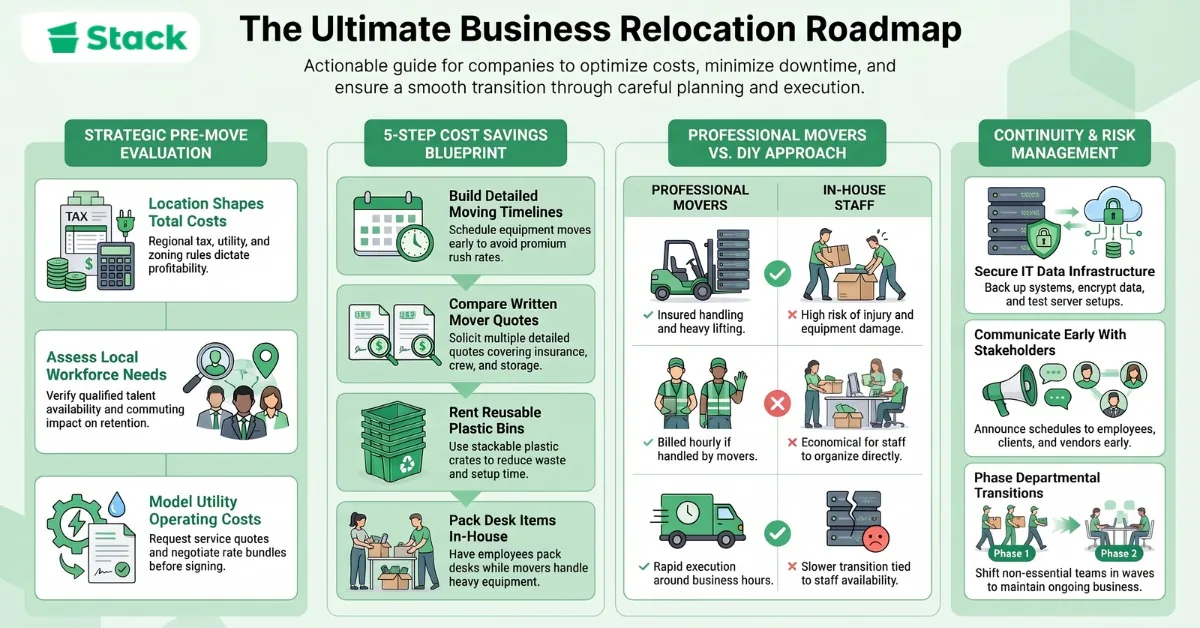
This table contrasts costs and risks between doing an office move professionally versus trying to do it yourself. Most companies fall somewhere in between: movers handle large items and office staff pack up their own desks as well.
| Area | Professional movers | DIY move |
|---|---|---|
| Upfront cost | Higher, billed hourly or as a flat fee | Lower: Mostly for truck rental and supplies. |
| Staff time | Minimal, as the crew performs the lifting. | High, since staff are pulled from their work |
| Equipment risk | Lower, with trained handling and insurance. | Higher, with a greater risk of damage and injury. |
| Downtime | Shorter, planned around business hours | Longer, tied to staff availability |
| Best fit | IT equipment, servers, heavy furniture | Desks, files, office supplies |
How to Pack and Organize Office Equipment
Organizing and safeguarding your things is what packing is about, not just cramming everything into boxes. Start by collecting the right supplies because packing too lightly results in overpacking and things getting damaged. A moving box calculator can estimate how many containers you would need for your whole office. You may also be weighing cardboard boxes vs plastic bins, and the main consideration is durability. Cardboard costs less upfront, but plastic bins offer better protection for heavier or delicate office equipment.
Pack the items you won’t need right away first, then work toward daily essentials. Pad electronics and documents with extra protection to prevent damage in transit. Label every box by room and desk so unpacking goes quickly, and assign packing tasks so everyone knows their role.
Customer and Brand Impact
Planning a good move should enhance the customer experience rather than disrupt it. Existing customers will still be concerned about service changes, so think about retaining them and reassure them early on. Offering services online or extending hours during the move week keeps customers served while desks are in boxes. Clear signs and directions help people find the new office and regular communication addresses questions before they become complaints.
Sharing a move as news can also strengthen your brand, especially if you think of it that way. Show some content that illustrates your company’s growth journey, or host an event where you explain why you made a move. Handled well, the transition tells customers the business is growing and still puts them first.
IT and Technology Relocation Considerations
Many teams find that IT is hard when it comes to relocation for a business, and they are right. Moving servers and digital assets takes careful planning so day-to-day operations run on the first morning in the new location. Backup everything before the move, and double-check that the backups work correctly. Encrypt data in transit so that if a drive goes missing, it doesn’t result in a data breach either. A tested plan is how you maintain business continuity when every system is unplugged at once.
Moving to Cloud-Based Operations
For some businesses, now is an appropriate time to switch to running operations in the cloud. Cloud systems allow staff to access things from any location and eliminate the hassle of moving servers around town. They can also reduce on-site maintenance, but migration has its own timeline and testing too.
Communicating the Move to Stakeholders

The strength of any successful business lies in its people, so employees should hear about the move first. Hold internal meetings that explain the reason for the move, the timeline, and what it means for each team. Support relocation efforts wherever possible because clear information dispels rumors and reduces risk of high turnover.
Customers come next, both current customers and the prospects you are targeting. Use email, your website, and social channels to announce the date, then send reminders as moving day gets closer. Suppliers and vendors also need notice so that they can update shipping addresses and service agreements as well. Communication with every stakeholder before the move reduces uncertainty and sets up a smooth transition.
Workforce Factors for a Successful Business Relocation
Evaluating the workforce is crucial, as the availability of skilled labor varies by region. Verify that qualified people who have the right skills live within a reasonable commuting distance from the new site location. Access to a specialized workforce can decide the move on its own for technical companies. In September 2026, the Bureau of Labor Statistics reported that the national unemployment rate was at 4.2%, and local unemployment rates vary greatly. Your human resources team may need new recruitment strategies once it sees the new labor market.
Supporting Existing Employees
Existing employees matter just as much as those you plan to hire. Employee turnover is a common risk, and the longer the new commute, the more people you may lose. Relocation support, from housing assistance to commuting help, keeps current employees on board through the change. Salaries may also need adjustment where the cost of living is higher or lower than before. Taking care of those concerns early helps with job satisfaction throughout the whole transition process.
Post-Relocation Strategy for Settling Into the New Location
The first few days in the new office tend to be spent on setup, not normal work. Before resuming full operations, arrange stations, test IT systems, and check for proper internet connectivity. Small problems caught in those first days never slow down a whole department, which keeps smooth business operations going from week one.
After you carry out the move, measure how that impacts your business over the next two quarters. Track revenue, new customer counts, and employee retention against the months before the move. Announce yourself in the local marketplace through an opening event, community sponsorship, or networking activities. A successful transition shows up in those numbers within a few months.
How to Budget and Save Money When Relocating a Business

Cutting costs on a relocation does not have to mean cutting corners. Following these five steps is important for achieving actual cost savings, and they work best if you follow them in sequence.
Plan Early to Avoid Last-Minute Expenses
First, build a detailed timeline for relocation that includes everything from hiring movers to changing addresses. Last-minute bookings carry premium prices, so early planning is the cheapest decision you will make. An office moving checklist ties each task to a deadline and assigns ownership to them.
Compare Multiple Moving Companies
Then, get written quotes from at least three movers because a higher price does not necessarily mean they will provide better service. Make sure to check what each price covers exactly before you negotiate on important things such as the date and crew size. Ask about insurance and storage now so neither one takes you by surprise later.
Rent Moving Boxes
Rent reusable office moving crates instead of using cardboard boxes. Bins stack neatly in a truck and can be easily sealed with lids. The EPA reports that corrugated boxes were the largest single product category of municipal solid waste in 2018, at 33.3 million tons. Renting skips the tape and assembly, and the bins go back when you finish.
Choose Cost-Effective Utilities
Afterward, take this opportunity to review your utility providers and try negotiating for better rates. Some sellers give discounts for first-time customers or bundle deals that reduce costs at the new location.
Pack In-House Where You Can
Finally, have your team pack their own desks while a small group handles shared areas like break rooms. Your team knows their way around the office layout, so packing things in-house saves money and usually makes the space more organized too. Leave servers, heavy furniture, and delicate equipment to the movers you have hired.
Ready to Move Your Business?
A successful business relocation works when cost, location, legal rules, workforce, and IT all get attention before moving day. Make sure that both customers and employees get this news early and that backups are run before servers go out of the building. If you are still sizing up the packing side of the move, we can help you count the bins you need.
Stack Moves provides reusable moving bins, labels, and dollies to help keep your packing process organized without relying on piles of disposable boxes. Contact us today to get you a special quote for your move business.
Frequently Asked Questions
Stack schedules bin deliveries and pickups around business move dates, so relocation questions come up in many of our corporate orders. These responses rely on the same planning steps discussed earlier in this guide as well.
What Is the Most Important Factor When Relocating a Business?
Cost usually comes first, but location shapes nearly every other factor, including taxes, wages, and zoning. Pick your location wisely, and most of the other decisions will be much simpler to make.
How Far in Advance Should You Plan a Business Relocation?
Plan at least three to six months for most office moves. Larger companies or moves with complex IT often need six months or more.
Do State Labor Laws Change When a Business Moves?
Yes, generally speaking, wages and workplace rules follow the laws of the state where your employees actually work. Federal law sets an hourly minimum wage at $7.25, but many states have set a higher wage.
How Do You Keep Customers During a Business Move?
Inform customers early and keep them updated via email and on your website. Also ensure that you provide good service both online and with extra hours as well. Clear directions and signs help you find your new location easily when you have returned before.
Should a Business Hire Movers or Move Itself?
Most businesses perform best by mixing different methods: using movers for certain jobs and relying on staff for others. Professional moving services handle computers and other heavy furniture, whereas staff pack their own desks and papers.
Box rental & tools
Cardboard sucks. Book bins instead.
Reusable plastic moving boxes, delivered and picked up for free. Bundles from $149.