
Moving to Detroit Checklist: What to Do Before, During, and After Your Move
Moving to Detroit means lining up housing in the right neighborhood, working out a realistic moving budget, switching your driver’s license and vehicle registration over to Michigan, and getting ready for a Midwest winter that catches newcomers off guard. You’ll also need to sort out Michigan’s state income tax, Detroit’s separate city income tax, and the state’s no-fault auto insurance rules, since all three work differently than in most states. Handle those pieces in order, and a Detroit move goes from overwhelming to manageable.
If you’re planning a move to Detroit and want to make packing and moving day easier, Stack Moves can help. Stack delivers reusable plastic moving bins, dollies, and labels right to your door, then picks up the empty bins once you’re unpacked, so you never have to buy, assemble, or break down a single cardboard box. Contact us today to get your bins scheduled around your move date.
This checklist guides you through steps from beginning with your first search for a neighborhood to making your first visit to Michigan Secretary of State offices.
Moving to Detroit Checklist: 8 Weeks to Moving Day

Start with this timeline as a guide. If your upcoming move is closer than eight weeks away, do the booking tasks first (housing, movers, building reservations), then the paperwork.
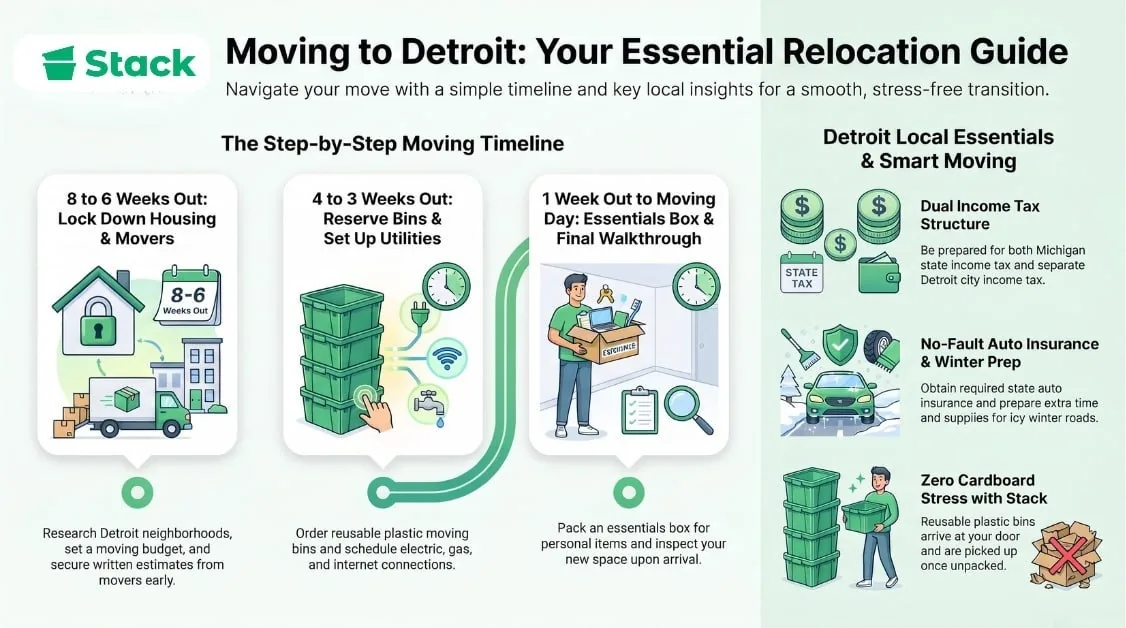
8 Weeks Out
This is the phase of research and planning. The goal is to pick a neighborhood, set a budget, and lock down housing before anything else can move.
1. Research Detroit Neighborhoods

Don’t fall for an apartment before you know the block. Detroit neighborhoods differ a lot in housing type, price, and daily feel, so look at the area first and the listing second. See things differently throughout the day: check distances to your workplace and grocery stores, and figure out where spots for street parking fill up.
Downtown Detroit and Midtown offer walkable living close to offices, Wayne State University, and cultural institutions. Corktown and Eastern Market feature older buildings, a variety of restaurants, and lively weekend crowds. For larger, older homes, consider historic districts like Indian Village, Palmer Woods, and Boston Edison, or explore Metro Detroit suburbs such as Royal Oak if you desire more space or a different school district.
2. Set a Moving Budget

Before booking anything, write down what you expect the cost of moving to be. Include movers or a truck, packing supplies, deposits, utility start fees, and a cushion for surprises. Our list of moving expenses covers the items people forget.
Then compare your Detroit cost of living to your current one. The Census Bureau’s QuickFacts puts Detroit’s median gross rent at $1,074 for 2020 through 2024, versus $1,413 nationally. When you lock down your budget, look at current listings, since asking rents today run higher than that multi-year figure.
3. Choose Where You’ll Live
For someone new to the city, renting first allows you time to get familiar with different neighborhoods before making a big commitment to buying property. If you can’t view places in person, a short-term rental for your first month lets you search locally once you arrive.
Before signing a lease, it’s important to ask property managers about the move-in rules and hours, as well as whether they require elevator reservations or a deposit for the move-in. Additionally, inquire about where a moving truck can legally park or unload and which utilities and internet providers serve the building.
6 Weeks Out
With a move date set, this stage is about booking people and places. Both fill up faster than most people expect.
4. Book Movers or Reserve a Truck
Schedule your movers four to eight weeks ahead of time, and even earlier if you’re moving during the summer or at the end of the month. Obtain at least three written estimates and clarify what each estimate includes. Inquire about their policies regarding stairs, heavy items, and winter weather conditions.
If you’re moving long distance across state lines, check that the company is registered with the federal government using the FMCSA Protect Your Move tool. What if you do it yourself by driving a truck? Count fuel, mileage fees, and insurance before you decide it’s cheaper.
5. Reserve Building Elevators and Loading Areas
When you move into an apartment tower or managed building, get reservations for elevators right away if you have a lease signed. Some buildings impose moving restrictions to certain times and require proof of insurance from movers as well as asking for a refundable security deposit. Make sure that you write down the rules in writing and give them to your movers.
6. Plan Parking for the Moving Truck
Don’t assume you can pull up and unload. There are Detroit blocks in residential areas that require permits, and residents apply for them through the website. Check posted signs on your new street and call the city’s Municipal Parking Department if you’re unsure where a truck can stop.
4 Weeks Out
This is when packing starts, and the paperwork trail begins.
7. Create a Moving Binder
A moving binder is a folder, physical or digital, that holds your lease or closing papers, mover contract, receipts, and important documents. It also keeps your estimates and confirmation numbers in one place. Use something like a moving inventory list, so you know exactly what you’ve packed too.
8. Order Boxes and Start Packing

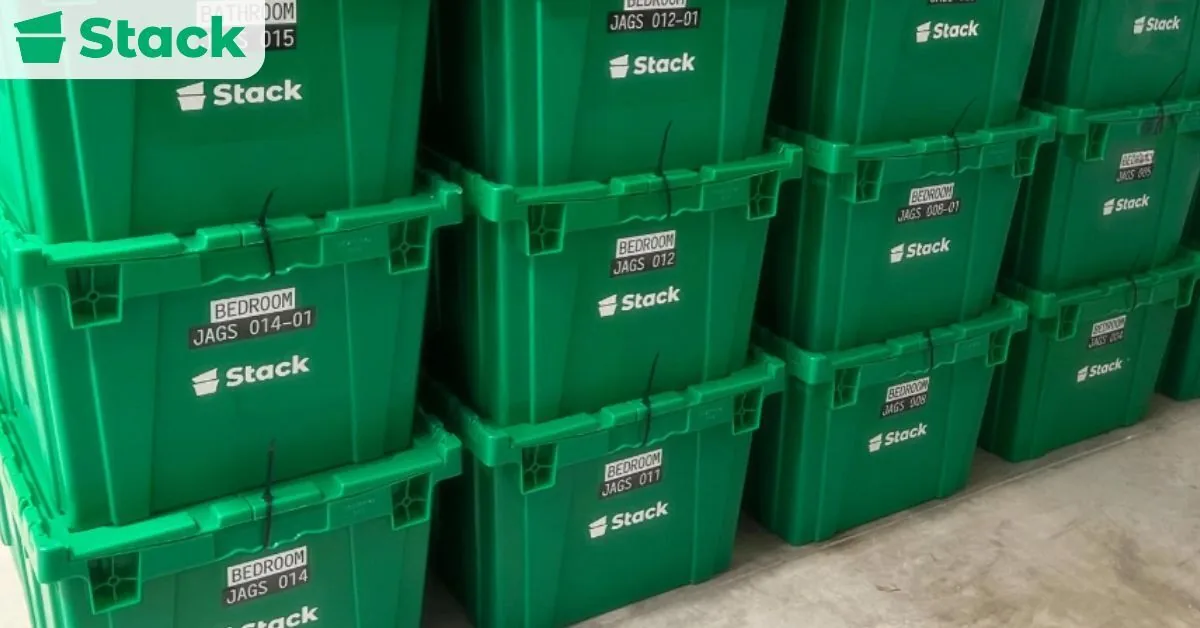
Use our moving box calculator to estimate how many bins you will need. According to bundle pricing, roughly, a studio package comes with 15 bins and a 3-bedroom package comes with 50 bins.
Pack non-essentials first, such as seasonal clothing, books, and decor. Label every bin with its contents and its destination room so movers know where it goes. Wrap glassware and breakables in towels, blankets, or bubble wrap. For more tips, check out how to label boxes and how to organize them too.
9. Notify Schools, Employers, and Doctors
Let your children’s school know and also let your current employer know as well, and get some documentation of this change. If you’re starting a new job in Detroit, confirm your start date and whether you’re working in the city, since that affects local tax withholding. Ask your current doctors and health systems for your medical records and prescriptions so you can register with a new doctor. Don’t forget to ask your veterinarian for records about vaccinations too.
10. Update Your New Address
File your change of address with the USPS before you move. Then update your bank, credit card companies, insurers, and subscriptions.
3 Weeks Out
Make sure your new place is livable the moment you walk in.
11. Set Up Utilities and Internet
Contact DTE Energy about electric and gas service as soon as you have a move-in date. Schedule as early as the utility allows. Book installation with one of the internet providers that serve your address, since appointments can take time. Schedule your old services to end the day after you move out so you aren’t without power during a delayed move.
12. Sort Out Car Insurance
Michigan requires that drivers have no-fault auto insurance in order to be allowed to drive legally. A 2019 reform gave drivers a choice of personal injury protection (PIP) medical coverage levels, so rates and coverage vary by policy.
1 Week Out
13. Pack an Essentials Box
Pack an essentials box that you keep with you, not on the truck. This box should contain toiletries, medications, a change of clothes, phone chargers, a power strip, your lease or closing documents, ID, and moving contract. Additionally, include basic tools, a box cutter, cleaning supplies, snacks, water, and any necessary pet supplies.
14. Do a Final Walkthrough
Check all closets, cabinets, and storage spaces in your old place. Take photos of their current condition before handing back the keys, especially if you expect to get your deposit refunded. Reconfirm movers, building reservations, and parking one last time.
Moving Day and Your First Week
15. Inspect Your New Home
Inspect major appliances, plumbing fixtures, and any outlets, and take pictures of anything that doesn’t work. Report any issues directly to your landlord or property manager in writing the same day. Start unpacking from your bedroom, bathroom, and kitchen first, then move outwards.
16. Visit a Michigan Secretary of State Office

Michigan’s Secretary of State suggests that new residents get Michigan driver licenses, titles for their vehicles, and registrations too as soon as they establish residency. Eligible citizens are registered to vote automatically when they complete a license or ID transaction there, unless they opt out, so you may be able to handle voter registration in the same visit. Bring your documents and check the Secretary of State’s site for the latest list before you go.
17. Schedule Your Bin Pickup
When you’ve emptied your bins, let us know, and we’ll pick them up. You don’t break down boxes or haul them to the curb.
What to Know Before Moving to Detroit

Beyond the week-by-week checklist, a few bigger-picture questions shape how a Detroit move actually feels once the boxes are gone.
Detroit Neighborhoods
The city has many neighborhoods, and each has its own housing stock, price range, and pace. A few starting points:
- Downtown Detroit has apartments in towers and converted buildings, and it’s close to a Tigers game, music venues, and the Detroit River.
- Midtown is home to Wayne State and cultural institutions such as the Detroit Institute of Arts, and Woodward Avenue runs through it.
- Corktown and Eastern Market have older buildings, restaurants, and a busy market scene.
- Indian Village, Palmer Woods, and Boston Edison are historic districts known for larger older homes.
- West Village is a residential neighborhood east of downtown with a mix of homes and small businesses.
These are starting points, not rankings. Visit different neighborhoods and talk to people who live there. The city’s Block Club Program lists registered block clubs and neighborhood associations, which is a good way to see who is organized near an address.
Cost of Living and Taxes
Compared to the national average, housing in Detroit costs far less, even though local incomes are lower too. Here’s how the two compare in the Census Bureau’s 2020–2024 data:
| Measure | Detroit | United States |
|---|---|---|
| Median value of owner-occupied homes | $83,900 | $332,700 |
| Median gross rent | $1,074 | $1,413 |
| Median household income | $39,938 | $80,734 |
Salaries in this region are roughly at par with national averages. The Detroit Regional Chamber’s workforce statistics report an average annual salary of $70,471 for the Detroit Region in 2023, slightly under the national average of $72,357.
Taxes are where Detroit surprises people:
- Michigan income tax: the state’s flat rate is 4.25% for the 2026 tax year.
- Detroit income tax: residents pay 2.4%, and nonresidents who work in the city pay 1.2%, according to this summary of the city tax. It’s possible that if you live outside of Detroit, you can still be subject to paying at this lower rate if you work downtown.
- Property tax: A City of Detroit report put the total residential millage at 69.6 mills in 2020, more than twice the state average. Rates change, so ask for the current bill on any home you’re considering.
Compare property tax rates between the city and the suburbs before you buy, and confirm with the city assessor which exemptions you qualify for.
Is Detroit Safe?
The honest answer is that it depends on the block, and the city’s trend is improving. According to the City of Detroit’s year-end 2025 numbers, the city recorded 165 homicides in 2025, down 19% from 203 in 2024 and down 35% since 2023. There is also a 10% reduction in total violent crime, as well as 10% fewer property crimes reported.
City-wide figures don’t tell you what a specific street is like. Before signing a lease, take time to walk the neighborhood both at night and on a weekday morning. Speak with neighbors and reach out to the local block club or neighborhood association to gather insights about the area. Additionally, inquire with the landlord about lighting, building access, and parking, and review crime rates specific to that area rather than just the city overall.
Jobs and Major Employers
Detroit’s economy still runs on automotive manufacturing, and health care, finance, and technology now carry a large share of job opportunities. The Detroit Regional Chamber list names like Rocket Companies, Stellantis, City of Detroit, and Henry Ford Health as major employers and reports that healthcare is the leading sector for jobs in this region. If you are relocating for a new job, you should find out whether your employer provides relocation assistance and also check whether your place of work will be subject to income tax levied by Detroit.
When young professionals think about shorter commutes, they often look towards downtown and midtown areas. Others prefer to live in the suburbs near companies and auto campuses. Check out rush hour commuting times before signing any lease.
Schools
Families relocating with kids should start with school districts, since Detroit has a mix of public schools, charter schools, and private schools, and quality varies block by block the same way housing does. Suburbs like Royal Oak, Bloomfield Hills, and the rest of Oakland County are popular with families chasing specific school districts, while city neighborhoods like Palmer Woods and parts of Midtown have their own loyal base of families who’d rather stay closer to downtown.
Snowy Winters and Parking
Prepare for cold, snowy weather ahead. Keep winter gear handy and plan to have extra time for dealing with icy driveways and slower traffic when the day comes. The National Weather Service Detroit/Pontiac office posts forecasts and snowfall data, so check it in the days before your move.
Street parking rules vary by block. Pay attention to posted signs and don’t assume that you can park overnight without checking specific rules for your address. Residential parking zones, metered areas, and winter restrictions each work differently.
Moving to Metro Detroit and the Suburbs
Metro Detroit is an expansive area where lots of people live outside the city. Take Royal Oak and Bloomfield Hills, for instance; they are in Oakland County. Each suburb has its own schools, tax rates, and downtown, so compare them one by one. If you commute into the city, remember the 1.2% nonresident Detroit income tax can apply to wages earned there.
Settling In: Community and Things to Do
After the boxes are gone, the fastest way to feel at home in a new neighborhood is community involvement. Try these first:
Engaging with your community is a great way to settle into Detroit. Consider joining local neighborhood associations and exploring Facebook groups for recommendations on contractors, restaurants, and pet care. Make sure to visit Eastern Market on market days and enjoy the vibrant atmosphere.
For outdoor activities, walking or biking at Belle Isle Park and spending an afternoon at the Detroit Institute of Arts are excellent options, along with catching a Tigers game or a show at one of the city’s music venues. Keep a list of fun things to try each month, so your first year doesn’t disappear into unpacking.
Budget-Friendly Ways to Move to Detroit
You can cut costs without making the move harder:
Start by decluttering your belongings; sell or donate items you won’t use, as leaving behind unnecessary items reduces both what you need to pack and the cost of your move. Next, compare written estimates from different movers, ensuring to ask what is included and if choosing a flexible date can lower the price. Lastly, be flexible with your timing, as moving on weekdays or mid-month typically costs less than moving on weekends or at the end of the month.
Skip buying cardboard altogether. Our bundles start at $149 for a studio (15 bins, 1 dolly, labels, delivery and pickup) and run to $189 for a 3-bedroom (50 bins, 3 dollies), per our pricing. Delivery and pickup fees vary based on how far you are from downtown, so please check your quote.
Ready to Start Your Detroit Move?
A moving checklist keeps your Detroit move organized from the first neighborhood search to the last box. Research neighborhoods, set a realistic budget, and handle your license, registration, and tax paperwork early so nothing catches you off guard.
To simplify your move and cut down on moving costs, we recommend using eco-friendly moving boxes. Stack Moves offers durable, reusable plastic moving bins for rent to make packing easy, safe, and affordable. Each bin replaces 500+ cardboard boxes over its lifetime, and renting one is quick and convenient. Contact us now to get your bins scheduled.
FAQs
Quick answers to the questions that come up most before an upcoming move to Detroit.
How Much Does It Cost to Move to Detroit from Out of State?
Total cost depends on distance, how much you’re bringing, and whether you hire full-service movers or rent a truck and bins yourself, but a long-distance move commonly runs from a few thousand dollars into five figures. Renting reusable bins instead of buying cardboard and comparing written estimates bring that number down fast.
Is Detroit a Good Place to Live?
The honest answer is that it depends on what you’re looking for. Detroit has a lower cost of living, a deep job market in health care, automotive, and technology, and strong neighborhood character, trade-offs that suit people who want space and affordability over dense, car-free urban living.
Do I Need a Car to Live in Detroit?
For most neighborhoods, yes. Transit has improved in recent years, but it still doesn’t cover the metro area the way it does in older transit-first cities, so plan on driving and budget for Michigan’s no-fault car insurance.
What Is the Best Detroit Neighborhood for Families or Young Professionals?
Families chasing school districts tend to look at Royal Oak, Bloomfield Hills, and the rest of Oakland County, while young professionals who want nightlife and a short commute land in Midtown or Corktown instead.
How Long Do I Have to Get a Michigan Driver’s License After Moving?
The state’s own guidance says to apply once you’ve established residency, without a specific day count for an ordinary license. New residents must title and register their vehicles right away. Michigan’s 90-day window only covers nonresidents driving on out-of-state plates.
How Far in Advance Should I Start a Detroit Move?
Book movers four to 8 weeks before your move date, and even earlier if you want to avoid summer or month ends. Make utility arrangements as soon as you have an expected move-in date.
Do I Need a Michigan Driver’s License After Moving to Detroit?
Michigan’s Secretary of State says that new people should get Michigan driver’s licenses, titles, and registrations as soon as they establish residency there. Also check the Secretary of State’s new resident page for a list of documents needed.
Is Detroit Expensive to Live In?
Housing costs less than the national average: Detroit’s median gross rent is $1,074, and its median home value is $83,900, versus $1,413 and $332,700 nationally (2020–2024 Census data). Property taxes are high, though, and current asking rents run above those multi-year figures, so budget from real listings.
What Taxes Will I Pay in Detroit?
Michigan’s flat income tax is 4.25% for 2026. Detroit residents also pay a 2.4% city income tax, and nonresidents who work in the city pay 1.2%. Property taxes are also higher than average when compared to the rest of the state for homeowners.
How Many Moving Bins Do I Need for a Detroit Move?
It depends on the size of your home. We offer different-sized bundles: from 15 bins for studios all the way to 100 for houses with 5 bedrooms. Use the moving box calculator for a better estimate.
What Should I Pack In an Essentials Box?
Pack toiletries, medications, chargers, a change of clothes, important documents, basic tools, snacks, and water. Keep it with you instead of on the truck.
Cardboard sucks. Book bins instead.
Reusable plastic moving boxes, delivered and picked up for free. Bundles from $149.