
How to Prepare for a Move in Eight Weeks
You should start preparing for your move six to eight weeks in advance. Begin by sorting through your belongings. Then, handle tasks such as booking, packing, managing utilities, and completing paperwork in a logical order. This approach ensures each task remains manageable, preventing the final week from becoming chaotic. Your plan can start with decluttering and creating a moving binder, proceed to packing an essentials box, and end with a final walkthrough.
Stack Moves offers reusable plastic moving bins, dollies, and labels and delivers directly to your door. The bundles range from 15 bins for a studio to 35 bins for a two-bedroom home. We clean and sanitize the bins between moves, then pick them up once you’re unpacked, so you never buy, assemble, or break down a cardboard box. To get your bins scheduled, contact our team around your move date.
This article covers the week-by-week steps for preparing appliances, furniture, pets, and your home, along with the most common questions people ask before a move.
Key Takeaways
Start six to eight weeks out and declutter in that same window, so you only pay to pack and carry what you plan to keep. Keep a binder handy and confirm your move-in booking one to two weeks in advance. Pack nonessential items first. Set up your utilities and update your address early. Pack an essentials box for your first night and conduct a final check of the house before you leave.
Why Starting Early Makes a Move Easier

Moving is common enough that people treat it as a weekend job, and that is where a stressful move begins. The Census Bureau reports that 11.8% of people in the United States moved to a different residence in 2024. Most of them also had a job, a family, and a calendar to work around while they did it. Eight weeks gives you room to plan without giving up your evenings. You should still expect a few tasks to take longer than they look on paper.
How to Prepare for a Move Step by Step
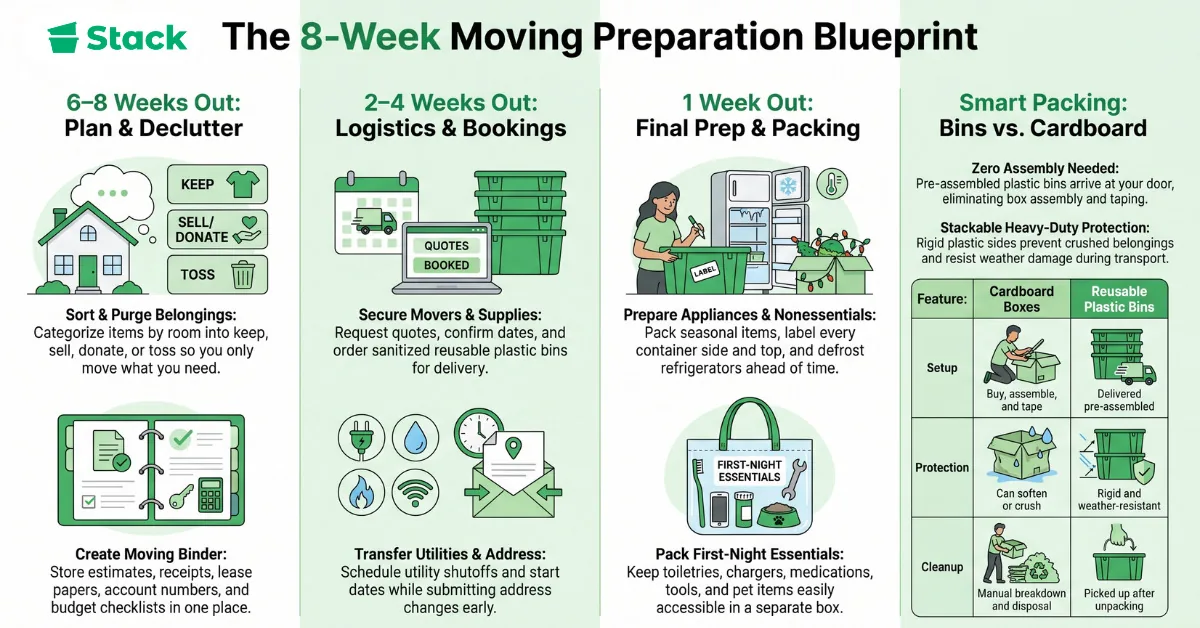
It’s more important to focus on the early weeks than on speed, so allocate most of your attention there. Each step has its own subheading, allowing you to go directly to the relevant part.
Plan and Declutter Six to Eight Weeks Before the Move
First, decide what you want to keep when moving. Go through each room and sort your belongings into keep, sell, donate, or toss. Start at least six to eight weeks in advance, as selling furniture or arranging a donation pickup takes longer than expected. Items you haven’t used in a year, such as clothes, toys, and smaller items, are easy to sort. Inspect your appliances as well; selling an old unit that won’t fit in your new kitchen is more cost-effective than moving it. Consider using a storage unit or a friend’s garage for items you wish to keep but currently lack space for.
Build a Moving Binder and a Detailed Checklist
Next, start a binder, either a paper folder or a shared drive, for estimates, lease or closing papers, and receipts. Then write a detailed checklist and put an estimated cost beside every line. Include movers or a truck, bin rental, cleaning, deposits, and a cushion for the things you forgot. Most people build the list room by room, starting with a moving-out checklist. A move across the country adds tasks like vehicle registration and a new driver’s license. Keep every account number and confirmation code in the binder so you aren’t digging through email later.
Choose Your Movers and Confirm the Booking
Request written quotes from at least three companies and compare what each one covers, not just the cost. Ask what happens if your date shifts, then accept the quote that answers that question plainly. Confirm the arrangements again one to two weeks before the move, and line up the delivery time with your move-in date. Stack provides bins, dollies, and labels, but not moving labor, so pair them with your own movers or a rental truck. You can estimate how many bins you need with a moving box calculator that works from your home size.
Gather Packing Supplies and Start With Nonessentials
Now the supplies come out, and you’ll need boxes or bins, bubble wrap, markers, and tape if you go with cardboard, and you should buy a little more than you think you need. Choose quality, sturdy containers, because a weak box fails at the worst moment. Pack the nonessentials first, such as seasonal clothes, books, wall art, and guest room items. Leave your everyday plates and the coffee maker for the final few days. Start packing early so this stage doesn’t eat your last weekend, and pack by how often you use things, so the least used items go first. Put heavy items in small containers and light items in large ones. Label each box on the side and the top, and secure the lids so nothing shifts when you carry them efficiently down the stairs. Kitchens and fragile items need extra packing care, so wrap them separately and fill any gaps with towels.
Prepare Appliances and Furniture for the Move
Big items are where moves often go wrong, so give them a plan. Measure the doors and hallways at both homes to fit large items. Confirm the new home has outlets and dimensions that match each appliance. Read each installation guide, as some units need a locked drum or a professional to disconnect a gas line. Coordinate delivery of new appliances with your move-in date to avoid an empty house.
Defrost the refrigerator and freezer a day or two ahead, wipe them dry, and leave the doors open for ventilation so odors don’t build up. Place towels underneath to catch melting ice and avoid water damage. Unplug the oven and remove the racks, then tape or wrap them to prevent rattling. Use up the food in your freezer and pantry before moving everything.
Plan for Pets and Family Members
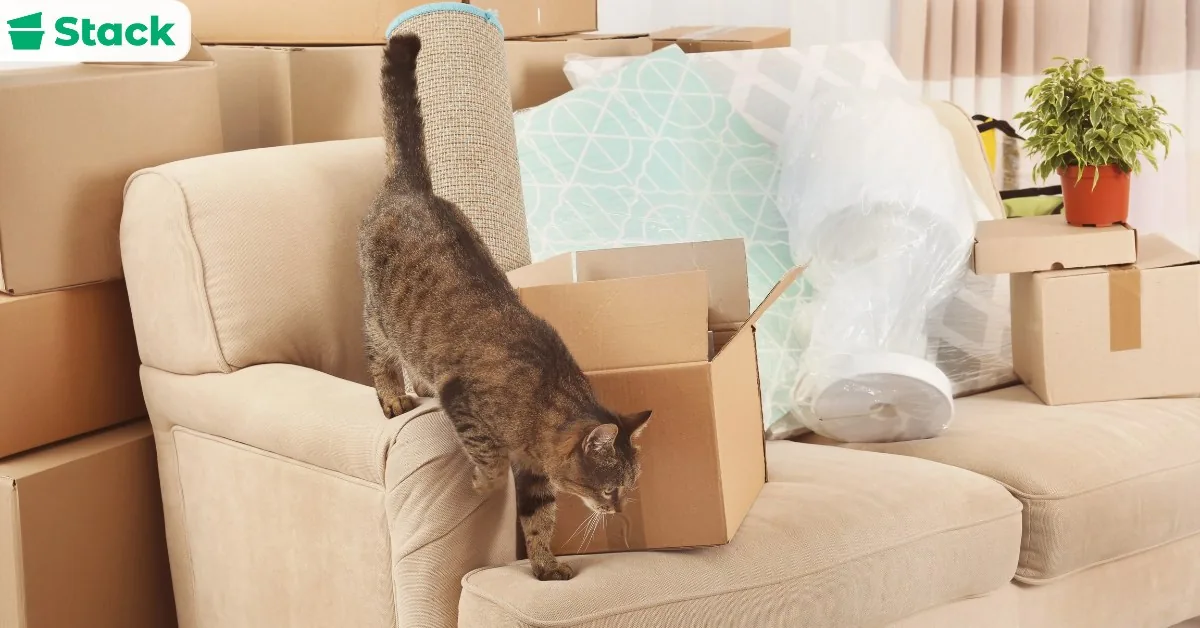
Pets sense the house’s atmosphere, so maintain their routines. Take your pet to the vet before moving and request a copy of their medical records. Ensure you have extra pet food to avoid shopping while unpacking. On moving day, consider boarding your pet or have a friend care for it. Alternatively, set up a quiet bedroom for your pet with water and a closed door that everyone is instructed to keep shut. Let the kids pack a bag of toys and entertainment to carry with you, not on the truck.
Transfer Utilities and Update Your Address
Schedule utility transfers for both homes and set the shutoff at the old place for the day after you leave and the start date at the new one for the day before you arrive. Cover electricity, gas, water, internet, and trash so nothing lapses on either end. Then update your address, which takes longer than most people assume. The U.S. Postal Service says to allow at least 7 to 10 business days after approval for the change to take effect. Online requests also carry a $1.25 identity verification fee, which is charged to a credit card. Tell your bank, credit card companies, employer, insurers, and your kids’ school directly, because not every sender relies on forwarding. Complete each account change before moving day to ensure that no payment or bill is sent to the wrong house.
Pack an Essentials Box and Check the Weather
Arrive at nine at night with all boxes sealed, and have no clue which one contains the toothbrushes. The essentials box is crucial for the first night. It should include toiletries, a phone charger, medications, a change of clothes, basic tools, snacks, and paper plates. Keep it with you. For the kids, add a favorite blanket or toy to help them feel comfortable. Check the weather forecast for the week of the move; rain or heat will affect how you protect furniture and the duration of the day. A bed that can be made up in five minutes is more valuable than a fully unpacked kitchen.
Do a Final Walkthrough Before You Leave
Before you hand over the keys, walk through every room, closet, cabinet, garage, and yard one more time to check for anything left behind. If you rent, the landlord’s inspection usually happens during the same visit. Take photos of the empty home to prove its condition when you return the keys. Chargers left in outlets and hooks left on walls are the usual casualties, so check the living rooms and bedrooms twice. Then confirm the utilities are off, lock up, and drive to your new place.
Reusable Plastic Bins vs Cardboard Boxes

Your choice of packing container affects how much work the middle weeks entail, and cardboard isn’t the best option for every household. The table below compares the two types of containers based on the most common questions people have during a typical move.
| Factor | Cardboard Boxes | Reusable Plastic Bins |
|---|---|---|
| Setup | You buy, assemble, and tape every box. | Arrive pre-assembled. |
| Protection | Can soften when wet or crush when stacked high | Rigid sides that stack |
| Cleanup | Breakdown and disposal after the move | Picked up empty once you’re unpacked. |
| Fit for the job | Built for a single move | Delivered and picked up for each move |
How Staging Helps If You Are Selling Your Home
If you’re selling the house you’re leaving, staging deserves part of your early weeks, and it overlaps neatly with decluttering. The National Association of Realtors’ 2025 Profile of Home Staging found that the living room was the most commonly staged room, at 91%. The primary bedroom followed at 83% and the dining room at 69%. Those are the rooms to put effort into first, with a clear surface and a neutral palette. Clear the kitchen counters, clean every bathroom surface, and keep bedrooms in neutral colors. Packing early helps here, since boxes stacked in a hallway distract buyers from the property.
Ready to Prepare for Your Move?
Preparing for a move comes down to starting about eight weeks out, clearing what you won’t keep, and settling your booking, utilities, and address changes before moving day. Every week of lead time counts down to the final days, when you have the least room to make one. If you need assistance determining how many bins your home needs, a brief conversation can help figure it out.
Stack Moves provides reusable plastic bins, dollies, and labels, and we clean them between each use. We pick up the empty bins when you finish, though we don’t provide moving labor, so you can pair them with your movers or a truck you rent. Contact us today to schedule your bins.
Frequently Asked Questions
Our bins go out to households of all sizes, so the same questions come up repeatedly before moving day. Here are the most common ones, with quick answers you can act on today.
How Far in Advance Should You Prepare for a Move?
Begin the process six to eight weeks in advance. This timeline allows you sufficient time to sort through items, compare various quotes, and secure assistance without feeling rushed.
What Should You Do First When Preparing to Move?
First, sort your items into keep, sell, donate, and toss categories. Each item you dispose of early prevents you from having to pack it later.
How Do You Prepare Appliances for a Move?
A day or two in advance, ensure the refrigerator and freezer are defrosted and dried, then keep the doors open for ventilation. Review both installation guides and measure the doors and stairs at each home.
How Do You Prepare Pets for a Move?
Maintain their routine, take them to the vet, and ensure you have enough food before moving day. On the move day, board them or place them in a quiet room with the door closed.
What Should You Not Pack When Moving?
Keep flammable items such as gasoline and propane at the location, and your mover will provide a list of restricted items. Take documents, medications, and any irreplaceable items with you in your own vehicle.
When Should You Update Your Address Before Moving?
Submit it two to three weeks in advance, as the Postal Service advises a processing time of 7 to 10 business days from approval. Update your bank and insurers directly at the same time, because they don’t all rely on forwarding.
Cardboard sucks. Book bins instead.
Reusable plastic moving boxes, delivered and picked up for free. Bundles from $149.