
How Much Do Movers Cost in Bay Area
Moving costs in the Bay Area can range from a few hundred dollars to several thousand, depending on the size of your move and the services you need. If you’re planning a move and trying to set a realistic budget, factors like crew size, labor time, distance, the amount of stuff you have, access to your home, and extra services can all affect the final cost. San Francisco movers may charge differently from those in San Jose or another Bay Area city, so it helps to look beyond a basic hourly rate when planning your budget.
If you’re planning a Bay Area move and want to make packing and moving day easier, Stack Moves can help. Stack delivers reusable plastic moving bins, dollies, and labels right to your door, then picks up the empty bins when you’re done, so you don’t have to buy, assemble, or get rid of piles of cardboard boxes. Ready to simplify your move? Book your bins with Stack Moves or contact us today to get started.
This blog breaks down how much movers cost in the Bay Area and the main factors that can affect your final moving bill. You’ll also find practical tips for comparing moving companies, estimating your expenses, avoiding unexpected fees, and keeping your moving costs under control.
Table Of Contents
- How Much Do Movers Cost in the Bay Area?
- What Factors Affect the Cost of Movers in the Bay Area?
- How to Estimate Your Moving Costs Step by Step
- What Extra Fees Should You Watch for When Hiring Bay Area Movers?
- How Can You Save Money on a Bay Area Move?
- Should You Hire Movers or Handle the Move Yourself?
- How Can You Choose a Reputable Moving Company in the Bay Area?
- How Much Should You Budget for Movers in the Bay Area?
- Frequently Asked Questions
- How Much Do Movers Cost Per Hour in the Bay Area?
- How Much Does It Cost to Move a One-Bedroom Apartment in San Francisco?
- How Much Does a Two-Bedroom Move Cost in the Bay Area?
- Are Movers More Expensive in San Francisco Than Other Bay Area Cities?
- What Can Make My Moving Bill Higher Than Expected?
- Is It Cheaper to Move During the Week or Off Season?
- How Can I Reduce My Moving Costs?
- Should I Get Quotes From Multiple Moving Companies?
How Much Do Movers Cost in the Bay Area?
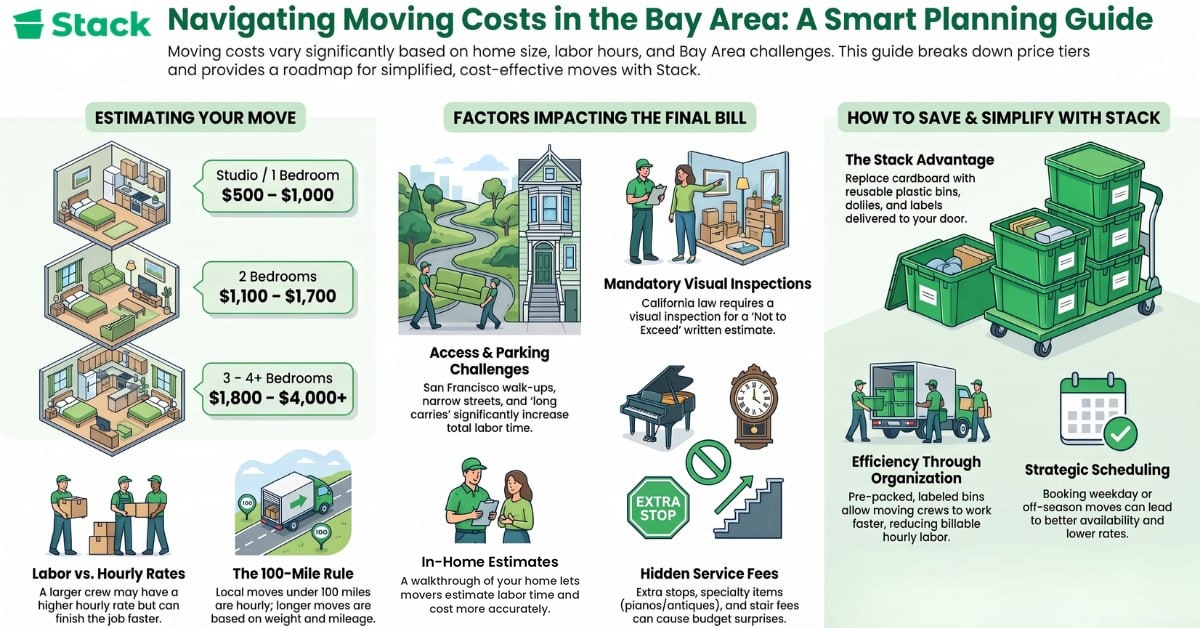
If you’re planning a local Bay Area move, you can expect to spend anywhere from around $500 for a smaller studio move to $3,000 or more for a larger home, depending on the details of the move. Your final cost can change based on the crew size, hours of labor, distance, amount of furniture and boxes, access at both locations, and any extra services you need.
For a rough starting point, a studio apartment may cost around $500–$700, while a one-bedroom move can fall around $600–$1,000. A two-bedroom move may cost roughly $1,100–$1,700, while three- and four-bedroom moves can range from about $1,800 to $4,000 or more. These are only general planning ranges, since the same size apartment can cost very differently depending on how much you own, how easy it is to access the building, and how long the movers need to complete the job.
How Do Hourly Rates Affect Your Moving Cost?
For many local Bay Area moves, movers charge by the hour, so both the hourly rate and the number of movers you need can affect your total. A two-person crew may have a lower hourly rate than a three- or four-person crew, but a larger crew can sometimes finish the job faster, meaning you need to look at the overall labor time rather than the hourly rate alone.
California has different pricing rules depending on the distance of the move. For moves within California that are 100 miles or less, movers can generally charge by the hour, while moves over 100 miles are generally charged based on weight and mileage. The California Bureau of Household Goods and Services provides more information on moving charges, estimates, and consumer protections.
This is why an hourly rate doesn’t tell you the final cost by itself. A $200-per-hour crew working for four hours is very different from the same crew working for eight hours, and stairs, long carries, parking issues, furniture disassembly, packing, or specialty items can all add time or additional charges to your bill.
When comparing moving companies, look at the full estimate, crew size, minimum hours, included services, and potential extra fees instead of focusing only on the lowest hourly rate. Getting a clear written estimate before moving day can also help you avoid surprises when the final bill arrives.
What Factors Affect the Cost of Movers in the Bay Area?
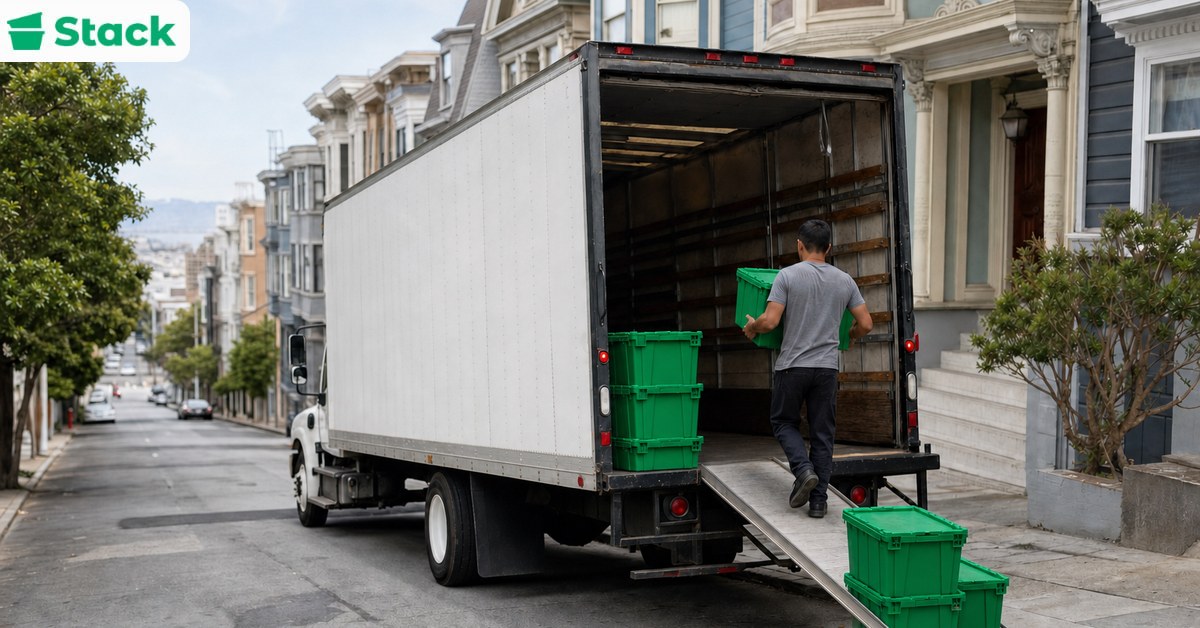
The size of your move is only one part of the equation when it comes to moving costs in the Bay Area. Things like how far you’re going, how many movers you need, how easy it is to access your home, and whether you need packing or other additional services can all affect what movers charge.
How Much You Have to Move
The more belongings you have, the more time movers usually need to load, transport, and unload everything. A studio apartment with a few pieces of furniture will naturally take less labor than a two-bedroom move with dozens of boxes, large furniture, and heavy items that require extra lifting.
Decluttering before moving day can help keep labor time and your moving budget under control. Getting rid of furniture, boxes, and other things you no longer need means there is less to load, carry, and unload, which can be especially helpful when movers charge on an hourly basis.
How Far You’re Moving
Distance also plays a major role in your local San Francisco moving costs. San Francisco local moves may be priced differently from moving between San Francisco and San Jose or another city in the surrounding Bay Area, while a long-distance move can involve different pricing altogether.
For moves within California that are 100 miles or less, movers can generally charge by the hour, while moves over 100 miles are generally charged based on weight and mileage. California’s Bureau of Household Goods and Services also recommends providing movers with accurate details about both pickup and delivery locations so they can prepare a more accurate estimate.
How Many Movers You Need
A two-person crew is often enough for a smaller apartment or straightforward local move, while a three-person crew or larger team may be needed for bigger homes, heavier furniture, or moves with more complicated access. Adding more movers can increase the hourly rate, but it may also reduce the total labor time because more people can work on loading and unloading at the same time.
The goal isn’t necessarily to hire the smallest crew possible. You want enough professional movers to handle the job efficiently without paying for more labor than your move actually requires.
How Difficult Is Access to Your Home?
Bay Area homes can come with their own moving challenges, from San Francisco walk-up buildings and multiple flights of stairs to narrow streets, steep hills, limited parking, and strict building rules. A long carry from the moving truck to the front door can also add time, particularly when the truck cannot get close to the property.
California’s moving regulations specifically account for situations involving flights of stairs and long carries, so it’s important to tell movers about these access challenges before they prepare your estimate. The state’s guidance defines a long carry in relation to how far the mover’s equipment can be positioned from the entrance, while flight charges can apply in certain circumstances.
Parking can be another issue in busy parts of San Francisco, especially when building access is limited or the moving truck cannot park close to the entrance. Giving the moving company these details ahead of time can help prevent unexpected fees and give you a more realistic idea of your total moving costs.
What Additional Services Do You Need?
The basic moving service may not cover everything you need. Packing and unpacking, packing materials, furniture disassembly, specialty items, and special handling can all increase the total cost of hiring movers.
Fragile belongings, antiques, large or unusually heavy pieces, and items such as pianos may require additional equipment, time, or specialized handling. California’s Bureau of Household Goods and Services advises customers to tell movers about special services and conditions that could affect pickup or delivery when requesting an estimate.
If you’re trying to save money, consider which parts of the move you can handle yourself. Packing your everyday belongings ahead of time, decluttering before moving day, and having everything ready for the movers can reduce the amount of paid labor time while still leaving the heavy lifting and transportation to professional movers.
How to Estimate Your Moving Costs Step by Step

Instead of relying on one average moving cost, you can get a much more useful estimate by looking at the specific details of your move. Work through these six steps to account for your belongings, labor, distance, access, and any additional services before setting your moving budget.
Step 1: Determine the Size of Your Move
Start by figuring out whether you’re moving from a studio, one-bedroom apartment, two-bedroom home, or a larger property. Take stock of your furniture, boxes, appliances, and other household belongings because the more you have to move, the more time and labor you may need.
If you have furniture or belongings you no longer use, this is also a good time to declutter. Fewer items mean less to pack, carry, load, and unload, which can help reduce labor time and your overall moving costs.
Step 2: Estimate the Labor You’ll Need
Think about how much work your move will actually involve, including loading the moving truck, transportation, unloading, stairs, and any difficult access. A two-person crew may be enough for a smaller local move, while a three-person crew or larger team may make more sense for a bigger home or a move with heavy furniture.
Remember that a lower hourly rate does not always mean a lower final bill. A larger crew may cost more per hour but finish the job faster, so compare the estimated total labor time as well as the hourly rate.
Step 3: Add Any Extra Services
Next, account for anything beyond basic loading and unloading. This could include packing services, packing materials, furniture disassembly, additional stops, or special handling for specialty items such as pianos, antiques, or fragile belongings.
If you’re trying to save money, decide which tasks you can comfortably handle yourself before moving day. Packing your own boxes, for example, can reduce the amount of time professional movers spend on the job.
Step 4: Account for Access and Parking
Look at both your current home and your new one and think about how easily movers can get in and out. Multiple flights of stairs, walk-up buildings, narrow streets, long carries, limited parking, building rules, and other access challenges can all add time to a move.
For a San Francisco move, this step can be particularly important because parking and building access can make a straightforward move take longer than expected. Give movers these details upfront so they can include them when preparing your estimate rather than discovering the problem on moving day.
Step 5: Get Written Estimates From Multiple Movers
Once you’ve worked out the details, ask several moving companies for written estimates and compare more than just the headline price. Look at the crew size, hourly rates, estimated labor time, included services, minimum charges, and any additional fees that could affect your final bill. The Federal Trade Commission recommends getting written price estimates from several movers and making sure the estimates account for your belongings before comparing them.
The FTC has also reported that moving companies can be a target for scams and advises consumers to check a mover’s registration, reputation, and pricing information before hiring. Taking a few extra minutes to compare your estimates can help you avoid choosing a company based on an unrealistically low initial price.
Step 6: Compare the Estimate With Your Moving Budget
Once you have your estimated labor, transportation, and additional costs, compare the total with your moving budget. If the price is higher than you expected, look at which parts of the move you can handle yourself, such as packing, decluttering, or preparing furniture before the movers arrive.
This gives you a more realistic picture of what you’ll actually spend instead of relying on a general average. It also makes it easier to decide where professional movers add the most value and where you can cut costs without making moving day harder than it needs to be.
What Extra Fees Should You Watch for When Hiring Bay Area Movers?

The hourly rate may be the number that catches your eye when comparing moving companies, but it isn’t always the number you’ll end up paying. Extra charges for stairs, difficult access, packing, additional labor, or changes to your moving plan can quickly increase the final bill, so it’s worth knowing what to ask about before moving day.
Stair Fees
If you’re moving into or out of a walk-up building, multiple flights of stairs can add to the labor involved. Ask whether stair fees are included in your estimate, especially if you’re moving furniture up several floors without an elevator.
Long-Carry Fees
A long carry can happen when the moving truck cannot park close enough to your home and movers have to carry your belongings a greater distance. This can be particularly relevant in San Francisco, where narrow streets, limited parking, and building access can make it difficult to position a moving truck close to the entrance.
Parking or Access-Related Costs
Parking restrictions, limited loading areas, steep hills, narrow streets, or strict building rules can all make a move take longer. If your building requires a parking permit, has a specific loading window, or limits elevator use, tell the movers before they prepare your estimate so these access challenges are accounted for.
Packing Materials
If you hire movers for packing services, ask whether boxes, tape, wrapping materials, and other packing materials are included in the quoted price. Otherwise, these additional costs can appear on the final bill on top of the moving labor.
Additional Labor
Extra labor may be needed when your move takes longer than expected or involves heavy furniture, difficult access, disassembly, or other work that wasn’t included in the original scope. This is one reason it’s important to give movers an accurate picture of what they’re moving rather than relying on a quick estimate based only on the number of bedrooms.
Specialty-Item Handling
Pianos, antiques, large appliances, fragile belongings, and other specialty items may require special equipment, extra workers, or additional handling. Ask about these items when getting your quote so you know whether special handling is already included or will cost extra.
Extra Stops
Adding another pickup or delivery location can increase the distance and labor time involved in your move. If you need movers to collect belongings from a storage unit, another home, or a second location, make sure every stop is included in the estimate.
Minimum-Hour Requirements
Some moving companies may have a minimum number of billable hours, even when your move itself is relatively small. For example, California’s moving guidance notes that hourly moves may have minimum charges, so check the agreement to see whether a minimum applies to your move.
Changes to the Original Scope of the Move
Your final cost can also change if you add belongings or request services that weren’t included when the mover prepared the estimate. For moves within California, the Bureau of Household Goods and Services requires a “Not to Exceed” price, and if you request additional or different services, those changes can be documented through a written Change Order.
Before hiring a mover, make sure your written estimate clearly shows the services included, expected charges, and any minimums or potential additional fees. California also requires a visual inspection for estimates on moves within the state, so be cautious about relying on a price given only over the phone or online.
How Can You Save Money on a Bay Area Move?

Moving can get expensive quickly, but a little planning can help keep your moving costs under control. From reducing what you take with you to making sure movers aren’t waiting around on moving day, these simple steps can help you get more value from the money you’re spending.
Declutter Before Moving
The less you have to move, the less time and labor you’ll need. Go through furniture, clothing, kitchen items, and other belongings before moving day and sell, donate, or get rid of anything you no longer need.
Pack Your Own Belongings
Packing services can add to the total cost of hiring movers, so consider packing your own belongings if you have the time. Having your boxes packed, labeled, and ready to go before the movers arrive can also help the crew get straight to loading instead of spending paid labor time on packing.
Use Reusable Moving Bins
You don’t have to buy a large number of cardboard moving boxes just to use them once. Reusable plastic moving bins can give you a sturdy option for packing while also saving you from buying, assembling, and eventually breaking down dozens of boxes.
This is where Stack Moves can make the packing side of a Bay Area move a little easier. Stack delivers reusable plastic moving bins, dollies, and labels to your door, so your packing supplies arrive ready to use, then picks up the empty bins after your move.
Compare Multiple Written Quotes
Don’t settle for the first moving company you find. Get multiple written quotes and compare the hourly rates, crew size, estimated labor time, included services, minimum charges, and potential additional fees so you can see what you’re actually paying for.
Ask About Weekday and Off-Season Availability
If your moving date is flexible, ask movers whether their rates or availability change during weekdays or less busy periods. Moving during a quieter time may give you more scheduling options, but always compare the actual quote rather than assuming a particular day will automatically be cheaper.
Confirm Additional Fees Before Booking
Ask about stair fees, long carries, parking or access charges, packing materials, specialty-item handling, extra stops, and minimum-hour requirements before you sign anything. Getting these details upfront can help you avoid an unpleasant surprise when the final bill arrives.
Have Everything Ready When Movers Arrive
Try to have your belongings packed, labeled, and ready to go before the crew gets there. The less time movers spend waiting, packing, or figuring out what needs to be moved, the more of your paid labor time can be spent actually getting the move done.
Plan Parking and Building Access Ahead of Time
Check parking restrictions, loading zones, elevator reservations, building rules, and access at both your old and new homes before moving day. Sorting these details out ahead of time can prevent delays and make it easier for the movers to get in, load up, and leave without unnecessary waiting.
Should You Hire Movers or Handle the Move Yourself?
Whether you hire professional movers or handle the move yourself usually comes down to your budget, available time, and how much physical work you’re comfortable taking on. Neither option works the same for everyone, so it helps to look at what you’ll be taking on before deciding how you want to move.
|
Factor |
Hire Professional Movers |
DIY Move |
|---|---|---|
|
Labor |
Movers handle the heavy lifting |
You or friends and family handle it |
|
Time |
Less physical work and coordination for you |
Usually requires more of your personal time |
|
Equipment |
Movers typically bring moving equipment |
You may need to rent or buy equipment |
|
Packing |
Professional packing may be available as an additional service |
You handle the packing yourself |
|
Cost |
Higher upfront service cost |
Lower service cost, but other expenses can add up |
|
Convenience |
Less physical work and moving-day coordination |
More control over the moving process |
A DIY move doesn’t have to mean cardboard boxes, borrowed trucks, and a chaotic moving day. You can still make the process easier by using the right equipment, including reusable moving bins, dollies, and labels, which is where Stack Moves can come in handy. Stack delivers the bins and moving supplies to your door and picks up the empty bins after you’re finished, giving you a simpler way to handle the packing side of your move.
How Can You Choose a Reputable Moving Company in the Bay Area?
Choosing between Bay Area moving companies isn’t just about finding the lowest price. A reputable mover should be properly licensed, clear about its pricing, and willing to explain exactly what you’re paying for before moving day, so you can make an informed decision without worrying about unexpected costs.
Check That the Company Is Properly Licensed
Before hiring San Francisco movers or a company elsewhere in the Bay Area, check that they are licensed to operate in California. California law requires companies that move household goods within the state to be licensed, and you can verify a mover’s status through the California Bureau of Household Goods and Services.
Get Multiple Written Estimates
Don’t rely on one free quote when you’re comparing moving companies. The California Attorney General recommends getting at least three in-person estimates in writing so you can compare the average cost, services provided, and potential charges more accurately.
Confirm Exactly What the Price Includes
A low quote isn’t necessarily a lower-cost move if important services are left out. Ask whether the estimate includes loading and unloading, transportation, moving pads, stairs, long carries, packing materials, and any other services you may need.
Ask About Minimum Hours and Additional Fees
Find out whether the mover has a minimum-hour requirement and what could lead to an extra cost. Ask specifically about stairs, difficult access, parking, additional stops, specialty items, packing, and changes to the original scope of the move so you can spot potential hidden fees before booking.
Check Reviews and Customer Experiences
Reviews can give you useful insight into how a company handles communication, pricing, punctuality, and damaged belongings. Look beyond the testimonials on the mover’s own website and check independent customer feedback as well, since California’s BHGS also recommends researching a company’s reputation before hiring.
Make Sure the Pricing Is Clear
Transparent pricing should leave you with a clear idea of what you’re paying for and what could change the final bill. For moves within California, BHGS says movers must provide a written estimate after a visual inspection and a “Not to Exceed Price,” which is the maximum amount you can be charged unless you request additional services and agree to the changes.
Don’t Automatically Choose the Cheapest Quote
When one San Francisco mover charges much less than the others, take a closer look before booking. A quote that leaves out important services or fees may not actually result in lower costs, so compare the total price, services, licensing, customer experiences, and terms rather than choosing based on the headline number alone.
Taking these steps can help you find reputable movers with transparent pricing and avoid surprises on moving day. The goal isn’t simply to find the cheapest company; it’s to find a mover whose price, services, and terms make sense for your particular move.
How Much Should You Budget for Movers in the Bay Area?
How much you should budget for movers in the Bay Area depends on several factors, including the size of your move, distance, crew size, labor time, building access, parking, and any additional services you need. Your final cost may be different from the average cost you see online, so planning ahead, comparing reputable movers, and getting transparent quotes can help you avoid surprises and set a realistic moving budget.
Once you know what your move involves, you can make practical choices to keep costs under control and make moving day less stressful. Stack Moves makes the packing process easier with reusable plastic moving bins, dollies, and labels delivered straight to your door, then picks everything up when you’re done. Skip the hassle of buying, assembling, and getting rid of cardboard boxes. Book your moving bins with Stack Moves and make your next Bay Area move simpler from the start.
Frequently Asked Questions
Moving costs can vary quite a bit depending on the size of your move, location, access, and services you choose. Here are quick answers to some of the most common questions about hiring movers in the Bay Area.
How Much Do Movers Cost Per Hour in the Bay Area?
Bay Area movers often charge an hourly rate for local moves, with the total depending on the crew size and number of hours needed. Your final bill can also include additional fees for stairs, long carries, parking, packing, or specialty items.
How Much Does It Cost to Move a One-Bedroom Apartment in San Francisco?
A one-bedroom move in San Francisco can cost roughly $600 to $1,000, depending on the amount you have and how easy the locations are to access. Stairs, long carries, parking challenges, and additional services can push the cost higher.
How Much Does a Two-Bedroom Move Cost in the Bay Area?
A two-bedroom move may cost around $1,100 to $1,700 for a local move, depending on labor time and the services provided. The actual price can vary based on distance, crew size, access, and the amount of furniture and boxes.
Are Movers More Expensive in San Francisco Than Other Bay Area Cities?
San Francisco moving costs can be higher when movers face challenges such as steep hills, narrow streets, walk-up buildings, limited parking, and strict building rules. However, the price depends on the specific move, so San Jose, Menlo Park, or another Bay Area location may not always cost less.
What Can Make My Moving Bill Higher Than Expected?
Extra labor, stairs, long carries, parking issues, packing services, specialty items, and changes to the original moving plan can all increase your final bill. Ask movers about these potential additional fees before moving day so you know what is included in your quote.
Is It Cheaper to Move During the Week or Off Season?
Moving during weekdays or the off season may offer lower rates because demand is often lower than during peak moving periods. Ask your moving company about their rates for different dates before booking.
How Can I Reduce My Moving Costs?
Declutter before moving, pack your own belongings where possible, compare multiple quotes, and make sure parking and building access are arranged ahead of time. Using reusable moving bins can also help simplify packing without buying and disposing of large amounts of cardboard.
Should I Get Quotes From Multiple Moving Companies?
Yes, getting quotes from several moving companies makes it easier to compare pricing, services, and potential additional fees. California’s Attorney General recommends getting at least three in-person written estimates before choosing a mover.
Rent Plastic Bins for Your Move!
Moving with cardboard boxes is a pain. Get pre-assembled bins delivered to your door and move hassle-free with Stack!
Stack eliminates the need for you to source, break down, or fill up your trash can with cardboard boxes.