
Moving to Raleigh Checklist: Pro Tips for a Smooth Move
Raleigh pulls in more new residents every year than almost any other city in the Southeast, and it is easy to see why. The Research Triangle keeps churning out tech, healthcare, and finance jobs, unemployment has generally run below the national average, and the city still carries its old nickname, the City of Oaks, for a reason. A move here is not without friction, though, since spring pollen, humid summers, and rapid growth have pushed housing costs up across the Raleigh area.
If you’re planning a move to Raleigh and want to make packing and moving day easier, Stack Moves can help. Stack delivers reusable plastic moving bins, dollies, and labels right to your door, cleaned and sanitized between moves, then picks up the empty bins when you’re done, so you don’t have to buy, assemble, or get rid of piles of cardboard boxes. Contact us today to get your bins ready for moving day.
This checklist breaks the whole process into a clear, month-by-month plan, from the first research phase through settling into your new neighborhood.
Moving to Raleigh Checklist for Beginners

Before moving to a growing Southern city like Raleigh, you need a properly structured checklist for moving out that covers everything from choosing the right neighborhood to setting up utilities and preparing for North Carolina’s weather. This list should include tasks both before and after the move in order to avoid any mishaps or things getting forgotten. You have to:
- Research and plan your move
- Find a place to live
- Set a realistic budget for your Raleigh move
- Prepare for the move
- Pack your moving day essentials bag
- Update documents and services after moving
- Settle into Raleigh after your move
- Get involved in the community
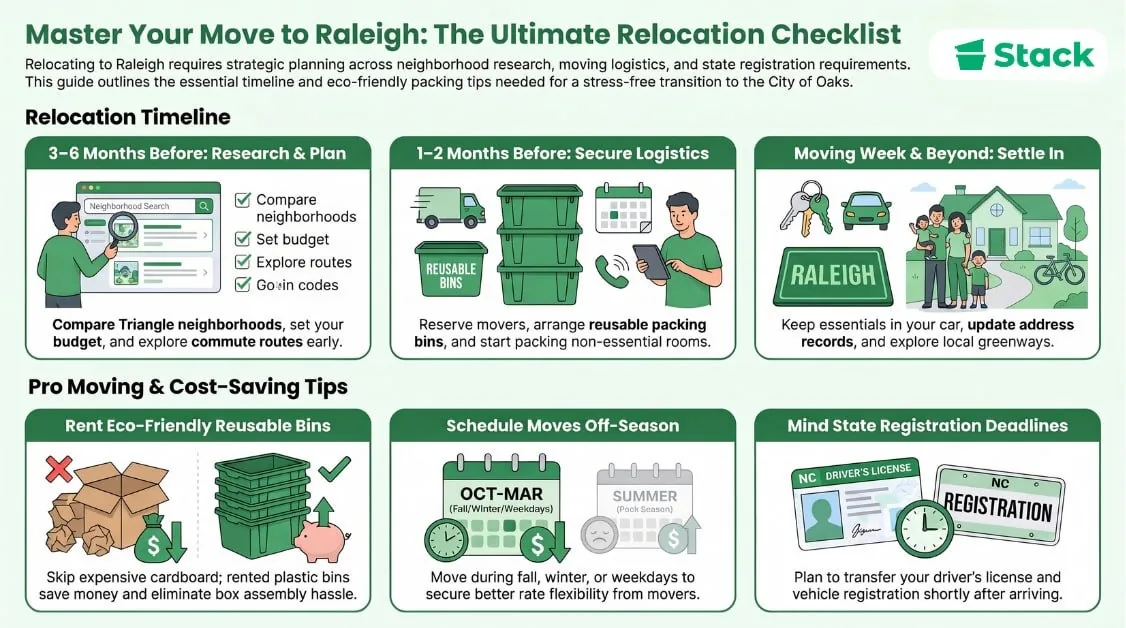
Now, let’s break down each of these steps in detail.
1. Research and Plan Your Move (3-6 Months Before Moving)

When you plan to relocate, you should begin researching three to six months beforehand. Raleigh is the second-largest city in North Carolina and continues to expand outward into Wake Forest, Holly Springs, and Fuquay-Varina. Therefore, give yourself enough time to compare towns across the surrounding Triangle before committing to one. Downtown Raleigh and North Hills draw people who want walkability and nightlife close by, while Cary and North Raleigh tend to appeal to families chasing strong school districts and new construction.
Raleigh’s population was an estimated 506,306 as of July 1, 2025, up from 467,665 at the 2020 Census, and that kind of growth reshapes neighborhoods fast. If you’re relocating from a pricier metro like New York or the Bay Area, Raleigh’s cost of living will likely still come as a relief, even with home prices rising.
2. Find a Place to Live (2-4 Months Before Moving)
Once you have picked a town or neighborhood, start touring two to four months in advance. Choose a place that fits your commute schedule and budget before you get too attached to a particular home. Rental markets here change quickly: a good listing can disappear within days in Cary or downtown Raleigh.
So, make sure you have all the necessary documents, like proof of income, ready when you start touring. Buying is competitive too; prices have risen quite a lot because high-demand, quality houses in desirable school areas sell quickly. Regardless of whether you rent or buy, get pre-approved or pre-qualified before you start seriously searching for a house. This way, you save time when you finally find the perfect place.
3. Set a Realistic Budget for Your Raleigh Move

Calculate the total expenses associated with the move, including movers or a moving truck, packing supplies, transportation, gas or flights, and a deposit for your new place. Do these calculations before considering Raleigh’s daily cost of living. Two-bedroom apartments in Raleigh average somewhere between $1,400 and $2,200 or more a month, depending on the neighborhood and how new the building is. It’s good to build in extra money for your first month.
Utilities, new permit fees for parking spots, and forgetting something important can also add up quickly. A realistic budget gives you some breathing room during the first few weeks instead of a nasty surprise on your bank statement.
4. Prepare for the Move (1-2 Months Before Moving)
With four to eight weeks left, book your moving truck or movers if you haven’t already, since other people will reserve the best dates first. Confirm your bin or box order, line up help for moving day, and start packing the rooms you use least, the garage, the guest room, and any closets you can live without. Now is also a good time to set up utilities at your new address and start getting the necessary paperwork started for things like your bank accounts, subscription services, and regular mail providers. A short list now saves a dozen small headaches in the first two weeks after you move in.
5. Pack Your Moving Day Essentials Bag
A few days before your move, pack a bag with clothes, changes, personal care items, medication, and important documents such as your lease and ID, along with your contract with movers. Keep it with you in the car instead of on the moving truck so you don’t have to wait for a delayed truck to get what you need your first night in the new home.
6. Update Documents and Services After Moving

After you move into Raleigh, try to change your address as soon as possible within the first few weeks. Change your new address with your employer, bank, insurance providers, and other service subscriptions that use your previous address. If you haven’t already, file IRS Form 8822 and register to vote again in Wake County. Let important people know about the address change about two weeks before you move. This lets banks and other subscription companies update their records before they send your first bill to the wrong house.
7. Settle Into Raleigh After Your Move
Transitioning to living in Raleigh, NC isn’t just about moving into a new house; it also involves adapting to a different pace of life. Allow yourself some time to explore first and don’t rush into routines right away. Walk around the nearby neighborhoods and check out the nearest grocery store, pharmacy, and coffee shops. Also, try out commute routes during regular rush hour traffic rather than at a quieter Sunday time.
If you enjoy hiking or trail running, consider William B, Umstead State Park as a good place to start. This location is conveniently close to both Raleigh and Cary so that it works well for people who live on either side of the Beltline.
8. Get Involved in the Community
Raleigh hosts a busy schedule of markets, concerts, and neighborhood festivals almost every weekend when the weather improves. Check your town or neighborhood association’s calendar; most have one, and attend something small before looking for something bigger. If you’ve not yet built a community here, local gyms and running clubs along with Raleigh’s extensive greenway trail system are excellent places to meet new people.
What Do I Need to Know Before Moving to Raleigh?

After you’ve put everything away and sorted through it, there are important considerations that will influence whether your move to Raleigh will be smooth sailing. Before you even sign a lease or make an offer, those are the main ones.
Understand the Local Laws and Registration Requirements
According to the state DMV, North Carolina gives new residents 60 days to get a North Carolina driver’s license. That North Carolina license then becomes the quickest way to prove your new address to banks, lenders, and other state agencies. Vehicle registration has its schedule too. You generally have about 30 days under the reciprocity agreement with your previous state, or less if you accept a job in North Carolina first, whichever comes first, so check the current requirements as soon as you have a move date.
Also important is registering to vote in Wake County and reporting your new address to the IRS using IRS Form 8822, as well as requesting mail forwarding to your new home. Standard forwarding services last no longer than 12 months. Income tax rates currently stand at 3.99% in North Carolina for 2026, compared to 4.25% in 2025 and 4.5% in 2024, based on information from the North Carolina Department of Revenue.
Consider Job Opportunities and the Employment Market
Raleigh anchors the Research Triangle, a tech, healthcare, and finance hub that includes Raleigh, Durham, and Chapel Hill. Major employers like IBM, Cisco, and SAS all keep a serious presence here, and the surrounding Triangle keeps attracting new graduates and remote workers who could live anywhere and choose the Triangle instead. Jobs in Raleigh tend to be fewer compared to the national average: the local economy depends very much on university jobs and research work. For those moving there without a job lined up, the labor market is still quite good, although it helps to start looking for work a few months in advance.
Check Out Raleigh’s Culture, Entertainment, and Dining Scene
Downtown Raleigh has developed a vibrant nightlife and dining scene around Glenwood South and Fayetteville Street, with new restaurants opening every month and a busy schedule of live music and festivals. Food quality has also been well recognized. Raleigh chefs have picked up James Beard semifinalist nods in recent years.
For museums, the North Carolina Museum of Natural Sciences on Jones Street is free to enter. Its downtown neighbor, the North Carolina Museum of History on East Edenton Street, is closed for a major renovation and is scheduled to reopen in phases starting in fall 2028. Closer to campus, the Gregg Museum of Art & Design at NC State, on Hillsborough Street, is also free and open Tuesday through Saturday. The North Carolina Museum of Art’s outdoor park is a separate stop on Blue Ridge Road, a few miles west of downtown, with 164 free acres of trails and sculpture. Sports fans can catch the Carolina Hurricanes at Lenovo Center, renamed from PNC Arena in September 2024.
Explore Different Neighborhoods to Find Your Best Fit
Every move will involve decisions about commute routes, school districts, and the home style you want, and Raleigh has enough variety to cover all three. Raleigh’s diverse parts support very different lifestyles. If you like things close by, like shops and nightlife, then Downtown Raleigh and North Hills are great places. North Raleigh and Cary lean family-friendly, with strong school districts and well-maintained parks, and families relocating with kids often pick a neighborhood for the schools first and worry about the commute second.
Wake Forest and newer suburban areas near the city offer more new builds and bigger spaces for the same price. Places like Holly Springs and Fuquay-Varina are further away but have newer houses at lower prices compared to the center of Raleigh and Cary. Raleigh mixes older neighborhoods with newer development, so whether you’re buying for the first time or relocating, there are actual options available. For a better idea of what different areas cost and which fit your budget, take a look at our Raleigh relocation guide.
Prepare for Raleigh’s Weather Conditions
Raleigh has distinct seasons with four: it’s hot and humid all through late summer and into early September. Springtime brings lots of pine pollen that lasts a few weeks; if you are sensitive to this pollen, take allergy medication beforehand. Winters are much milder compared to that; you get light ice storms rather than large snowfalls. Check traffic flow before deciding where to settle. A normal ten-minute drive on Tuesdays in the afternoon can turn into forty-five minutes during rush hour on routes such as I-40 or Beltline, and that makes a big difference when you live there instead of just visiting. Driving time to Wrightsville Beach or Wilmington stretches to about two to two and a half hours in the summer, too, because of lower weekend traffic.
Budget-Friendly Ways for Moving to Raleigh
Moving is rarely cheap, but a few deliberate choices can keep your household budget under control without cutting corners on the move itself.
Move During Off-Season
There’s a high demand for moving companies and renting trucks from May through September, so if you can time things right by moving during the fall or winter, you’ll save real money and have a better chance at choosing your ideal day. If possible and if your work schedule and lease permits it, consider scheduling your move on weekdays during the low season rather than weekends in summer.
Declutter and Sell Unwanted Items
Go through each room and sell or donate items that you haven’t touched in a year. Fewer boxes mean you need a smaller moving truck, and fewer bins to rent, too. Selling furniture you won’t need in your new space, especially larger furniture, is often cheaper than paying to move it.
Source Free or Discounted Packing Materials
Before buying new boxes, ask local stores if they have any that they don’t need anymore. Also look into group forums where people give away boxes and bubble wrap after moving themselves. This is a good opportunity to save some money before purchasing bins or using a truck for your move.
Compare Multiple Quotes and Negotiate Prices
Before you book anything with a mover or rent a moving truck, get at least three quotes and ask each one directly whether they will match a competitor’s quote. Moving companies expect this behavior in low season and are often flexible about pricing.
Plan Utility Setup Strategically
Make sure you schedule all your services like electricity, water, gas, and internet at least two weeks before you move into your new place. Set your move-in date as opposed to the signing date of your lease. Overlapping service by even a day or two at your old house can help you avoid a dark first night.
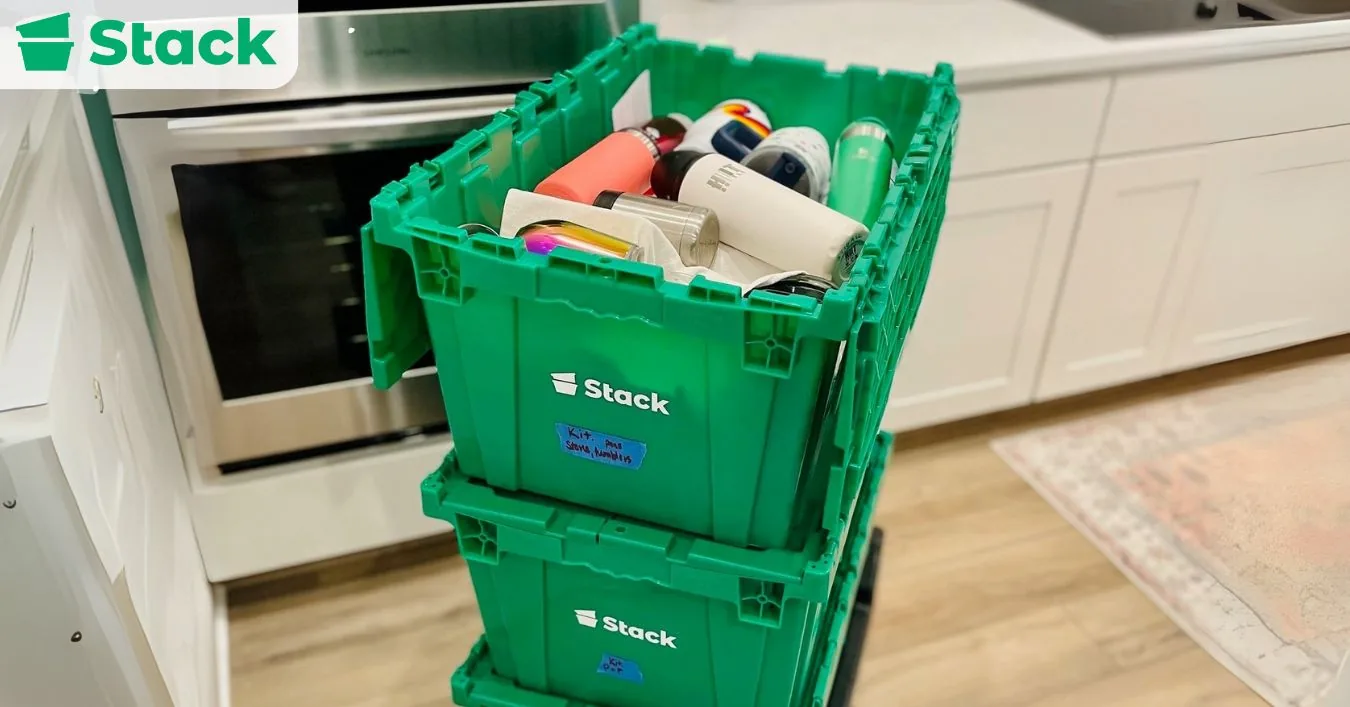
Rent Moving Boxes
When you take into account things like tape, bubble wrap, and having to go out for more boxes partway through your move, buying boxes becomes pretty pricey. Usually, renting bins from Stack Moves comes out cheaper if you’re moving similarly because there’s no hassle of putting them together again or disposing of them. Compare the math yourself by checking how much moving boxes typically cost before you decide.
Packing and Preparation Tips for a Smooth Move to Raleigh
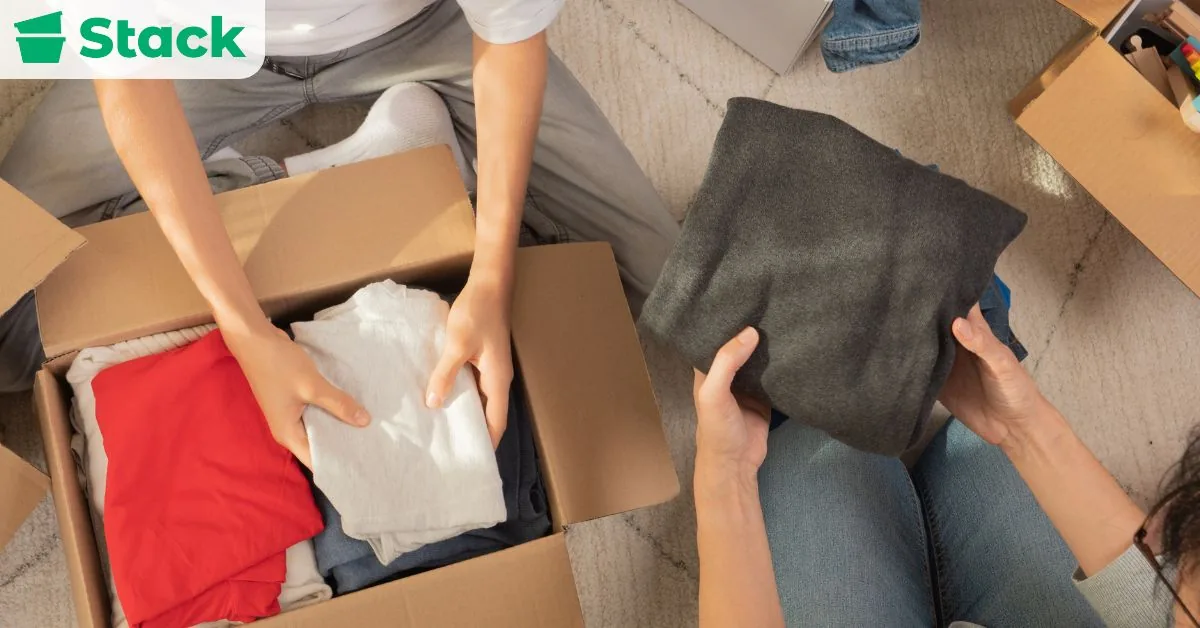
A smooth transition from one house to another comes down to preparation more than luck. This list of quick tips covers important details that make a big difference on moving day.
Start Packing Early and Label All the Boxes
Start thinking about labeling boxes now for the items you use the least, such as those from the garage, guest room, and closet storage rooms. Plan at least a month ahead. Label every box with the room it’s going to in your new home, not the room it came from in your old home, so movers and friends can place it correctly without asking.
Pack an Essentials Bag
Pack a bag with a few days of clothes, toiletries, phone chargers, medications, and important documents, and keep it with you instead of on the truck. Keeping these things close means everyone in your family can continue to use their stuff if the truck takes longer than expected to arrive.
Use Vacuum-Sealed Bags for Bulky Items
Vacuum-sealed bags reduce bedding, pillows, and out-of-season clothes to minimal sizes so they take up much less space inside bins or trucks. Save the hard-sided boxes for books and fragile items that would crush a soft bag.
Protect Fragile Items Creatively
Wrap glassware together with clothing or towels that you have packed. Use pillows and blankets as padding for items that have sharp corners too. This uses your supplies more efficiently and reduces stress about things breaking when unpacking.
Create a Moving Inventory List
Create a moving inventory list room by room before putting things in boxes. Then use Stack Moves’ moving box calculator to figure out roughly how many boxes you will need. Having this actual list also makes it simple to check that nothing gets lost once everything has been unloaded at your new place.
Need Help With Your Move to Raleigh?
Keeping an organized list helps you when moving to Raleigh from start to finish. First, you do some research into different neighborhoods, set a realistic budget, and handle things like changing your address and registering before the big day comes. This way, you won’t be surprised by anything.
To simplify your move and lower costs, we suggest going green with eco boxes. Stack Moves rents durable and reusable plastic bins that make packing easy, safe, and economical. Each bin saves the equivalent of 500+ boxes during its lifetime, and renting them is fast and convenient too. Contact us to place your order right now!
Frequently Asked Questions
Here are some common answers to frequently asked questions people have when they’re thinking of moving to Raleigh.
Does Stack Moves Provide Movers for a Raleigh Move?
No, that’s not right. Stack provides delivery and pickup services for reusable plastic containers, dollies, and labels; they clean and sanitize these items before every move.
How Long Do New Residents Have to Get a North Carolina Driver’s License?
North Carolina gives new residents 60 days to get a driver’s license after establishing residency, according to the state DMV.
How Soon Must I Register My Vehicle After Moving to North Carolina?
Generally, you must register your vehicle within about 30 days under the reciprocity agreement with your previous state, or sooner if you accept a job in North Carolina first, whichever comes first.
What Is North Carolina’s Current Income Tax Rate?
North Carolina’s flat individual income tax rate is 3.99% for 2026, down from 4.25% in 2025 and 4.5% in 2024.
What Is Raleigh’s Current Population?
An estimated 506,306 as of July 1, 2025, according to the U.S. Census Bureau, up from 467,665 at the 2020 Census.
What Is the Best Time of Year to Move to Raleigh?
When considering a move to Raleigh, fall and winter tend to be cheaper and less competitive times compared to May through September when there is high demand for moving companies and trucks.
Which Raleigh Neighborhoods Are Best for Families?
North Raleigh and Cary are considered good places to live with great family friendliness and strong school districts, along with well-maintained parks. North Raleigh and Cary lean family-friendly, with strong school districts and well-maintained parks, while Wake Forest and the newer suburbs offer more new construction and space for the money.
How Far Is Raleigh From the Coast?
Wrightsville Beach and Wilmington are roughly two to two-and-a-half hours away by car.
Cardboard sucks. Book bins instead.
Reusable plastic moving boxes, delivered and picked up for free. Bundles from $149.