Moving Boxes

Home Depot vs. Lowe’s Moving Boxes

When you’re buying moving boxes, Home Depot and Lowe’s are usually the first two options that come to mind. Although both stores offer a wide range of moving boxes and packing supplies, it can be tough trying to choose one over the other. This comparison shows why Home Depot is the better choice for heavy-duty bulk moves, while Lowe’s is the winner for small-scale convenience and all-in-one kits.

If you’re looking for a cost-effective and eco-friendly way to gather moving boxes, Stack Moves can help you save both time and money. By renting plastic moving boxes you get durable, uniform containers delivered to your door and picked up after your move—no waste, no sourcing hassle. Want to learn more about how renting can help you save money? Contact us today!

In this post, we will discuss the pros and cons of shopping for moving boxes from Home Depot and Lowe’s to help you decide on the best solution for your move.

Comparison of Home Depot vs. Lowe’s Moving Boxes

Key Features of Home Depot Boxes

Our comparison of Home Depot vs. Lowe’s moving boxes looks at the factors that matter most when choosing the right boxes for your move, including sizes, durability, eco-friendliness, and available options to see how each retailer stacks up. By the end, you’ll have a clearer idea of which store offers the better fit for your moving needs.

Key Features of Home Depot Boxes

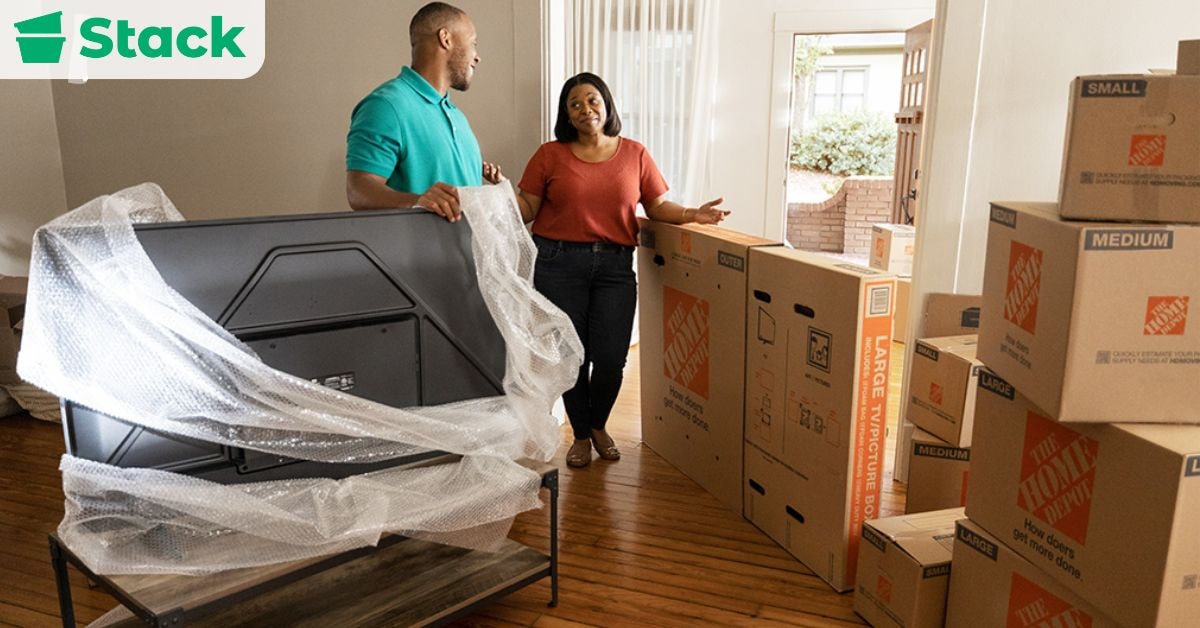
Home Depot moving boxes are known for their wide selection, solid build, and eco-friendly materials. Below we break down how they stack up in size availability, durability, sustainability, and what you get with your purchase.

Box Sizes and Specialty Options

Home Depot boxes are available in various sizes, ranging from small to extra-large. In addition to standard boxes, they also provide specialty boxes, like dishpack and wardrobe boxes. Their standard, medium-sized boxes measure 21 inches in length, 15 inches in width, and 16 inches in depth.

Durability and Strength

Beyond being affordable, Home Depot’s boxes are built to withstand tough moves. Home Depot boxes are made of corrugated cardboard and are generally strong enough for typical household moves. Likewise, their heavier-duty options perform well under weight and stacking pressure. With an edge crush test (ECT) ranging from 32 to 48, these boxes are suitable for packing both heavy and fragile items.

Eco-friendliness

For the environmentally conscious mover, Home Depot’s boxes are a sustainable choice. Most of their boxes are made from 100% recycled content and remain fully recyclable even after multiple uses. By choosing these over non-recycled alternatives, you’re reducing the carbon footprint of your move and ensuring that your packing materials don’t end up in a landfill once the last room is unpacked.

Additional Supplies

While Home Depot sells other packing supplies such as tape and bubble wrap, these items are not included with box purchases and must be bought separately.

Key Features of Lowe’s Moving Boxes

Key Features of Lowe’s Moving Boxes

Lowe’s moving boxes compete closely with Home Depot’s offerings, emphasizing a variety of sizes and recyclable materials, with some distinct perks in their bundled kits.

Box Sizes and Speciality Options

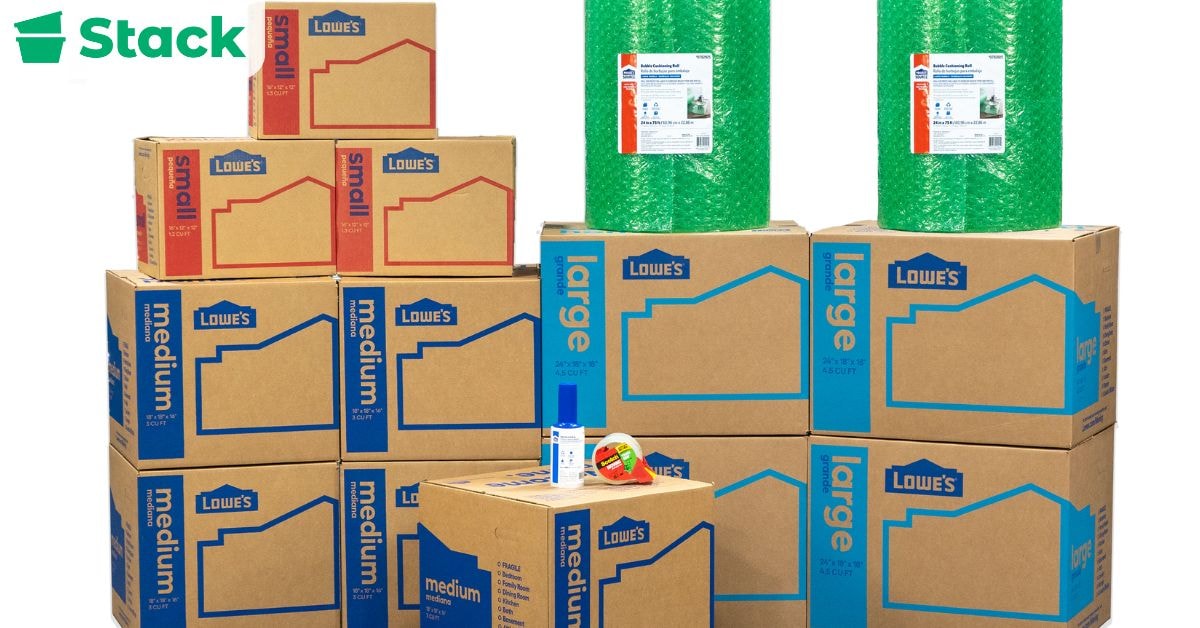
Like Home Depot, Lowe’s also offers a wide range of boxes, including specialty boxes like television moving boxes. A medium-sized box from Lowe’s measures 18 inches in width, 16 inches in height, and 18 inches in depth, making it slightly shorter but wider than the Home Depot equivalent. To support larger projects, Lowe’s also offers tiered bulk pricing, allowing you to scale your supply list while keeping the per-unit cost low.

Durability and Strength

While Lowe’s boxes are dependable for typical household items, they are primarily designed for standard-duty use. Most of their inventory carries an ECT score of 32, which is the industry baseline for safe stacking. It is also worth noting that handle cutouts vary by model; if you are moving heavy items, you’ll want to filter for their specific “Easy Lift” options to ensure a secure grip.

Eco-friendliness

Lowe’s moving boxes are made from recycled cardboard and often carry certifications like SFI (Sustainable Forestry Initiative), supporting responsible sourcing and recycling. This ensures that the fibers used in your boxes come from forests managed with strict environmental and social standards.

Additional Supplies

The biggest differentiator for Lowe’s is their all-in-one moving kits. Unlike the à la carte model, these bundles often package boxes with essentials like tape, bubble wrap, and protective pouches. This approach eliminates the need for multiple trips to the store and ensures you have a cohesive set of supplies from day one. While the specific contents can vary by location, these kits are the most efficient option for those who want to skip the logistics of supply planning and get straight to packing.

Pricing and Availability of Moving Boxes at Home Depot and Lowe’s

Lowe’s standard boxes are priced at $1.75 for small boxes, $2.25 for medium boxes, $2.75 for large boxes, and $3.75 for extra-large boxes.

SizePriceHWD
Small$1.75121612
Medium$2.25181618
Large$2.75182418
Extra Large$3.7521.52222

Home Depot’s standard boxes cost $1.98 for small boxes and $2.48 for large boxes. Heavy-duty boxes can cost as much as $6.98, depending on the size.

SizePriceHWD
Small$1.38171111
Medium$1.98211516
Large$2.48271615
Extra Large$3.48242120

Home Depot vs. Lowe’s Moving Boxes—Pros and Cons

This breakdown will give you a clearer picture of what each store offers and help you decide which is the right choice for you.

Home Depot

Home Depot offers moving boxes in varying sizes and strengths to suit diverse packing needs. More reasons why they’re a great choice to purchase moving boxes from include:

Pros:

  • Easy to purchase
  • Affordable prices
  • High ECT score for added durability
  • Eco-friendly
  • Handles on boxes
  • Comprehensive return policy

Cons

  • Bundles don’t come with additional supplies

Lowe’s

When you shop at Lowe’s, you can be sure you’re getting high-quality boxes at competitive prices, but what else sets them apart?

Pros:

  • Boxes are made from ethically sourced materials
  • Kits come with extra supplies
  • Extensive return policy

Cons:

  • Slightly higher prices compared to Home Depot
  • Limited ECT score
  • Availability and pricing can vary by location

Home Depot vs Lowe’s Moving Boxes: How They Compare

In terms of strength, both stores’ boxes meet the standard edge crush test (ECT) score of 32, suitable for most packing needs. However, Home Depot offers boxes with higher scores, reaching up to 48 for added strength. Additionally, both stores provide specialty boxes, such as wardrobe boxes, television boxes, and more.

Looking at customer satisfaction and feedback, Home Depot has a slightly higher rating of 4.6 stars with an 83% recommendation rate compared to Lowe’s 4.4 stars and 84% recommendation rate. Customers also enjoy the same positive experience when it comes to their return policies. If you have any extra unused boxes, Home Depot allows you to return your boxes within 90 days as long as you have a receipt. Likewise, Lowe’s general policy allows customers to return most items within 90 days as well.

Both stores offer bundle options that allow you to take advantage of bulk discounts; however, notable differences exist between the two. For instance, Home Depot’s bundles don’t include additional packing supplies. On the other hand, Lowe’s kits include helpful supplies such as bubble wrap and foam pouches. However, the availability and pricing of Lowe’s kits depend on your location, making Home Depot’s offer more predictable.

Home Depot vs. Lowe’s Moving Boxes—Which is Best for You?

To help you decide which moving boxes are best for your needs, we compared both boxes based on affordability, durability, and eco-friendliness. You have to consider all these factors because it’s important for your boxes to be sturdy yet affordable.

In terms of pricing, Home Depot offers slightly lower prices for individual boxes than Lowe’s. Plus, their prices are more consistent across locations, making them a more budget-friendly choice.

Home Depot also takes the lead for durability since their boxes come at higher ECT ratings of up to 48 compared to Lowe’s standard 32. Both stores sell boxes made from recycled materials, making either one a solid choice for eco-conscious buyers.

Additional Moving Supplies and Services Offered by Home Depot and Lowe’s

Pros and Cons of Each Option

Both Home Depot and Lowe’s offer more than just moving boxes, making them convenient one-stop shops for basic moving supplies.

Common Supplies at Both Stores:

  • Packing tape and dispensers
  • Bubble wrap and foam sheets
  • Packing paper and newsprint
  • Stretch wrap and shrink wrap
  • Mattress and furniture covers
  • Labels and markers

Home Depot Extras:

  • Partnerships with truck rental companies
  • Dollies and hand trucks
  • Moving kits (boxes sold together, no extra packing materials included)

Lowe’s Extras:

  • Moving kits that bundle boxes with tape, bubble wrap, and foam pouches
  • Furniture sliders and protective pads
  • Select local truck rental partnerships

Other Cheap Moving Box Solutions

While Home Depot and Lowe’s are the most convenient, you can find cheaper moving boxes beyond big-box stores. Walmart often undercuts the major home improvement stores by a few cents per unit on standard sizes. For those who can plan ahead, Amazon and U-Line offer significant savings when you buy in bundles of 20 or 25, though you’ll need to account for shipping costs or Prime eligibility. U-Haul is another high-value option, offering a “buy-back” guarantee where they refund you the full price for any unused boxes you return. Finally, dollar stores are excellent for small, sturdy boxes, though their inventory is usually inconsistent and better suited for packing heavy items like books or canned goods.

Where Can You Get Free Moving Boxes?

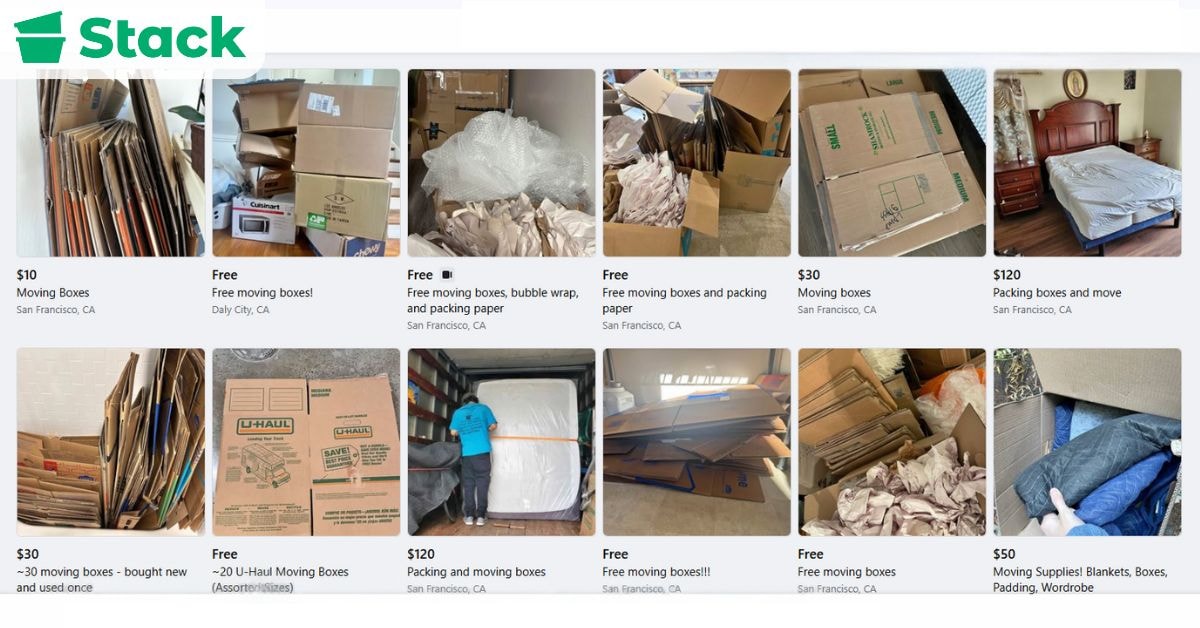
For the absolute lowest moving budget, you can source high-quality boxes for free by tapping into local community groups and retail waste cycles. Facebook Marketplace and the Nextdoor app are the best places to start, as people who have just finished unpacking are usually desperate to get rid of their empty boxes to reclaim their garage space. You can also visit local liquor stores or bookstores, which routinely give away reinforced, heavy-duty boxes that are specifically designed to hold weight without buckling. Finally, check with large retailers or grocery stores during their restocking hours; they often have an abundance of clean, sturdy cardboard destined for the baler that they are happy to let you haul away for free.

Why Renting Plastic Bins Is the Best Option

Compared with buying boxes, renting plastic bins is the most stress-free and cost-effective way to gather moving boxes. Unlike traditional cardboard boxes, which become weak when exposed to moisture and tend to collapse under heavy weight, plastic bins are very durable. In addition to their sturdiness, they are also a more sustainable way of moving since the boxes can be used multiple times. Renting plastic bins is also more convenient since most rental services provide the option of having your bins delivered to your doorstep and picked up after your move.

Tips for Choosing the Right Moving Boxes

Where Can You Get Free Moving Boxes

With the right moving boxes, packing is easier, and your belongings remain protected throughout the move. Use these tips to find the right box for your move:

  1. Estimate how many boxes you might need based on the size of your home and belongings. Online tools, such as a moving box calculator, can help you do this easily and save you the stress of needing more boxes mid-packing.
  2. Stacking boxes is a handy technique that helps you maximize space in your moving truck. Stick to boxes of similar shapes and sizes to make stacking them easier and safer. Another good practice when picking box sizes for moving is to match the box sizes to the items being packed.
  3. Measure your large or oddly shaped items to confirm they can fit into standard moving boxes. This way, you can ensure they are properly packed and kept safe.
  4. Choose your box sizes according to the size of your truck. Remember that smaller boxes are easier to fit into tight spaces and can be stacked to save space.

Need Reusable Moving Boxes to Rent?

Alternatives to Free Moving Boxes

Home Depot and Lowe’s offer a wide range of moving boxes at affordable prices. Home Depot is a budget-friendly choice that allows you to choose boxes with better durability for tougher moves. Lowe’s offers packing kits with bonus supplies, which can be convenient and make packing simpler.

Ultimately, both options are great, and whichever one you choose will get the job done. However, it’s worth mentioning that you can still get the best moving boxes without buying them. Whether you’re on a budget or looking for an eco-friendly moving solution, renting moving boxes remains the most affordable and sustainable way to pack. Contact us today to rent our sturdy plastic bins.

Frequently Asked Questions

To help you finalize your supply list, here are the answers to the most common questions about sourcing boxes from Home Depot and Lowe’s.

Are Home Depot Boxes Good?

Yes, Home Depot moving boxes are a solid choice for most moves. They’re sturdy, easy to find in-store or online, and made from recycled materials, with heavier-duty options available if you’re packing fragile or bulky items.

Which Offers Better Quality Moving Boxes, Home Depot or Lowe’s?

Both stores offer reliable boxes that work well for standard household moves. If strength is your top concern, Home Depot has more heavy-duty options, while Lowe’s is perfectly suitable for everyday packing needs.

Can I Buy Moving Boxes in Bulk at Home Depot or Lowe’s?

Yes, both retailers offer bulk options and moving kits that make it easier to buy everything at once. Lowe’s kits sometimes include extra supplies, though availability can vary by location.

Are There Eco-Friendly Moving Box Options Available at These Stores?

Absolutely. Both Home Depot and Lowe’s sell moving boxes made from recycled and recyclable materials, making them a good option for eco-conscious movers.

Do Movers Provide Boxes?

Moving boxes are the foundation of any move. Your belongings are at a greater risk of damage when you use poor-quality boxes to pack them. So, it’s important to choose sturdy boxes for your move. While most people prefer to source boxes on their own from retail stores or friends and family, you may have wondered whether it’s possible to get them directly from your moving company. The answer is yes, movers do provide boxes, but this service often comes at a higher cost and may depend on the type of moving service you paid for.

The answer to this question depends on the type of moving service you choose. Many professional movers offer the option to purchase boxes separately, but full-service movers typically include boxes and other essential supplies as part of their comprehensive package. These full-service packages also tend to come with both packing and unpacking services, making your move even more streamlined.

At Stack Moves, we’ve helped people in the U.S. enjoy hassle-free relocations thanks to our reusable moving boxes for rent. Backed by years of experience in the moving industry, our friendly team offers expert moving tips tailored to your situation so that your move is not only less hectic but more affordable too. Contact us today to book your boxes for your next move!

In this blog, we will discuss if movers provide boxes and explain the types of services they offer.

Do Movers Provide Boxes?

Yes, most movers provide boxes, either as part of their packing service or for an additional fee. These boxes are typically high-quality, durable, and designed specifically for moving, which helps protect your belongings during transit. However, relying on movers for boxes can increase your overall moving costs compared to sourcing or renting them yourself.

On the plus side, it saves you the time, effort, and stress of finding boxes that actually hold up. This option is worth considering if you’re short on time, want a full-service move, or just need a few extra boxes for last-minute packing.

Types of Movers and What Packing Supplies They Provide

The type of mover you hire will determine whether boxes and materials are included, available for purchase, or something you’ll need to handle yourself. Here’s a breakdown to let you know what to expect.

Full Service Movers

Full-Service Movers

Full-service movers handle nearly every part of your move. When you pay for a full-service package, you’re essentially hiring a professional team to do all the heavy lifting and organizing for you. In addition to their professional packing services, they also provide packing materials such as sturdy moving boxes, packing paper, labels, bubble wrap, moving blankets, and more. Since full-service movers handle more than just transportation, the cost is generally higher, but the convenience they offer can make it well worth it.

Types of Boxes Provided by Full-Service Movers

  • Small Boxes: Ideal for heavy items like books, kitchenware, or tools
  • Medium Boxes: Perfect for everyday essentials such as clothing, linens, toys, or decorative pieces
  • Large & Extra Large Boxes: Used for lightweight, bulky items like pillows and blankets
  • Specialty Boxes: Best for unique items that require extra protection

Moving companies typically offer a range of different-sized boxes, such as small, medium, and large boxes, to help you accommodate all your belongings. Professional packers may also use specialized boxes to pack your wardrobe, dishes, pictures, and other goods. 

If your movers provide packing materials, they’ll likely supply these items:

  • Cardboard boxes
  • Bubble wrap
  • Packing paper
  • Packing tape
  • Labels
  • Moving blankets or quilted moving pads
  • Dollies
  • Custom crates

These packing options will cost you more than just loading, unloading, and transportation. However, if your budget can handle it and you simply don’t have the time and energy to pack on your own, a full-service would be the best choice for you.

Partial-Service or Self-Service Movers

Partial-service movers are a flexible option for people who want some professional help without paying for a full-service move. You can decide which parts of the move you want handled, such as packing fragile or bulky items and manage the rest yourself.

These movers provide the same boxes and packing materials as full-service movers but only for the items they’re responsible for, while you use your supplies for the rest. This approach helps you save on costs while still benefiting from expert packing where it matters most.


Costs of Boxes With Full-Service Movers

Most professional movers provide free quotes for their services. The cost of materials may be included in the cost of packing or broken out as a separate cost.

The cost of a full or partial packing service will be based primarily on the size of your home and the volume of your possessions. Since the price of moving services can vary widely, make sure you get a firm quote before proceeding with a company.

DIY or Self-Service Movers

Basic or Self-Service Movers

In the case of a DIY move, you should expect to handle most of the process by yourself. You typically will not get any assistance from the movers beyond transportation. While this option can save money, it often comes at the cost of your time and energy.

You’ll be responsible for getting your boxes and packing materials, packing, loading, and unpacking. All your movers will do is transport your belongings from one location to another. That said, many basic movers allow you to add optional services, like furniture disassembly or packing help, for an extra fee.

You can also purchase boxes and materials from them if needed. Even with these add-ons, you’re still responsible for estimating how many boxes and supplies are required based on the size of your move.

What Types of Boxes Do Moving Companies Offer?

Depending on the moving company you select, you may have access to a range of moving supplies, including boxes and packing material. The best moving boxes are sturdy and sized to accommodate typical household items. Specialty boxes may also be available for heavy or bulky items like clothes, dishes, and electronics. 

There are two primary kinds of boxes that moving companies will either sell or rent to you—cardboard and plastic. Cardboard boxes are by far the most common option, but movers are steadily incorporating more plastic bins into their moving process because of their durability and sustainability.

Cardboard Boxes

Cardboard boxes come in a range of sizes, from standard to specialty boxes for dishes, clothing, appliances, and so on. Professional movers can supply them for an additional fee, but you can also affordably find your own. 

For example, you can save money by asking for free boxes from grocery and retail stores. You can also search for them on platforms like Nextdoor, Craigslist, or Facebook Marketplace. Even U-Haul has options for online swaps, and some locations have a “take one, leave one” area where you might find used boxes. While this could be a good option if your budget is tight, finding quality boxes in these cases can be quite challenging. They might also not have the right box sizes, and even then, they might not have as many boxes as you need to finish your move.

Unfortunately, cardboard is not without limitations. For one, if you don’t have the right size boxes, the packing process can be frustrating. If the boxes are too small, they probably won’t be able to accommodate all the items you plan to pack. On the other hand, if they’re too big, you might inadvertently stuff them to the point where they’re too heavy to be safely loaded and unloaded. 

Stacking them inside a truck also becomes a problem. With various sizes that don’t rest neatly on top of each other, it can turn into a game of Tetris. And since cardboard is not particularly sturdy, your items may not be well protected from harm.

If your mover doesn’t offer them or if you don’t want to use cardboard boxes, you still have options to pack up and prepare your home for moving. Plastic moving bins for rent are a great alternative, with robust construction and uniform sizing to keep valuables safe.

Reusable Plastic Bins

If you want to make sure that every item in your home is securely packed, the safe move is to use sturdy packing boxes made of plastic. 

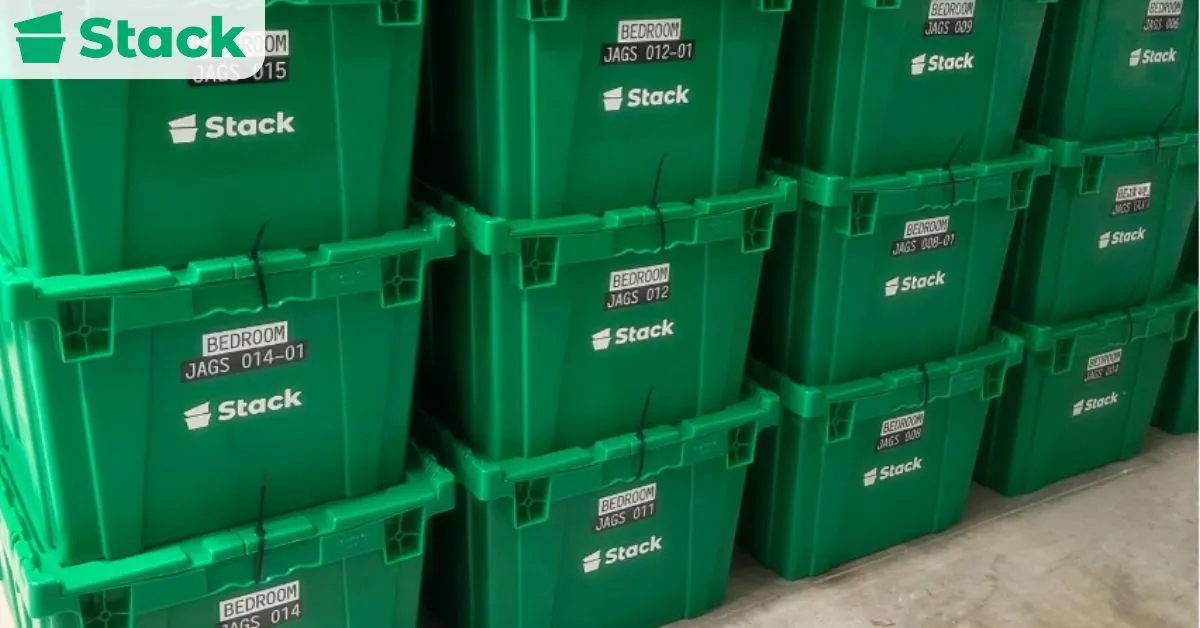
Plastic bins are resilient and easy to organize. They’re durable, water-resistant, and designed to keep pests out, making them ideal for protecting fragile items, from heirlooms to essential documents. They’re also stackable, and you won’t have to worry about them collapsing under the weight of multiple boxes like flimsy cardboard does. They also have grooves on the lids that serve to lock the box above it into place, making stacking a cinch when you’re storing, transporting, or organizing. Finally, they’re a sustainable packaging option that serves as an eco-friendly alternative to cardboard.

Comparing Plastic Bins and Cardboard Boxes

Comparing Plastic Bins and Cardboard Boxes

Here’s how plastic bins stack up against cardboard boxes for a move:

Durability vs. Cost

The cost of moving boxes is an important factor when planning your move. Buying cardboard boxes is not always cheap, and unless they’re still in great condition, you’ll have to dispose of them when you’re done. They’re also not the most reliable choice in terms of strength and durability.

When they’re stacked high in a moving truck, even sturdy moving boxes can buckle under the heavy weight of your household goods. In contrast, plastic bins will stack perfectly and ensure that the contents arrive safely at your destination. This could end up saving you money and heartache in the long run.

Environmental Impact

Over 1.7 million tons of cardboard are sent to landfills each year. If you’re looking for an eco-friendly alternative that will lower your carbon footprint, we suggest renting reusable plastic bins for packing and moving.

Use Cases

Cardboard might seem like a good choice if you’re willing to spend a good deal of time tracking down cheap used boxes. But this potentially puts your belongings at risk as second-hand containers often aren’t as strong as they used to be. 

Renting plastic bins, on the other hand, allows you to cheaply get high-quality containers—ones that you can feel safe using and that you don’t have to track down and dispose of when you’re done. Ultimately, time is money, and with rentals that are dropped off and picked up at your door according to your schedule, you can save on both. 

Plastic bins are also great for packing delicate items. With robust plastic bins, there’s less risk of damage, saving you plenty of money on repair and replacement — not to mention the heartache of losing precious items.

Reusable bins are also an eco-friendly option, so if you’re looking for an environmentally-friendly option while protecting your household goods, plastic bins are a great solution. 

Is It Worth Paying Movers for Moving Boxes?

Is It Worth Paying Movers for Moving Boxes?

While you may have to rely on movers for specialty items like wooden crates or for supplies like packing paper or bubble wrap, there are cheaper ways to get boxes. If you’re looking for a high-quality, reusable option, go for Stack Move’s plastic bins. They’re easily stackable, include convenient labels, and offer better protection for valuable and fragile items.

Buying moving boxes might seem practical at first, but it rarely pays off. The biggest problem with this option is wondering what to do with the boxes after the move. If you choose to store them, they take up valuable space and often get damaged before your next use. If you decide to toss them, they end up as waste.

Even if you manage to find free moving boxes, you’ll still deal with the hassle of looking for sturdy ones, checking for damage, and assembling each with packing tape. Over the years, we’ve found that renting moving boxes is a far more practical and eco-friendly way to pack and move.

Plastic moving bins come preassembled, which saves you time you would’ve spent reinforcing your cardboard boxes. Their sturdy design keeps your items safer during transport, especially fragile or heavy ones. Once you’re done, the bins are picked up for cleaning and reuse, saving you the trouble of storage or disposal.

Renting Boxes: A Cost-Effective Alternative

Renting plastic bins is a cost-effective alternative that offers plenty of convenience. Once you’ve placed your order, the bins are dropped off at your location on your requested date. You’ll have more than enough time to make sure everything is carefully packed before your scheduled move. When you’re finished, these eco-friendly bins are picked up, sanitized, and prepared for reuse.

When you request boxes, it’s important to understand the mover’s box policies. This includes associated costs and what happens to empty boxes after the move. So whether you choose a full-service or self-service option, you should get a firm quote for the move. You should also ask additional questions, such as if you need to return the boxes yourself or if they’ll be picked up by the movers after the move.

If you want to learn more about the many benefits of bin rentals, contact Stack Moves today.

Does Everything Need to Be in Boxes for Movers?

Does Everything Need to Be in Boxes for Movers?

Many people wonder whether everything has to be in boxes for movers. While most of your belongings should be boxed up, not everything has to be.

It’s best to securely pack dishes, clothes, small appliances, fragile items, and other loose goods. However, larger items don’t necessarily need to be in boxes — especially items like furniture.

Will Movers Move Things Not in Boxes?

Although most professional moving companies prefer when items are packed in boxes, it isn’t mandatory. A major benefit of using boxes to pack your belongings is that it makes them easier to load and unload from your moving truck. It also makes sure your items are protected from harm during the move.

That said, it’s easy to assume every single item needs to go into a box before your movers handle it, but this isn’t always the case. Large or oddly shaped items like furniture and heavy equipment usually can’t fit into boxes. Instead, movers wrap these pieces with moving blankets, plastic wrap, or padding to prevent scratches and damage during transport.

Movers can handle transporting large items like bed frames, night tables, and couches, but you’ll want to protect them with padding. Not only will you keep your belongings safe, but some movers refuse to transport and take responsibility for unprotected items.

If there are items you don’t have time, energy, or knowledge to pack, you might wonder: Do professional moving companies pack for you? Some do, but they won’t make any guarantees about safe transport, even if they handle the packing on your behalf.

Which Items Will Movers Not Move?

There are several items moving companies would rather not handle. This usually includes hazardous items, controlled substances, and valuable and fragile items, among others. Some examples of such items include:

  • Food: Especially perishable or opened food items that can spoil or attract pests.
  • Pets: Movers can’t transport live animals due to health, safety, and regulatory concerns.
  • Plants: Many movers avoid moving plants because they can wilt, spill soil, or violate state agricultural regulations.
  • Scuba gear: Pressurized tanks and other dive equipment can be dangerous to move without proper handling.
  • Lawn and garden tools: Tools with fuel or oil must be emptied before transport, and some movers won’t move them at all.
  • Hazardous materials: Items like paint, gasoline, batteries, cleaning chemicals, and propane tanks are considered unsafe for transport.
  • Jewelry, cash, and important documents: These should always be moved personally to prevent loss or theft.
  • Firearms and ammunition: These require special handling and documentation that most movers aren’t licensed to manage.
  • High-value electronics or collectibles: Movers may recommend insuring or personally transporting these items to avoid potential damage.


Get Your Plastic Bins from Stack Moves

Many moving companies provide a range of services and supplies for an added fee. If you’re in a hurry and your budget allows, it might make sense to take advantage of these options. First, however, you should speak with the movers directly about their policies to make sure they align with your needs.

Save More with Stack’s Moving Boxes for Rent

It’s a good idea to get boxes directly from movers if you’re short on time or want everything handled by one team. It is not only convenient, but it also ensures you get the best boxes to safely transport your items. But remember that this convenience often comes with a higher price tag, especially if boxes and packing materials are billed separately.

You can enjoy the same benefits of getting boxes from your movers at a lower cost by renting them instead. These durable boxes are built to withstand the rigors of any move and some rentals even include additional packing supplies, making the entire moving process smoother from start to finish.

Don’t waste another minute! Reserve your moving boxes and have them delivered in time for moving day. If you have any questions about our services, don’t hesitate to contact our team.

Frequently Asked Questions

We understand that you may still have questions about the services movers provide and how they can benefit your moving needs. That’s why we’ve answered some of the most frequently asked questions to help you enjoy a stress-free relocation process.

Do Moving Companies Pack for You?

Yes, most moving companies do provide professional packing services, though this depends on the package you choose. Full-service movers take care of everything, from packing and loading to transport and unpacking. That said, these services tend to be pricier, so many people go for partial packing help or handle some of the work themselves to save money.

Do Moving Companies Provide Boxes and Packing Materials?

Many moving companies offer boxes and packing materials, either as part of your package or as a separate service. However, this convenience comes at a higher price, which is why most people would rather opt for sourcing their own boxes to cut costs.

How Far in Advance Should I Book a Professional Moving Company with Packing Services?

It’s best to book a moving company 4–8 weeks in advance, especially if you’re moving during peak season. For smaller moves or relocations outside of busy periods, 2–4 weeks lead time is usually enough to secure your preferred date and ensure the movers have time to plan and prepare your appointment.

Can I Pack Some Items Myself and Have the Movers Pack the Rest?

Absolutely. This is known as a partial packing service, and it’s ideal for people who need some assistance with packing instead of having movers handle everything. It’s usually less expensive than full-service packing since you’re only paying for the professional help you actually need.

Is It Customary to Tip Movers Who Also Provide Packing Services?

While not mandatory, tipping is a way to show appreciation for exceptional service. If your movers handle your belongings with care, you should tip them. If you’re on a tight budget, simply offering snacks and drinks or referring their service to friends and family is another thoughtful way to show your gratitude.

How Can I Figure Out How Many Moving Boxes I’ll Need?

Figuring out how many boxes you’ll need can be tricky since it depends on your home’s size and how much you own. To make it easier, Stack Moves offers a free moving box calculator that quickly estimates the number and sizes of boxes you’ll need for your move.

What Sizes of Moving Boxes Are Available?

Moving boxes typically come in small, medium, large, and extra-large sizes, each suited for different types of items. Small boxes work best for heavy or compact belongings like books and kitchenware, while medium and large boxes are ideal for clothes, linens, and household items. Extra-large boxes are great for lightweight but bulky items such as pillows or bedding.

Are There Eco-Friendly or Reusable Moving Box Options?

That’s precisely what Stack Moves is all about. Our eco-friendly moving boxes are made from durable, recycled plastic and built to be reused for hundreds of moves. By renting our plastic moving boxes, you’re guaranteed an organized and cleaner move. It’s a simple, sustainable way to move.


How Much Do Moving Boxes Cost?

On average, standard cardboard moving boxes cost between $1 and $4 for small and medium-sized boxes, while larger or heavy-duty options can reach $8 or more per box. The price usually depends on the material it’s made of, the specific purpose of the box, and where you buy it from. Given how much prices can vary based on these factors, it’s important to determine the number of boxes you actually need so you don’t end up paying for boxes you won’t use.

Looking for a more cost-effective alternative to buying moving boxes? Consider renting Stack Moves’ durable plastic moving boxes instead. Use our moving box calculator to figure out exactly how many boxes you need based on the size of your move, so you’re not guessing or overordering. Contact us today to get started and simplify your move from start to finish.

In this blog, we will analyze the cost of moving boxes based on size and type. We will also break down and highlight the factors that influence those costs and share practical tips for saving money on your moving boxes.

Average Cost of Moving Boxes by Size

Image showing organized moving boxes and plastic bins inside a home, representing affordable and convenient packing options for a move.

Moving box prices vary primarily by size, with smaller boxes costing less and larger boxes designed for bulky items priced higher.

  • Small Moving Boxes ($1–$3): Best for heavy, compact items like books, canned goods, tools, files, and small décor pieces. Keeping heavy items in small boxes makes them easier and safer to lift.
  • Medium Moving Boxes ($1.60–$3.50): Ideal for kitchenware, pots and pans, toys, small appliances, pantry items, and neatly stacked household items. These boxes strike a good balance between weight and capacity.
  • Large Moving Boxes ($2–$6): Designed for bulky but lightweight items such as pillows, bedding, comforters, blankets, lampshades, and folded clothing. Avoid packing heavy items in these boxes to prevent tearing.
  • Extra Large Moving Boxes ($3–$8): Best for oversized, lightweight items like large blankets, winter coats, bulky clothing, and comforters. These boxes help consolidate space-consuming items while staying manageable when packed correctly.

Cost of Moving Boxes By Type

In addition to size, moving boxes are also priced according to their type.

  • Standard Cardboard Boxes ($1–$4): The most common moving boxes, perfect for everyday household items like books, toys, pantry goods, and décor. They are cost-effective and ideal for short-term moves but less durable for heavier or fragile items.
  • Heavy-Duty Boxes / Double-Walled Cardboard Boxes ($3–$8): Built with reinforced walls, these boxes are designed to handle heavier items such as dishes, small appliances, glassware, and electronics. They’re ideal when extra strength is needed to prevent collapsing or tearing.
  • Corrugated Boxes ($2–$6): Made with multiple layers of fluting, corrugated boxes offer added durability and protection during long-distance moves or shipping. Best for fragile or medium-weight household items that require extra cushioning.

Cost of Specialty Boxes

Specialty moving boxes are designed to protect fragile, oversized, or high-value items that don’t fit well in standard boxes. While they cost more than regular cardboard boxes, they help reduce the risk of damage during transport.

The table below breaks down the average cost range for each box size so you can quickly compare your options at a glance.

Specialty Box TypeAverage CostBest Use For
Wardrobe Boxes$10-$20Hanging clothes, suits, dresses, coats, and garments you want to move without folding
Dish Pack Boxes$10-$15Plates, bowls, glassware, mugs, and other breakable kitchen items
TV Moving Boxes$20-$40Flat-screen TVs, computer monitors, and large electronics
Electronics Boxes$5-$12Desktop computers, stereo equipment, and office electronics, large monitors, audio equipment, and bundled electronics
Wine Shipping Kits$7-$15Wine bottles, liquor bottles, and other glass containers
Mirror Boxes$5-$8Wall mirrors, framed mirrors, and fragile flat glass items
Picture Boxes$5-$8Framed artwork, photos, canvases, and prints
Mattress Boxes$10-$20Twin, full, queen, and king mattresses during transport
Lamp Boxes$6-$10Table lamps, floor lamp bases, and lamp shades
File Boxes$4-$7Documents, files, paperwork, and office records

Renting vs. Buying Moving Boxes: A Price Comparison

The cost difference between renting and buying moving boxes comes down to a few key factors: how long you need the boxes, how durable they need to be, how many boxes you require, and what happens to them after the move. Cardboard boxes are priced lower upfront but are typically designed for single use, while plastic moving boxes cost more because they are reusable, sturdier, and built for repeated handling.

In terms of pricing, cardboard boxes usually range from $1 to $8 each depending on size and strength, while plastic moving boxes can cost anywhere from $10 to $30 per box to purchase. Renting plastic moving boxes, however, typically costs around $1.50 to $3 per box for the rental period.

For short-term moves, renting is often the more practical option. You only pay for the time you need the boxes, avoid the hassle of disposal or storage afterward, and often benefit from delivery and pickup services. This makes renting a more controlled and predictable choice, especially when you want durable boxes without the long-term commitment.

Case Study: Moving a 1-Bedroom Apartment

The average one-bedroom apartment moves requires around 25-30 boxes. A typical buying scenario would look something like this:

  • 10 small boxes at about $2 each = $20
  • 10 medium boxes at about $3 each = $30
  • 6 large boxes at about $5 each = $30
  • 2 specialty boxes (dish pack or wardrobe) = $25

Customers who buy cardboard boxes almost always need additional supplies to make those boxes usable and secure. Tape, bubble wrap, packing paper, and replacement boxes for ones that tear or collapse typically add another $30 to $60, pushing the total closer to $135–$165 for a one-bedroom move.

Customers who decide to rent plastic bins instead can get the same number of boxes for around $139, inclusive of other packing supplies like labels and dollies. In many cases, they would only need minimal tape or wrapping for fragile items, if any at all.

Why Are Moving Boxes So Expensive?

The high cost of moving boxes comes down to factors like durability, the quality of the materials used, and the rising cost of production. Although high-quality shipping boxes come at a higher price tag, they offer the best protection for your belongings when in transit. But it’s better to rent your boxes rather than buy them. When you rent, you can enjoy reliable, sturdy boxes without overspending. Plus, with rentals, you won’t have to worry about storing the boxes after your move, which can be a hassle if you don’t have the space.

What Are the Best Moving Boxes to Buy?

Image comparing buying cardboard moving boxes versus renting reusable plastic bins, showing cost savings and convenience for moving.

Often, individuals find themselves deciding between cardboard boxes and plastic bins. Cardboard boxes are typically cost-effective but lack durability, particularly for long-term storage. In contrast, plastic bins offer greater durability and are waterproof, making them ideal for storing items for an extended period.

While more expensive initially, plastic bins are by far the best moving boxes as they are reusable, and you can stack them easily and securely.

Plastic bins usually come in different sizes. However, when it comes to the best-size boxes for moving, we recommend a bin that measures 27″ by 17″ at the top, 24.5″ by 14.5″ at the bottom, and 13″ tall.

How Much Do Other Supplies Cost for a Move?

During a moving process, you would need other packing supplies like packing tape and bubble wrap, which help seal boxes securely and protect fragile items. Packing tape costs $2 to $5 per roll, while bubble wrap costs $10 to $20 per roll.  

Furthermore, you would also need packing paper to wrap and cushion items within boxes. They cost $10 to $30 per pack. Additionally, having labels and markers help with organizing and identifying box contents. Other items you would need include stretch wrap, furniture covers, moving blankets, and pads.

4 Factors Influencing the Cost of Moving Boxes

image explaining smart packing tips to save money on moving, including using free boxes, renting plastic bins, labeling efficiently, and protecting fragile items.

Several factors can influence the cost of moving boxes, affecting how much you’ll spend on your moving supplies. These factors include material and durability, size and type, quantity, and brand.

1. Material and Durability
One of the biggest drivers of cost is what the box is made from and how much wear it’s designed to withstand. Standard cardboard boxes are intended for short-term use and lighter handling, which keeps production costs lower. Plastic moving boxes, by contrast, are built for repeated use, stacking, and transport. Their added durability, weather resistance, and structural strength naturally place them at a higher price point.

2. Size and Intended Use
Box size alone doesn’t determine cost. What matters more is how the box is meant to be used. Smaller boxes are engineered to carry heavier items without breaking, while larger boxes prioritize volume over weight. Specialty boxes add another layer, as they’re designed for specific items like clothing, dishes, TVs, or artwork. Extra materials, reinforcements, or internal supports increase complexity and, in turn, cost.

3. Quantity and Packing Efficiency
How many boxes you need also affects overall cost. Buying or sourcing boxes individually is usually less efficient than acquiring them in bulk or as part of a bundled solution. Larger quantities reduce per-unit handling, packaging, and distribution costs, which is why bulk options or rentals often offer better overall value for bigger moves.

4. Brand and Quality

Brand pricing often reflects consistency and quality standards rather than just the box itself. Established moving-supply brands tend to use thicker materials, standardized sizing, and stronger construction to reduce failure during transport. Lower-cost options may work for lighter loads but often involve trade-offs in durability, which can matter depending on what you’re packing.

What Are the Best Moving Boxes to Buy?

image comparing the cost of buying new moving boxes versus renting reusable plastic bins, highlighting savings, convenience, and delivery and pickup services.

Most people usually have to pick between cardboard moving boxes and plastic bins. In our experience, plastic moving boxes are the best moving boxes to buy because they are sturdier, stack securely, resist moisture, and are far less likely to collapse or tear during transport. Making them especially well-suited for full household moves, multi-day moves, and situations where boxes will be handled multiple times.

That said, buying plastic bins outright can get expensive, especially if you need a large quantity. For example, moving a one-room apartment typically requires around 20 to 30 boxes, which can quickly add up when purchasing plastic bins individually. For this reason, we generally recommend renting plastic moving boxes instead of buying them, as it gives you the same durability and protection without the upfront cost or long-term storage hassle.

Where to Buy Moving Boxes?

You can buy quality moving boxes from retail home improvement stores like Home Depot and Lowe’s, as well as moving supply companies such as U-Haul. Both stores offer a wide selection of box sizes and specialty options, making it easy to find exactly what you need. You can also order from online retailers like Amazon and Walmart, who provide added convenience by delivering boxes directly to your door. However, prices may be higher and the quality can vary.

How to Save Money on Moving Boxes

Infographic showing two ways to save money on moving boxes: getting free cardboard boxes from local businesses and renting reusable plastic moving bins with delivery and pickup.


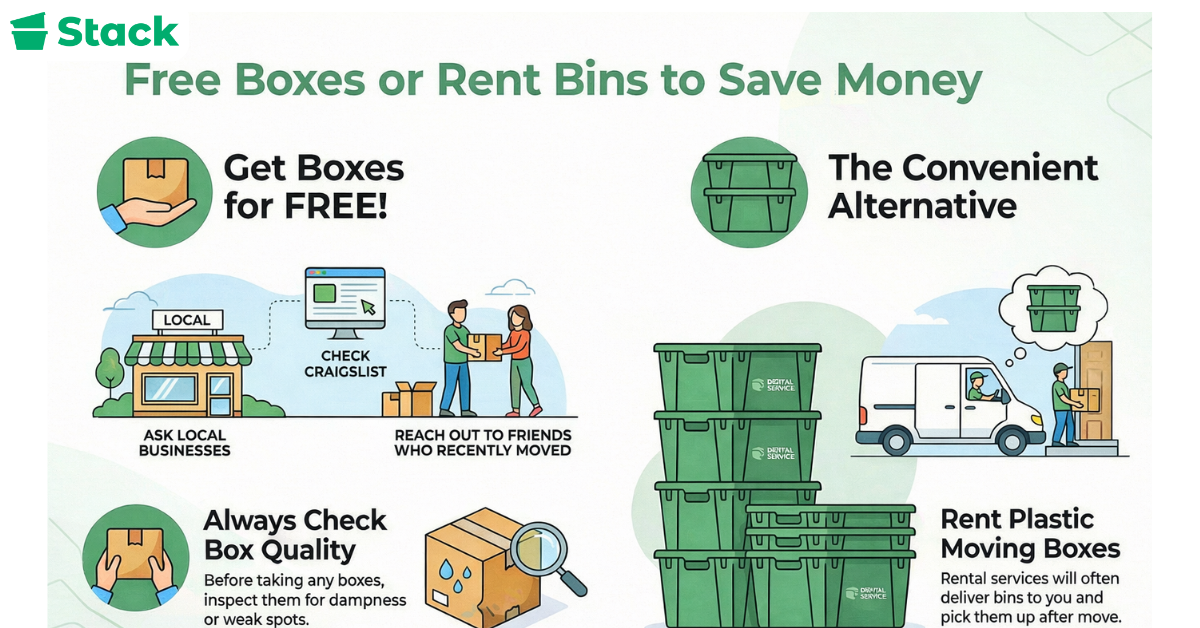
The easiest ways to cut down on moving box costs are to either use free boxes or rent them instead of buying new ones. You can often find great free boxes from local businesses such as grocery stores, liquor stores, and bookstores. It also helps to check the online community on Craigslist and Nextdoor, where people are more than happy to give away their leftover boxes. Just be sure to check the boxes for dampness or weak spots before accepting them. Even a quick text to friends who recently moved can land you a full set for $0.

If the thought of hunting for free boxes sounds exhausting, you should consider renting plastic moving boxes instead. It’s a lot more convenient since most rental services will drop the bins off at your current place and pick them up at your new one.

How Much Do Other Packing Supplies Cost for a Move?

During a moving process, you would need other packing supplies to protect your belongings and keep your move organized. Prices vary by material and quantity, but these are the most common basics most moves require.

Packing Tape ($2–$5 per roll)

Cushioning Materials ($10–$30)

Labels and Markers ($5–$10)

Stretch Wrap ($10–$20)

Moving Blankets or Furniture Pads ($10–$30 each)

Looking for Affordable Moving Boxes?

Moving boxes can make up a significant portion of your moving cost. While using too many boxes or choosing the wrong type can lead to wasted money and damaged belongings, underestimating your needs may force last-minute purchases at higher prices.

We’ve found that the most convenient and cost-effective way to get high-quality boxes is to rent them. Rental boxes are sturdy, stackable, and reusable, giving you the protection you need without the hassle of storing or disposing of them afterward. Plus, many rental services include delivery and pickup, saving you time and effort. Contact us today to schedule your moving boxes in time for your next move.

Frequently Asked Questions

Moving boxes are one of the most common concerns for people planning a move. Below, we answer the questions we hear most often, offering practical guidance to help you plan your move cost-effectively.

How Much Should I Spend on Moving Boxes?

It depends on the size of your move, the types of items you’re packing, and whether you plan to buy or rent boxes. For a small apartment, a modest budget for basic cardboard boxes might be enough, while a larger household with fragile or bulky items may justify investing in specialty or plastic boxes. The key to coming up with a realistic budget is to balance protection with cost.

How Much Do Moving Boxes Cost on Average?

Standard cardboard boxes generally range from about $1 to $8, depending on size and durability. On the other hand, specialty boxes, like wardrobe or dish pack boxes, can cost more, and plastic moving bins are typically $10 to $30 each. Prices vary widely depending on the retailer, location, and whether you buy in bulk or rent.

Who Has the Cheapest Moving Boxes?

It depends on what you need and how many boxes you’re buying. Local grocery stores, liquor stores, and online community marketplaces often provide free or very low-cost pre-used boxes. For new boxes, big-box retailers like Walmart or Home Depot may offer the most affordable options, while specialty moving stores focus more on durability than price.

How Can I Save Money on Moving Boxes?

In most cases, the best way to save is either to reuse free boxes when possible or rent sturdy plastic boxes for your move. Free boxes reduce upfront costs but require time to source and inspect, while renting ensures high-quality, reusable boxes without the long-term storage or disposal hassle.

The Complete Office Moving Checklist for a Smooth Relocation

If you’ve been looking for an office moving checklist to guide you and your team through every phase of this transition, you’re in the right place. An office move is a high-stakes move where a single mistake, like a lost server cable, can lead to expensive downtime and a frustrated team. Most moving experts agree that one true and tested way to avoid situations like this is to plan your move with a comprehensive office relocation checklist.

When making your office moving checklist, you have to factor in every step of the moving process, from the initial planning to the final setup in your new office space.

Not sure what packing solution to use for your upcoming office move? Consider renting Stack Moves office moving crates, trusted by moving professionals for their durability, stackability, and ability to keep equipment protected and organized. Request a custom quote to get started.

In this blog we will provide a step-by-step office moving checklist organized by timeline, helping you plan every stage of your relocation from start to finish. We will also share practical tips on choosing the right packing supplies and proven ways to reduce moving costs without disrupting your operations.

Comprehensive Office Moving Checklist for a Smooth Relocation

Most business moves consist of four major parts: planning and preparation, logistics and packing, move-day execution, and post-move setup. To help you understand the relocation process better, our moving experts broke them down into an office moving checklist with clear timelines. This way, you can track responsibilities, stay ahead of deadlines, and keep operations running smoothly without unnecessary downtime or last-minute surprises.

Office Moving Checklist: 6–12 Months Before Moving Day

Two professionals discussing and planning an office move while reviewing documents and timelines during the early pre-move planning stage.

At this stage your goal should be to identify potential challenges early and make informed decisions that reduce risk, cost, and downtime later in the process.

1. Assess Your Office Needs

Before committing to a move, take a good look at your current setup to determine what furniture and equipment actually deserve a spot in your new office. This is the perfect time to evaluate whether your existing pieces still meet your standards for comfort and durability or if they need to be replaced with items that will fit your new space better. Once you’ve made those decisions, coordinate with your suppliers to schedule delivery for the new items in time for everything to be installed, tested, and ready for use the moment the office officially opens.

2. Create A Moving Plan

Think of your move like a project with milestones that need to be hit on schedule to show that progress is being made. That is where a moving plan comes in. Having a clear plan early helps prevent last-minute scrambling and keeps everyone aligned. Your moving plan should clearly outline responsibilities, key milestones, and deadlines, backed by an internal moving team or a dedicated point person to lead the charge. This plan should account for every phase of the move, including packing schedules, IT shutdowns, move-day supervision, and post-move setup.

3. Research New Office Locations

Remember that when choosing a new office, what truly matters is a space that supports your daily business operations. You want to look for a layout that naturally enhances your team’s workflow while providing enough square footage to house both your staff and equipment comfortably. Additionally, your new location should be accessible not just to employees but also to clients so that it’s convenient for everyone.

4. Take Inventory of Office Assets

Before you move anything, take inventory of your office equipment and supplies by creating a moving inventory list. This will help you decide what to keep, sell, or discard, making the move easier. This audit is essential for deciding what to keep, sell, or discard, significantly lightening the load for your movers. This is also an opportune time to assess your IT systems and tech equipment to determine what should be upgraded or replaced. Determining which IT systems are outdated now allows you to plan for upgrades before you arrive, rather than dealing with obsolete equipment in a brand-new office.

5. Begin IT and Infrastructure Planning

You should begin coordinating with your IT team and service providers the moment the move is confirmed. Map out the requirements for everything from internet and phone lines to security systems and access controls in the new building. Also create a migration plan that covers data backups, equipment transport, and rigorous testing so you can head off technical glitches before they happen. Getting this infrastructure right is the fastest way to ensure your team is back to work without a hitch the day after the move.

3-6 Months to Moving Day

Business professionals reviewing floor plans and calculating costs while setting a moving budget and timeline 3–6 months before moving day.

6. Set Your Moving Budget

Your budget should cover obvious moving costs like professional moving services and packing materials as well as overlooked ones like minor renovations. Your budget should be based on actual information where possible. Look at what similar businesses have spent on office relocations, and review any costs from previous moves your company has undertaken. Also remember that unexpected costs almost always arise, so it’s wise to include a contingency buffer in your budget. A good rule of thumb is to set aside 10–15% of your total projected moving costs as a safety net.

7. Build A Moving Timeline

In the early stages of your planning, you should create a moving timeline. By assigning realistic deadlines to every task and reviewing your progress regularly, you can prevent the last-minute panic that leads to mistakes. A typical office relocation time frame looks something like this:

  • 6-12 Months Before Moving: Begin the search for a new office location, create a moving team, and start preparing your budget.
  • 3-6 Months Before Moving: Commit to hiring your vendors and communicating the specific logistics to your staff.
  • 1-3 Months Before Moving: Finalize the new office address, hire a moving company, and communicate detailed plans to employees.
  • 1 Week Before Moving: Pack non-essential items, back up data, and ensure all final preparations are complete.

8. Design the New Office Layout

This is the perfect opportunity to fix what wasn’t working in your old office. Start by designing a layout that meets your team’s needs. As you design, think about how your team actually moves throughout the day—pay attention to the placement of breakrooms, the flow of natural light, and the accessibility of storage areas. You can use design software like SmartDraw or Floorplanner to assist you. Don’t forget to factor in possible future growth when designing the office layout. Ensure your layout is flexible enough to accommodate new hires and evolving business needs so you don’t outgrow the space too quickly.

9. Hire Professional Movers

When it’s time to book your movers, look for a company that specializes in commercial relocations rather than just residential moves. We recommend getting detailed quotes from at least three different providers to compare not just the price but also the level of service offered. Ask specifically about their experience with IT setup, furniture assembly, and whether they offer comprehensive insurance for lost or damaged equipment. If you choose to manage the logistics in-house, make sure you have a dedicated coordinator to handle truck schedules, driver communication, and loading priorities to keep the day moving smoothly.

1-3 Months to Moving Day

Professional coordinating an office move while working on a laptop and making phone calls during the final 1–3 months before moving day.

10. Finalize the New Office Lease

Confirm all lease terms with your landlord or property manager to avoid last-minute issues. Take the time to double-check move-in dates and building access permissions. Also clarify who is responsible for repairs or renovations during the hand-off. If possible, try to secure early access to the space so you can measure the rooms and plan your furniture placement in person.

11. Notify Employees, Clients, and Vendors

As soon as your new location is confirmed, share the news with your employees to give them ample time to prepare. Be transparent about the moving timeline and set clear expectations regarding their individual roles, like packing their own desks or coordinating their department’s inventory. Once the internal team is briefed, notify your clients and vendors so they can update their records, ensuring there’s no lapse in service or missed deliveries during the transition.

12. Sort and Declutter Office Items

A move is the perfect excuse to purge what you don’t need. Go through every piece of equipment, furniture, and supply in your office to identify what’s essential, what can be donated or sold, and what should be discarded. Decluttering not only reduces moving costs and packing time, but it also helps your new office start fresh without unnecessary clutter. Pay special attention to sensitive or high-value items, labeling and setting them aside for extra care during the move.

13. Plan IT and Utilities Setup

Your business can’t function without power and connectivity, so treat your utility setup as a top priority. Work closely with your internal IT team and service providers to schedule disconnections, transfers, and installations so systems are ready on move-in day. Some offices choose to outsource this part of the move to companies that offer office IT relocation services to ensure everything is safely moved and reinstalled without downtime.

This is also the time to perform a final backup of all critical data and create a checklist of devices, servers, and connections that must be reinstalled or tested immediately. This early coordination is the only way to prevent data loss and ensure your team can jump back into their work without technical hitches.

1 Month to Moving Day

With just a month left, the move is entering its most hands-on phase. This is the time to start preparing your office physically, making sure every item has a place, and ensuring critical systems like IT and furniture setups are scheduled for a smooth transition.

14. Begin Packing Non-Essential Items

Start by packing items that aren’t immediately needed for daily operations, such as seasonal supplies, archived files, and rarely used equipment. Use high-quality boxes or moving crates to protect contents, and avoid overloading them to prevent damage. Clearly label each box with its contents and the department it belongs to; this will make unpacking faster and more organized at the new office.

15. Label and Organize Boxes by Department

To avoid a mountain of mystery boxes at the new office, you and your team should follow a strict labeling system. One effective way to label boxes for an office move is to assign a specific color to each department so that movers know exactly where each item belongs without needing to ask. Alternatively, you can number each box and link it to your inventory moving list. This approach minimizes confusion on moving day and allows teams to resume work quickly in the new space.

16. Coordinate Furniture and Equipment Deliveries

It’s time to touch base with your suppliers and confirm the delivery schedule for any new office furniture or tech equipment. Proper coordination here ensures that your major assets are staged and ready for use the moment the office doors open. Verify that large pieces, such as desks, conference tables, or IT servers, have access to elevators, doorways, and staging areas in both the old and new offices.

1-2 Weeks to Moving Day

Office employees packing and labeling boxes while organizing supplies during the final 1–2 weeks before moving day.

The countdown has officially begun, and the margin for error is shrinking. Now is the time to finalize assignments, lock in schedules, and make sure all systems are ready for a seamless moving day.

17. Finalize Employee Assignments

Your team should have specific people assigned to supervise the loading process, coordinate with vendors, and act as a resource for the rest of the staff. To keep things from becoming overwhelming, appoint at least one point person to serve as the primary contact for any last-minute issues or complaints. Having this clear chain of command ensures that questions are answered quickly and the process remains organized and stress-free for everyone.

18. Prepare IT Systems

This is the most critical window for your technology. Work closely with your IT team to finalize preparations for servers, computers, phones, and network equipment. Back up all critical data, document configurations, and ensure hardware is ready to be safely transported. Create a checklist for reconnecting and testing systems in the new office so your team can resume work without delays. Early IT preparation prevents technical issues that could disrupt operations immediately after the move.

19. Confirm Moving Day Arrangements

Touch base with your movers to confirm dates, times, and access to both offices. Both sites should be aware of your moving schedule so that they can grant entry or prepare parking areas as needed. Share detailed instructions and contact numbers with your internal moving team so that everyone is aligned. Also, go back to review your inventory list and make sure everything is accounted for and ready to be transported. If applicable, prepare access badges or entry codes for movers or third-party vendors.

Before Moving Day

This is the time to ensure the old office is ready for turnover, key access and documentation are in place, and your new office is prepped to receive employees and equipment. Taking these steps reduces last-minute stress and helps ensure a smooth transition on moving day.

20. Clean and Inspect the Old Office

We recommend hiring a professional cleaning service to handle the final cleanup of your old office. It’ll save you and your team precious time to focus on the new office setup. Once you’ve arrived at your new office, focus on setting up key areas, server rooms, and workstations so that the business can resume operations as soon as possible.

21. Prepare Access and Documentation

Ensure that movers, suppliers, and any third-party vendors have the access they need for both your old and new offices. This includes building entry codes, keys, parking passes, elevator reservations, or any permits required for moving large items. Gather and organize all necessary documentation, such as inventory lists, delivery schedules, and contact information for your moving team. Proper access and documentation at this stage prevent delays, miscommunications, or denied entry on moving day.

Moving Day

Office movers carrying labeled boxes into a new workspace on moving day as part of an organized office relocation.

Today is the day all your planning pays off. The goal for moving day is to manage the flow of people and equipment with military precision, acting as the bridge between your old office and your new beginning while keeping stress levels low for your team.

22. Conduct a Final Walkthrough

Before the movers begin loading, perform a final walkthrough of your old office. Check every room, storage area, and common space to ensure nothing is left behind. Confirm that utilities are shut off and all personal or sensitive items are accounted for. This step helps avoid forgotten equipment or supplies and ensures a clean handover of the space.

23. Supervise the Move

Have your moving team and point persons actively supervise the process. Ensure movers are following your instructions, boxes and equipment are being loaded carefully, and items are going to the correct departments at the new office. Keep communication lines open so any issues can be addressed immediately. Supervision ensures that the move is executed efficiently and that your office assets arrive safely and organized.

After Moving Day

Office employees setting up furniture and workstations in a new office space after moving day.

Even after all the heavy lifting is done, your work isn’t over. The days following a move are critical for restoring normal operations, settling your team into the new environment, and ensuring nothing was lost or damaged during transit.

24. Unpack Priority Workstations First

Rather than trying to unpack everything at once, focus on the workstations and departments that are vital to your daily operations. Get the computers, phones, and specific tools set up first so your team can resume their core tasks without missing a beat. To make this easier, provide each team with a quick access kit containing the essentials—like chargers, manuals, and basic office supplies—so they aren’t forced to hunt through dozens of boxes just to find a stapler or a power cord.

25. Test IT Systems and Utilities

The moment you arrive, perform a full sweep of your infrastructure. Test every computer, printer, and phone line, and verify that the Wi-Fi signal is strong in every corner of the office. It’s a good idea to have your IT staff on-site or on high alert for the first 48 hours to troubleshoot any connectivity issues or server glitches immediately. By prioritizing the systems that impact productivity, such as cloud access and VoIP phones, you can prevent minor technical hiccups from turning into a full day of lost work.

26. Update Business Address Everywhere

Once you’re settled, promptly update your business address across all platforms. This includes your website, Google Business profile, social media accounts, mailing lists, invoices, and vendor accounts. Also notify your clients and service providers to prevent missed deliveries, ensure continuity of service, and maintain a professional image during the transition.

27. Orient Employees to the New Office

A new office can be disorienting, so take the time to give your team a proper orientation. Walk them through the new floor plan, pointing out everything from the meeting room booking systems to the quirks of the new breakroom coffee machine. Clear up any confusion regarding new security access codes or waste disposal rules right away.

28. Celebrate the Move With Your Team

Finally, take time to recognize the effort that went into the relocation. Hosting a small celebration, whether it’s a team lunch, coffee morning, or informal office gathering, shows appreciation for everyone’s hard work. Celebrating the move also helps foster a sense of community and excitement about the new space, reinforcing a positive start in your refreshed office environment.

How Long Does it Take to Relocate an Office?

The time it takes to relocate an office can vary greatly depending on several factors, including the size of the office, the complexity of the move, and the level of planning involved. On average, an office relocation can take anywhere from several weeks to a few months.

How Much Does it Cost to Move an Office?

Relocating your business will cost anywhere from $1,500 to $30,000 or more, with the biggest factor being the size of your office. Naturally, larger offices will attract higher prices due to the number of items being moved. A great tip for saving up on office relocation expenses is to bundle services together. Bundling services not only helps you save costs but also streamlines the relocation process.

Vendors who offer bundled services usually do so at a discounted rate, which makes it more economical to engage them rather than hiring separate service providers. It also simplifies the moving process since you only have to deal with a single vendor for multiple services.

How to Pack for an Office Move

Office employees reviewing packing plans on a laptop while preparing inventory for an organized office move.

By following a structured packing process, you can transform a mountain of inventory into an organized, plug-and-play setup that allows your business to resume operations immediately.

  • Gather High-Quality Packing Supplies: Start by collecting everything you’ll need to safely pack your office: sturdy boxes in various sizes, packing tape, bubble wrap, packing paper, and labels. For added convenience and durability, consider using plastic crates, which are stackable, reusable, and protect fragile items better than cardboard.
  • Estimate Your Volume Accurately: To avoid the frustration of running out of materials mid-move, use a moving box calculator to determine the exact number of containers required based on your office’s square footage and staff count.
  • Inventory and Label as You Go: As items go into boxes, immediately document the contents and mark the box with its destination department; this ensures the moving team places every container in the right spot for an efficient unpacking process.
  • Prioritize Electronics Protection: Use bubble wrap and anti-static materials for computers and servers—ideally using original packaging if available—and remember to label every cable so your IT setup is a simple “plug-and-play” task at the new site.
  • Delegate Personal Packing: Provide each employee with a designated box for their desk décor, photos, and personal electronics, making them responsible for securing their own belongings to ensure nothing sentimental or valuable is misplaced.
  • Cushion and Flag Fragile Assets: For glassware, artwork, or sensitive lab equipment, use generous layers of packing paper and bubble wrap, then clearly mark these boxes as “Fragile” so the movers know to give them top-tier care.

Ready for a Smooth Office Move?

Fortunately, they can be far more manageable with the help of a comprehensive office moving checklist. Think of a checklist as your move’s master plan; it turns a chaotic pile of tasks into a clear, step-by-step roadmap for success. One major part of that plan is your moving supplies, especially your moving boxes. Using the right boxes not only safeguards your assets but also speeds up unpacking and setup at your new location.

However, poorly chosen boxes often lead to damaged gear or lost inventory. Instead of relying on traditional cardboard, consider renting durable, reusable plastic moving boxes that protect your belongings and make packing more efficient. At Stack Moves, our professional-grade crates are designed specifically for office moves, and we can even handle delivery and pickup for added convenience. Contact us today to rent office moving crates in time for your next office move.

Frequently Asked Questions

Even with a master plan in place, it’s natural to have lingering questions about the finer details of commercial relocation. This section addresses the most common concerns about office moves to give you the extra confidence you need.

What Is the Best Time to Start Preparing an Office Moving Checklist?

The industry standard for a smooth transition is 6 to 12 months before your move date. For smaller offices (under 2,500 sq. ft.), 6 months is usually sufficient. However, larger corporations or businesses with complex IT infrastructure should start planning a full year out. This lead time allows you to vet moving companies, secure your preferred move date, and coordinate with internet service providers, who often require 60–90 days’ notice for new installations.

How Do I Ensure It Equipment Is Safely Moved?

The golden rule here is to assume something might go wrong and back up everything to the cloud before you even touch a power cord. When you start disconnecting, don’t just throw cables in a bin; take a quick photo of the back of the computers so you know exactly where those cords go later. Wrap your hardware in anti-static bubble wrap because a tiny bit of static can fry a motherboard.

What Supplies Are Essential for Packing Office Items?

Beyond basic boxes, you should prioritize specialty file boxes that allow you to move hanging folders directly from the cabinet without disrupting their order. For high-volume moves, heavy-duty plastic bins are often the most efficient choice because they offer superior crush resistance and come with a lid for extra security.

How Can I Minimize Downtime During an Office Move?

Plan your move in stages, starting with non-essential areas and items first, so critical operations can continue until the last moment. Make sure you coordinate closely with your IT team to ensure servers, networks, and communication systems are backed up and quickly reconnected at the new office. Also try to clearly assign roles to employees and movers, so everyone knows their responsibilities and key tasks aren’t delayed.

College Moving Boxes: What to Use and When to Use Them

The average cardboard box can be used for just about any type of move, so is there really such a thing as a “college moving box”? Because boxes vary by factors like size and material, it’s been observed that some are more suitable for certain moves than others. In this case, we’ve found that plastic boxes are best suited for college moves because they’re sturdy, easy to carry, and can be stacked to save space. They’re also a convenient option for gathering boxes since they can be delivered to your address and picked up after your move.

At Stack Moves, we’ve supported students nationwide in making their college move-in days hassle-free. Our years of experience in the moving industry has allowed us to design moving boxes that aren’t just durable, but also student-friendly and perfect for busy move-in days. Contact us today to book your boxes in time for your move.

In this guide, we’ll walk you through the different types of college moving boxes and explain where to get them.

What Are College Moving Boxes?

College moving boxes - Stack Moves

College moving boxes are containers specifically designed to make moving into a dorm or campus apartment easier and more organized. These boxes can come in different sizes and materials ranging from cardboard to plastic. The main reason for using them is to make transporting your belongings easier while keeping them protected.

Best College Moving Boxes for Dorms

Aside from being able to protect your belongings, boxes that are stackable and easy to carry make the best college moving boxes. In this section, we’ll break down the most common box types students use, along with when you should consider using them for your move.

1. Cardboard Moving Boxes

Cardboard boxes are usually our default choice, and for many student moves, they get the job done just fine. They’re simple to find, lightweight, and stack easily, making them a popular choice for packing clothes and other everyday items. They’re especially helpful if you’re moving from a nearby apartment or heading to campus by car, since they’re easy to load and unload quickly.

But the main drawback of these boxes is that they’re not very durable. Cardboard boxes weaken when exposed to moisture and can give out when overpacked or reused too many times. Before using them, be sure to reinforce them with tape so that they can hold up better.

2. Plastic Moving Boxes

If you want to enjoy a smoother and more organized move, we recommend using plastic moving bins instead of cardboard boxes. These boxes are sturdy and do a great job protecting items from moisture and rough handling during move-in. Because of their uniform size, they fit neatly in elevators, hallways, and dorm rooms, making it easier to navigate tight spaces better.

Sadly, they can be expensive if you’re planning to buy them outright. This is why we advise movers to consider renting them instead. For an affordable price you can enjoy a bundle of boxes, along with complimentary packing supplies to make your move even more efficient and stress-free. And the best part is, most rental companies deliver these boxes to you and pick them up after, eliminating the hassle of figuring out what to do with the boxes after moving.

3. Specialty Boxes

Some items require more care than standard boxes can offer, and this is where specialty moving boxes come in. They are designed to fit and protect delicate items such as hanging clothes, dishes, and artwork, thereby reducing the need for extra packing materials. It’s best to get these boxes only when you have a clear need for them. This means that specialty boxes may not always be necessary for a dorm move, as they can be more expensive and take up extra space.

Where to Get Moving Boxes for College Students

When it comes to getting moving boxes for college, there are two main routes students usually take. The first is to purchase a company-supplied college moving kit, where everything is bundled for you. The second is to gather your own boxes based on your budget and needs.

1) College Moving Kits from Moving Companies

College moving kits are pre-assembled box bundles, often paired with basic packing supplies, put together by moving companies to simplify your packing process. The biggest benefit to using moving kits is convenience, especially if you’re short on time or planning a move from out of state. They’re especially helpful for first-time movers or students moving into campus housing on a tight schedule.

A popular example of a college moving kit is U-Haul’s college boxes, which are designed with students in mind and sold as ready-to-use packages. All you have to do is choose a kit and have it delivered to your specified address, pack at your own pace, and then handle disposal once the move is done. This setup works well for students who want a simple, predictable option without having to overthink quantities or box sizes.

That said, moving kits aren’t always the perfect solution for college moves. Most kits use cardboard boxes, which means durability can be an issue if the boxes get wet. You may also end up with box sizes you don’t really need, or not enough of the ones you do, since the kits are standardized rather than personalized. And because you’re buying them outright, you’re left with boxes to dispose of or store after move-in.

2) DIY College Moving Boxes: Free, Cheap, and Rental Options

Finding your own boxes gives you more control over box sizes, materials, and overall quality, so you can pack exactly what you need without paying for extras you won’t use. It also lets you choose sturdier or more budget-friendly options depending on your priorities, while avoiding the hassle of dealing with leftover boxes after move-in. There are generally three ways to source boxes yourself:

1) Free Moving Boxes for College: Free boxes can be a good option when you’re trying to spend as little as possible on your move. It’s best to use free boxes if you’re moving locally, packing lightweight items, and have time to hunt them down ahead of move-in. You can usually find free moving boxes at grocery stores, liquor stores, bookstores, or through local community groups and online listings. Some people also reuse boxes from previous moves or deliveries. The downside is that free boxes are often already worn or weaker than expected. To deal with this, reinforce the bottom with extra tape, and stick to using them for lighter items

2) Cheap College Moving Boxes: If you’re still working with a tight budget but want something more reliable compared to free boxes, consider buying cheap moving boxes. This option works well when you want consistency in size and don’t want to worry about boxes falling apart. The best places to shop for cheap boxes are home improvement stores, moving supply shops, and online retailers. The main downside is that you’re paying for something you’ll likely only use once, and figuring out what to do with the boxes after a move can be a hassle. To offset that, you can recycle them, pass them along to another student, or save a few for future moves or storage.

3) Reusable Plastic Moving Bins for Rent: Whether you’re on a budget or just want convenience, renting moving bins is the easiest and most stress-free way to gather boxes. These bins are sturdy, uniform in size, and designed specifically for moving, which makes packing and stacking much simpler. Rental companies like Stack Moves provide reusable bins and handle delivery and pickup across the U.S., so you don’t have to worry about sourcing or disposing of boxes. The only real downside is that they need to be returned after your move, but this is usually scheduled in advance and handled for you, making it a small trade-off for how easy the process is.

How to Pack College Moving Boxes for Move-In Day

College moving boxes - Stack Moves

Even with the right box, the wrong packing method can still result in a stressful and chaotic move. Packing incorrectly can potentially waste space, time, or even damage your belongings. To help you avoid these outcomes, we put together a practical guide to packing efficiently for your college move:

1. Sort Your Items Before Packing

Before you start packing, place all your belongings where you can see them and decide on what’s following you. Keep in mind that dorm rooms are small, and arriving with a ton of items will only make the room smaller. It’s best to show up with only the basic essentials and build from there.

2. Pack Similar Items Together

You can save yourself a lot of time when setting up by packing similar items together. It is for this reason that we usually advise people planning household relocations to pack room by room. For example, when packing your bathroom, all bathroom items should be packed together. This way you can arrive and unpack your entire bathroom setup in one go.

3. Keep Boxes Light

Some of the most common injuries during a move are sprains and dislocations. This is usually a result of poor posture when lifting and carrying heavy boxes. Overpacking your boxes also increases the risk of the box breaking or getting dropped, leading to damaged items. Only fill your boxes about three-quarters full to keep the weight manageable.

4. Protect Fragile Items

It shouldn’t come as a surprise that glassware is one of the most common items to get broken during a move. Generally, fragile items such as glass, dishes, and small electronics are at higher risk of sustaining damage during any type of move, making it important to pack them carefully. Always wrap breakable items with protective materials like bubble wrap to reduce the risk of breaking them. You can also fill in any gaps in your moving boxes with packing paper, packing peanuts, or small clothing to prevent shifting during transit.

5. Clearly Label Boxes

While there are multiple ways to effectively label a box, we’ve found that the best way to label a box for moving is to write its content and destination on multiple sides of the box. Alternatively, you can also color-code your boxes by room or even link them to your inventory moving list, where each box is numbered and its content is tracked.

6. Prepare an Essentials Box

Finally, set aside a dedicated essentials box with everything you’ll need for your first night and the first day in your dorm. This should include items like bedding, toiletries, a change of clothes, phone chargers, basic snacks, and any medications you might need. The goal is to keep these must-haves accessible so you don’t have to dig through multiple boxes right after arriving.

Rent Plastic Boxes for a Stress-Free College Move

College moving boxes - Stack Moves

The ideal college moving box should be sturdy, stackable, easy to carry, and able to protect your belongings from the rigors of moving. Plastic boxes check all of these boxes, making them the most reliable choice for dorm moves where space is tight and items need extra protection.

What makes them even better is the convenience of renting from companies like Stack Moves. They deliver the boxes directly to your door, pick them up after your move, and often include helpful extras like dollies, labels, and other packing supplies to make move-in day as smooth as possible. Don’t wait a moment longer; schedule your boxes now!

FAQs

These quick answers are here to help you feel prepared and a little less stressed before the big day. Don’t see a question you have in mind? Feel free to reach out and a member of our friendly team will be happy to answer any questions you have.

What Size Boxes Are Best for College Dorms?

It’s best to stick with small and medium-sized boxes for college moves. These boxes are not only easier to carry but also prevent overpacking, which could cause strain or damage later on. Remember that the rooms are small, and you wouldn’t want to crowd the space any more with oversized boxes.

Can You Bring Boxes on Move-in Day?

Yes, you can. Most schools expect students to come with their belongings neatly packed in boxes or some other form of moving container. Remember to make sure that everything is packed and labeled so that you can settle in faster once you arrive.

Should Parents Buy or Reuse Boxes?

Reusing boxes for a move is the simplest and most affordable way to gather moving boxes. The only downside to reusing boxes is they tend to wear out faster and can be difficult to find in matching sizes. However, buying boxes can be expensive if you’re on a budget. Hence why we recommend renting plastic moving bins instead.

Are Plastic Bins Better Than Cardboard Boxes?

In most cases, plastic bins are better than cardboard boxes because of their enhanced durability, especially in humid environments. They are also more affordable and sustainable than their cardboard counterparts. However, there are still some instances where using a cardboard box is better than a plastic one. So it’s best to choose a box based on what you’re packing and how you plan to move it.

Do Colleges Provide Moving Boxes?

Most colleges don’t provide boxes for students. While some schools may share some tips on where to get boxes, it’s usually up to students and their guardians to plan ahead and bring what they need.

Ultimate Step-by-Step Guide to Moving Out of College Dorm

Moving out of your college dorm can be just as hectic as moving in. Between packing, cleaning, and saying goodbye to friends, it can be both exciting and overwhelming. Fortunately, with the right plan, it can be an entirely hassle-free process. The key to a smooth college dorm move-out is to declutter early, pack smart, clean thoroughly, and coordinate with roommates to keep the process smooth and simple.

Stack Moves is a U.S.-based moving service that has helped hundreds of students simplify their moves. With years of trusted service in the moving industry, our friendly team has students enjoy stress-free moves using our high-grade moving bins for rent. Contact us now to reserve your moving bins and guarantee delivery before moving day!

In this guide, we’ll walk you through every essential step for moving out of a college dorm, including what to do, what not to forget, and how to stay organized from start to finish.

What Are the Steps for Moving Out of a College Dorm?

What Are the Steps for Moving Out of a College Dorm?

Here’s a simple 9-step guide to help you plan, pack, and move out smoothly without any last-minute chaos.

1. Start Early and Make a Move-Out Plan

The easiest way to save yourself from stress on move-out day is to start preparing for your move weeks in advance. Starting early gives you enough time to deal with hiccups such as finding extra boxes or selling your belongings.

Check your university’s housing portal or email for official move-out dates and specific checkout rules. With this information, you can create a moving checklist, which will guide you on what to do and when to do it. Your moving timeline should include every step you need to finish before you hand in your keys, even small details like clearing out your fridge.

Also keep in mind that you don’t have to pack everything all at once, especially if you are taking your final exams. Instead, block out chunks of time each day to focus on one area of the room so the process feels steady instead of overwhelming.

2. Sort and Declutter Your Belongings

Before you start packing, go through every item in your dorm room and separate them into categories of keep, donate, and sell/toss. You’d be surprised just how much stuff you’ve piled up throughout your stay.

It’s always a good idea to declutter before any move because it prevents you from carrying unnecessary belongings home or paying to store things you don’t need. If you’ll be planning another move soon, think ahead about what will still be useful. Doing so will save you time, space, and money when packing for your next move. You can also donate items that you no longer need through campus donation drives. Alternatively, you can sell items that are still useful to other students on platforms like Facebook Marketplace.

3. Gather Packing Supplies

Make sure you’ve gathered all the supplies you need for your move before you start moving. At the very least you’ll need moving boxes, packing tape, packing paper or bubble wrap, labels, scissors, markers, and trash bags.

The number of boxes you’d need for your move depends on how much stuff you’re moving. Most students can expect to use anywhere from five to ten medium boxes, plus a few large ones for bulky items like comforters and mattress toppers.

To save costs on moving supplies, reuse sturdy boxes from deliveries or ask friends who’ve already moved out if they have extras. Another smart move is to rent plastic moving bins…

4. Pack Smart and Stay Organized

Pack Smart and Stay Organized

Now that you’ve gathered your supplies, you can finally start packing. Consider packing similar items together, for example, clothes in one box, decor items in another, and so on. Packing like this helps you keep track of what you’ve already packed and makes unpacking faster.

Please remember to label each box clearly with its content and destination. Labeling this way saves you time when unloading, helps prevent mix-ups, and ensures fragile items get handled with care.

When packing your moving boxes, it’s a good idea to put heavier items like textbooks at the bottom and lighter ones on top to avoid crushing anything. Besides packing paper, you can also use soft items like towels or sheets to cushion fragile pieces.

Pack your hanging clothes by keeping them on their hangers and putting them in wardrobe boxes. Alternatively, you can also group them together inside a garbage/trash bag and neatly place them in a plastic bin. For bulky items like comforters, use large boxes and pack them last because they take up the most space.

5. Plan Transportation and Storage

Another important step of your move is to decide how you’ll get your belongings home or how you will store them until you need them again. A clear transportation plan helps you avoid unnecessary stress, saves time, and ensures your belongings make the trip safely to their next destination.

Whether you decide to use a family car, rent a moving truck, or reserve storage space somewhere, be sure to plan for it early. If you’re planning a long-distance trip or moving into an apartment right away, consider shipping a few boxes ahead of time to ease the stress of hauling everything at once.

If you plan to store your belongings after move-out, choose containers that will protect them for weeks or even months. The best storage containers for moving are plastic boxes because they’re stackable, moisture-resistant, and strong enough to hold heavy items without tearing.

6. Clean Your Dorm Room Thoroughly

Give your room one last deep clean once you’ve finished packing. Most schools expect rooms to be spotless before inspection, so a good clean can help you avoid extra fees or penalties. Leaving behind a clean room also leaves a good impression for the next resident.

Start with visible areas before moving on to hidden spots like under the bed or inside closets. Wipe down all surfaces using disinfectant wipes or a damp cloth to remove dust and grime. To make your space look instantly cleaner, remember to vacuum or mop the floors once everything’s cleared out. Split tasks with your roommate(s) so no one is left doing everything.

7. Donate or Recycle What’s Left

You may have discovered a few leftover items like an extra towel, old shoes, and half-used cleaning supplies while cleaning your dorm room. Instead of throwing everything away, donate items that are still usable. Many schools partner with local charities or have donation bins littered around the campus during move-out week to encourage students to give back and reduce waste.

For items that can’t be reused, recycle where possible and safely discard the rest. Avoid leaving trash in the hallway or common areas because it creates more work for staff and could result in penalties.

8. Check Out with Dorm Staff

Don’t leave without signing the necessary forms or confirming your move-out in the system. When you’re done cleaning and packing, schedule your checkout appointment with dorm staff or your resident assistant (RA). Make sure you have all documentation your house office might require handy.

Your assigned dorm staff or RA will inspect the room for damages, confirm that everything’s cleared out, and collect your key. If something in the room was already damaged when you moved in, mention it before the inspection so it doesn’t count against you. Once the staff signs off, you can officially close out your dorm stay and breathe a little easier knowing everything’s squared away.

9. Celebrate the End of the Semester

Celebrate the End of the Semester

After making it through weeks of classes, exams, and deadlines, you deserve some celebration. Celebrating helps you close out the school year on a positive note and gives you a mental reset before summer or the next chapter begins.

Take time to unwind with friends, go out for a nice meal, or host a small dorm get-together before everyone heads home. Even something simple, like grabbing ice cream, can make the end of the school year feel special.

7 Common Move-Out Mistakes to Avoid

Here are the most common slip-ups to steer clear of and what to do instead.

  1. Waiting Until the Last Minute: Packing the night before move-out day almost always leads to stress and forgotten items. Start early so you can pace yourself and deal with any surprises calmly. A simple checklist helps you stay on track and finish without rushing.
  2. Skipping the Cleaning Step: Leaving behind dust, trash, or wall marks can create a bad impression and result in fines or penalties. Take time to tidy your dorm before inspection and fix any minor damage.
  3. Overpacking Everything: Throwing your entire dorm into boxes only creates confusion later. Sort through your belongings and pack what you’ll actually need for next semester. Donate or sell the rest so you’re not hauling unnecessary stuff home.
  4. Forgetting to Label Boxes: Unlabeled boxes turn unpacking into frustrating guesswork. Label each one clearly with its content and destination. Also mark boxes with breakable items as “fragile” so that you handle them with care.
  5. Not Returning Dorm Keys on Time: Forgetting or losing your key can result in unnecessary fines. Check your checkout deadline and hand in your key during inspection. Keep a photo of the return slip as proof just in case.
  6. Leaving Trash or Donations Behind: Dumping items in hallways or common areas creates extra work for staff and can delay inspections. Dispose of trash properly and use designated donation bins around campus. A tidy exit shows respect for the next residents.
  7. Skipping Goodbyes: After packing, it’s tempting to rush off, but not saying goodbye can make things feel unfinished. Take a moment to thank your roommate, RA, or friends before heading out. It’s a small gesture that helps you close this chapter on a good note.

Make Your College Move-Out Day Easier with Plastic Moving Bins

Good planning is what separates a chaotic move-out day from a calm one. With a bit of organization, you can make a big difference and help yourself wrap up your semester without the stress. Your experience moving out of a college dorm depends on timing, preparation, and the quality of your moving supplies.

Start by gathering your boxes and packing materials early, labeling as you go, and setting aside essentials for your last night. Pay special attention to your moving supplies because cheap or flimsy ones could damage your belongings. The surest way to avoid this is to rent moving bins instead of buying or using free ones. You’ll get durable, uniform boxes that stack neatly, protect your belongings, and cost less in the long run.

This is where Stack Moves comes in. Our rental service offers sturdy, eco-friendly moving bins delivered to your door and picked up when you’re done. Book your Stack Moves bins today and make your college move simpler from start to finish.

Frequently Asked Questions

Moving out of college marks the end of one chapter and the start of another, so it’s natural to have a few lingering questions. We answered some common questions to help you make the transition a less stressful one.

Is It Hard to Move After College?

While moving after college can be challenging, it’s manageable with the right planning. The toughest part is often the emotional shift because you’re leaving behind friends, routines, and a familiar space. Just make sure you start early, sort your belongings before packing, get rid of what you don’t need, and label your boxes for easier unpacking.

What Are the Steps for Moving Out of a College Dorm?

The process starts with decluttering; decide what to keep, donate, or toss. Next, gather packing supplies like boxes, tape, and labels, and begin packing room by room to stay organized. Clean your dorm thoroughly to avoid penalties, and schedule your move-out time with your dorm office in advance. Finally, do a last walk-through to ensure nothing’s left behind before turning in your keys.

Where Can I Find Affordable Moving Boxes for College Dorm Moving?

You can find affordable moving boxes at local retailers like Walmart, Home Depot, and U-Haul, or online on Amazon and Facebook Marketplace. You can also get free boxes through campus forums or local community pages near the end of each semester. Keep in mind that quality can vary, so if you want a sturdier option without buying new ones, consider renting moving boxes.

How Can I Handle Sentimental Items During Move-Out?

Set aside sentimental items from your regular belongings so you can give them the special attention they deserve. Wrap fragile keepsakes like frames or ornaments in protective items like bubble wrap, and pack them in a small, sturdy box labeled “fragile” to keep them safe. You can also digitize letters, photos, or cards by scanning or photographing them. This will preserve the memories without taking up space and give you a way to keep them safe even if something happens to the originals.

What Are the Shipping Options Available for Out-of-State Students?

Out-of-state students can use courier services like UPS, FedEx, or USPS to ship boxes home or hire moving companies that specialize in student relocations. Some universities also partner with storage-and-shipping providers who handle pickup and delivery. Compare prices and timelines early to choose the most reliable and cost-effective option for your move.

Where to Buy Moving Boxes for Cheap

Quality boxes and packing supplies are non-negotiable for a safe move, but costs can add up fast if you don’t plan ahead. Which is what makes it important to be intentional about finding ways you can save costs, like store discounts, online sales, and recycled box programs.

The cheapest place to buy moving boxes is from large retailers or local moving supply stores that offer durable, high-quality boxes at bulk or clearance prices, like U-Haul, Home Depot, and Lowe’s. Other great sources include moving or storage companies and community marketplaces, where you can often get them for free.

At Stack Moves, we’ve helped movers in the United States save hundreds of dollars on moving supply costs. With years of experience in the moving industry, our team provides durable moving box rentals that make relocating easier and more affordable. Contact us today to rent high-quality moving boxes and start saving on your next move.

In this post, we’ll compare the best places to buy moving boxes for cheap, plus share money-saving tips and alternatives to help you plan a smooth, cost-effective move.

Where to Buy Moving Boxes for Cheap

Eco-Friendly Plastic Bins as a Cost-Effective Alternative

But keep in mind that low-quality boxes can lead to damaged items and extra costs down the line, making it necessary to balance affordability with durability. Below, we’ve rounded up the best places to find affordable yet quality moving boxes.

Online Retailers

If you like to shop from home and compare prices before buying, online stores are an easy place to start. This option works best if you have a little time before moving day since you can browse different brands, read reviews, and get boxes delivered right to your door. Just keep in mind that shipping fees can add up, and box quality may vary depending on the seller, so check ratings and delivery times before you order.

  1. Amazon
    • Pros: Quality of boxes can be verified, shopping is convenient, and delivery is fast.
    • Cons: Shipping costs may be expensive and unavoidable. Box quality depends on the seller.
  2. U-Haul
    • Pros: Perfect place to get specialty boxes, orders can be picked up from various locations, and boxes come in various sizes.
    • Cons: Prices can vary significantly by location.
  3. Walmart
    • Pros: Thousands of stores across the nation make in-store pick-up easier, affordable pricing, and some centers are open 24/7.
    • Cons: Not the best place to get specialty boxes.
  4. Home Depot / Lowe’s
    • Pros: Both offer competitive prices and in-store availability, allowing you to pick up boxes immediately.
    • Cons: Limited quantity per purchase, which can affect the ease of large moves.
  5. The UPS Store
    • Pros: Offers durable, professional-grade moving boxes in various sizes, plus packing supplies and expert advice on what box fits what item. You can buy in-store or order online for pickup.
    • Cons: Prices tend to be higher than big-box stores, and not all locations carry a full range of moving supplies.

Moving and Storage Companies

Many movers also provide boxes as part of their service or offer them for purchase, so it’s worth checking what’s included before you book your move. Getting moving boxes from storage and moving companies guarantees you receive high-quality, sturdy packing boxes specifically designed for moving. This reduces the risk of damage to your belongings and often includes convenient pickup or delivery options.

  1. Budget
    • Pros: Quality boxes that come in various sizes and are available in convenient locations nationwide.
    • Cons: Can be more expensive than other options.
  2. PODS and 1-800-PACK-RAT
    • Pros: High-quality moving boxes that can be delivered to you.
    • Cons: More expensive and may not be available in your area.

Online Marketplaces and Community Boards

Online marketplaces such as Craigslist are platforms that allow you to find cheap moving boxes by connecting directly with sellers.

  1. Craigslist
    • Pros: You can find cheap or free boxes here.
    • Cons: There’s no way to guarantee the box quality, and arranging to pick it up yourself requires extra effort
  2. Facebook Marketplace
    • Pros: Often free, with options arising within your locality.
    • Cons: No option for delivery; you have to pick it up yourself. Plus, availability can vary.
  3. Freecycle
    • Pros: Anything posted on the platform is free, plus the initiative helps to reduce waste.
    • Cons: Availability is very limited, and the quality can vary based on what is being offered.

Where to Get Free Moving Boxes

Best Box Sizes and Types for a Move

If you’re trying to keep moving costs down, there’s no shame in hunting for free moving boxes. Skipping store-bought boxes can easily save you $50–$100, money that’s better spent on something actually exciting in your new place. You can get high-quality reusable moving boxes, often at no cost, from these sources:

  1. Family & Friends: Start by asking people you already know. Friends, neighbors, or relatives who shop online or have recently moved often have boxes lying around and are happy to get rid of them. The best part is you’ll know exactly where the box comes from and can trust its condition.
  2. Your Workplace: Many offices receive regular shipments of supplies or equipment, and those boxes often end up in recycling bins. Ask your supervisor or the facilities team if they can save some for you. Office supply boxes are usually sturdy and uniform in size, which makes stacking and loading easier.
  3. Local Businesses: Small shops, liquor stores, bookstores, grocery stores, etc., get shipments every week in strong boxes made to carry heavy items. Stop by one and ask if they have extras before recycling day. Liquor stores, coffee shops, and bookstores are especially good sources for clean, solid boxes. Just make sure to inspect them for signs of moisture or pests before you take them home.
  4. Recycling Centers: Recycling centers can be a gold mine for lightly used boxes that never made it to the shredder. Visit your local facility and ask if you can take any boxes that are still intact. It’s eco-friendly and completely free. Just bring a car or van and load up whatever fits your needs.

How Much Do Moving Boxes Cost?

How to Organize Boxes for Moving

The cost of moving boxes varies depending on location, the type of boxes you choose, and where you’re buying them. New boxes can cost anywhere from $1 to $20 depending on the size and quality. Specialty boxes like wardrobe boxes, which are standing boxes with a built-in bar that allow you to hang up clothes inside, can cost even more than that. However, if you know where to look, you can also find suitable boxes for free or for a very low cost. Before collecting the boxes you need, ensure you know your available sources.

How Do I Know How Many Boxes I Need?

Even with the right moving boxes, your move can end up in disarray if you don’t have enough boxes for your move. Being well prepared entails creating a packing timeline, having a clear inventory of everything you want to pack, and knowing how many moving boxes you need to move.

Our Moving Box Calculator can help you prepare for your move in advance by helping you precisely estimate just the right amount of boxes. This not only saves you money but also helps make your moving process smoother and more manageable.

Is It Better to Buy or Rent Moving Boxes?

How to Move Hanging Clothes With Wardrobe Boxes

There’s no one-size-fits-all solution. However, in general, renting boxes ends up being the better option for a few reasons:

  • Durable plastic bins don’t have the same breakage risk as cardboard boxes.
  • Plastic bins may be more effective when it comes to protecting fragile items.
  • Plastic bins generally don’t require the use of packing tape.
  • When you rent, your boxes are dropped off and picked up for you.

Renting moving bins helps you save on packing materials and the stress of figuring out how to get rid of your boxes. Renting is often less costly and time-consuming overall, and it’s better for the environment, too!

Need Moving Boxes for Rent?

When searching for cheap moving boxes, it is advisable to consider every option available. Online retailers like Walmart offer convenience and a wide selection to choose from, whereas local sources like bookstores provide free, eco-friendly alternatives.

The best way to keep your moving costs minimal is to plan early and explore multiple sources to find the best deal. If you decide to rent your moving boxes instead of buying them, you can enjoy significant cost savings and the convenience of not having to dispose of boxes afterward. Additionally, renting provides durable, uniform containers that offer better protection for your belongings.

If you’re considering renting boxes for your next move, let Stack Moves take the stress out of the process. Our sturdy, eco-friendly box rentals save you time, money, and hassle. Explore our rental options and see how easy moving can be when everything’s built to work smoothly from start to finish.

Frequently Asked Questions

It’s natural to have a few questions about how to keep your moving costs low without putting your property at risk of damage or loss. To help you plan smarter and save money, we’ve answered some common questions that can make your move more efficient and cost-effective.

Are Free Moving Boxes Safe to Use?

Yes they are, as long as you inspect them carefully. Check for signs of moisture, tears, or weak corners before packing, especially if you’re storing fragile items or using bubble wrap for protection. Free boxes from friends or local stores can be just as durable as new ones if they’re in good condition.

What Are the Best Sizes of Boxes to Buy for Moving?

The best approach is to mix sizes. Use small boxes for books and other heavy items. Medium moving boxes are great for packing everyday items like decor or kitchenware. Whereas, large boxes are best suited for light, bulky things like beddings and comforters. A balanced mix keeps your packing organized and prevents crushed boxes in the moving truck.

How Many Moving Boxes Will I Need for a One-Bedroom Apartment?

On average, a one-bedroom apartment requires around 25-30 moving boxes. That includes small boxes for dense items and large ones for lighter belongings. In addition to moving boxes, you’d also need other moving supplies such as tape, bubble wrap or packing paper, permanent markers, scissors, and labels. These extra items will not only help you pack efficiently but will also keep your move organized.

Are Recycled Cardboard Boxes Strong Enough for Moving?

They can be, if they’re still in good shape. Recycled or secondhand boxes are often made from strong materials that can handle a typical move, especially if they’re double-walled. Just make sure there’s no water damage, soft spots, or crushed corners before reuse. For extra protection, reinforce the bottom with packing tape and use bubble wrap for delicate items.

Where Can I Donate or Recycle My Boxes After Moving?

You can donate gently used boxes through local community boards, Freecycle, or Facebook Marketplace. Many recycling centers and moving companies also accept cardboard boxes for reuse. If your boxes are still durable, passing them along helps others save money and reduces waste. Otherwise, break them down and recycle them properly to keep your move eco-friendly.

Best Size Boxes for Moving

When preparing for a move, it’s important to choose the right box sizes because if your box is too big or too small, your belongings could shift, break, or be difficult to carry. The best-sized boxes for moving are usually a mix of small, medium, and large boxes. In some cases, you may also need a specialty box, especially if you’re packing fragile or oddly shaped items.

At Stack Moves, we’ve helped thousands of renters simplify their moves with our durable, eco-friendly moving bins. With years of experience in the moving industry, our team knows exactly what you need to find the best-sized boxes for moving without any of the guesswork. Rent our reusable moving boxes today for a cleaner, faster, and more organized move.

In this blog, we’ll break down which box sizes work best for common household items. We’ll also guide you on where to source the right moving boxes and share practical packing tips to make your move seamless from start to finish.

Standard Moving Box Sizes

Standard Moving Box Sizes

When planning a move, choosing the right box sizes is necessary for a hassle-free experience. To help you safely pack and transport your belongings, we’ve explained how different sizes cater to various items.

Small Moving Boxes

Best for: Heavy or compact items

Ideally, a small box is perfect for items like books, DVDs, and canned goods. They are typically 16” x 12” x 12″ and can safely carry up to 40 pounds. When using these boxes, avoid overloading them. Instead, use packing paper to fill empty spaces and protect the contents of the box. It is important to ensure that the box remains easy to lift.

Medium Moving Boxes

Best for: Everyday household items

Medium-sized boxes are usually around 8″ x 14″ x 12″ with a capacity to hold up to 60 pounds. You can use these boxes to pack kitchenware, toys, and decorative items. For these medium-sized boxes, place heavier items at the bottom and lighter items on top. Furthermore, use packing paper or bubble wrap for protection and to prevent items from shifting.

Large and Extra-Large Moving Boxes

Best for: Light but bulky items

These boxes are suitable for bulky but light items like linens, comforters, and pillows. The common dimensions for these boxes are 20″ x 20″ x 15″ or 23″ x 23″ x 16″, and they are capable of holding up to 80 pounds. Despite their size, you should avoid the temptation to overpack them. It can make the boxes too heavy and susceptible to tearing.

Specialty Moving Boxes

Best for: Fragile, valuable, or oddly shaped items

While most items will fit neatly into your standard moving boxes, some belongings need extra protection or special handling. These unique items call for specialty moving boxes. Specialty boxes are specifically designed to keep fragile or irregularly shaped objects safe during transport.

Wardrobe boxes, dish pack boxes, and mirror and art boxes are common examples. These boxes feature reinforced walls, inserts, or adjustable designs that provide added stability and protection. Although they are pricier than your standard-sized boxes, the added safety and convenience they offer make them well worth the investment.

Best Box Sizes for Moving Each Type of Household Item

Best Box Sizes for Moving Each Type of Household Item

Here’s our quick guide to help you match the right box size to your belongings:

Small BoxesMedium BoxesLarge BoxesSpecialty Boxes
BooksPots, pans, and kitchen utensilsSuits, dresses, and coatsFlat-screen TVs
Tools and hardwareDishes, bowls, and cupsBed linens and duvetsComputers and monitors
Pantry items (cans, jars, condiments)Toys and board gamesShoes and handbagsDishware and glass sets (dish pack boxes)
Small kitchen appliances (toaster, blender)Personal care appliances (hairdryer, shaver)Accessories and beltsArtwork and picture frames
Cleaning suppliesSmall decorative itemsBlankets and throwsMusical instruments
Office supplies and stationeryPantry staples like cereal boxesSeasonal wearMirrors
Small electronics and cordsTowels and bathrobesWine or liquor bottles
Bathroom items (lotions, toiletries)Collectibles and antiques
DVDs, CDs, and video gamesElectronics and gaming consoles
Decor accents or framed photosLamps and fragile decor

Where to Find the Best Box Size for Moving

Your budget and the nature of your move play a big role in where you get your moving boxes. If you’re on a tight budget, you can get moving boxes for free from local grocery stores, liquor shops, or community listings on Craigslist and Facebook Marketplace. These can be a fantastic way to save money, but the downside is that free boxes often come in mixed sizes and conditions. You’ll need to inspect them carefully for tears, dampness, or signs of wear before packing.

If you’d rather buy, you can still find cheap moving boxes by purchasing in bulk from major retailers like Home Depot and Lowe’s. Buying in sets is often more affordable than picking up individual boxes. You’ll get better quality than free boxes, but you’ll also have to figure out what to do with the boxes after your move.

What if you’d rather source boxes from your moving company? Some moving companies provide boxes and supplies as part of their service, though this convenience usually comes at a higher cost. It’s a good option if you’re short on time or prefer not to deal with packing materials yourself.

But if you’re looking for a balance between cost, convenience, and sustainability, renting moving boxes might be your best bet. With this option, you’ll get durable, reusable bins delivered right to your doorstep. And the best part? They’re collected once you’re done with your move, leaving you with no waste or clutter.

Factors to Consider When Choosing Box Sizes

Factors to Consider When Choosing Box Sizes

Here are the key factors to keep in mind when deciding how to pack or what type of moving container to use:

  • Item Size and Volume: Your belongings should fit comfortably inside the box or bin with minimal empty space. Smaller boxes work best for compact but dense items like books, while larger boxes should be reserved for lightweight or bulky items such as bedding. Using appropriately sized boxes prevents wasted space and reduces the risk of damage from shifting items.
  • Weight Distribution: The weight of your belongings should also be considered. Heavy items should go in smaller boxes to make lifting easier and to prevent the bottom from giving out. Lighter items can be placed in larger boxes to balance overall weight.
  • Fragility of Items: Fragile items like dishes, glassware, or electronics need boxes that provide enough room for cushioning materials such as bubble wrap or packing paper. Avoid overpacking fragile boxes to reduce pressure and the risk of cracks or breakage.
  • Type of Belongings: You need to adopt a different packing approach for each household item. For instance, clothes can go into boxes or bags but delicate items like artwork should only be packed in specialty boxes.
  • Ease of Handling: Boxes should be easy to lift, carry, and stack without strain. Choose sizes that allow for comfortable movement through doorways and hallways.
  • Storage Duration: If your belongings are to be stored for a while before unpacking, consider using boxes or bins that can resist moisture and stacking pressure over time. This helps protect your items during long-term storage or moves across the country.

Tips for Packing Efficiently with Different Box Sizes

Tips for Packing Efficiently with Different Box Sizes

The easiest thing you can do to enjoy a smooth move is to match the box size to the item’s weight and type. This simple step keeps your boxes manageable and prevents damage from overloading. Next, make sure to distribute weight evenly when loading boxes into your moving truck. Doing this helps maintain balance during transport and protects fragile items from being crushed.

It also helps to fill any empty spaces inside boxes with soft items like towels, linens, or clothing. Doing so prevents items from shifting during the move and makes full use of the space you have. You’ll need fewer boxes overall, which can help cut down on moving costs.

For added protection, avoid overpacking boxes. While it may seem efficient to squeeze in as much as possible, doing so can make boxes too heavy or cause items to break. Instead, leave some room for bubble wrap or packing paper to cushion delicate belongings.

Finally, if you’re moving during a rainy season or to a humid area, use waterproof containers like plastic bins for moisture-sensitive items. Unlike cardboard boxes, plastic bins keep your belongings dry and safe from mold or water damage, giving you extra peace of mind during your move.

Need Help Deciding the Best Box Sizes for Moving?

Choosing the best box sizes for moving can make all the difference in how smoothly your relocation goes. With the right system, like using small boxes for heavy items and large boxes for light, bulky ones, you’ll keep your belongings safe and make loading and unloading easier for everyone.

However, choosing the right-sized box is only half the battle. You’ll still need to figure out how many boxes you’ll need and what to do with them after the move. That’s where Stack Moves comes in. Our rental moving bins are designed to make your move simpler, cleaner, and more organized from start to finish, giving you an eco-friendly solution you can trust.

Ready to enjoy a stress-free move? Contact us to book your moving boxes for rent now!

Frequently Asked Questions

Still unsure what box sizes to use for your move? This FAQ section answers common questions to help you pack confidently and choose the right boxes for your belongings.

How Do I Choose the Right Box Size for Heavy Items?

Always pack heavy items like books, tools, or canned goods in small boxes. This keeps the box’s weight manageable (under 40-50 pounds) and prevents the bottom from giving out.

What Size Boxes Are Easiest To Move?

Small and medium boxes are the easiest to handle. When packed correctly, they remain light enough for safe lifting and are uniform for efficient stacking in the moving truck.

Can I Reuse Grocery Boxes for Moving?

Yes, you can reuse sturdy boxes from grocery or liquor stores, but check them for damage or moisture. Their compact size makes them ideal for small, heavy items. However, they won’t stack as neatly as uniform moving boxes.

Do Moving Companies Provide Boxes Or Should I Buy My Own?

It depends on your budget and priorities. Most moving companies sell professional-grade boxes that are often double-walled and very sturdy. But these are more expensive than the boxes sold at retail stores. A major advantage of using these boxes is their perfect fit, which maximizes the space in their moving trucks.

What Should I Pack in the Largest Moving Boxes?

The largest boxes should be used for light, bulky items. This includes linens, bedding, pillows, comforters, and curtains. Packing heavy items in them will make them dangerous to lift and prone to breaking.

What Are Specialty Moving Boxes?

Specialty boxes are custom-designed for awkward or fragile items. Examples include wardrobe boxes (with a metal bar for hanging clothes), dish packs (with reinforced walls and dividers), and TV boxes (with extra padding).

What Are The Best Moving Boxes To Buy?

The type of moving box you buy can impact your moving experience because the right box will protect your fragile items, maximize space in your moving truck, and reduce moving-day stress. Plastic bins are widely considered the best moving boxes to buy since they’re sturdier, stackable, and reusable compared to other moving boxes. However, the final choice depends on your budget, storage needs, and whether you prefer a one-time or long-term solution.

Stack Moves is a U.S.-based moving service that has helped hundreds of movers simplify their relocations. With two years of trusted service, our friendly team has helped families and businesses relocate more easily using our high-grade moving bins for rent. Contact us now to reserve your moving bins and guarantee delivery before moving day!

In this blog, we’ll cover the different types of moving boxes, where to buy them, and expert tips for packing effectively. By the end, you’ll know exactly which moving boxes fit your needs and how to use them for a seamless move.

What Are the Best Boxes for Moving?

What Are the Best Boxes for Moving?

What’s considered the best moving box really depends on what you’re packing and your moving budget. We’ve listed different types of moving boxes along with their pros and cons so you can choose the option that fits your move best.

1. Plastic Moving Boxes & Totes

First on this list are plastic moving bins. These durable bins are considered the best bins for moving because of their advanced durability. Unlike traditional cardboard boxes, they are water-resistant, making them especially reliable for fragile or valuable items.

Another major advantage to using these boxes is they are reusable. If purchased, they can serve as long-term storage solutions long after the move. They are also easy to stack, which helps maximize space and keep belongings protected during transit.

Plastic boxes also come in the form of plastic totes, which are more commonly used for corporate relocations. The only drawback of both plastic bins and totes is their higher upfront costs compared to cardboard. That’s why many people choose to rent plastic bins instead, since renting offers all the same benefits at a fraction of the price.

It may be wise to invest in or rent plastic moving bins or totes for your move if your priority is durability, protection, and space efficiency.

2. Cardboard Boxes (Heavy-Duty & Standard)

Next on the list are cardboard boxes. These are the most common moving boxes because they’re widely available, affordable, and come in a variety of sizes to suit different packing needs. Cardboard boxes are also recyclable, which makes them a reasonably eco-friendly option if disposed of properly.

Standard cardboard boxes are lightweight and easy to assemble, making them practical for everyday items like clothing, linens, or kitchenware. Additionally, they’re inexpensive and can be sourced secondhand for free from friends, relatives, and online stores like Facebook Marketplace.

Cardboard boxes also come in heavy-duty versions, which are reinforced and more suitable for heavier or fragile items like books, dishes, or electronics. Heavy-duty boxes provide extra protection compared to standard cardboard but still fall short of the strength and moisture resistance offered by plastic bins.

The main drawbacks of cardboard are that they can weaken when exposed to moisture, are less durable for long-term storage, and often need to be discarded after a single move. If your priority is affordability and convenience, cardboard boxes are a practical choice for most household moves.

3. Specialty Boxes

Finally, there are specialty boxes. Although specialty boxes are not essential for every move, they can be invaluable if you need extra protection for high-value, fragile, or oversized items. These include wardrobe boxes, dish boxes, and any other type of box specifically designed to keep unique belongings safe.

Their biggest advantage is superior protection. Whether it’s keeping clothes wrinkle-free, shielding fragile glassware, or securing electronics, specialty boxes provide tailored solutions that standard boxes can’t match.

The downside to using them is the high purchase cost. Specialty boxes are often more expensive than regular cardboard and may only be used once and can also take up extra space in the moving truck. However, for items that are fragile, oversized, or valuable, the added expense is often worth the peace of mind.

Here’s a quick list of common specialty boxes and their best uses:

  • Wardrobe boxes: hanging clothes, coats, and dresses.
  • Dish boxes: plates, glasses, and other kitchenware.
  • Picture boxes: artwork, mirrors, and framed photos.
  • TV boxes: flat-screen televisions.
  • Lamp boxes: Tall or fragile lamps.
  • Mattress boxes: Mattresses of all sizes.
TypeProsConsCostBest For
Plastic Bins & TotesDurable, water-resistant, reusable, easy to stack, eco-friendly, saves spaceExpensive to purchase outright$10-$30Fragile items, long-distance moves, eco-conscious movers, corporate relocations
Cardboard BoxesAffordable, widely available, recyclable, various sizes, heavy-duty optionsWeak against moisture, less durable, often single-use$1-$8General household items, budget-friendly moves
Specialty BoxesDesigned for specific items, extra protection, makes unpacking easierMore expensive, bulky, not always reusable or needed$5-$40Clothes, dishes, artwork, TVs, lamps, mattresses

Where to Find Moving Boxes

Where to Find Moving Boxes

One of the easiest places to start is by asking people you know. Many households have leftover boxes from past moves or deliveries that they’re happy to give away. This is often the most convenient way to get moving boxes for free.

You can also get moving boxes from retail stores. Grocery stores, bookstores, and liquor stores receive regular shipments in sturdy boxes, and most are glad to let customers take them once they’ve been unpacked. For even greater convenience, online retailers make it easy to buy in bulk and often at lower prices. This makes them the best place to buy moving boxes for cheap.

Community groups on platforms like Facebook Marketplace and Craigslist can also be a goldmine for free boxes. But if you’d prefer new boxes for consistency and durability, you can source boxes from local moving supply stores and home improvement retailers like Home Depot or Lowe’s.

Is It Better to Rent or Buy Moving Boxes?

It’s almost always better to rent moving boxes, especially if you’re planning a standard household move. Renting is cheaper in most cases and more convenient since boxes are delivered and picked up from your location. They’re also far more eco-friendly because you avoid creating unnecessary waste during the move.

That said, buying boxes can sometimes be the better option. Especially if you plan to keep these boxes for long-term storage after your move. In situations like this, owning your boxes makes more sense.

In the end, it all depends on what’s important to you. If you want to save money, reduce stress, and keep your move as efficient as possible, renting is the way to go.

What to Look for When Choosing Moving Boxes

What to Look for When Choosing Moving Boxes

Before you decide which moving boxes to buy, there are a few key factors that can make all the difference. We’ve covered 5 major ones to help you choose the right boxes with confidence.

  1. Durability and Strength: Your boxes should be able to handle the weight of heavy household items like books, dishes, and clothes without collapsing. Heavy-duty cardboard options are best suited for protecting fragile items, while plastic bins offer superior protection against damage.
  2. Size Variety: Moving boxes typically come in small, medium, large, and extra-large. Small boxes work best for compact, heavy items (e.g., books, canned goods), medium boxes are versatile for everyday items, and large or extra-large boxes are ideal for bulky belongings like bedding and appliances.
  3. Eco-friendliness: Cardboard boxes can be recycled, but plastic bins are reusable and reduce waste over time. This makes them a more sustainable option, especially if you choose to rent instead of buy.
  4. Ease of Carrying & Stacking: Handles, lids, or sturdy designs can make boxes easier to move. Plastic bins are ergonomically designed to reduce awkward lifting that can lead to musculoskeletal problems during a move. And their stackable design makes it easier for them to maximize space in the moving truck.
  5. Ease of Cleaning: Plastic bins are water-resistant and easy to wipe clean, unlike cardboard, which can get dirty, tear, or lose strength if exposed to moisture. This makes them more reliable for multiple uses or long moves.

How Many Moving Boxes Do I Need?

One of the trickiest parts of planning is figuring out just how many moving boxes you’ll actually need to move. Too few boxes will have you scrambling on moving day, and too many means you’ll end up wasting money and space.

If you want a quick, stress-free answer, the easiest way is to use a moving box calculator. The truth is, the number of boxes you need depends on factors like the size of your home, the quantity of items you own, and the types of items you’re packing. A moving box calculator takes out the guesswork and gives you an accurate estimate of how many boxes you need to prepare for your move.

7 Smart Ways to Save Money on Moving Boxes

7 Smart Ways to Save Money on Moving Boxes

Moving costs can add up quickly, but that doesn’t mean you have to break the bank just to secure good-quality moving boxes. Here are 7 smart ways to save money on moving boxes without sacrificing quality or convenience.

  1. Start with Free Options: Ask friends, family, or neighbors if they have leftover boxes from recent moves or deliveries. Grocery stores, liquor stores, and bookstores are also great places to score sturdy boxes for free.
  2. Check Online Marketplaces: Sites like Facebook Marketplace, Craigslist, or Freecycle often have people giving away or selling moving boxes at a fraction of the retail cost.
  3. Buy in Bulk: Retailers like U-Haul, Home Depot, or Amazon usually offer discounts when you buy boxes in bundles rather than individually.
  4. Mix and Match Box Types: Instead of buying only brand-new heavy-duty boxes, combine them with free or cheaper standard boxes for less fragile items. This helps you save while still protecting valuables.
  5. Reuse What You Already Have: Suitcases, laundry baskets, storage bins, and even dresser drawers can double as moving containers, cutting down on the number of boxes you actually need to buy.
  6. Opt for Reusable Plastic Bins: While more expensive upfront, plastic bins can be reused for storage long after the move, making them a cost-effective investment over time. If you don’t want to buy, consider renting them instead.
  7. Look for Seasonal Promotions: Moving supplies often go on sale during peak moving seasons (spring and summer). Check local hardware or big-box stores for discounts and promotions before you buy.

One of the best ways to save money on moving boxes is by renting reusable plastic moving bins. These are sturdier than cardboard boxes and often more cost-effective. Companies like Stack Moves offer durable bins that can be delivered to your door, saving you the hassle of buying new boxes. Renting also reduces waste and is an eco-friendly option.

Before you rush out to purchase boxes, check around your home for items you can repurpose. Baskets, suitcases, laundry hampers, and even large bags can be used to transport your belongings. This minimizes the number of large moving boxes you will need to buy and helps you use every available space.

Using the right size boxes for your belongings can also prevent over-packing and unnecessary costs. Typically, small boxes are perfect for heavier items like books, while medium boxes work well for most household goods. Larger items like bedding or clothing can go in large or extra-large boxes.

It is also important to plan ahead as buying moving supplies last minute can lead to overspending. Planning ahead gives you time to look for the best moving box deals online and allows you to take advantage of sales and bulk discounts. 

Need Durable Moving Boxes for Your Next Move?

Choosing the right moving boxes can make a huge difference in protecting your belongings and keeping your move organized. While buying has its place, renting moving boxes is often the smarter, more cost-effective choice. When you rent moving boxes, you get durability, convenience, and eco-friendliness without worrying about storage or disposal.

If you’d like to rent moving bins for your next move, Stack Moves makes it simple with durable moving bins delivered straight to your door. We’d also be happy to share expert advice on how you can plan for the seamless relocation you deserve. Schedule a free consultation with us today!

FAQs

It’s normal to have some questions around the quality, cost, and convenience of buying moving boxes before making a decision. We’ve answered some of the most common ones below to help you choose the right option for your move.

What Type of Box Is the Best for Moving?

The best box depends on what you’re packing. Standard cardboard boxes are fine for most items, and the heavy-duty boxes provided added strength for fragile belongings. But if you want maximum durability, plastic bins are the best moving boxes to buy.

Are Lowe’s or Home Depot Moving Boxes Better?

Both Lowe’s and Home Depot sell high-quality moving boxes in a range of sizes. In terms of cost, Lowe’s boxes are often slightly cheaper, while Home Depot offers more specialty options.

What Is the Cheapest Way to Get Moving Boxes?

The cheapest way is to source free or used boxes from grocery stores, bookstores, or online platforms like Facebook Marketplace. If you need stronger ones, buy in bulk from a moving company or retailer to cut down per-box costs.

Is It Better to Move with Bags or Boxes?

Boxes are almost always better because they protect items, stack neatly, and make loading safer. Bags are okay for clothing, linens, or other soft, lightweight items but aren’t a replacement for proper moving boxes.

How Many Boxes Should You Buy for Moving?

It depends on your home size and packing style. A collector living in a studio apartment could end up using more boxes than a minimalist in a two-bedroom. Generally, a good rule of thumb is to focus on the size of your home, and with the help of a moving box calculator, you can get a more accurate estimate of how many boxes you’ll actually need.

Do Movers Prefer Boxes or Bags?

Movers strongly prefer boxes because they stack efficiently and keep items safe in transit. Bags can tear, shift around, and don’t protect fragile items. To keep your movers (and your belongings) happy, use boxes whenever possible.

Will Movers Move Plastic Bins?

Packing is one of the greatest challenges of moving, and choosing the right containers can make all the difference. While cardboard boxes are the traditional choice, more people are turning to plastic bins because they’re reusable, stackable, and secure with tight-fitting lids.

So, will movers move plastic bins for you? The answer is yes, they will. However, some may have restrictions on size, weight, or how the bins are packed, so it’s always best to confirm ahead of time.

In the past two years, Stack Moves has simplified the relocation process for numerous families and businesses using our professional-grade plastic bins. Our moving bins for rent are designed to save space, protect belongings, and reduce waste. Our friendly support team is always ready to answer all your questions and help you plan for a hassle-free move. Contact us today!

In this post, we’ll explain why movers sometimes set rules around plastic bins. We’ll also share tips on how to pack them properly and why choosing the right bins can save you time, money, and hassle.

Do Professional Movers Accept Plastic Storage Bins?

Will Movers Move Plastic Bins?

The answer is that it depends on the company. Most movers have no problem handling sturdy plastic bins, but some may place restrictions on their size, weight, or how they’re packed. Since every moving company has its set of policies, it’s important to confirm these details in advance.

Some movers even prefer plastic bins because they’re durable and stack neatly, while others may limit their use. Checking ahead of time helps you avoid unpleasant surprises on moving day and ensures your belongings are packed in a way your movers can safely transport.

When Movers May Refuse to Move Plastic Bins

Moving companies may refuse to move your plastic bins if they exceed safe weight limits. Overfilling plastic totes or storage bins can render them too heavy for safe movement. This increases the risk of damage to the bins and injury to the movers.

Another reason why movers may refuse to move your plastic storage bins is the lack of proper labeling. It is important for movers to know what’s inside the bins for safe handling, especially if the contents are fragile or require extra care. Similarly, unlabeled plastic items can pose risks. For these reasons, movers may not want to move plastic bins so they don’t incur damages. 

Additionally, movers may decline to move your plastic bins with unsealed or broken lids because items packed in such boxes are more likely to fall out. The company wouldn’t want to be responsible for any losses you may incur.

Items That Shouldn’t Go in Plastic Bins

There are certain things you shouldn’t pack in plastic bins because these boxes can trap moisture and cause damage or create safety risks during your move. Here’s a quick guide:

ItemRisk
LeatherMold or mildew buildup
PhotosSticking, fading, or curling
ElectronicsOverheating or static damage
BatteriesLeakage, corrosion, or even fire hazards
ShoesOdor buildup and mold
Delicate Fabrics & Natural FibersYellowing, wrinkles, or mildew
Cleaning SuppliesSpills or chemical reactions
AntiquesCracking or warping
ChemicalsToxic leaks or dangerous reactions

The best way to work around these risks is to make sure both your items and the bins are completely dry before packing. Use protective wraps like bubble wrap, cloth covers, or silica gel packs to prevent moisture buildup, and reserve breathable containers for sensitive items. This way, you can still enjoy the strength of plastic bins without putting delicate belongings at risk.

Why Are Plastic Tubs for Moving a Popular Choice?

Plastic containers are the best bins for moving. Unlike cardboard boxes, they can handle heavier loads and offer stronger protection for your belongings. Other key benefits include:

  • Better Protection: A primary advantage of plastic totes is their superior protection compared to cardboard containers. Plastic bins are an ideal choice for fragile or delicate items because they typically maintain their shape integrity and protect content from damage.
  • Weather Resistance: Another advantage of plastic moving boxes is weatherproofing. Unlike cardboard, plastic bins provide a weatherproof solution that ensures your items remain dry and intact during the move.
  • Reusability & Sustainability: Their reusable nature makes them a more sustainable and eco-friendly choice. You can reuse plastic containers for future moves or storage, eliminating the need to purchase new boxes each time. However, it is best to rent plastic moving boxes, as it reduces waste and promotes a greener move.

A 6-Step Guide to Packing Plastic Bins for Moving

How to Pack Plastic Bins for Moving

Even though plastic bins are the best containers for moving, they can still lead to damage or inefficiency if they’re not packed correctly. Follow this simple 6-step guide to pack your plastic bins the right way:

1. Gather Your Packing Supplies

First, make sure you have all the essentials on hand. This includes plastic bins with secure lids, strong packing tape, permanent markers, and protective materials like bubble wrap. It’s important to treat your supplies as an investment in keeping your belongings safe. Using poor-quality packing materials will put your possessions at risk.

2. Sort and Arrange Your Items

Try not to toss items into bins randomly. Sorting first allows you to group similar items together, making packing more efficient and unpacking less stressful. Doing this also keeps bins balanced and makes them easier for movers to handle.

3. Prepare and Label Your Bins

If you’ve previously used your bins for storage, quickly clean them to get rid of any dust or residue. This extra step keeps your belongings fresh during the move. Next, clearly label each bin on multiple sides with both its contents and the destination room. Labels help movers know where each bin goes and alert them if a container needs special care (e.g., “Fragile – Glassware”).

4. Pack Your Items Correctly

Place heavier items at the bottom and lighter ones on top to maintain stability. It will also prevent the binsfrom getting crushed and damaging any items during the move. Use bubble wrap or packing paper to fill any gaps and stop items from shifting during transit. It is also important to avoid overpacking the bins. While plastic storage bins are sturdy, overfilling them can make them difficult to stack and transport.

5. Secure the Lids

There’s no harm in adding an extra layer of security to your moving bins. Use packing tape or zip ties to keep lids from popping open during transport. This simple step ensures that nothing spills out if bins are stacked or shifted in the moving truck. Think of it as a safety belt for your belongings.

6. Stack the Bins in Your Moving Truck

Stack the bins strategically to maximize space and stability. A well-stacked load protects your items and makes unpacking at your new home much easier. For enhanced stability, place lighter boxes on top of the heavier ones. Additionally, make sure the boxes are aligned edge to edge. This prevents tipping and reduces movement while on the road.

Tips for Preparing Plastic Bins for Movers

Tips for Preparing Plastic Bins for Movers

One of the most important rules when packing plastic bins is to keep the weight manageable. Even though plastic bins are sturdy, they can still be difficult to lift or stack when overfilled. 

It is also important to clearly label your plastic moving boxes to easily identify the contents. For example, mark bins with “fragile items” or indicate which bins are heavier. This will help so your professional movers know how to handle each bin. 

Additionally, make sure the plastic containers are sealed properly to prevent a bin’s contents from spilling out. While the lids on plastic storage bins are generally secure, you can add an extra layer of protection to them. Use either tape or zip ties to ensure that the lids do not pop open during transport.

Is It Better to Rent or Buy Plastic Boxes?

It’s almost always better to rent plastic moving boxes instead of buying them and here’s why:

Firstly, renting is affordable. You only pay for the bins you need during your move, instead of spending hundreds on containers you may never use again. Additionally, renting is also more convenient. Most rental companies will deliver bins to your door and pick them up afterward, saving you the hassle of transportation and storage. And lastly, renting boxes is more eco-friendly. Renting promotes sustainability by reusing durable containers, reducing the need for single-use packaging or cheap cardboard boxes.

If you move often or need long-term storage, buying plastic boxes may be the smarter choice. While the upfront cost is higher, buying high-quality plastic bins is a solid investment because they last for years. However, buying also means committing storage space for bulky bins when they’re not in use.

Our Recommendation:

If you’re moving once or occasionally it’s better to rent. It’s cost-effective, eco-friendly, and takes the stress out of managing supplies. Buy if you move frequently or need multipurpose storage. The investment pays off when bins get regular use.

Ready to Make Moving with Plastic Bins Easier?

Moving with plastic bins is the easiest way to protect your belongings, save time, and cut down on waste. Compared to traditional cardboard boxes, plastic bins stack neatly, keep fragile items secure, and reduce stress on moving days.

To answer your question again: yes, most movers will move plastic bins. But because every company has its own policies, it’s always best to confirm in advance. No matter your mover’s policy, our professional-grade bins give you the confidence that your items are packed, protected, and ready for transport.

Don’t wait until the last minute. Schedule your moving boxes now!

Frequently Asked Questions

Do you still have questions about moving with plastic bins? Here are answers to the most common ones to help you prepare with confidence.

Are Plastic Bins Good for Moving?

Yes, plastic bins are excellent for moving because they’re durable, stackable, and water-resistant. They protect fragile items better than cardboard boxes and reduce waste since the same bins are reused multiple times.

What Things Will Movers Not Move?

Movers generally won’t handle hazardous items like chemicals, flammable products, perishable food, or valuables like jewelry and cash. Company policies vary, so it’s best to ask your moving company ahead of time.

Do Movers Prefer Boxes or Totes?

Most movers prefer uniform cardboard boxes since they’re lightweight and simple to stack. However, plastic totes or bins are becoming more popular because they protect fragile items and can be stacked neatly. Always check with your mover to see their preference.

Will Movers Move Things That Aren’t in Boxes?

Yes, movers will often transport loose items like furniture or odd-shaped items. But for small or fragile objects, it’s best to pack them into boxes or bins for protection. Keeping things contained also helps your movers work faster and safer.

Can You Use Plastic Bins for Moving?

Absolutely! Plastic bins are sturdy, reusable, and ideal for protecting belongings. Many moving companies are comfortable moving them, though some still prefer cardboard moving boxes. Renting plastic bins is especially convenient since they’re delivered, picked up, and require no assembly.

How to Pack a Container for Moving?

Group similar items together to keep things organized and easier to unpack. Place heavier items at the bottom, then layer lighter or fragile items on top with padding for protection. Use clothes, towels, or packing paper to fill gaps and prevent shifting during transport. Finally, label each bin clearly so you know exactly what’s inside when you arrive.

Rent Boxes!