Skip to main content

Author: Chidinma

How Much Do Moving Boxes Cost?

On average, standard cardboard moving boxes cost between $1 and $4 for small and medium-sized boxes, while larger or heavy-duty options can reach $8 or more per box. The price usually depends on the material it’s made of, the specific purpose of the box, and where you buy it from. Given how much prices can vary based on these factors, it’s important to determine the number of boxes you actually need so you don’t end up paying for boxes you won’t use.

Looking for a more cost-effective alternative to buying moving boxes? Consider renting Stack Moves’ durable plastic moving boxes instead. Use our moving box calculator to figure out exactly how many boxes you need based on the size of your move, so you’re not guessing or overordering. Contact us today to get started and simplify your move from start to finish.

In this blog, we will analyze the cost of moving boxes based on size and type. We will also break down and highlight the factors that influence those costs and share practical tips for saving money on your moving boxes.

Average Cost of Moving Boxes by Size

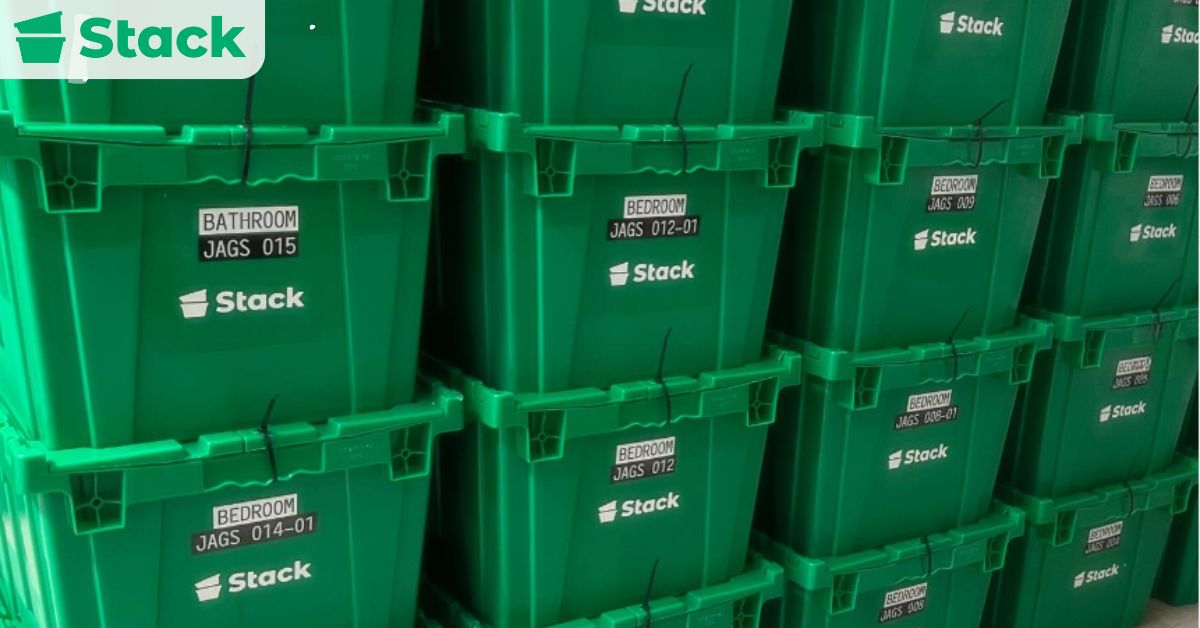
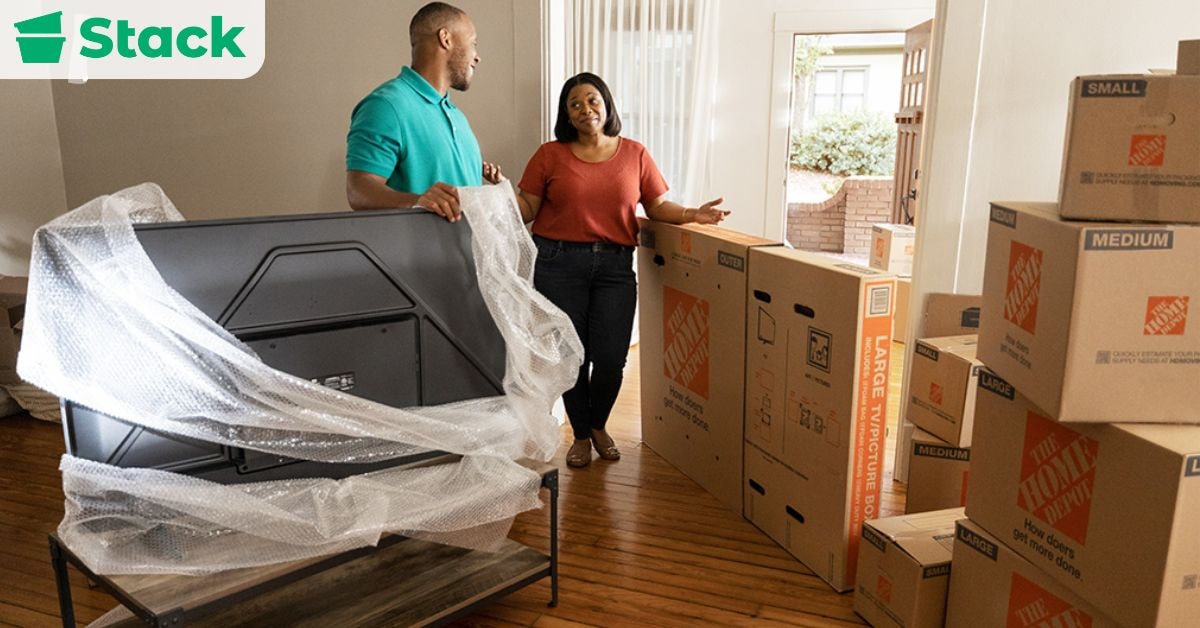
Image showing organized moving boxes and plastic bins inside a home, representing affordable and convenient packing options for a move.

Moving box prices vary primarily by size, with smaller boxes costing less and larger boxes designed for bulky items priced higher.

  • Small Moving Boxes ($1–$3): Best for heavy, compact items like books, canned goods, tools, files, and small décor pieces. Keeping heavy items in small boxes makes them easier and safer to lift.
  • Medium Moving Boxes ($1.60–$3.50): Ideal for kitchenware, pots and pans, toys, small appliances, pantry items, and neatly stacked household items. These boxes strike a good balance between weight and capacity.
  • Large Moving Boxes ($2–$6): Designed for bulky but lightweight items such as pillows, bedding, comforters, blankets, lampshades, and folded clothing. Avoid packing heavy items in these boxes to prevent tearing.
  • Extra Large Moving Boxes ($3–$8): Best for oversized, lightweight items like large blankets, winter coats, bulky clothing, and comforters. These boxes help consolidate space-consuming items while staying manageable when packed correctly.

Cost of Moving Boxes By Type

In addition to size, moving boxes are also priced according to their type.

  • Standard Cardboard Boxes ($1–$4): The most common moving boxes, perfect for everyday household items like books, toys, pantry goods, and décor. They are cost-effective and ideal for short-term moves but less durable for heavier or fragile items.
  • Heavy-Duty Boxes / Double-Walled Cardboard Boxes ($3–$8): Built with reinforced walls, these boxes are designed to handle heavier items such as dishes, small appliances, glassware, and electronics. They’re ideal when extra strength is needed to prevent collapsing or tearing.
  • Corrugated Boxes ($2–$6): Made with multiple layers of fluting, corrugated boxes offer added durability and protection during long-distance moves or shipping. Best for fragile or medium-weight household items that require extra cushioning.

Cost of Specialty Boxes

Specialty moving boxes are designed to protect fragile, oversized, or high-value items that don’t fit well in standard boxes. While they cost more than regular cardboard boxes, they help reduce the risk of damage during transport.

The table below breaks down the average cost range for each box size so you can quickly compare your options at a glance.

Specialty Box Type Average Cost Best Use For
Wardrobe Boxes $10-$20 Hanging clothes, suits, dresses, coats, and garments you want to move without folding
Dish Pack Boxes $10-$15 Plates, bowls, glassware, mugs, and other breakable kitchen items
TV Moving Boxes $20-$40 Flat-screen TVs, computer monitors, and large electronics
Electronics Boxes $5-$12 Desktop computers, stereo equipment, and office electronics, large monitors, audio equipment, and bundled electronics
Wine Shipping Kits $7-$15 Wine bottles, liquor bottles, and other glass containers
Mirror Boxes $5-$8 Wall mirrors, framed mirrors, and fragile flat glass items
Picture Boxes $5-$8 Framed artwork, photos, canvases, and prints
Mattress Boxes $10-$20 Twin, full, queen, and king mattresses during transport
Lamp Boxes $6-$10 Table lamps, floor lamp bases, and lamp shades
File Boxes $4-$7 Documents, files, paperwork, and office records

Renting vs. Buying Moving Boxes: A Price Comparison

The cost difference between renting and buying moving boxes comes down to a few key factors: how long you need the boxes, how durable they need to be, how many boxes you require, and what happens to them after the move. Cardboard boxes are priced lower upfront but are typically designed for single use, while plastic moving boxes cost more because they are reusable, sturdier, and built for repeated handling.

In terms of pricing, cardboard boxes usually range from $1 to $8 each depending on size and strength, while plastic moving boxes can cost anywhere from $10 to $30 per box to purchase. Renting plastic moving boxes, however, typically costs around $1.50 to $3 per box for the rental period.

For short-term moves, renting is often the more practical option. You only pay for the time you need the boxes, avoid the hassle of disposal or storage afterward, and often benefit from delivery and pickup services. This makes renting a more controlled and predictable choice, especially when you want durable boxes without the long-term commitment.

Case Study: Moving a 1-Bedroom Apartment

The average one-bedroom apartment moves requires around 25-30 boxes. A typical buying scenario would look something like this:

  • 10 small boxes at about $2 each = $20
  • 10 medium boxes at about $3 each = $30
  • 6 large boxes at about $5 each = $30
  • 2 specialty boxes (dish pack or wardrobe) = $25

Customers who buy cardboard boxes almost always need additional supplies to make those boxes usable and secure. Tape, bubble wrap, packing paper, and replacement boxes for ones that tear or collapse typically add another $30 to $60, pushing the total closer to $135–$165 for a one-bedroom move.

Customers who decide to rent plastic bins instead can get the same number of boxes for around $139, inclusive of other packing supplies like labels and dollies. In many cases, they would only need minimal tape or wrapping for fragile items, if any at all.

Why Are Moving Boxes So Expensive?

The high cost of moving boxes comes down to factors like durability, the quality of the materials used, and the rising cost of production. Although high-quality shipping boxes come at a higher price tag, they offer the best protection for your belongings when in transit. But it’s better to rent your boxes rather than buy them. When you rent, you can enjoy reliable, sturdy boxes without overspending. Plus, with rentals, you won’t have to worry about storing the boxes after your move, which can be a hassle if you don’t have the space.

What Are the Best Moving Boxes to Buy?

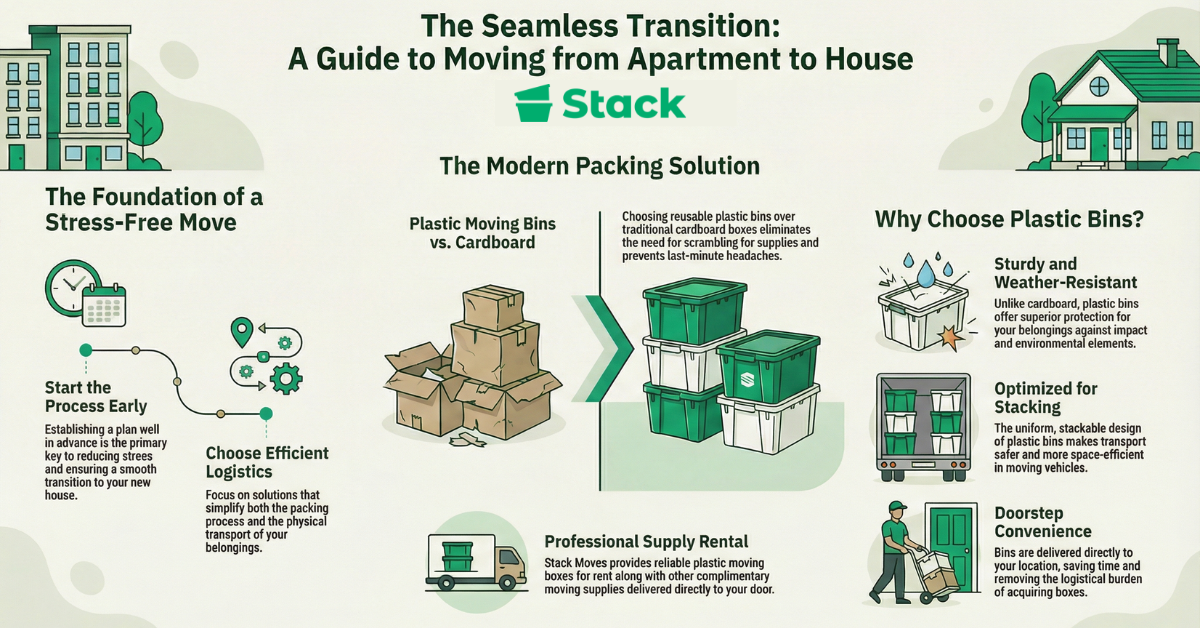
Image comparing buying cardboard moving boxes versus renting reusable plastic bins, showing cost savings and convenience for moving.

Often, individuals find themselves deciding between cardboard boxes and plastic bins. Cardboard boxes are typically cost-effective but lack durability, particularly for long-term storage. In contrast, plastic bins offer greater durability and are waterproof, making them ideal for storing items for an extended period.

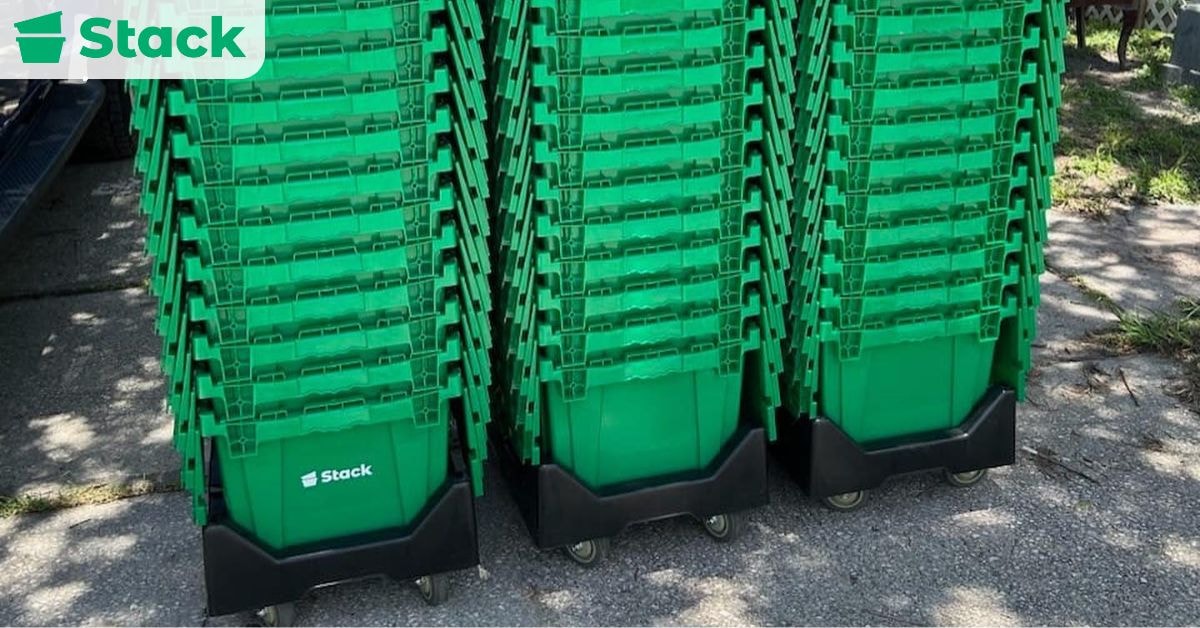
While more expensive initially, plastic bins are by far the best moving boxes as they are reusable, and you can stack them easily and securely.

Plastic bins usually come in different sizes. However, when it comes to the best-size boxes for moving, we recommend a bin that measures 27″ by 17″ at the top, 24.5″ by 14.5″ at the bottom, and 13″ tall.

How Much Do Other Supplies Cost for a Move?

During a moving process, you would need other packing supplies like packing tape and bubble wrap, which help seal boxes securely and protect fragile items. Packing tape costs $2 to $5 per roll, while bubble wrap costs $10 to $20 per roll.  

Furthermore, you would also need packing paper to wrap and cushion items within boxes. They cost $10 to $30 per pack. Additionally, having labels and markers help with organizing and identifying box contents. Other items you would need include stretch wrap, furniture covers, moving blankets, and pads.

4 Factors Influencing the Cost of Moving Boxes

image explaining smart packing tips to save money on moving, including using free boxes, renting plastic bins, labeling efficiently, and protecting fragile items.

Several factors can influence the cost of moving boxes, affecting how much you’ll spend on your moving supplies. These factors include material and durability, size and type, quantity, and brand.

1. Material and Durability
One of the biggest drivers of cost is what the box is made from and how much wear it’s designed to withstand. Standard cardboard boxes are intended for short-term use and lighter handling, which keeps production costs lower. Plastic moving boxes, by contrast, are built for repeated use, stacking, and transport. Their added durability, weather resistance, and structural strength naturally place them at a higher price point.

2. Size and Intended Use
Box size alone doesn’t determine cost. What matters more is how the box is meant to be used. Smaller boxes are engineered to carry heavier items without breaking, while larger boxes prioritize volume over weight. Specialty boxes add another layer, as they’re designed for specific items like clothing, dishes, TVs, or artwork. Extra materials, reinforcements, or internal supports increase complexity and, in turn, cost.

3. Quantity and Packing Efficiency
How many boxes you need also affects overall cost. Buying or sourcing boxes individually is usually less efficient than acquiring them in bulk or as part of a bundled solution. Larger quantities reduce per-unit handling, packaging, and distribution costs, which is why bulk options or rentals often offer better overall value for bigger moves.

4. Brand and Quality

Brand pricing often reflects consistency and quality standards rather than just the box itself. Established moving-supply brands tend to use thicker materials, standardized sizing, and stronger construction to reduce failure during transport. Lower-cost options may work for lighter loads but often involve trade-offs in durability, which can matter depending on what you’re packing.

What Are the Best Moving Boxes to Buy?

image comparing the cost of buying new moving boxes versus renting reusable plastic bins, highlighting savings, convenience, and delivery and pickup services.

Most people usually have to pick between cardboard moving boxes and plastic bins. In our experience, plastic moving boxes are the best moving boxes to buy because they are sturdier, stack securely, resist moisture, and are far less likely to collapse or tear during transport. Making them especially well-suited for full household moves, multi-day moves, and situations where boxes will be handled multiple times.

That said, buying plastic bins outright can get expensive, especially if you need a large quantity. For example, moving a one-room apartment typically requires around 20 to 30 boxes, which can quickly add up when purchasing plastic bins individually. For this reason, we generally recommend renting plastic moving boxes instead of buying them, as it gives you the same durability and protection without the upfront cost or long-term storage hassle.

Where to Buy Moving Boxes?

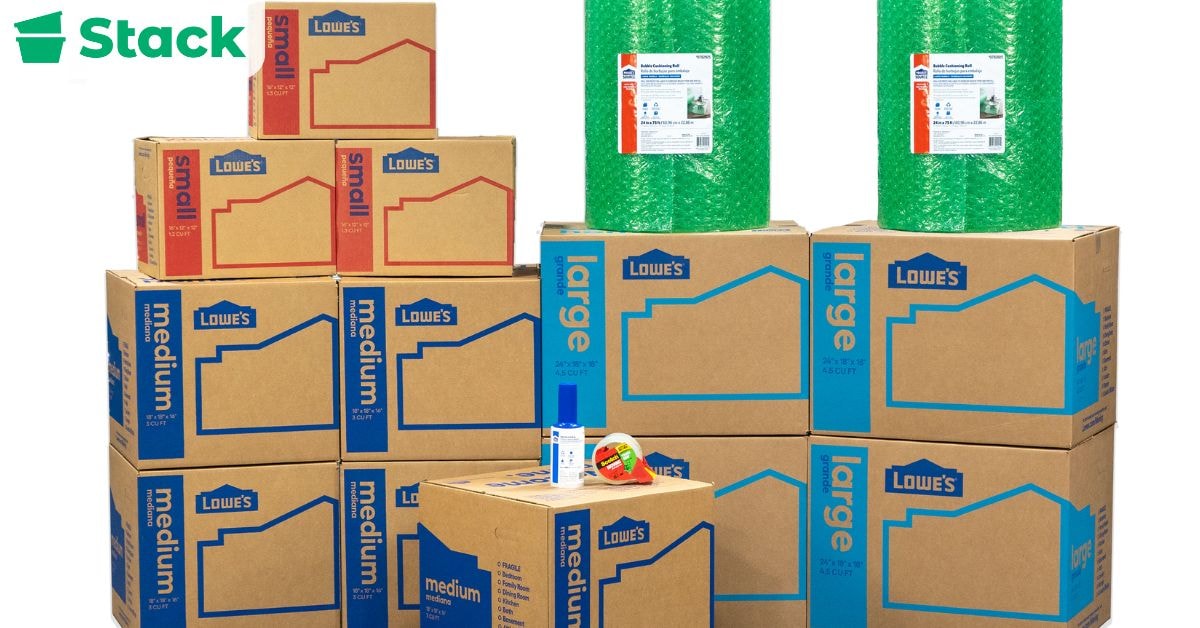
You can buy quality moving boxes from retail home improvement stores like Home Depot and Lowe’s, as well as moving supply companies such as U-Haul. Both stores offer a wide selection of box sizes and specialty options, making it easy to find exactly what you need. You can also order from online retailers like Amazon and Walmart, who provide added convenience by delivering boxes directly to your door. However, prices may be higher and the quality can vary.

How to Save Money on Moving Boxes

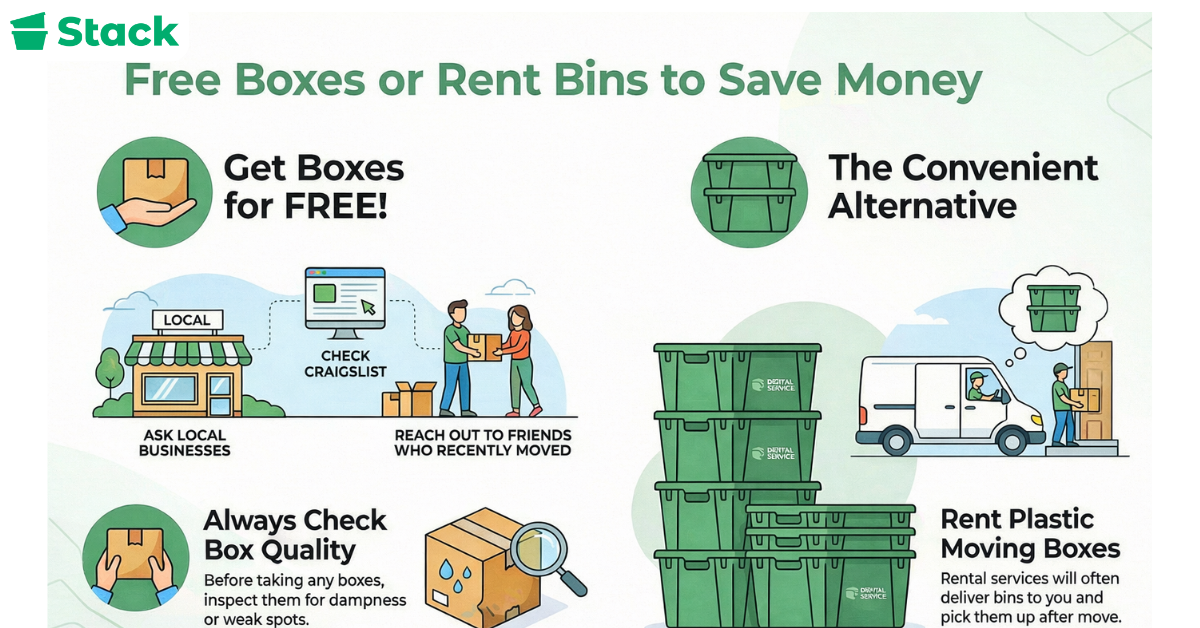
Infographic showing two ways to save money on moving boxes: getting free cardboard boxes from local businesses and renting reusable plastic moving bins with delivery and pickup.


The easiest ways to cut down on moving box costs are to either use free boxes or rent them instead of buying new ones. You can often find great free boxes from local businesses such as grocery stores, liquor stores, and bookstores. It also helps to check the online community on Craigslist and Nextdoor, where people are more than happy to give away their leftover boxes. Just be sure to check the boxes for dampness or weak spots before accepting them. Even a quick text to friends who recently moved can land you a full set for $0.

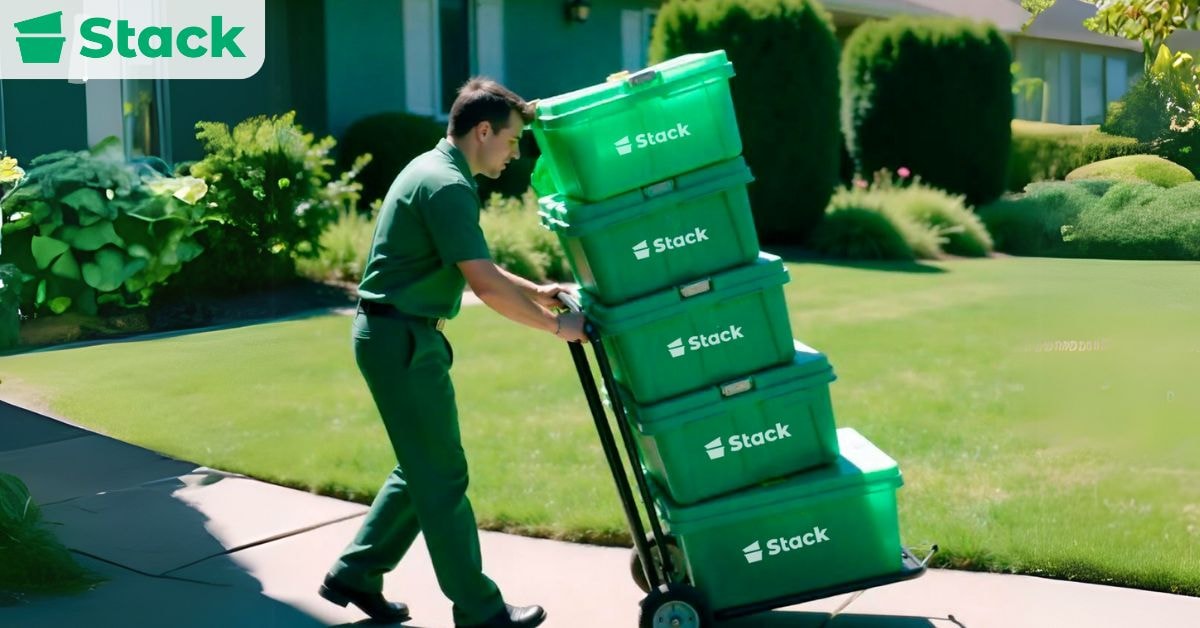
If the thought of hunting for free boxes sounds exhausting, you should consider renting plastic moving boxes instead. It’s a lot more convenient since most rental services will drop the bins off at your current place and pick them up at your new one.

How Much Do Other Packing Supplies Cost for a Move?

During a moving process, you would need other packing supplies to protect your belongings and keep your move organized. Prices vary by material and quantity, but these are the most common basics most moves require.

Packing Tape ($2–$5 per roll)

Cushioning Materials ($10–$30)

Labels and Markers ($5–$10)

Stretch Wrap ($10–$20)

Moving Blankets or Furniture Pads ($10–$30 each)

Looking for Affordable Moving Boxes?

Moving boxes can make up a significant portion of your moving cost. While using too many boxes or choosing the wrong type can lead to wasted money and damaged belongings, underestimating your needs may force last-minute purchases at higher prices.

We’ve found that the most convenient and cost-effective way to get high-quality boxes is to rent them. Rental boxes are sturdy, stackable, and reusable, giving you the protection you need without the hassle of storing or disposing of them afterward. Plus, many rental services include delivery and pickup, saving you time and effort. Contact us today to schedule your moving boxes in time for your next move.

Frequently Asked Questions

Moving boxes are one of the most common concerns for people planning a move. Below, we answer the questions we hear most often, offering practical guidance to help you plan your move cost-effectively.

How Much Should I Spend on Moving Boxes?

It depends on the size of your move, the types of items you’re packing, and whether you plan to buy or rent boxes. For a small apartment, a modest budget for basic cardboard boxes might be enough, while a larger household with fragile or bulky items may justify investing in specialty or plastic boxes. The key to coming up with a realistic budget is to balance protection with cost.

How Much Do Moving Boxes Cost on Average?

Standard cardboard boxes generally range from about $1 to $8, depending on size and durability. On the other hand, specialty boxes, like wardrobe or dish pack boxes, can cost more, and plastic moving bins are typically $10 to $30 each. Prices vary widely depending on the retailer, location, and whether you buy in bulk or rent.

Who Has the Cheapest Moving Boxes?

It depends on what you need and how many boxes you’re buying. Local grocery stores, liquor stores, and online community marketplaces often provide free or very low-cost pre-used boxes. For new boxes, big-box retailers like Walmart or Home Depot may offer the most affordable options, while specialty moving stores focus more on durability than price.

How Can I Save Money on Moving Boxes?

In most cases, the best way to save is either to reuse free boxes when possible or rent sturdy plastic boxes for your move. Free boxes reduce upfront costs but require time to source and inspect, while renting ensures high-quality, reusable boxes without the long-term storage or disposal hassle.

The Complete Office Moving Checklist for a Smooth Relocation

If you’ve been looking for an office moving checklist to guide you and your team through every phase of this transition, you’re in the right place. An office move is a high-stakes move where a single mistake, like a lost server cable, can lead to expensive downtime and a frustrated team. Most moving experts agree that one true and tested way to avoid situations like this is to plan your move with a comprehensive office relocation checklist.

When making your office moving checklist, you have to factor in every step of the moving process, from the initial planning to the final setup in your new office space.

Not sure what packing solution to use for your upcoming office move? Consider renting Stack Moves office moving crates, trusted by moving professionals for their durability, stackability, and ability to keep equipment protected and organized. Request a custom quote to get started.

In this blog we will provide a step-by-step office moving checklist organized by timeline, helping you plan every stage of your relocation from start to finish. We will also share practical tips on choosing the right packing supplies and proven ways to reduce moving costs without disrupting your operations.

Comprehensive Office Moving Checklist for a Smooth Relocation

Most business moves consist of four major parts: planning and preparation, logistics and packing, move-day execution, and post-move setup. To help you understand the relocation process better, our moving experts broke them down into an office moving checklist with clear timelines. This way, you can track responsibilities, stay ahead of deadlines, and keep operations running smoothly without unnecessary downtime or last-minute surprises.

Office Moving Checklist: 6–12 Months Before Moving Day

Two professionals discussing and planning an office move while reviewing documents and timelines during the early pre-move planning stage.

At this stage your goal should be to identify potential challenges early and make informed decisions that reduce risk, cost, and downtime later in the process.

1. Assess Your Office Needs

Before committing to a move, take a good look at your current setup to determine what furniture and equipment actually deserve a spot in your new office. This is the perfect time to evaluate whether your existing pieces still meet your standards for comfort and durability or if they need to be replaced with items that will fit your new space better. Once you’ve made those decisions, coordinate with your suppliers to schedule delivery for the new items in time for everything to be installed, tested, and ready for use the moment the office officially opens.

2. Create A Moving Plan

Think of your move like a project with milestones that need to be hit on schedule to show that progress is being made. That is where a moving plan comes in. Having a clear plan early helps prevent last-minute scrambling and keeps everyone aligned. Your moving plan should clearly outline responsibilities, key milestones, and deadlines, backed by an internal moving team or a dedicated point person to lead the charge. This plan should account for every phase of the move, including packing schedules, IT shutdowns, move-day supervision, and post-move setup.

3. Research New Office Locations

Remember that when choosing a new office, what truly matters is a space that supports your daily business operations. You want to look for a layout that naturally enhances your team’s workflow while providing enough square footage to house both your staff and equipment comfortably. Additionally, your new location should be accessible not just to employees but also to clients so that it’s convenient for everyone.

4. Take Inventory of Office Assets

Before you move anything, take inventory of your office equipment and supplies by creating a moving inventory list. This will help you decide what to keep, sell, or discard, making the move easier. This audit is essential for deciding what to keep, sell, or discard, significantly lightening the load for your movers. This is also an opportune time to assess your IT systems and tech equipment to determine what should be upgraded or replaced. Determining which IT systems are outdated now allows you to plan for upgrades before you arrive, rather than dealing with obsolete equipment in a brand-new office.

5. Begin IT and Infrastructure Planning

You should begin coordinating with your IT team and service providers the moment the move is confirmed. Map out the requirements for everything from internet and phone lines to security systems and access controls in the new building. Also create a migration plan that covers data backups, equipment transport, and rigorous testing so you can head off technical glitches before they happen. Getting this infrastructure right is the fastest way to ensure your team is back to work without a hitch the day after the move.

3-6 Months to Moving Day

Business professionals reviewing floor plans and calculating costs while setting a moving budget and timeline 3–6 months before moving day.

6. Set Your Moving Budget

Your budget should cover obvious moving costs like professional moving services and packing materials as well as overlooked ones like minor renovations. Your budget should be based on actual information where possible. Look at what similar businesses have spent on office relocations, and review any costs from previous moves your company has undertaken. Also remember that unexpected costs almost always arise, so it’s wise to include a contingency buffer in your budget. A good rule of thumb is to set aside 10–15% of your total projected moving costs as a safety net.

7. Build A Moving Timeline

In the early stages of your planning, you should create a moving timeline. By assigning realistic deadlines to every task and reviewing your progress regularly, you can prevent the last-minute panic that leads to mistakes. A typical office relocation time frame looks something like this:

  • 6-12 Months Before Moving: Begin the search for a new office location, create a moving team, and start preparing your budget.
  • 3-6 Months Before Moving: Commit to hiring your vendors and communicating the specific logistics to your staff.
  • 1-3 Months Before Moving: Finalize the new office address, hire a moving company, and communicate detailed plans to employees.
  • 1 Week Before Moving: Pack non-essential items, back up data, and ensure all final preparations are complete.

8. Design the New Office Layout

This is the perfect opportunity to fix what wasn’t working in your old office. Start by designing a layout that meets your team’s needs. As you design, think about how your team actually moves throughout the day—pay attention to the placement of breakrooms, the flow of natural light, and the accessibility of storage areas. You can use design software like SmartDraw or Floorplanner to assist you. Don’t forget to factor in possible future growth when designing the office layout. Ensure your layout is flexible enough to accommodate new hires and evolving business needs so you don’t outgrow the space too quickly.

9. Hire Professional Movers

When it’s time to book your movers, look for a company that specializes in commercial relocations rather than just residential moves. We recommend getting detailed quotes from at least three different providers to compare not just the price but also the level of service offered. Ask specifically about their experience with IT setup, furniture assembly, and whether they offer comprehensive insurance for lost or damaged equipment. If you choose to manage the logistics in-house, make sure you have a dedicated coordinator to handle truck schedules, driver communication, and loading priorities to keep the day moving smoothly.

1-3 Months to Moving Day

Professional coordinating an office move while working on a laptop and making phone calls during the final 1–3 months before moving day.

10. Finalize the New Office Lease

Confirm all lease terms with your landlord or property manager to avoid last-minute issues. Take the time to double-check move-in dates and building access permissions. Also clarify who is responsible for repairs or renovations during the hand-off. If possible, try to secure early access to the space so you can measure the rooms and plan your furniture placement in person.

11. Notify Employees, Clients, and Vendors

As soon as your new location is confirmed, share the news with your employees to give them ample time to prepare. Be transparent about the moving timeline and set clear expectations regarding their individual roles, like packing their own desks or coordinating their department’s inventory. Once the internal team is briefed, notify your clients and vendors so they can update their records, ensuring there’s no lapse in service or missed deliveries during the transition.

12. Sort and Declutter Office Items

A move is the perfect excuse to purge what you don’t need. Go through every piece of equipment, furniture, and supply in your office to identify what’s essential, what can be donated or sold, and what should be discarded. Decluttering not only reduces moving costs and packing time, but it also helps your new office start fresh without unnecessary clutter. Pay special attention to sensitive or high-value items, labeling and setting them aside for extra care during the move.

13. Plan IT and Utilities Setup

Your business can’t function without power and connectivity, so treat your utility setup as a top priority. Work closely with your internal IT team and service providers to schedule disconnections, transfers, and installations so systems are ready on move-in day. Some offices choose to outsource this part of the move to companies that offer office IT relocation services to ensure everything is safely moved and reinstalled without downtime.

This is also the time to perform a final backup of all critical data and create a checklist of devices, servers, and connections that must be reinstalled or tested immediately. This early coordination is the only way to prevent data loss and ensure your team can jump back into their work without technical hitches.

1 Month to Moving Day

With just a month left, the move is entering its most hands-on phase. This is the time to start preparing your office physically, making sure every item has a place, and ensuring critical systems like IT and furniture setups are scheduled for a smooth transition.

14. Begin Packing Non-Essential Items

Start by packing items that aren’t immediately needed for daily operations, such as seasonal supplies, archived files, and rarely used equipment. Use high-quality boxes or moving crates to protect contents, and avoid overloading them to prevent damage. Clearly label each box with its contents and the department it belongs to; this will make unpacking faster and more organized at the new office.

15. Label and Organize Boxes by Department

To avoid a mountain of mystery boxes at the new office, you and your team should follow a strict labeling system. One effective way to label boxes for an office move is to assign a specific color to each department so that movers know exactly where each item belongs without needing to ask. Alternatively, you can number each box and link it to your inventory moving list. This approach minimizes confusion on moving day and allows teams to resume work quickly in the new space.

16. Coordinate Furniture and Equipment Deliveries

It’s time to touch base with your suppliers and confirm the delivery schedule for any new office furniture or tech equipment. Proper coordination here ensures that your major assets are staged and ready for use the moment the office doors open. Verify that large pieces, such as desks, conference tables, or IT servers, have access to elevators, doorways, and staging areas in both the old and new offices.

1-2 Weeks to Moving Day

Office employees packing and labeling boxes while organizing supplies during the final 1–2 weeks before moving day.

The countdown has officially begun, and the margin for error is shrinking. Now is the time to finalize assignments, lock in schedules, and make sure all systems are ready for a seamless moving day.

17. Finalize Employee Assignments

Your team should have specific people assigned to supervise the loading process, coordinate with vendors, and act as a resource for the rest of the staff. To keep things from becoming overwhelming, appoint at least one point person to serve as the primary contact for any last-minute issues or complaints. Having this clear chain of command ensures that questions are answered quickly and the process remains organized and stress-free for everyone.

18. Prepare IT Systems

This is the most critical window for your technology. Work closely with your IT team to finalize preparations for servers, computers, phones, and network equipment. Back up all critical data, document configurations, and ensure hardware is ready to be safely transported. Create a checklist for reconnecting and testing systems in the new office so your team can resume work without delays. Early IT preparation prevents technical issues that could disrupt operations immediately after the move.

19. Confirm Moving Day Arrangements

Touch base with your movers to confirm dates, times, and access to both offices. Both sites should be aware of your moving schedule so that they can grant entry or prepare parking areas as needed. Share detailed instructions and contact numbers with your internal moving team so that everyone is aligned. Also, go back to review your inventory list and make sure everything is accounted for and ready to be transported. If applicable, prepare access badges or entry codes for movers or third-party vendors.

Before Moving Day

This is the time to ensure the old office is ready for turnover, key access and documentation are in place, and your new office is prepped to receive employees and equipment. Taking these steps reduces last-minute stress and helps ensure a smooth transition on moving day.

20. Clean and Inspect the Old Office

We recommend hiring a professional cleaning service to handle the final cleanup of your old office. It’ll save you and your team precious time to focus on the new office setup. Once you’ve arrived at your new office, focus on setting up key areas, server rooms, and workstations so that the business can resume operations as soon as possible.

21. Prepare Access and Documentation

Ensure that movers, suppliers, and any third-party vendors have the access they need for both your old and new offices. This includes building entry codes, keys, parking passes, elevator reservations, or any permits required for moving large items. Gather and organize all necessary documentation, such as inventory lists, delivery schedules, and contact information for your moving team. Proper access and documentation at this stage prevent delays, miscommunications, or denied entry on moving day.

Moving Day

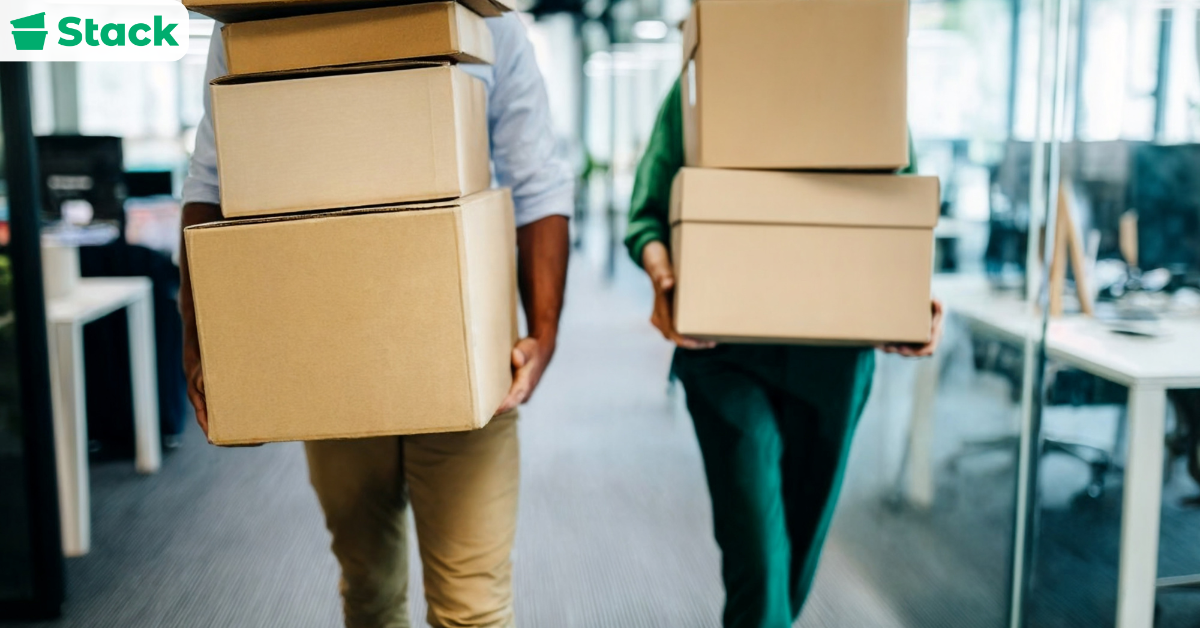
Office movers carrying labeled boxes into a new workspace on moving day as part of an organized office relocation.

Today is the day all your planning pays off. The goal for moving day is to manage the flow of people and equipment with military precision, acting as the bridge between your old office and your new beginning while keeping stress levels low for your team.

22. Conduct a Final Walkthrough

Before the movers begin loading, perform a final walkthrough of your old office. Check every room, storage area, and common space to ensure nothing is left behind. Confirm that utilities are shut off and all personal or sensitive items are accounted for. This step helps avoid forgotten equipment or supplies and ensures a clean handover of the space.

23. Supervise the Move

Have your moving team and point persons actively supervise the process. Ensure movers are following your instructions, boxes and equipment are being loaded carefully, and items are going to the correct departments at the new office. Keep communication lines open so any issues can be addressed immediately. Supervision ensures that the move is executed efficiently and that your office assets arrive safely and organized.

After Moving Day

Office employees setting up furniture and workstations in a new office space after moving day.

Even after all the heavy lifting is done, your work isn’t over. The days following a move are critical for restoring normal operations, settling your team into the new environment, and ensuring nothing was lost or damaged during transit.

24. Unpack Priority Workstations First

Rather than trying to unpack everything at once, focus on the workstations and departments that are vital to your daily operations. Get the computers, phones, and specific tools set up first so your team can resume their core tasks without missing a beat. To make this easier, provide each team with a quick access kit containing the essentials—like chargers, manuals, and basic office supplies—so they aren’t forced to hunt through dozens of boxes just to find a stapler or a power cord.

25. Test IT Systems and Utilities

The moment you arrive, perform a full sweep of your infrastructure. Test every computer, printer, and phone line, and verify that the Wi-Fi signal is strong in every corner of the office. It’s a good idea to have your IT staff on-site or on high alert for the first 48 hours to troubleshoot any connectivity issues or server glitches immediately. By prioritizing the systems that impact productivity, such as cloud access and VoIP phones, you can prevent minor technical hiccups from turning into a full day of lost work.

26. Update Business Address Everywhere

Once you’re settled, promptly update your business address across all platforms. This includes your website, Google Business profile, social media accounts, mailing lists, invoices, and vendor accounts. Also notify your clients and service providers to prevent missed deliveries, ensure continuity of service, and maintain a professional image during the transition.

27. Orient Employees to the New Office

A new office can be disorienting, so take the time to give your team a proper orientation. Walk them through the new floor plan, pointing out everything from the meeting room booking systems to the quirks of the new breakroom coffee machine. Clear up any confusion regarding new security access codes or waste disposal rules right away.

28. Celebrate the Move With Your Team

Finally, take time to recognize the effort that went into the relocation. Hosting a small celebration, whether it’s a team lunch, coffee morning, or informal office gathering, shows appreciation for everyone’s hard work. Celebrating the move also helps foster a sense of community and excitement about the new space, reinforcing a positive start in your refreshed office environment.

How Long Does it Take to Relocate an Office?

The time it takes to relocate an office can vary greatly depending on several factors, including the size of the office, the complexity of the move, and the level of planning involved. On average, an office relocation can take anywhere from several weeks to a few months.

How Much Does it Cost to Move an Office?

Relocating your business will cost anywhere from $1,500 to $30,000 or more, with the biggest factor being the size of your office. Naturally, larger offices will attract higher prices due to the number of items being moved. A great tip for saving up on office relocation expenses is to bundle services together. Bundling services not only helps you save costs but also streamlines the relocation process.

Vendors who offer bundled services usually do so at a discounted rate, which makes it more economical to engage them rather than hiring separate service providers. It also simplifies the moving process since you only have to deal with a single vendor for multiple services.

How to Pack for an Office Move

Office employees reviewing packing plans on a laptop while preparing inventory for an organized office move.

By following a structured packing process, you can transform a mountain of inventory into an organized, plug-and-play setup that allows your business to resume operations immediately.

  • Gather High-Quality Packing Supplies: Start by collecting everything you’ll need to safely pack your office: sturdy boxes in various sizes, packing tape, bubble wrap, packing paper, and labels. For added convenience and durability, consider using plastic crates, which are stackable, reusable, and protect fragile items better than cardboard.
  • Estimate Your Volume Accurately: To avoid the frustration of running out of materials mid-move, use a moving box calculator to determine the exact number of containers required based on your office’s square footage and staff count.
  • Inventory and Label as You Go: As items go into boxes, immediately document the contents and mark the box with its destination department; this ensures the moving team places every container in the right spot for an efficient unpacking process.
  • Prioritize Electronics Protection: Use bubble wrap and anti-static materials for computers and servers—ideally using original packaging if available—and remember to label every cable so your IT setup is a simple “plug-and-play” task at the new site.
  • Delegate Personal Packing: Provide each employee with a designated box for their desk décor, photos, and personal electronics, making them responsible for securing their own belongings to ensure nothing sentimental or valuable is misplaced.
  • Cushion and Flag Fragile Assets: For glassware, artwork, or sensitive lab equipment, use generous layers of packing paper and bubble wrap, then clearly mark these boxes as “Fragile” so the movers know to give them top-tier care.

Ready for a Smooth Office Move?

Fortunately, they can be far more manageable with the help of a comprehensive office moving checklist. Think of a checklist as your move’s master plan; it turns a chaotic pile of tasks into a clear, step-by-step roadmap for success. One major part of that plan is your moving supplies, especially your moving boxes. Using the right boxes not only safeguards your assets but also speeds up unpacking and setup at your new location.

However, poorly chosen boxes often lead to damaged gear or lost inventory. Instead of relying on traditional cardboard, consider renting durable, reusable plastic moving boxes that protect your belongings and make packing more efficient. At Stack Moves, our professional-grade crates are designed specifically for office moves, and we can even handle delivery and pickup for added convenience. Contact us today to rent office moving crates in time for your next office move.

Frequently Asked Questions

Even with a master plan in place, it’s natural to have lingering questions about the finer details of commercial relocation. This section addresses the most common concerns about office moves to give you the extra confidence you need.

What Is the Best Time to Start Preparing an Office Moving Checklist?

The industry standard for a smooth transition is 6 to 12 months before your move date. For smaller offices (under 2,500 sq. ft.), 6 months is usually sufficient. However, larger corporations or businesses with complex IT infrastructure should start planning a full year out. This lead time allows you to vet moving companies, secure your preferred move date, and coordinate with internet service providers, who often require 60–90 days’ notice for new installations.

How Do I Ensure It Equipment Is Safely Moved?

The golden rule here is to assume something might go wrong and back up everything to the cloud before you even touch a power cord. When you start disconnecting, don’t just throw cables in a bin; take a quick photo of the back of the computers so you know exactly where those cords go later. Wrap your hardware in anti-static bubble wrap because a tiny bit of static can fry a motherboard.

What Supplies Are Essential for Packing Office Items?

Beyond basic boxes, you should prioritize specialty file boxes that allow you to move hanging folders directly from the cabinet without disrupting their order. For high-volume moves, heavy-duty plastic bins are often the most efficient choice because they offer superior crush resistance and come with a lid for extra security.

How Can I Minimize Downtime During an Office Move?

Plan your move in stages, starting with non-essential areas and items first, so critical operations can continue until the last moment. Make sure you coordinate closely with your IT team to ensure servers, networks, and communication systems are backed up and quickly reconnected at the new office. Also try to clearly assign roles to employees and movers, so everyone knows their responsibilities and key tasks aren’t delayed.

How to Pack for Moving: A Step-by-Step Guide for a Stress-Free Move

The best way to pack for moving is to start early, use the right packing materials, and follow a clear, room-by-room process to keep everything protected and organized. Moving is stressful for many people because packing is easy to mess up, especially when it’s done at the last minute. Without the right strategy, items can get damaged, misplaced, or lost, adding unnecessary frustration and cost to your move. Similarly, the type and quality of packing materials you use matter just as much as the packing method you adopt, making it important to be intentional about what type of box you pack with.

That’s why the best way to pack before a move is to start early. Taking the time to plan, acquire necessary packing supplies, and pack your items weeks in advance will help you stay organized without feeling pressured by the amount of work involved.

Are you looking for affordable yet high-quality moving boxes for your next move? Stack Moves offers durable moving bins for rent that not only protect your belongings better than cardboard but also make packing, stacking, and transporting easier. Book now to receive your boxes in time for your upcoming move.

In this guide, we’ll walk you through our proven packing process that shows you exactly when to start packing, what supplies to use, and how to protect your belongings every step of the way.

How to Pack for Moving in 10 Simple Steps

Person organizing boxes showing the best way to pack for moving

We’ve broken down the entire packing process into 10 simple steps to help you stay organized and make sure nothing important is left behind.

1. Create a Moving Timeline

A moving timeline is a plan that maps out everything that needs to happen between today and moving day. A timeline helps you control the pace of your move and prevents last-minute packing. It also allows you to spread your physical and mental effort over several weeks rather than cramming it into a few stressful days.

To create a moving timeline, start at your intended move date and work backwards, assigning realistic deadlines for milestones such as decluttering, gathering supplies, and packing each room. Try to build in buffer days in between tasks so unexpected delays don’t throw your entire move off track. And even if you do find yourself running short on time, you can still enjoy an organized move despite the added pressure with the help of some of our packing tips for moving in a hurry.

2. Sort and Declutter Before You Pack

Moving can be expensive, and one of the most effective ways to reduce your moving expenses is to pack less stuff. When you declutter before a move, you reduce the number of packing materials you need, saving you time, money, and effort. The best way to declutter is to be realistic about what you actually use, not what you think you might use in the future. Sort your items into categories like ‘keep,’ ‘donate,’ ‘sell,’ and ‘discard.’

3. Gather the Right Packing Supplies

Packing materials arranged to show the best way to pack for moving

Combining high-quality packing materials with proper packing techniques can make all the difference in your move by ensuring all your belongings arrive at their destination safely. Some basic but essential packing supplies include:

  • Moving boxes: These are the most important packing supply because they house all your belongings. With this in mind, you should ensure that your moving boxes are of good quality and that you have an adequate amount for your move. When selecting a box for your move, be sure to factor in the nature of what you’re packing, how fragile it is, and how much weight each box can realistically handle.
  • Packing Tape: High-quality packing tape keeps your boxes sealed during the move. It’s a great source of reinforcement for heavy boxes to prevent them from tearing open or falling apart.
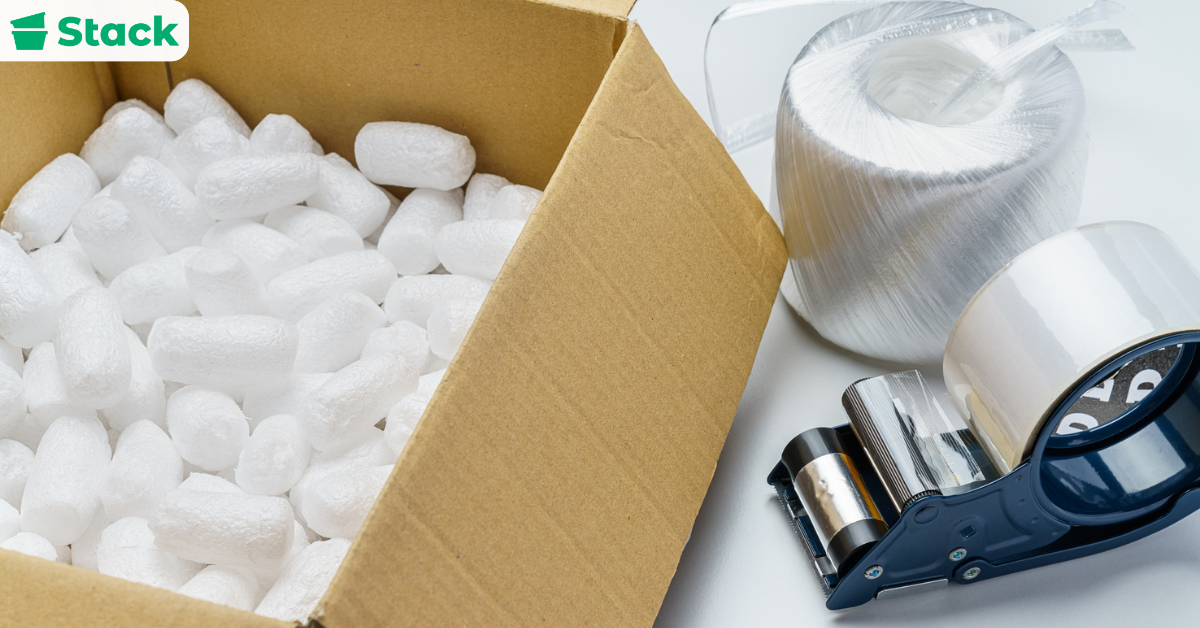
  • Bubble Wrap/Packing Paper: This gives extra protection to breakable items like glassware and electronics either by absorbing impact or filling up spaces to stop objects from moving around during transit.
  • Markers and Labels: Labeling helps speed up the unpacking process since you know the content of every box and where it should go.
  • Specialty Boxes: These include wardrobe boxes, dish pack boxes, and any other box specially designed to convey delicate items that require added protection.
  • Scissors/Box Cutters: Use these to cut packing tape, open boxes, or trim packing paper quickly and safely.

4. Create a Moving/Packing Checklist

When packing stretches over several weeks or even months, it’s easy to forget where you left off or assume something was already handled. You can avoid this by creating a moving checklist that will help you keep track of what’s been done, what’s in progress, and what still needs attention. You can either create one from scratch based on your timeline or download an editable moving checklist and customize it to your needs. Be sure to update it regularly so it reflects your actual progress, not just your original plan.

5. Pack Non-Essential Items First

The easiest way to guarantee yourself a stress-free moving experience is to start packing early. But it wouldn’t make sense to pack up your kitchen when the move is still weeks away. This is why we advise people to start with non-essential items like seasonal clothing, décor, and rarely used kitchenware.

You’ll avoid any disruptions in your daily life, plus you’ll also have enough time to fine-tune your packing process before you start packing up essentials. By the time moving day approaches, the bulk of the work is already done, making the final stretch far more manageable.

6. How to Pack for Moving Room-by-Room

Wrapping dishes safely as part of the best way to pack for moving

This method of packing makes it easier to track what’s been packed and reduces confusion during loading, unloading, and unpacking. It also allows you to apply the right packing techniques based on the room, since kitchens, bedrooms, and bathrooms all have different packing needs.

How to Pack a Living Room for Moving

Start with smaller items like books, decor pieces, and electronics. Heavy items like books should be kept at the bottom of your moving boxes. Wrap delicate decor pieces in soft materials like blankets to keep them safe from damage. It’s also a good idea to label the wires of each device and keep them together in a small bag. Or you can bundle and secure them using twist ties. Also, remember to remove batteries from remotes and other electronic devices to prevent battery leakages. Battery leakages can corrode important components in these devices and lead to costly repairs or replacements.

How to Pack a Bedroom for Moving

To pack your clothes, neatly fold them into a box, or better yet, roll them to maximize space. Consider using a wardrobe box to transport your hanging clothes. Alternatively, you can place them in a garbage bag and into a plastic container. Bedding like comforters and blankets should be packed last. This is the best way to pack comforters for moving because their bulky nature can take up valuable space if packed first. Disassembling furniture like bed frames and dressers makes them easier to transport and reduces the risk of damage.

How to Pack a Kitchen for Moving

Due to the number of breakable objects kept there, the kitchen is often considered the hardest room to pack. This isn’t meant to scare you but to give you a heads-up so you can prepare adequately. Start with dishes, utensils, and small appliances like a coffee maker. Use bubble wrap, packing paper, or even a towel to prevent your dishes from breaking and your utensils from scratching. Be sure to label perishables like meat properly and pack them last in a cooler filled with ice. Also, make sure you disconnect electrical appliances before you try to pack them to avoid electric shock. It’s also a good idea to ask your moving company about their policies on transporting alcohol, flammable materials, and other commonly restricted items.

How to Pack a Bathroom for Moving

The safest way to pack bathroom items for moving is to secure them in spill-proof bags and place them in water-resistant moving containers. Check that your medications are properly sealed before packing them in plastic bags to avoid leaks. Be sure to throw out any expired products to reduce the risk of contamination and lighten your load. Daily essentials like a toothbrush and medication should be packed separately so they are accessible when you get to your new home.

7. Prepare a First Night Essentials Box

Imagine arriving at your new home after a long move only to realize you can’t find your phone charger. A first-night essentials box prevents this stress by keeping everything you’ll need immediately accessible. The general rule is to pack items that let you function comfortably on your first night without digging through boxes. This typically includes toiletries, medications, chargers, a change of clothes, and basic bedding.

8. Notify Important Parties of Your Move

This step should be done well before moving day, ideally as soon as your moving date is set. The last thing anyone would want in the middle of setting up their new home is to get charged for utilities at a place that they no longer live. Failing to notify important parties of your move, like your bank, utility company, or subscription services, can result in delayed services or unexpected charges.

9. Confirm Moving Arrangements

Ever heard of someone finding out hours before their move that the truck wasn’t coming? While it’s highly unlikely that professional movers would fail to notify you of a change, mix-ups around dates, times, or services can still happen on either end. Confirming your moving arrangements in advance can help prevent these last-minute surprises.

When working with professional movers, double-check the date, arrival window, and scope of services. If you’re renting a truck or relying on friends and family, verify their availability and make sure everyone understands their responsibilities.

10. Do a Final Walkthrough

A final walkthrough is your last chance to make sure nothing is forgotten before you leave. Beyond checking for missed items, you can inspect each room for damage, note anything that needs minor fixing, and ensure the space is clean and ready to hand over. Completing a thorough walkthrough helps you leave the property in good condition and gives you confidence that you’ve wrapped up the move responsibly.

How to Choose the Right Moving Boxes

Some of the key things to consider before you decide on moving boxes are the material, size, and number you’ll need. Once you account for these factors, the right moving box for your move becomes any box that can safely support your items without bending, tearing, or collapsing during transport.

The first thing to determine is the material. Cardboard boxes have been the first choice for many movers, but a lot of people are switching to plastic. Plastic boxes are stronger, don’t get soggy if they get damp, and stack better so nothing shifts around. They’re especially good for fragile stuff or heavier items.

Next is size. There’s no perfect box size, so aim for a mix of small to extra-large boxes. Heavy things like books and tools go in smaller boxes so they’re easier to lift, while light but bulky stuff like bedding and pillows fit nicely in bigger boxes. Picking the right size keeps your stuff safe and makes carrying boxes less of a pain.

Finally, think about how many boxes you’ll need to move. The number of boxes you need for a move generally depends on the size of your home. Grab too few, and you’ll be scrambling at the last minute; grab too many, and you’re wasting money and space. Tools like our moving box calculator can help you figure out exactly how many you need.

What Are the Best Packing Tips for Moving?

These practical moving tips help you save time, protect your belongings, and avoid common mistakes that lead to stress or damage. Use them alongside the steps above to pack smarter and enjoy a hassle-free move.

  1. Use high-quality packing materials: Cheap or worn boxes can collapse under weight, putting your items at risk. Packing tape, moving boxes, and proper padding help protect your belongings throughout the move.
  2. Label boxes clearly: Clear labels help you and your movers know exactly where each box belongs. Include both the room name and a brief description of contents to speed up unloading and unpacking.
  3. Don’t overpack boxes: Overfilled boxes are more likely to tear, break, or cause injury when lifted. Keep boxes at a manageable weight by distributing heavy items across several containers. This makes carrying easier and protects both your belongings and your back.
  4. Protect fragile items: Each breakable item should be wrapped separately and cushioned with padding to absorb shock. This extra care significantly reduces the chance of cracks or breaks during transit.
  5. Keep valuable items with you: Documents, valuables like jewelry, and essentials should never be packed in the moving truck. It’s safest to store personal items in a small pouch or bag you can travel with.
  6. Pack with unpacking in mind: Think ahead to how you’ll unpack in your new space. This makes settling into your new home faster and far less frustrating. Start by grouping similar items together, for example, bathroom items, so it’s easier to keep them in their new spot without digging through multiple boxes.

    Stack Moves reusable bins supporting the best way to pack for moving

Need Moving Boxes for Rent?

Starting early and following a clear, organized plan is the most reliable way to guarantee yourself a stress-free move. But even the best planning is useless without the right packing materials. For example, using low-quality boxes can lead to damaged or broken items, making it essential to only use high-quality packing materials for your move.

Our sturdy moving bins are designed to protect your belongings throughout the moving process. And the best part is they come with additional packing supplies, like labels and dollies that make organizing and transporting your items effortless. Schedule your box delivery today and take the first step toward a worry-free move.

Frequently Asked Question

Packing comes with a lot of specific “how-do-I-do-this?” moments, especially when it comes to everyday items you don’t want damaged. Below, we answer some of the most common packing questions to help you protect your belongings and enjoy a hassle-free move.

How Do You Pack Books for Moving?

Pack books in small, sturdy boxes to keep the weight manageable. Always place books flat or spine-down to protect their covers and bindings. You can also use packing paper to fill empty spaces to prevent them from shifting.

How Should You Pack Clothes for Moving?

Fold your clothes and place them in a sturdy moving box. For hanging clothes, it’s best to use wardrobe boxes because they offer the best protection during transport. Alternatively, you can also put a garbage bag over them and place them in a plastic moving bin to keep them safe. Roll your casual clothes instead of folding them to save space in your moving box.

What Is the Best Way to Pack Dishes for Moving?

Wrap each dish individually using packing paper or bubble wrap. You should stack plates vertically to reduce the risk of cracking. You can add padding to the bottom and sides of the box to absorb shock. You should clearly label the box as fragile.

How Do You Pack Glasses for Moving Safely?

Wrap each glass separately and use dividers if available. Place glasses upright in a sturdy box with plenty of cushioning on all sides. Avoid stacking glass items directly on top of one another without padding. Mark the box as fragile and handle with care.

How Can I Pack Pictures and Framed Artwork for Moving?

Use picture boxes or wrap frames with bubble wrap for added protection. You can also place a layer of cardboard between multiple frames to prevent scratches. Pack picture frames vertically rather than flat whenever possible to reduce pressure on the glass. And remember to label these boxes as “fragile” so that they’re handled with extra care.

How Do I Safely Pack Electronics for Moving?

If you can, pack electronics in their original boxes since they’re designed to protect delicate components during transport.

Where to Buy Moving Boxes for Cheap

Quality boxes and packing supplies are non-negotiable for a safe move, but costs can add up fast if you don’t plan ahead. Which is what makes it important to be intentional about finding ways you can save costs, like store discounts, online sales, and recycled box programs.

The cheapest place to buy moving boxes is from large retailers or local moving supply stores that offer durable, high-quality boxes at bulk or clearance prices, like U-Haul, Home Depot, and Lowe’s. Other great sources include moving or storage companies and community marketplaces, where you can often get them for free.

At Stack Moves, we’ve helped movers in the United States save hundreds of dollars on moving supply costs. With years of experience in the moving industry, our team provides durable moving box rentals that make relocating easier and more affordable. Contact us today to rent high-quality moving boxes and start saving on your next move.

In this post, we’ll compare the best places to buy moving boxes for cheap, plus share money-saving tips and alternatives to help you plan a smooth, cost-effective move.

Where to Buy Moving Boxes for Cheap

Eco-Friendly Plastic Bins as a Cost-Effective Alternative

But keep in mind that low-quality boxes can lead to damaged items and extra costs down the line, making it necessary to balance affordability with durability. Below, we’ve rounded up the best places to find affordable yet quality moving boxes.

Online Retailers

If you like to shop from home and compare prices before buying, online stores are an easy place to start. This option works best if you have a little time before moving day since you can browse different brands, read reviews, and get boxes delivered right to your door. Just keep in mind that shipping fees can add up, and box quality may vary depending on the seller, so check ratings and delivery times before you order.

  1. Amazon
    • Pros: Quality of boxes can be verified, shopping is convenient, and delivery is fast.
    • Cons: Shipping costs may be expensive and unavoidable. Box quality depends on the seller.
  2. U-Haul
    • Pros: Perfect place to get specialty boxes, orders can be picked up from various locations, and boxes come in various sizes.
    • Cons: Prices can vary significantly by location.
  3. Walmart
    • Pros: Thousands of stores across the nation make in-store pick-up easier, affordable pricing, and some centers are open 24/7.
    • Cons: Not the best place to get specialty boxes.
  4. Home Depot / Lowe’s
    • Pros: Both offer competitive prices and in-store availability, allowing you to pick up boxes immediately.
    • Cons: Limited quantity per purchase, which can affect the ease of large moves.
  5. The UPS Store
    • Pros: Offers durable, professional-grade moving boxes in various sizes, plus packing supplies and expert advice on what box fits what item. You can buy in-store or order online for pickup.
    • Cons: Prices tend to be higher than big-box stores, and not all locations carry a full range of moving supplies.

Moving and Storage Companies

Many movers also provide boxes as part of their service or offer them for purchase, so it’s worth checking what’s included before you book your move. Getting moving boxes from storage and moving companies guarantees you receive high-quality, sturdy packing boxes specifically designed for moving. This reduces the risk of damage to your belongings and often includes convenient pickup or delivery options.

  1. Budget
    • Pros: Quality boxes that come in various sizes and are available in convenient locations nationwide.
    • Cons: Can be more expensive than other options.
  2. PODS and 1-800-PACK-RAT
    • Pros: High-quality moving boxes that can be delivered to you.
    • Cons: More expensive and may not be available in your area.

Online Marketplaces and Community Boards

Online marketplaces such as Craigslist are platforms that allow you to find cheap moving boxes by connecting directly with sellers.

  1. Craigslist
    • Pros: You can find cheap or free boxes here.
    • Cons: There’s no way to guarantee the box quality, and arranging to pick it up yourself requires extra effort
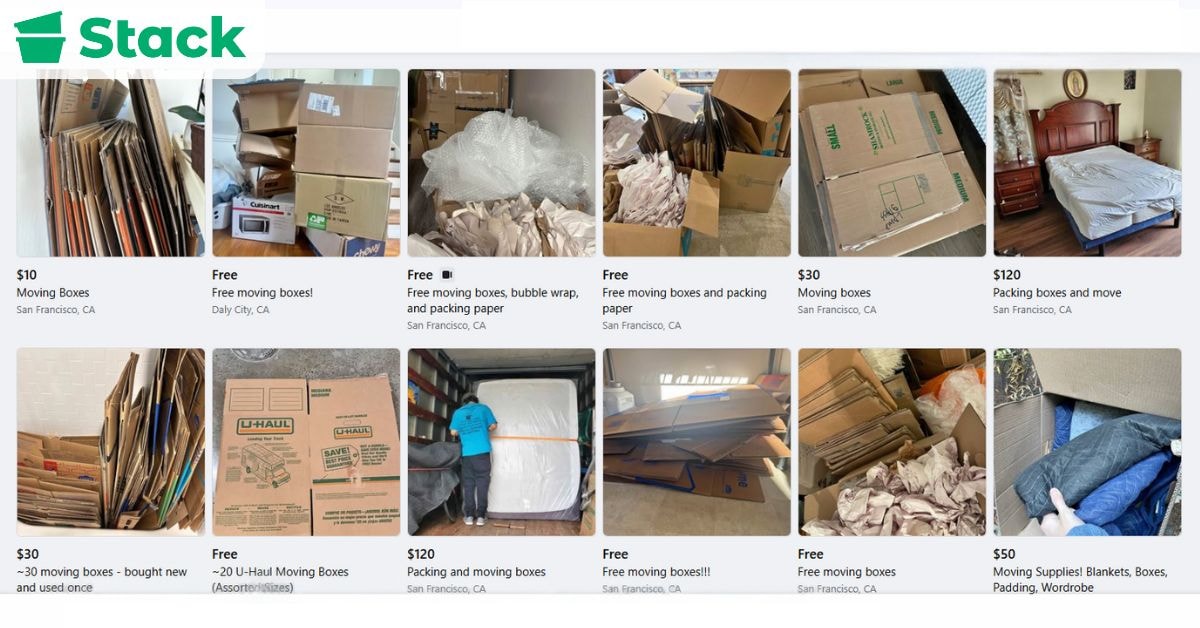
  2. Facebook Marketplace
    • Pros: Often free, with options arising within your locality.
    • Cons: No option for delivery; you have to pick it up yourself. Plus, availability can vary.
  3. Freecycle
    • Pros: Anything posted on the platform is free, plus the initiative helps to reduce waste.
    • Cons: Availability is very limited, and the quality can vary based on what is being offered.

Where to Get Free Moving Boxes

Best Box Sizes and Types for a Move

If you’re trying to keep moving costs down, there’s no shame in hunting for free moving boxes. Skipping store-bought boxes can easily save you $50–$100, money that’s better spent on something actually exciting in your new place. You can get high-quality reusable moving boxes, often at no cost, from these sources:

  1. Family & Friends: Start by asking people you already know. Friends, neighbors, or relatives who shop online or have recently moved often have boxes lying around and are happy to get rid of them. The best part is you’ll know exactly where the box comes from and can trust its condition.
  2. Your Workplace: Many offices receive regular shipments of supplies or equipment, and those boxes often end up in recycling bins. Ask your supervisor or the facilities team if they can save some for you. Office supply boxes are usually sturdy and uniform in size, which makes stacking and loading easier.
  3. Local Businesses: Small shops, liquor stores, bookstores, grocery stores, etc., get shipments every week in strong boxes made to carry heavy items. Stop by one and ask if they have extras before recycling day. Liquor stores, coffee shops, and bookstores are especially good sources for clean, solid boxes. Just make sure to inspect them for signs of moisture or pests before you take them home.
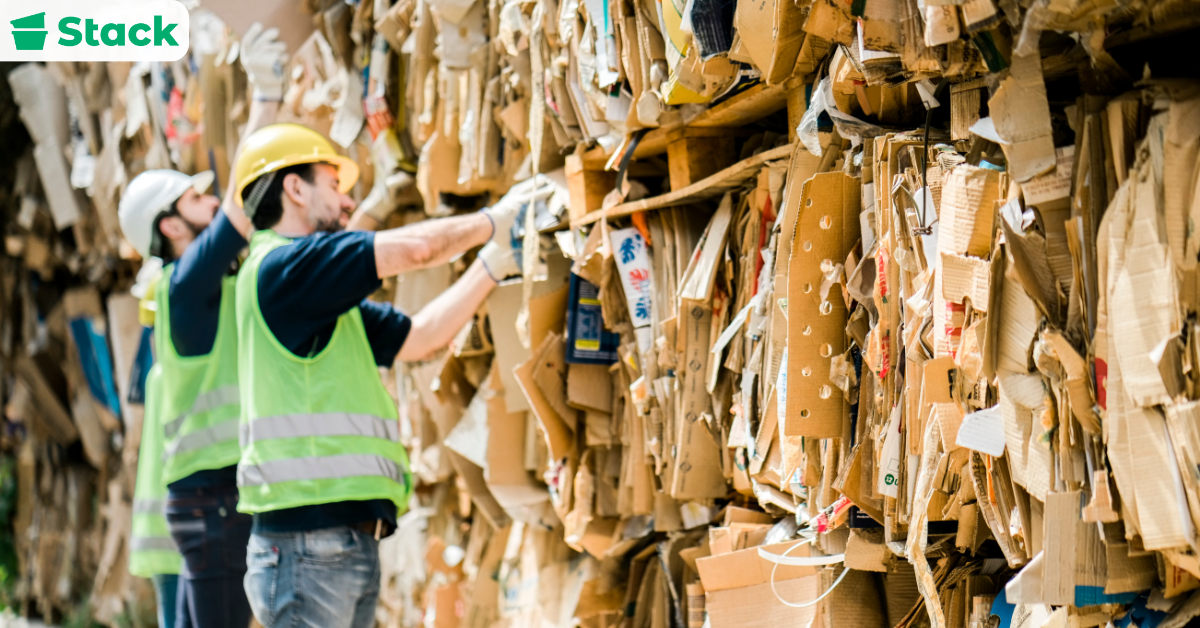
  4. Recycling Centers: Recycling centers can be a gold mine for lightly used boxes that never made it to the shredder. Visit your local facility and ask if you can take any boxes that are still intact. It’s eco-friendly and completely free. Just bring a car or van and load up whatever fits your needs.

How Much Do Moving Boxes Cost?

How to Organize Boxes for Moving

The cost of moving boxes varies depending on location, the type of boxes you choose, and where you’re buying them. New boxes can cost anywhere from $1 to $20 depending on the size and quality. Specialty boxes like wardrobe boxes, which are standing boxes with a built-in bar that allow you to hang up clothes inside, can cost even more than that. However, if you know where to look, you can also find suitable boxes for free or for a very low cost. Before collecting the boxes you need, ensure you know your available sources.

How Do I Know How Many Boxes I Need?

Even with the right moving boxes, your move can end up in disarray if you don’t have enough boxes for your move. Being well prepared entails creating a packing timeline, having a clear inventory of everything you want to pack, and knowing how many moving boxes you need to move.

Our Moving Box Calculator can help you prepare for your move in advance by helping you precisely estimate just the right amount of boxes. This not only saves you money but also helps make your moving process smoother and more manageable.

Is It Better to Buy or Rent Moving Boxes?

How to Move Hanging Clothes With Wardrobe Boxes

There’s no one-size-fits-all solution. However, in general, renting boxes ends up being the better option for a few reasons:

  • Durable plastic bins don’t have the same breakage risk as cardboard boxes.
  • Plastic bins may be more effective when it comes to protecting fragile items.
  • Plastic bins generally don’t require the use of packing tape.
  • When you rent, your boxes are dropped off and picked up for you.

Renting moving bins helps you save on packing materials and the stress of figuring out how to get rid of your boxes. Renting is often less costly and time-consuming overall, and it’s better for the environment, too!

Need Moving Boxes for Rent?

When searching for cheap moving boxes, it is advisable to consider every option available. Online retailers like Walmart offer convenience and a wide selection to choose from, whereas local sources like bookstores provide free, eco-friendly alternatives.

The best way to keep your moving costs minimal is to plan early and explore multiple sources to find the best deal. If you decide to rent your moving boxes instead of buying them, you can enjoy significant cost savings and the convenience of not having to dispose of boxes afterward. Additionally, renting provides durable, uniform containers that offer better protection for your belongings.

If you’re considering renting boxes for your next move, let Stack Moves take the stress out of the process. Our sturdy, eco-friendly box rentals save you time, money, and hassle. Explore our rental options and see how easy moving can be when everything’s built to work smoothly from start to finish.

Frequently Asked Questions

It’s natural to have a few questions about how to keep your moving costs low without putting your property at risk of damage or loss. To help you plan smarter and save money, we’ve answered some common questions that can make your move more efficient and cost-effective.

Are Free Moving Boxes Safe to Use?

Yes they are, as long as you inspect them carefully. Check for signs of moisture, tears, or weak corners before packing, especially if you’re storing fragile items or using bubble wrap for protection. Free boxes from friends or local stores can be just as durable as new ones if they’re in good condition.
What Are the Best Sizes of Boxes to Buy for Moving?

The best approach is to mix sizes. Use small boxes for books and other heavy items. Medium moving boxes are great for packing everyday items like decor or kitchenware. Whereas, large boxes are best suited for light, bulky things like beddings and comforters. A balanced mix keeps your packing organized and prevents crushed boxes in the moving truck.

How Many Moving Boxes Will I Need for a One-Bedroom Apartment?

On average, a one-bedroom apartment requires around 25-30 moving boxes. That includes small boxes for dense items and large ones for lighter belongings. In addition to moving boxes, you’d also need other moving supplies such as tape, bubble wrap or packing paper, permanent markers, scissors, and labels. These extra items will not only help you pack efficiently but will also keep your move organized.

Are Recycled Cardboard Boxes Strong Enough for Moving?

They can be, if they’re still in good shape. Recycled or secondhand boxes are often made from strong materials that can handle a typical move, especially if they’re double-walled. Just make sure there’s no water damage, soft spots, or crushed corners before reuse. For extra protection, reinforce the bottom with packing tape and use bubble wrap for delicate items.

Where Can I Donate or Recycle My Boxes After Moving?

You can donate gently used boxes through local community boards, Freecycle, or Facebook Marketplace. Many recycling centers and moving companies also accept cardboard boxes for reuse. If your boxes are still durable, passing them along helps others save money and reduces waste. Otherwise, break them down and recycle them properly to keep your move eco-friendly.

Medical Office Relocation Checklist Template

Download Medical Office Relocation Checklist

Relocating a medical office is a lot more complex than a standard business move. In addition to the usual logistics, healthcare facilities also have to account for patient safety, how they dispose of their waste, HIPAA-compliant data handling, among other things.

It all goes to show how the smallest oversight can lead to serious consequences. With a comprehensive moving checklist, you can allocate resources efficiently and avoid making any costly mistakes.

For this kind of high-stakes move, you can rent sturdy plastic moving crates from Stack Moves, which offer more protection than traditional cardboard. Backed by years of experience supporting corporate relocations across the US, our durable crates help keep sensitive equipment and files secure throughout the process. Rent your crates today and make your medical office move smoother from start to finish.

In this post, we will walk you through how to plan for your medical office move with a detailed medical office relocation checklist. We will cover everything from early planning and compliance to IT setup and post-move operations. Use this as a roadmap to ensure your relocation process is smooth, compliant, and stress-free.

Why You Need a Medical Office Relocation Checklist

Why You Need a Medical Office Relocation Checklist

Relocating a medical office involves complex legal, operational, and logistical requirements. A clear and detailed office moving checklist can help you stay organized, minimize disruptions, and ensure nothing critical gets missed along the way.

The first reason to create a medical office relocation checklist is that you’re dealing with more than just boxes. The requirements that apply to a medical office during a move are different from those of other businesses. They are regulated by multiple agencies and need to remain compliant every step of the move, or else they could face serious penalties such as losing their license.

The second reason to plan your move with a checklist is that there’s a risk of HIPAA violations or patient care gaps. Relocating improperly could put patient data at risk. If such an incident happens at any point during the move, it could lead to HIPAA violations and heavy fines. There’s also the risk of missed appointments or service interruptions, which can erode patient trust and harm your reputation.

Additionally, without a checklist, it would not be easy to get everyone on the same page. One of the great things about working with a checklist is that it clearly communicates everyone’s roles. Plus, vendors can be scheduled properly, and patients can receive timely updates about your new address.

Medical Office Relocation Plan for Beginners

This beginner-friendly plan breaks down the process step by step so your move stays organized, secure, and on schedule.

Pre-Planning Stage (6–12 Months Before Move Date)

Pre-Planning Stage (6–12 Months Before Move Date)

The success of your move is determined long before any box is packed. Understand that the decisions you make during this phase will shape the entire relocation. And so this stage is all about building a strong foundation by getting organized, aligning stakeholders, and setting expectations.

Begin by notifying all key stakeholders of your intent to relocate. Clear and early communication ensures everyone is on the same page and allows time to coordinate responsibilities. Next, set a realistic relocation budget that accounts for moving expenses, downtime, equipment upgrades, and any unexpected costs that may arise.

It’s also crucial to assign a dedicated project manager or build a small relocation team. This group will be responsible for overseeing everything concerning the move. This includes timelines, tasks, and being a point of contact for vendors and internal teams.

Once your leadership structure is in place, start researching potential new office locations that support your operational needs, meet zoning regulations, and offer easy access for patients and staff. You can also start searching for trusted professionals for the move itself.

To tie it all together, review your current lease agreement and determine your required notice period or any penalties. This is also a good time to initiate your compliance planning, such as certifications needed for your new facility.

Compliance and Communication (3-6 Months Before Move Date)

During this stage, focus on meeting all regulatory requirements and keeping all key stakeholders in the loop of what’s happening. Begin by updating your address with all relevant regulatory and administrative bodies, including:

  • Your state’s medical board
  • Drug Enforcement Administration (DEA)
  • Centers for Medicare & Medicaid Services (CMS) and all insurance payers
  • Any applicable state licensing authorities

Failing to notify any of these organizations could violate legal standards. Plan for possible inspection appointments, site approvals, or credential re-verifications, especially if your move involves controlled substances or changes to your service offerings.

Keep in mind that compliance-related tasks often move slowly, so allocate extra time into your planning process. So if your new office location requires local occupancy permits, zoning clearance, or business registrations, start the process early to avoid last-minute delays.

Equipment, IT, and Layout Coordination (1–3 Months Before the Move)

Any successful move requires early coordination of your equipment, IT infrastructure, and new office layout. This is especially true for medical facilities because of how heavily they rely on tech. Use this time to assess your current setup and ensure your new office location can support the same functionality.

Start by notifying your IT provider or in-house team well in advance. You want them to have enough time to create a transition plan for transferring your office IT services, such as internet service, phone lines, internal servers, and cloud-based platforms.

Next, schedule a secure backup of all patient data and essential files. This protects you in case anything gets lost or damaged in transit. Before you reopen your medical facility, test all critical systems to confirm everything works smoothly. This will allow you to troubleshoot in advance and reduce downtime.

To wrap things up, finalize your new office layout and confirm all tech-related installations meet your workflow needs.

Packing and Labeling (2-4 Weeks Before Move Date)

Packing and Labeling (2-4 Weeks Before Move Date)

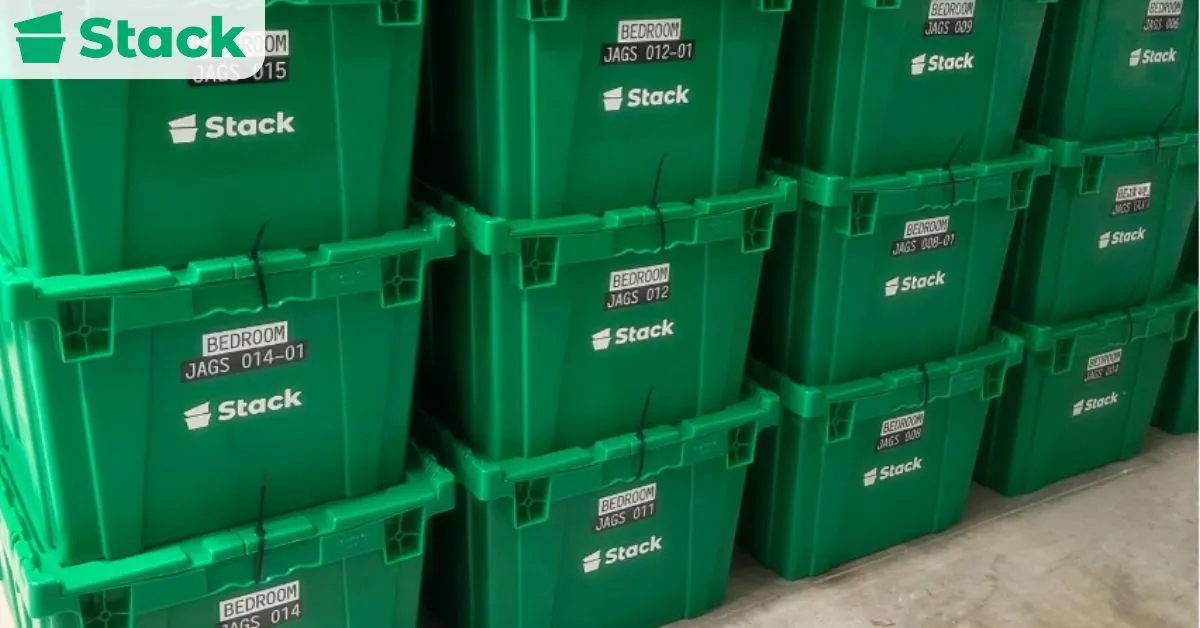
The goal of everything done during this phase is to ensure that your items arrive safely and that they can be unpacked quickly at the new facility. Using labels to organize your move can be a game-changer. With a color-coded labeling system or room-based tags, you can indicate where each box should go in the new space.

For a more efficient packing experience, consider renting plastic moving bins instead of buying cardboard boxes. These containers are not just sturdier but also more eco-friendly. Pack sensitive medical equipment using foam-lined containers or custom padding to prevent costly damage.

Heavy items should go in smaller boxes to reduce the risk of someone getting hurt from lifting them. Be sure to clearly label each box with its contents and the appropriate department so staff can find what they need quickly at the new office.

For any hazardous materials, follow all safety regulations for separation and secure transport. Confidential patient records should be packed in tamper-evident containers to maintain compliance with HIPAA and ensure privacy throughout the move.

Pack essential supplies last so they’re the first to be unpacked at your new location. Items like PPE, prescription pads, or daily-use instruments should be immediately accessible once operations resume.
Final Preparation (1 Week Before Move Date)

In the final week leading up to your medical office move, your focus should shift to execution. By now, you should’ve packed all non-essential items and labeled every box with its content and destination. Doing this helps to avoid any confusion on move day and speeds up the unpacking process. You can even use color-coded labels or numbers to match your floor plan, so movers and staff can easily place items where they belong in the new office.
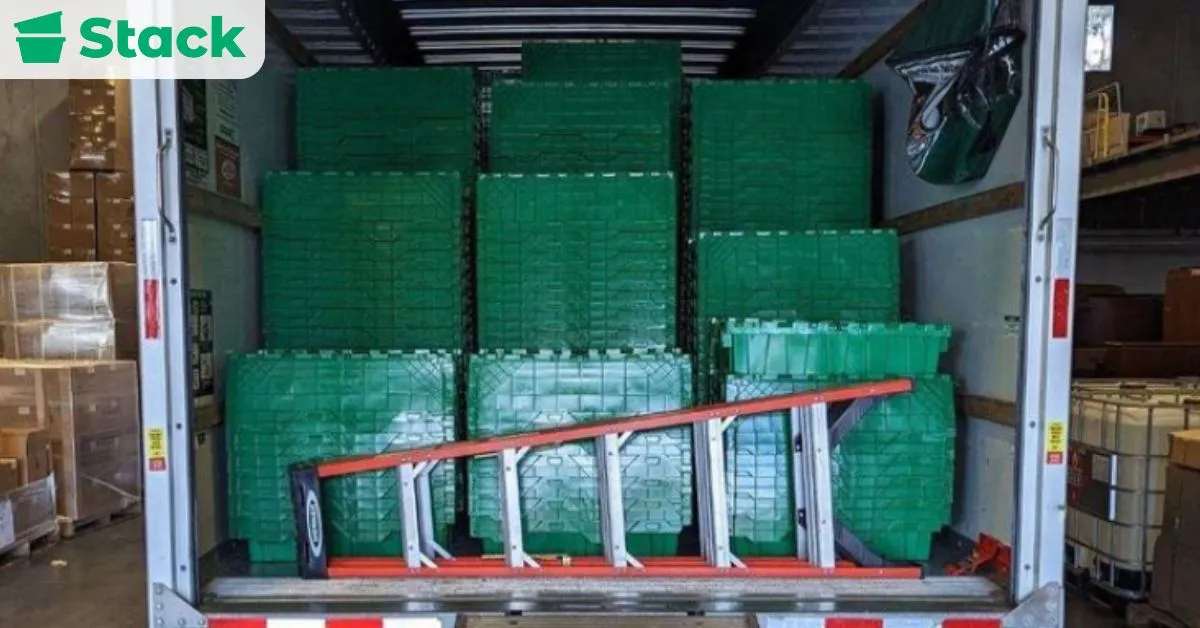

Next, confirm all vendor appointments, moving times, and access instructions. This means getting in touch with any vendor responsible for medical waste disposal, specialized equipment, or installations. Make sure everyone has the right address, entry times, parking instructions, and contact persons. Miscommunication at this stage could cause delays or missed services on move day.

Set up mail forwarding with the postal service and transfer your utility accounts to your new office location. As a final step, prepare signage and entry instructions for both staff and patients at the new space.

Your company address should be up to date on all printed forms, digital listings, and even insurance portals. Even a temporary sign will be useful in directing patients and vendors where to go during the first week.

Move Day

This is a busy day for everyone, so it’s important to have a clear plan for how it should go. Assign staff members to supervise both the current and new office locations. The point of doing your part is to have someone on-site who can answer questions, provide access, and direct the movers as needed. It also minimizes confusion and helps catch any last-minute issues that might arise on either end of the move.

As items are being moved from your current office to the new one, secure all sensitive materials and medical equipment. This includes protected health information (PHI), controlled substances, and any diagnostic devices like an X-ray scanner. Be sure to pack, label, and move them according to the relevant safety and legal standards.

Upon arrival, inspect everything for damage. It’s best to start with your most valuable and fragile equipment before moving on to furniture and supplies. Use your office relocation checklist to confirm all items have arrived and are placed in the correct rooms. Address any issues right away with your movers.

Finally, distribute keys, access cards, alarm codes, and update your security system. Confirm that all staff members know how to enter and exit the new facility safely. Also, be sure that all security protocols are in place before you leave. You want to be sure that your office, equipment, and information are safe from day one.

Final Setup (First Week After Move Date)

Final Setup (First Week After Move Date)

Once your office is fully relocated, your first line of action should be to make sure that all systems are operational within the first 24 hours. Test your phones, internet connections, appointment software, EMRs, and internal communication tools. Even minor issues, such as a voicemail not routing correctly, can have a big impact on the patient experience.

After confirming that your core systems are up, gather your team for a brief walkthrough of the new office space. Even if everyone helped during the move, an orientation can help clarify workflow, emergency exits, and process changes. This is also a good time to remind staff of any newly implemented protocols related to the new space, such as how to use upgraded equipment or access updated digital tools.

Next on your list should be to verify that all professional licenses, billing systems, and patient forms reflect your new office address. Any inaccuracies can lead to insurance claim denials, reimbursement delays, and compliance concerns.

Lastly, send a follow-up message to your patients to confirm the move was successful. Mention your new office address, your business hours, and how they can reach you. This is also a good time to thank them for their patience during the move.

Want to Rent Reusable Bins and Cut Moving Costs?

To guarantee a successful transition, you need to create a detailed budget, set clear timelines for each task, and organize your team. The best way to accomplish this is with a comprehensive checklist. A relocation checklist won’t just help you prevent costly mistakes; it can also help you minimize possible disruptions.

Remember to start planning early, at least a year before your intended move date. Assign responsibilities to staff members and allow time for any necessary renovations or permit delays. After moving in, don’t overlook your post-move assessment.

And don’t forget that your assets are far too valuable to be packed in flimsy moving containers. Instead, opt for reusable plastic moving boxes offered by rental companies like Stack Moves. They’re strong, secure, and stackable, making them perfect for protecting sensitive equipment and confidential records in a high-stakes healthcare environment. Ready to simplify your move? Rent a moving bin today!

Frequently Asked Questions

There are many parts to planning a medical move, literally and figuratively. These FAQs address common concerns that medical practices face when preparing for a smooth and compliant move.

How Far in Advance Should I Start Planning My Medical Office Move?

Ideally, planning should begin 9-12 months before your intended move date. This gives you time to get everything set. You can notify your patients, secure necessary permits, and book a professional moving company experienced in medical facility relocations.

What Packing Materials Are Recommended for Fragile Medical Instruments?

Firstly, make sure you consult professional movers who specialize in medical office relocations to ensure proper handling and transport of your devices. That said, sensitive equipment should be packed with high-quality materials such as foam inserts, anti-static bubble wrap, and hard-shell crates. Avoid using standard boxes or cheap fillers, as they won’t protect against damage or shifting in transit.

What Items Should Be Prioritized for Packing First in a Medical Office Move?

Start by packing non-essential items such as archived records, excess office furniture, and seasonal supplies. Gradually move toward less frequently used medical equipment and office décor. Leave essential tools and patient care equipment until the very end to avoid interruptions to your daily operations.

Can I Customize the Medical Office Relocation Template for My Practice?

Absolutely. Just like every business is different, every medical practice has its unique business needs. Your relocation checklist should be tailored to what happens in your business. This will help you allocate your resources more efficiently.

Best Size Boxes for Moving

When preparing for a move, it’s important to choose the right box sizes because if your box is too big or too small, your belongings could shift, break, or be difficult to carry. The best-sized boxes for moving are usually a mix of small, medium, and large boxes. In some cases, you may also need a specialty box, especially if you’re packing fragile or oddly shaped items.

At Stack Moves, we’ve helped thousands of renters simplify their moves with our durable, eco-friendly moving bins. With years of experience in the moving industry, our team knows exactly what you need to find the best-sized boxes for moving without any of the guesswork. Rent our reusable moving boxes today for a cleaner, faster, and more organized move.

In this blog, we’ll break down which box sizes work best for common household items. We’ll also guide you on where to source the right moving boxes and share practical packing tips to make your move seamless from start to finish.

Standard Moving Box Sizes

Standard Moving Box Sizes

When planning a move, choosing the right box sizes is necessary for a hassle-free experience. To help you safely pack and transport your belongings, we’ve explained how different sizes cater to various items.

Small Moving Boxes

Best for: Heavy or compact items

Ideally, a small box is perfect for items like books, DVDs, and canned goods. They are typically 16” x 12” x 12″ and can safely carry up to 40 pounds. When using these boxes, avoid overloading them. Instead, use packing paper to fill empty spaces and protect the contents of the box. It is important to ensure that the box remains easy to lift.

Medium Moving Boxes

Best for: Everyday household items

Medium-sized boxes are usually around 8″ x 14″ x 12″ with a capacity to hold up to 60 pounds. You can use these boxes to pack kitchenware, toys, and decorative items. For these medium-sized boxes, place heavier items at the bottom and lighter items on top. Furthermore, use packing paper or bubble wrap for protection and to prevent items from shifting.

Large and Extra-Large Moving Boxes

Best for: Light but bulky items

These boxes are suitable for bulky but light items like linens, comforters, and pillows. The common dimensions for these boxes are 20″ x 20″ x 15″ or 23″ x 23″ x 16″, and they are capable of holding up to 80 pounds. Despite their size, you should avoid the temptation to overpack them. It can make the boxes too heavy and susceptible to tearing.

Specialty Moving Boxes

Best for: Fragile, valuable, or oddly shaped items

While most items will fit neatly into your standard moving boxes, some belongings need extra protection or special handling. These unique items call for specialty moving boxes. Specialty boxes are specifically designed to keep fragile or irregularly shaped objects safe during transport.

Wardrobe boxes, dish pack boxes, and mirror and art boxes are common examples. These boxes feature reinforced walls, inserts, or adjustable designs that provide added stability and protection. Although they are pricier than your standard-sized boxes, the added safety and convenience they offer make them well worth the investment.

Best Box Sizes for Moving Each Type of Household Item

Best Box Sizes for Moving Each Type of Household Item

Here’s our quick guide to help you match the right box size to your belongings:

Small Boxes Medium Boxes Large Boxes Specialty Boxes
Books Pots, pans, and kitchen utensils Suits, dresses, and coats Flat-screen TVs
Tools and hardware Dishes, bowls, and cups Bed linens and duvets Computers and monitors
Pantry items (cans, jars, condiments) Toys and board games Shoes and handbags Dishware and glass sets (dish pack boxes)
Small kitchen appliances (toaster, blender) Personal care appliances (hairdryer, shaver) Accessories and belts Artwork and picture frames
Cleaning supplies Small decorative items Blankets and throws Musical instruments
Office supplies and stationery Pantry staples like cereal boxes Seasonal wear Mirrors
Small electronics and cords Towels and bathrobes Wine or liquor bottles
Bathroom items (lotions, toiletries) Collectibles and antiques
DVDs, CDs, and video games Electronics and gaming consoles
Decor accents or framed photos Lamps and fragile decor

Where to Find the Best Box Size for Moving

Your budget and the nature of your move play a big role in where you get your moving boxes. If you’re on a tight budget, you can get moving boxes for free from local grocery stores, liquor shops, or community listings on Craigslist and Facebook Marketplace. These can be a fantastic way to save money, but the downside is that free boxes often come in mixed sizes and conditions. You’ll need to inspect them carefully for tears, dampness, or signs of wear before packing.

If you’d rather buy, you can still find cheap moving boxes by purchasing in bulk from major retailers like Home Depot and Lowe’s. Buying in sets is often more affordable than picking up individual boxes. You’ll get better quality than free boxes, but you’ll also have to figure out what to do with the boxes after your move.

What if you’d rather source boxes from your moving company? Some moving companies provide boxes and supplies as part of their service, though this convenience usually comes at a higher cost. It’s a good option if you’re short on time or prefer not to deal with packing materials yourself.

But if you’re looking for a balance between cost, convenience, and sustainability, renting moving boxes might be your best bet. With this option, you’ll get durable, reusable bins delivered right to your doorstep. And the best part? They’re collected once you’re done with your move, leaving you with no waste or clutter.

Factors to Consider When Choosing Box Sizes

Factors to Consider When Choosing Box Sizes

Here are the key factors to keep in mind when deciding how to pack or what type of moving container to use:

  • Item Size and Volume: Your belongings should fit comfortably inside the box or bin with minimal empty space. Smaller boxes work best for compact but dense items like books, while larger boxes should be reserved for lightweight or bulky items such as bedding. Using appropriately sized boxes prevents wasted space and reduces the risk of damage from shifting items.
  • Weight Distribution: The weight of your belongings should also be considered. Heavy items should go in smaller boxes to make lifting easier and to prevent the bottom from giving out. Lighter items can be placed in larger boxes to balance overall weight.
  • Fragility of Items: Fragile items like dishes, glassware, or electronics need boxes that provide enough room for cushioning materials such as bubble wrap or packing paper. Avoid overpacking fragile boxes to reduce pressure and the risk of cracks or breakage.
  • Type of Belongings: You need to adopt a different packing approach for each household item. For instance, clothes can go into boxes or bags but delicate items like artwork should only be packed in specialty boxes.
  • Ease of Handling: Boxes should be easy to lift, carry, and stack without strain. Choose sizes that allow for comfortable movement through doorways and hallways.
  • Storage Duration: If your belongings are to be stored for a while before unpacking, consider using boxes or bins that can resist moisture and stacking pressure over time. This helps protect your items during long-term storage or moves across the country.

Tips for Packing Efficiently with Different Box Sizes

Tips for Packing Efficiently with Different Box Sizes

The easiest thing you can do to enjoy a smooth move is to match the box size to the item’s weight and type. This simple step keeps your boxes manageable and prevents damage from overloading. Next, make sure to distribute weight evenly when loading boxes into your moving truck. Doing this helps maintain balance during transport and protects fragile items from being crushed.

It also helps to fill any empty spaces inside boxes with soft items like towels, linens, or clothing. Doing so prevents items from shifting during the move and makes full use of the space you have. You’ll need fewer boxes overall, which can help cut down on moving costs.

For added protection, avoid overpacking boxes. While it may seem efficient to squeeze in as much as possible, doing so can make boxes too heavy or cause items to break. Instead, leave some room for bubble wrap or packing paper to cushion delicate belongings.

Finally, if you’re moving during a rainy season or to a humid area, use waterproof containers like plastic bins for moisture-sensitive items. Unlike cardboard boxes, plastic bins keep your belongings dry and safe from mold or water damage, giving you extra peace of mind during your move.

Need Help Deciding the Best Box Sizes for Moving?

Choosing the best box sizes for moving can make all the difference in how smoothly your relocation goes. With the right system, like using small boxes for heavy items and large boxes for light, bulky ones, you’ll keep your belongings safe and make loading and unloading easier for everyone.

However, choosing the right-sized box is only half the battle. You’ll still need to figure out how many boxes you’ll need and what to do with them after the move. That’s where Stack Moves comes in. Our rental moving bins are designed to make your move simpler, cleaner, and more organized from start to finish, giving you an eco-friendly solution you can trust.

Ready to enjoy a stress-free move? Contact us to book your moving boxes for rent now!

Frequently Asked Questions

Still unsure what box sizes to use for your move? This FAQ section answers common questions to help you pack confidently and choose the right boxes for your belongings.

How Do I Choose the Right Box Size for Heavy Items?

Always pack heavy items like books, tools, or canned goods in small boxes. This keeps the box’s weight manageable (under 40-50 pounds) and prevents the bottom from giving out.

What Size Boxes Are Easiest To Move?

Small and medium boxes are the easiest to handle. When packed correctly, they remain light enough for safe lifting and are uniform for efficient stacking in the moving truck.

Can I Reuse Grocery Boxes for Moving?

Yes, you can reuse sturdy boxes from grocery or liquor stores, but check them for damage or moisture. Their compact size makes them ideal for small, heavy items. However, they won’t stack as neatly as uniform moving boxes.

Do Moving Companies Provide Boxes Or Should I Buy My Own?

It depends on your budget and priorities. Most moving companies sell professional-grade boxes that are often double-walled and very sturdy. But these are more expensive than the boxes sold at retail stores. A major advantage of using these boxes is their perfect fit, which maximizes the space in their moving trucks.

What Should I Pack in the Largest Moving Boxes?

The largest boxes should be used for light, bulky items. This includes linens, bedding, pillows, comforters, and curtains. Packing heavy items in them will make them dangerous to lift and prone to breaking.

What Are Specialty Moving Boxes?

Specialty boxes are custom-designed for awkward or fragile items. Examples include wardrobe boxes (with a metal bar for hanging clothes), dish packs (with reinforced walls and dividers), and TV boxes (with extra padding).

How to Pack Moving Boxes

Packing is arguably one of the hardest parts of moving because it’s time-consuming and stressful. People tend to rush through the process and toss items randomly into boxes, only to deal with broken belongings and disorganized unpacking later.

Fortunately, the packing process becomes much easier and even more enjoyable when you know how to pack moving boxes correctly. The best way to pack moving boxes is to use the right supplies, group items by category, and keep boxes balanced for safe transport.

At Stack Moves, we’ve supported hundreds of successful moves nationwide, giving families and businesses peace of mind during one of life’s most stressful tasks. Our durable moving bins for rent are trusted by professional movers to keep belongings safe while cutting down on waste. Contact us today to reserve your bins and move with confidence.

In this blog, we’ll break down how to efficiently pack moving boxes for a move and share tips on how to pack different rooms in your home.

How to Pack Boxes for Moving

How to Pack Boxes for Moving

The most effective way to pack moving boxes is to gather high-quality supplies, organize your items by type, and keep each box evenly balanced to prevent damage in transit. To break it down even further, we’ve created a 10-step packing guide on how to pack boxes for moving.

1. Gather Your Supplies

Before you start packing, first make sure you have everything you’ll need by preparing a list for moving out. With the right supplies on hand, your items are well-protected from the start. Plus, you can avoid running back and forth for missing supplies, which will only waste your time and break your packing rhythm.

At a minimum, you’ll need moving boxes in different sizes, heavy-duty packing tape, bubble wrap, packing paper, scissors, and permanent markers. If possible, consider using specialty boxes like wardrobe boxes for your hanging clothes. They’re more reliable than all-purpose boxes because they’re designed to protect specific items during transport.

2. Declutter Before You Pack

Reducing your load lowers your moving costs and makes your unpacking much more manageable. A move presents the perfect opportunity to sort through your belongings. As you pack, sort your items into groups of what to keep, sell, or discard. Decluttering also helps with organization. You’ll know exactly what’s going with you, and you can avoid paying movers for unnecessary weight.

3. Clean Items Before Packing

Take a little time to clean your belongings before packing. This way you can avoid bringing dirt and grime into your new space. Wipe down appliances, dust furniture, and wash clothing or linens. This small step makes your belongings feel fresh when you unpack.

Another benefit of cleaning your items before packing is that it can also protect your belongings from damage. It’s possible for dirt or debris to scratch the surface of furniture, glassware, or electronics and ruin their appearance during the move. Additionally, making sure everything is ready to use fresh out of the box saves you an extra chore later.

4. Choose the Right Box for Each Item

Choosing the right box size ensures items don’t shift, break, or cause boxes to collapse. Use small boxes for dense, heavy items like books, canned goods, or kitchen appliances. Medium boxes are ideal for everyday items like dishes and small décor. Large boxes work best for light, bulky items like bedding, pillows, or stuffed toys.

Although cardboard boxes are readily available in different sizes, they are not always reliable when exposed to moisture. A much more durable alternative is plastic moving boxes, which resist crushing, repel moisture, and provide stronger protection for fragile belongings. If you’re still weighing the pros and cons of each, check out our guide on moving boxes vs. plastic bins to see which option would best suit your moving needs.

5. Pack Room by Room

5. Pack Room by Room

A room-by-room packing method will also help you unpack more easily. Each box will be labeled by the room it should go to, making it easier for your movers to drop boxes in the right place.

6. Protect Fragile Items

Fragile items need extra care because they’re the most vulnerable to damage. Wrap each item with packing paper or bubble wrap to prevent scratching or breaking. Place heavier fragile items at the bottom of the box and lighter ones on top, with padding in between. Use crumpled paper, towels, or clothing to fill gaps and keep things from shifting.

For very delicate items like glassware or heirlooms, it may be a good idea to double-box them. Double-boxing for extra protection ensures your most delicate belongings make it safely to your new home. To double-box your items, pack them in a small box first, pad it well, then place that box inside a larger one with additional cushioning.

7. Use Space Wisely

A well-packed box is stable and keeps your belongings safe without being too heavy to lift. Use nesting techniques by placing smaller items inside sturdier ones, such as rolling socks into shoes. This will maximize space, add cushioning, and reduce the number of boxes you’ll need.

Always place heavy items at the bottom and lighter ones on top to avoid crushing. Avoid overfilling boxes, which can cause them to split, but don’t underfill them either because this leaves space for items to shift during transit.

8. Label and Inventory

Nothing goes missing when you track your move with both labels and lists. Clearly labeling your boxes will also save you lots of time when you’re ready to unpack. The correct way to label boxes for moving is to use a thick marker to write the contents and destination room on multiple sides of every box.

If you want to speed things up, try color-coding with tape or stickers. You can assign one color per room and mark all boxes accordingly. In addition to labels, keep a simple inventory list. Number your boxes and write down their contents on a master sheet or digital file. This way, you’ll know if a box goes missing.

9. Seal Boxes Properly

Sealing a box well keeps it intact during the move. Use strong packing tape because masking or duct tape can peel or split. Tape both the bottom and top seams with at least two layers, making sure it extends partway up the sides for extra strength.

Also pay close attention to high-stress areas where flaps meet. Double-taping high-strain areas prevents boxes from opening unexpectedly when lifted or stacked.

10. Stack Boxes Safely for Moving

When it’s time to load boxes, think about balance and safety. Place the heaviest boxes on the bottom and stack lighter ones on top to create a stable base. Group boxes of similar size together so they stack evenly without tipping.

Always bend your knees and lift with your legs, not your back. When dealing with heavy loads (above 50lbs), use a dolly or hand truck to move them safely and reduce the risk of injury. If possible, don’t attempt to lift bulky items alone.

How to Pack Boxes Room by Room

How to Pack Boxes Room by Room

The best way to pack room by room is to start with low-use spaces, finish one area completely before moving on, and label each box clearly for its destination. This method keeps you organized and makes unpacking faster. To make planning even easier, our moving box calculator can estimate how many boxes you’ll need for every room.

How to Pack Your Kitchen

Packing items in the kitchen can be challenging because it contains a lot of fragile items like dishes and glasses. In packing, you should begin with items you use less frequently, such as mixing bowls, baking sheets, and special utensils. Then, use sturdy boxes and wrap each dish in packing paper or bubble wrap. Furthermore, place dishes vertically in a box as if you were loading a dishwasher. This reduces the risk of breakage.

In addition, you should wrap each glass individually with packing paper or bubble wrap and use divided boxes if possible. You should also fill any empty spaces with crumpled paper to prevent movement. Finally, clearly label the boxes with “Fragile” and list the items.

How to Pack Your Bedroom

Packing the bedroom involves dealing with clothes, personal items, and possibly heavy furniture. Wardrobe boxes come in handy for hanging clothes directly from your closet without folding. This is ideal for dresses, suits, and other garments. In addition, rolling clothes can save space and reduce wrinkles.

Use large boxes for bedding, pillows, and linens. These lightweight and smaller items are perfect for larger boxes. Furthermore, keep a separate box or bag for personal items you’ll need right away at the new home, like your toiletries, phone charger, and a change of clothes.

How to Pack Your Living Room

The living room can be tricky because it is a mix of large furniture, electronics, and decorations. If possible, pack electronics in their original boxes with their original padding. Otherwise, wrap items in bubble wrap and pack them in boxes filled with packing peanuts to cushion them.

For decorative items and picture frames, wrap them in bubble wrap or packing paper and place them in medium-sized boxes cushioned with packing materials. You should also disassemble furniture if possible and wrap pieces in moving blankets or bubble wrap.

How to Pack Your Bathroom

Bathrooms usually have fewer items to pack, but you need to be cautious with liquids and breakables. For non-leakable toiletries, seal caps with tape to prevent leaking and place toiletries in plastic bags before packing them in boxes.

Furthermore, use towels to wrap other fragile items or fill empty spaces in boxes. Otherwise, pack them into large boxes where they can cushion other items. It is also important to keep a separate, clearly labeled box for medicines and first aid supplies. This should be easily accessible during your move.

Packing Tips to Save Space and Time

Packing Tips to Save Space and Time

Use these practical tips to save space, stay organized, and keep your belongings safe throughout the move.

  1. Use the Right Box for the Job: Heavy items like books belong in small boxes, while light, bulky items go in large ones. Choosing the right size prevents damage and makes stacking easier.
  2. Wrap Fragile Items Individually: Protect breakables with packing paper, bubble wrap, or even towels. Wrapping each item separately prevents scratches and chips during transit.
  3. Layer Heavy to Light: Always place heavier items at the bottom of a box and lighter ones on top. This reduces the risk of crushing delicate belongings.
  4. Fill Gaps to Prevent Shifting: Use crumpled paper, clothing, or linens to pad empty spaces inside boxes. A snug fit ensures nothing moves around in transit.
  5. Seal Boxes Securely: Reinforce seams with strong packing tape using the H-tape method (across the top and bottom seams). This keeps boxes from opening unexpectedly.
  6. Avoid Overpacking or Underpacking: Overstuffed boxes may split, while underfilled ones collapse under weight. Aim for boxes that close flat without bulging.
  7. Use Nesting Techniques: Save space by tucking smaller items inside larger ones, such as placing socks in shoes or utensils inside containers.
  8. Clearly Label All Sides of the Box: Write the room name and contents with a thick marker. This saves time when loading, unloading, and unpacking.
  9. Color-Code for Speed: Assign a color to each room using tape or stickers. Movers and family members will know instantly where each box belongs.
  10. Keep Essentials Separate: Pack an “open-first” box with toiletries, chargers, snacks, and a change of clothes. Having necessities handy avoids rummaging through multiple boxes on your first night.

Ready to Pack Moving Boxes With Confidence?

Packing your moving boxes correctly can make the difference between a chaotic move and a smooth one. But don’t forget that the type of box you’re using also matters. With the right moving boxes, you can stay organized, unpack faster, and enjoy peace of mind throughout your move.

Professional movers and relocation experts recommend using sturdy, reusable moving containers like plastic bins because they reduce the risk of damage and support a more eco-friendly move. Looking for moving boxes in Los Angeles? Our professional-grade plastic moving bins are all you need to save space, protect your belongings, and cut down on waste. Contact us today to reserve your bins.

Frequently Asked Questions

Understandably, you may still have plenty of questions about how to efficiently pack for a move and ways to keep the process simple. Below, we’ve answered some of the most common ones.

What’s the Best Way to Pack Fragile Items for a Move?

Clearly mark “Fragile” and place on top of heavier boxes to prevent crushing. Wrap each fragile item in packing paper or bubble wrap and secure with tape. Cushion boxes with crumpled paper, avoid overpacking, and keep them light. Use specialty boxes or the double-boxing technique for delicate items.

How Do You Properly Seal Moving Boxes?

Before sealing, check for empty spaces or overstuffing, then perform a lift test to ensure the box is secure. Use strong packing tape, not masking or duct tape, to double-tape both top and bottom seams, letting tape extend up the sides. Reinforce stress points like edges and flaps.

How Should You Stack Boxes Safely During a Move?

Always stack heavy boxes at the bottom and lighter ones on top. Group similar sizes to improve stability and use moving straps inside the truck. Test with a gentle shake to prevent shifting. Lift with your legs, not your back, and use a dolly for bulky loads.

How Soon Should You Start Packing Before Moving House?

Ideally, start packing at least 4–6 weeks before moving day. Begin with seasonal or rarely used items first, such as décor or books, then work toward daily essentials. By the final week, only essentials like toiletries, clothes, and kitchen basics should remain unpacked.

What Is the Hardest Room to Pack When Moving?

The kitchen is usually the hardest room to pack because it has a mix of fragile, bulky, and oddly shaped items. Bathrooms can also be tricky because of liquids and toiletries that may leak.

Is It Better to Pack Clothes in Bags or Boxes When Moving?

Both work, but it depends on the type of clothing. Wardrobe boxes are best for hanging clothes like suits and dresses since they prevent wrinkles. Folded clothes can go into regular boxes or plastic bins. And soft bags, like duffels or vacuum-sealed bags, save space and work well for items like linens, bedding, or casual wear.

What Is the Best Order to Pack Things When Moving?

Pack items by frequency of use. Start with seasonal and rarely used belongings, then move on to non-essential rooms. Save daily-use areas like bedrooms, bathrooms, and kitchens for last. Finally, prepare a clearly labeled “essentials” box with toiletries, bedding, and chargers for easy access on your first night.

How Many Boxes Do I Need to Move?

The number of boxes you’ll need depends on the size of your home, how many belongings you own, and how much you decide to declutter before moving. The easiest way around guesswork is to use a moving box calculator, which gives you an accurate estimate based on your rooms and household size.

What Supplies Do Movers Recommend?

At minimum, you’ll want sturdy boxes in multiple sizes, heavy-duty packing tape, bubble wrap, packing paper, markers for labeling, and specialty boxes for fragile or bulky items.


What Are The Best Moving Boxes To Buy?

The type of moving box you buy can impact your moving experience because the right box will protect your fragile items, maximize space in your moving truck, and reduce moving-day stress. Plastic bins are widely considered the best moving boxes to buy since they’re sturdier, stackable, and reusable compared to other moving boxes. However, the final choice depends on your budget, storage needs, and whether you prefer a one-time or long-term solution.

Stack Moves is a U.S.-based moving service that has helped hundreds of movers simplify their relocations. With two years of trusted service, our friendly team has helped families and businesses relocate more easily using our high-grade moving bins for rent. Contact us now to reserve your moving bins and guarantee delivery before moving day!

In this blog, we’ll cover the different types of moving boxes, where to buy them, and expert tips for packing effectively. By the end, you’ll know exactly which moving boxes fit your needs and how to use them for a seamless move.

What Are the Best Boxes for Moving?

What Are the Best Boxes for Moving?

What’s considered the best moving box really depends on what you’re packing and your moving budget. We’ve listed different types of moving boxes along with their pros and cons so you can choose the option that fits your move best.

1. Plastic Moving Boxes & Totes

First on this list are plastic moving bins. These durable bins are considered the best bins for moving because of their advanced durability. Unlike traditional cardboard boxes, they are water-resistant, making them especially reliable for fragile or valuable items.

Another major advantage to using these boxes is they are reusable. If purchased, they can serve as long-term storage solutions long after the move. They are also easy to stack, which helps maximize space and keep belongings protected during transit.

Plastic boxes also come in the form of plastic totes, which are more commonly used for corporate relocations. The only drawback of both plastic bins and totes is their higher upfront costs compared to cardboard. That’s why many people choose to rent plastic bins instead, since renting offers all the same benefits at a fraction of the price.

It may be wise to invest in or rent plastic moving bins or totes for your move if your priority is durability, protection, and space efficiency.

2. Cardboard Boxes (Heavy-Duty & Standard)

Next on the list are cardboard boxes. These are the most common moving boxes because they’re widely available, affordable, and come in a variety of sizes to suit different packing needs. Cardboard boxes are also recyclable, which makes them a reasonably eco-friendly option if disposed of properly.

Standard cardboard boxes are lightweight and easy to assemble, making them practical for everyday items like clothing, linens, or kitchenware. Additionally, they’re inexpensive and can be sourced secondhand for free from friends, relatives, and online stores like Facebook Marketplace.

Cardboard boxes also come in heavy-duty versions, which are reinforced and more suitable for heavier or fragile items like books, dishes, or electronics. Heavy-duty boxes provide extra protection compared to standard cardboard but still fall short of the strength and moisture resistance offered by plastic bins.

The main drawbacks of cardboard are that they can weaken when exposed to moisture, are less durable for long-term storage, and often need to be discarded after a single move. If your priority is affordability and convenience, cardboard boxes are a practical choice for most household moves.

3. Specialty Boxes

Finally, there are specialty boxes. Although specialty boxes are not essential for every move, they can be invaluable if you need extra protection for high-value, fragile, or oversized items. These include wardrobe boxes, dish boxes, and any other type of box specifically designed to keep unique belongings safe.

Their biggest advantage is superior protection. Whether it’s keeping clothes wrinkle-free, shielding fragile glassware, or securing electronics, specialty boxes provide tailored solutions that standard boxes can’t match.

The downside to using them is the high purchase cost. Specialty boxes are often more expensive than regular cardboard and may only be used once and can also take up extra space in the moving truck. However, for items that are fragile, oversized, or valuable, the added expense is often worth the peace of mind.

Here’s a quick list of common specialty boxes and their best uses:

  • Wardrobe boxes: hanging clothes, coats, and dresses.
  • Dish boxes: plates, glasses, and other kitchenware.
  • Picture boxes: artwork, mirrors, and framed photos.
  • TV boxes: flat-screen televisions.
  • Lamp boxes: Tall or fragile lamps.
  • Mattress boxes: Mattresses of all sizes.
Type Pros Cons Cost Best For
Plastic Bins & Totes Durable, water-resistant, reusable, easy to stack, eco-friendly, saves space Expensive to purchase outright $10-$30 Fragile items, long-distance moves, eco-conscious movers, corporate relocations
Cardboard Boxes Affordable, widely available, recyclable, various sizes, heavy-duty options Weak against moisture, less durable, often single-use $1-$8 General household items, budget-friendly moves
Specialty Boxes Designed for specific items, extra protection, makes unpacking easier More expensive, bulky, not always reusable or needed $5-$40 Clothes, dishes, artwork, TVs, lamps, mattresses

Where to Find Moving Boxes

Where to Find Moving Boxes

One of the easiest places to start is by asking people you know. Many households have leftover boxes from past moves or deliveries that they’re happy to give away. This is often the most convenient way to get moving boxes for free.

You can also get moving boxes from retail stores. Grocery stores, bookstores, and liquor stores receive regular shipments in sturdy boxes, and most are glad to let customers take them once they’ve been unpacked. For even greater convenience, online retailers make it easy to buy in bulk and often at lower prices. This makes them the best place to buy moving boxes for cheap.

Community groups on platforms like Facebook Marketplace and Craigslist can also be a goldmine for free boxes. But if you’d prefer new boxes for consistency and durability, you can source boxes from local moving supply stores and home improvement retailers like Home Depot or Lowe’s.

Is It Better to Rent or Buy Moving Boxes?

It’s almost always better to rent moving boxes, especially if you’re planning a standard household move. Renting is cheaper in most cases and more convenient since boxes are delivered and picked up from your location. They’re also far more eco-friendly because you avoid creating unnecessary waste during the move.

That said, buying boxes can sometimes be the better option. Especially if you plan to keep these boxes for long-term storage after your move. In situations like this, owning your boxes makes more sense.

In the end, it all depends on what’s important to you. If you want to save money, reduce stress, and keep your move as efficient as possible, renting is the way to go.

What to Look for When Choosing Moving Boxes

What to Look for When Choosing Moving Boxes

Before you decide which moving boxes to buy, there are a few key factors that can make all the difference. We’ve covered 5 major ones to help you choose the right boxes with confidence.

  1. Durability and Strength: Your boxes should be able to handle the weight of heavy household items like books, dishes, and clothes without collapsing. Heavy-duty cardboard options are best suited for protecting fragile items, while plastic bins offer superior protection against damage.
  2. Size Variety: Moving boxes typically come in small, medium, large, and extra-large. Small boxes work best for compact, heavy items (e.g., books, canned goods), medium boxes are versatile for everyday items, and large or extra-large boxes are ideal for bulky belongings like bedding and appliances.
  3. Eco-friendliness: Cardboard boxes can be recycled, but plastic bins are reusable and reduce waste over time. This makes them a more sustainable option, especially if you choose to rent instead of buy.
  4. Ease of Carrying & Stacking: Handles, lids, or sturdy designs can make boxes easier to move. Plastic bins are ergonomically designed to reduce awkward lifting that can lead to musculoskeletal problems during a move. And their stackable design makes it easier for them to maximize space in the moving truck.
  5. Ease of Cleaning: Plastic bins are water-resistant and easy to wipe clean, unlike cardboard, which can get dirty, tear, or lose strength if exposed to moisture. This makes them more reliable for multiple uses or long moves.

How Many Moving Boxes Do I Need?

One of the trickiest parts of planning is figuring out just how many moving boxes you’ll actually need to move. Too few boxes will have you scrambling on moving day, and too many means you’ll end up wasting money and space.

If you want a quick, stress-free answer, the easiest way is to use a moving box calculator. The truth is, the number of boxes you need depends on factors like the size of your home, the quantity of items you own, and the types of items you’re packing. A moving box calculator takes out the guesswork and gives you an accurate estimate of how many boxes you need to prepare for your move.

7 Smart Ways to Save Money on Moving Boxes

7 Smart Ways to Save Money on Moving Boxes

Moving costs can add up quickly, but that doesn’t mean you have to break the bank just to secure good-quality moving boxes. Here are 7 smart ways to save money on moving boxes without sacrificing quality or convenience.

  1. Start with Free Options: Ask friends, family, or neighbors if they have leftover boxes from recent moves or deliveries. Grocery stores, liquor stores, and bookstores are also great places to score sturdy boxes for free.
  2. Check Online Marketplaces: Sites like Facebook Marketplace, Craigslist, or Freecycle often have people giving away or selling moving boxes at a fraction of the retail cost.
  3. Buy in Bulk: Retailers like U-Haul, Home Depot, or Amazon usually offer discounts when you buy boxes in bundles rather than individually.
  4. Mix and Match Box Types: Instead of buying only brand-new heavy-duty boxes, combine them with free or cheaper standard boxes for less fragile items. This helps you save while still protecting valuables.
  5. Reuse What You Already Have: Suitcases, laundry baskets, storage bins, and even dresser drawers can double as moving containers, cutting down on the number of boxes you actually need to buy.
  6. Opt for Reusable Plastic Bins: While more expensive upfront, plastic bins can be reused for storage long after the move, making them a cost-effective investment over time. If you don’t want to buy, consider renting them instead.
  7. Look for Seasonal Promotions: Moving supplies often go on sale during peak moving seasons (spring and summer). Check local hardware or big-box stores for discounts and promotions before you buy.

One of the best ways to save money on moving boxes is by renting reusable plastic moving bins. These are sturdier than cardboard boxes and often more cost-effective. Companies like Stack Moves offer durable bins that can be delivered to your door, saving you the hassle of buying new boxes. Renting also reduces waste and is an eco-friendly option.

Before you rush out to purchase boxes, check around your home for items you can repurpose. Baskets, suitcases, laundry hampers, and even large bags can be used to transport your belongings. This minimizes the number of large moving boxes you will need to buy and helps you use every available space.

Using the right size boxes for your belongings can also prevent over-packing and unnecessary costs. Typically, small boxes are perfect for heavier items like books, while medium boxes work well for most household goods. Larger items like bedding or clothing can go in large or extra-large boxes.

It is also important to plan ahead as buying moving supplies last minute can lead to overspending. Planning ahead gives you time to look for the best moving box deals online and allows you to take advantage of sales and bulk discounts. 

Need Durable Moving Boxes for Your Next Move?

Choosing the right moving boxes can make a huge difference in protecting your belongings and keeping your move organized. While buying has its place, renting moving boxes is often the smarter, more cost-effective choice. When you rent moving boxes, you get durability, convenience, and eco-friendliness without worrying about storage or disposal.

If you’d like to rent moving bins for your next move, Stack Moves makes it simple with durable moving bins delivered straight to your door. We’d also be happy to share expert advice on how you can plan for the seamless relocation you deserve. Schedule a free consultation with us today!

FAQs

It’s normal to have some questions around the quality, cost, and convenience of buying moving boxes before making a decision. We’ve answered some of the most common ones below to help you choose the right option for your move.

What Type of Box Is the Best for Moving?

The best box depends on what you’re packing. Standard cardboard boxes are fine for most items, and the heavy-duty boxes provided added strength for fragile belongings. But if you want maximum durability, plastic bins are the best moving boxes to buy.

Are Lowe’s or Home Depot Moving Boxes Better?

Both Lowe’s and Home Depot sell high-quality moving boxes in a range of sizes. In terms of cost, Lowe’s boxes are often slightly cheaper, while Home Depot offers more specialty options.

What Is the Cheapest Way to Get Moving Boxes?

The cheapest way is to source free or used boxes from grocery stores, bookstores, or online platforms like Facebook Marketplace. If you need stronger ones, buy in bulk from a moving company or retailer to cut down per-box costs.

Is It Better to Move with Bags or Boxes?

Boxes are almost always better because they protect items, stack neatly, and make loading safer. Bags are okay for clothing, linens, or other soft, lightweight items but aren’t a replacement for proper moving boxes.

How Many Boxes Should You Buy for Moving?

It depends on your home size and packing style. A collector living in a studio apartment could end up using more boxes than a minimalist in a two-bedroom. Generally, a good rule of thumb is to focus on the size of your home, and with the help of a moving box calculator, you can get a more accurate estimate of how many boxes you’ll actually need.

Do Movers Prefer Boxes or Bags?

Movers strongly prefer boxes because they stack efficiently and keep items safe in transit. Bags can tear, shift around, and don’t protect fragile items. To keep your movers (and your belongings) happy, use boxes whenever possible.

How to Pack Bathroom Items for Moving?

Packing bathroom items can be one of the trickiest parts of moving, since toiletries are prone to leaks, spills, and breakage. That’s why knowing how to pack bathroom items for moving the right way is essential; otherwise, you risk costly damage and extra stress. The safest approach is to secure liquids in spill-proof bags, cushion fragile items, and use sturdy, water-resistant containers that won’t give way to moisture.

Over the years, Stack Moves has helped movers relocate with confidence thanks to our professional-grade plastic bins. These sturdy boxes come with secure lids, making them the perfect solution to protect fragile bathroom items like toiletries. Don’t risk leaks or breakage—contact us today to book your moving bins for rent.

In this post, you’ll discover the best ways to pack toiletries and bathroom items for a move. You’ll also learn how to create a first-day essentials kit and how to choose the right bins to keep everything secure.

How to Pack Bathroom Essentials for a Move

How to Pack Bathroom Essentials for a Move

Packing bathroom essentials for a move can be tricky, especially with fragile items and liquids prone to spills. Follow this step-by-step guide to ensure the safety and organization of your bathroom items.

1. Declutter and Sort

Before you start packing, it’s important to declutter your bathroom to avoid moving unnecessary items and reduce the risk of accidents. Go through all your toiletries, cleaning supplies, and bathroom accessories, and decide what to keep, donate, or throw away.

Pay special attention to nearly empty containers, expired cosmetics, and hazardous products like nail polish or bleach, which should be disposed of safely. Once decluttered, categorize your items for easier packing and organization. Group similar items together, e.g., toiletries like shampoo, conditioner, and soap should be placed in the same container. Another example is grouping medications and first aid supplies.

By decluttering and sorting, you’ll know exactly what needs to go in your moving boxes, speed up packing, and reduce the risk of accidents during the move.

2. Gather Packing Supplies

To pack bathroom items for moving safely, you need the right supplies that protect your belongings and prevent spills. Make sure you have moving boxes (preferably water-resistant), bubble wrap or protective padding, sealable plastic bags for liquids, packing tape, labels, and small containers. Also, remember to get cleaning supplies to sanitize each item before packing.

For liquids like shampoos, conditioners, nail polish, and other liquid-based toiletries, use waterproof containers and leak-proof bags. You’ll be able to prevent leaks that could damage other items in your boxes this way. Plastic wrap is also helpful to seal bottle openings and padding like towels or bubble wrap cushions fragile containers during the move.

3. Pack Liquids and Toiletries

Liquids and toiletries are prone to leaks and spills, so it’s important to pack them carefully. Proper padding, careful placement, and leak-proof containment ensure your toiletries and fragile items stay safe throughout the move.

Put plastic wrap under the lids of opened bottles and store them in airtight plastic bags to prevent leaks. Use small, sturdy boxes for liquids to keep bottles upright and secure. Place makeup containers in specialized makeup bags, and cushion glass bottles like perfumes with towels or packing paper to prevent breakage.

Hazardous items such as nail polish remover or hair dye should also be packed in sealed plastic bags for extra protection. Keep medications and other bathroom essentials that you’ll need immediately separate in a well-labeled box. This tip also applies to first-day essentials, so you can access them without digging through multiple boxes.

4. Protect Fragile Items

4. Protect Fragile Items

Fragile bathroom items like mirrors, glass bottles, and decorative pieces require extra care to prevent breakage. Wrap each item individually in bubble wrap or packing paper, and make sure all sides are covered. You can also use towels and washcloths for extra padding between items to prevent movement during transit.

When placing items in boxes, put heavier items on the bottom and fragile ones on top to avoid crushing. Fill any gaps with packing paper, towels, or bubble wrap to keep items from shifting while the box is being moved. Using medium-sized boxes helps keep the weight manageable and reduces the risk of dropping or damaging the contents.

For additional protection, consider double-boxing, especially delicate items like large mirrors or glass jars: place the wrapped item in a slightly larger box filled with padding, then place that box inside another box for extra cushioning. Following these steps ensures your fragile bathroom items stay intact and reduces stress on moving day.

5. Organize Small Accessories & Electronics

Small bathroom accessories and electronics are easy to lose or damage if not packed carefully. Keep items like hair ties, razors, tweezers, and cotton pads organized in small but sturdy boxes or reusable containers to prevent them from scattering during the move.

Electronic items should be packed in their original packaging if possible or wrapped in towels for added protection. Soft items like shower curtains, towels, and bath mats can cushion fragile items or delicate appliances inside your boxes. This will keep your items organized while maximizing the space you have.

Store cords and chargers in sealable plastic bags to prevent tangling. Pack batteries in their original packaging or a designated container to avoid leaks or short circuits

6. Pack Medications and First Aid

Start by checking expiration dates on all medications and safely dispose of unused medicine or anything that’s no longer needed. Next, pack all medications (prescription bottles, over-the-counter medicines, and any liquid medications) in a clearly labeled, airtight plastic bag or small container to keep them organized and protected from moisture. Check that lids are tightly sealed to prevent any spills.

First aid supplies like bandages, antiseptics, and medical tools should be stored in a separate, labeled container so they’re easy to find during and immediately after your move. For added convenience, consider keeping a small “emergency kit” within reach, containing the items you may need on the first day in your new home.

7. Prepare a First-Day Bathroom Essentials Box

A first-day bathroom essentials box is a well-marked and readily available container containing everything you’ll need when you arrive in your new home. A box like this will keep you from digging through multiple moving boxes to find basic necessities, thereby reducing stress on your first day.

Pack the box with all items you’ll need for immediate use so you can freshen up and settle in comfortably. This includes a toothbrush and toothpaste, deodorant, essential skincare products, medications, a few towels, toilet paper, soap, and hairbrushes.

For smaller items, store them in clear, transparent bags so they’re easy to see and grab without unpacking everything. Proper preparation ensures a smoother move-in and a stress-free first day in your new home.

How to Choose the Best Moving Boxes for Bathroom Items

How to Choose the Best Moving Boxes for Bathroom Items

The best bin for moving largely depends on the items being packed. Toiletries and bathroom items are usually liquid-based and fragile, and can cause a mess if a leak happens. Think shampoos, soaps, perfume bottles, cosmetics, and mirrors.

Because of these qualities, cardboard boxes won’t offer much protection for delicate items since they’re easily damaged by moisture. This is where plastic bins take the lead in the debate of moving boxes vs plastic bins. Plastic moving bins are durable, water-resistant, and spill-proof thanks to their lids. When combined with proper padding like towels, bubble wrap, or washcloths, they create the safest environment for transporting bathroom essentials without leaks or breakage.

Final Checks Before Sealing Boxes

Once you’ve selected the right boxes and packed your items, the next step is to perform final checks before sealing them. Before sealing your boxes, make sure to:

  • Secure fragile items: review each box to ensure it is properly packed and secure for the move. You must ensure that fragile items like glass containers are cushioned with bubble wrap or towels.
  • Double-check your bathroom: go through your bathroom cabinets once more to verify that you haven’t left behind important items like hair dryers, shower caps, and other bathroom appliances.
  • Label boxes clearly: ensure that all the boxes are clearly labeled with their contents and the room they belong to. For example, mark boxes containing fragile bathroom items or first aid supplies for easier unpacking later.

Want a Spill-Proof Way to Move Your Bathroom Items?

Packing up toiletries and bathroom essentials is often the messiest part of moving. A smart approach ensures your bathroom goods travel safely and you settle in stress-free. The most efficient way to pack bathroom items is to contain liquids tightly and protect breakable items from impact.

This means to always pack delicate items with extra padding or place liquids in spill-proof containers like plastic moving bins. Each rental also comes with labels to make tracking your bathroom essentials and other belongings much easier.

Don’t let leaks or broken bottles slow you down on moving day. Our moving bin rental service in Los Angeles delivers sturdy bins right to your location and ready for use. Schedule your moving bins today!

Frequently Asked Questions

We answered your most asked questions about packing bathroom items for a move to help you enjoy a stress-free move.

How Do I Pack Toiletries for Moving?

Properly packing toiletries helps prevent leaks and damage. Use spill-proof bags for liquids, cushion fragile containers with towels or bubble wrap, and keep all similar items together in small, sturdy boxes.

What Is the Best Way to Pack Bathroom Items for Moving?

The best approach combines leak-proof containers for liquids, extra padding for fragile items, and clear labeling. Using stackable plastic moving bins adds durability and keeps your items organized during transit.

How Should I Pack Liquids for Moving?

Place plastic wrap under bottle caps and store liquids in airtight, sealable bags. Keep them upright in small, sturdy boxes, and separate hazardous liquids like nail polish remover or bleach from other items.

How Do I Pack Cleaning Supplies When Moving?

Check labels for flammability and expiration dates, and securely close all containers. Transport cleaning products in a dedicated box or plastic bin, preferably lined with absorbent material to contain spills.

How Can I Pack Medications and First Aid Supplies Safely for a Move?

Sort medications by type and expiration date, and store them in clearly labeled airtight bags or small containers. Keep first aid supplies separate for quick access on moving day.

What Should I Include in a First-Day Bathroom Essentials Box?

Include items you’ll need immediately, like a toothbrush, toothpaste, deodorant, essential skincare products, a few towels, toilet paper, soap, and any medications. Store smaller items in clear bags for easy access.

Will Movers Move Plastic Bins?

Packing is one of the greatest challenges of moving, and choosing the right containers can make all the difference. While cardboard boxes are the traditional choice, more people are turning to plastic bins because they’re reusable, stackable, and secure with tight-fitting lids.

So, will movers move plastic bins for you? The answer is yes, they will. However, some may have restrictions on size, weight, or how the bins are packed, so it’s always best to confirm ahead of time.

In the past two years, Stack Moves has simplified the relocation process for numerous families and businesses using our professional-grade plastic bins. Our moving bins for rent are designed to save space, protect belongings, and reduce waste. Our friendly support team is always ready to answer all your questions and help you plan for a hassle-free move. Contact us today!

In this post, we’ll explain why movers sometimes set rules around plastic bins. We’ll also share tips on how to pack them properly and why choosing the right bins can save you time, money, and hassle.

Do Professional Movers Accept Plastic Storage Bins?

Will Movers Move Plastic Bins?

The answer is that it depends on the company. Most movers have no problem handling sturdy plastic bins, but some may place restrictions on their size, weight, or how they’re packed. Since every moving company has its set of policies, it’s important to confirm these details in advance.

Some movers even prefer plastic bins because they’re durable and stack neatly, while others may limit their use. Checking ahead of time helps you avoid unpleasant surprises on moving day and ensures your belongings are packed in a way your movers can safely transport.

When Movers May Refuse to Move Plastic Bins

Moving companies may refuse to move your plastic bins if they exceed safe weight limits. Overfilling plastic totes or storage bins can render them too heavy for safe movement. This increases the risk of damage to the bins and injury to the movers.

Another reason why movers may refuse to move your plastic storage bins is the lack of proper labeling. It is important for movers to know what’s inside the bins for safe handling, especially if the contents are fragile or require extra care. Similarly, unlabeled plastic items can pose risks. For these reasons, movers may not want to move plastic bins so they don’t incur damages. 

Additionally, movers may decline to move your plastic bins with unsealed or broken lids because items packed in such boxes are more likely to fall out. The company wouldn’t want to be responsible for any losses you may incur.

Items That Shouldn’t Go in Plastic Bins

There are certain things you shouldn’t pack in plastic bins because these boxes can trap moisture and cause damage or create safety risks during your move. Here’s a quick guide:

Item Risk
Leather Mold or mildew buildup
Photos Sticking, fading, or curling
Electronics Overheating or static damage
Batteries Leakage, corrosion, or even fire hazards
Shoes Odor buildup and mold
Delicate Fabrics & Natural Fibers Yellowing, wrinkles, or mildew
Cleaning Supplies Spills or chemical reactions
Antiques Cracking or warping
Chemicals Toxic leaks or dangerous reactions

The best way to work around these risks is to make sure both your items and the bins are completely dry before packing. Use protective wraps like bubble wrap, cloth covers, or silica gel packs to prevent moisture buildup, and reserve breathable containers for sensitive items. This way, you can still enjoy the strength of plastic bins without putting delicate belongings at risk.

Why Are Plastic Tubs for Moving a Popular Choice?

Plastic containers are the best bins for moving. Unlike cardboard boxes, they can handle heavier loads and offer stronger protection for your belongings. Other key benefits include:

  • Better Protection: A primary advantage of plastic totes is their superior protection compared to cardboard containers. Plastic bins are an ideal choice for fragile or delicate items because they typically maintain their shape integrity and protect content from damage.
  • Weather Resistance: Another advantage of plastic moving boxes is weatherproofing. Unlike cardboard, plastic bins provide a weatherproof solution that ensures your items remain dry and intact during the move.
  • Reusability & Sustainability: Their reusable nature makes them a more sustainable and eco-friendly choice. You can reuse plastic containers for future moves or storage, eliminating the need to purchase new boxes each time. However, it is best to rent plastic moving boxes, as it reduces waste and promotes a greener move.

A 6-Step Guide to Packing Plastic Bins for Moving

How to Pack Plastic Bins for Moving

Even though plastic bins are the best containers for moving, they can still lead to damage or inefficiency if they’re not packed correctly. Follow this simple 6-step guide to pack your plastic bins the right way:

1. Gather Your Packing Supplies

First, make sure you have all the essentials on hand. This includes plastic bins with secure lids, strong packing tape, permanent markers, and protective materials like bubble wrap. It’s important to treat your supplies as an investment in keeping your belongings safe. Using poor-quality packing materials will put your possessions at risk.

2. Sort and Arrange Your Items

Try not to toss items into bins randomly. Sorting first allows you to group similar items together, making packing more efficient and unpacking less stressful. Doing this also keeps bins balanced and makes them easier for movers to handle.

3. Prepare and Label Your Bins

If you’ve previously used your bins for storage, quickly clean them to get rid of any dust or residue. This extra step keeps your belongings fresh during the move. Next, clearly label each bin on multiple sides with both its contents and the destination room. Labels help movers know where each bin goes and alert them if a container needs special care (e.g., “Fragile – Glassware”).

4. Pack Your Items Correctly

Place heavier items at the bottom and lighter ones on top to maintain stability. It will also prevent the binsfrom getting crushed and damaging any items during the move. Use bubble wrap or packing paper to fill any gaps and stop items from shifting during transit. It is also important to avoid overpacking the bins. While plastic storage bins are sturdy, overfilling them can make them difficult to stack and transport.

5. Secure the Lids

There’s no harm in adding an extra layer of security to your moving bins. Use packing tape or zip ties to keep lids from popping open during transport. This simple step ensures that nothing spills out if bins are stacked or shifted in the moving truck. Think of it as a safety belt for your belongings.

6. Stack the Bins in Your Moving Truck

Stack the bins strategically to maximize space and stability. A well-stacked load protects your items and makes unpacking at your new home much easier. For enhanced stability, place lighter boxes on top of the heavier ones. Additionally, make sure the boxes are aligned edge to edge. This prevents tipping and reduces movement while on the road.

Tips for Preparing Plastic Bins for Movers

Tips for Preparing Plastic Bins for Movers

One of the most important rules when packing plastic bins is to keep the weight manageable. Even though plastic bins are sturdy, they can still be difficult to lift or stack when overfilled. 

It is also important to clearly label your plastic moving boxes to easily identify the contents. For example, mark bins with “fragile items” or indicate which bins are heavier. This will help so your professional movers know how to handle each bin. 

Additionally, make sure the plastic containers are sealed properly to prevent a bin’s contents from spilling out. While the lids on plastic storage bins are generally secure, you can add an extra layer of protection to them. Use either tape or zip ties to ensure that the lids do not pop open during transport.

Is It Better to Rent or Buy Plastic Boxes?

It’s almost always better to rent plastic moving boxes instead of buying them and here’s why:

Firstly, renting is affordable. You only pay for the bins you need during your move, instead of spending hundreds on containers you may never use again. Additionally, renting is also more convenient. Most rental companies will deliver bins to your door and pick them up afterward, saving you the hassle of transportation and storage. And lastly, renting boxes is more eco-friendly. Renting promotes sustainability by reusing durable containers, reducing the need for single-use packaging or cheap cardboard boxes.

If you move often or need long-term storage, buying plastic boxes may be the smarter choice. While the upfront cost is higher, buying high-quality plastic bins is a solid investment because they last for years. However, buying also means committing storage space for bulky bins when they’re not in use.

Our Recommendation:

If you’re moving once or occasionally it’s better to rent. It’s cost-effective, eco-friendly, and takes the stress out of managing supplies. Buy if you move frequently or need multipurpose storage. The investment pays off when bins get regular use.

Ready to Make Moving with Plastic Bins Easier?

Moving with plastic bins is the easiest way to protect your belongings, save time, and cut down on waste. Compared to traditional cardboard boxes, plastic bins stack neatly, keep fragile items secure, and reduce stress on moving days.

To answer your question again: yes, most movers will move plastic bins. But because every company has its own policies, it’s always best to confirm in advance. No matter your mover’s policy, our professional-grade bins give you the confidence that your items are packed, protected, and ready for transport.

Don’t wait until the last minute. Schedule your moving boxes now!

Frequently Asked Questions

Do you still have questions about moving with plastic bins? Here are answers to the most common ones to help you prepare with confidence.

Are Plastic Bins Good for Moving?

Yes, plastic bins are excellent for moving because they’re durable, stackable, and water-resistant. They protect fragile items better than cardboard boxes and reduce waste since the same bins are reused multiple times.

What Things Will Movers Not Move?

Movers generally won’t handle hazardous items like chemicals, flammable products, perishable food, or valuables like jewelry and cash. Company policies vary, so it’s best to ask your moving company ahead of time.

Do Movers Prefer Boxes or Totes?

Most movers prefer uniform cardboard boxes since they’re lightweight and simple to stack. However, plastic totes or bins are becoming more popular because they protect fragile items and can be stacked neatly. Always check with your mover to see their preference.

Will Movers Move Things That Aren’t in Boxes?

Yes, movers will often transport loose items like furniture or odd-shaped items. But for small or fragile objects, it’s best to pack them into boxes or bins for protection. Keeping things contained also helps your movers work faster and safer.

Can You Use Plastic Bins for Moving?

Absolutely! Plastic bins are sturdy, reusable, and ideal for protecting belongings. Many moving companies are comfortable moving them, though some still prefer cardboard moving boxes. Renting plastic bins is especially convenient since they’re delivered, picked up, and require no assembly.

How to Pack a Container for Moving?

Group similar items together to keep things organized and easier to unpack. Place heavier items at the bottom, then layer lighter or fragile items on top with padding for protection. Use clothes, towels, or packing paper to fill gaps and prevent shifting during transport. Finally, label each bin clearly so you know exactly what’s inside when you arrive.

Rent Boxes!