Author: Juan Reyes

Corporate Relocation Services | How to Move Offices Smoothly

Corporate relocation services help businesses move efficiently by managing every aspect of the transition, from employee support like housing and travel arrangements to temporary storage. Rather than navigating the complex logistics alone, companies rely on these moving experts to minimize downtime and keep operations running smoothly throughout the move. With the right corporate relocation service, your team can hit the ground running in the new office while you stay focused on the business.

At Stack Moves, we know how chaotic corporate moves can be, we’ve been a part of hundreds of them. We offer sturdy, reusable plastic moving crates for rent that make packing faster, cleaner, and a lot less stressful. If you’re planning to move your business, contact us to rent our budget-friendly office moving crates.

In this blog, we’ll walk you through everything you need to know about corporate relocation services from the different types of moves to the key services typically included in a relocation package. We’ll also cover how to choose the right relocation partner to make your next move as smooth and stress-free as possible.

Comprehensive Overview of Corporate Relocation Services

The most obvious benefit of working with a corporate relocation service provider is that it significantly reduces downtime. Corporate relocation services are professional moving solutions designed to help businesses transition their offices, employees, or entire operations to a new location without the chaos that usually comes with it.

A poorly managed move can disrupt workflows, frustrate employees, and cost your business more than you’d expect. With the right corporate relocation service in your corner, you get a smoother move, a faster restart, and a team that actually feels taken care of.

Key Services Included in Corporate Relocation Solutions

What Are Corporate Relocation Services

No two corporate moves look the same, but the best relocation packages tend to cover the same essential bases. Here’s a breakdown of the key services you’ll typically find and what they actually mean for your business:

Office Packing and Unpacking
Professional relocation teams carefully pack, label, and transport everything from office furniture to sensitive documents, then set it all back up at your new location so you’re not starting from scratch on day one.

IT Infrastructure Setup and Tech Support
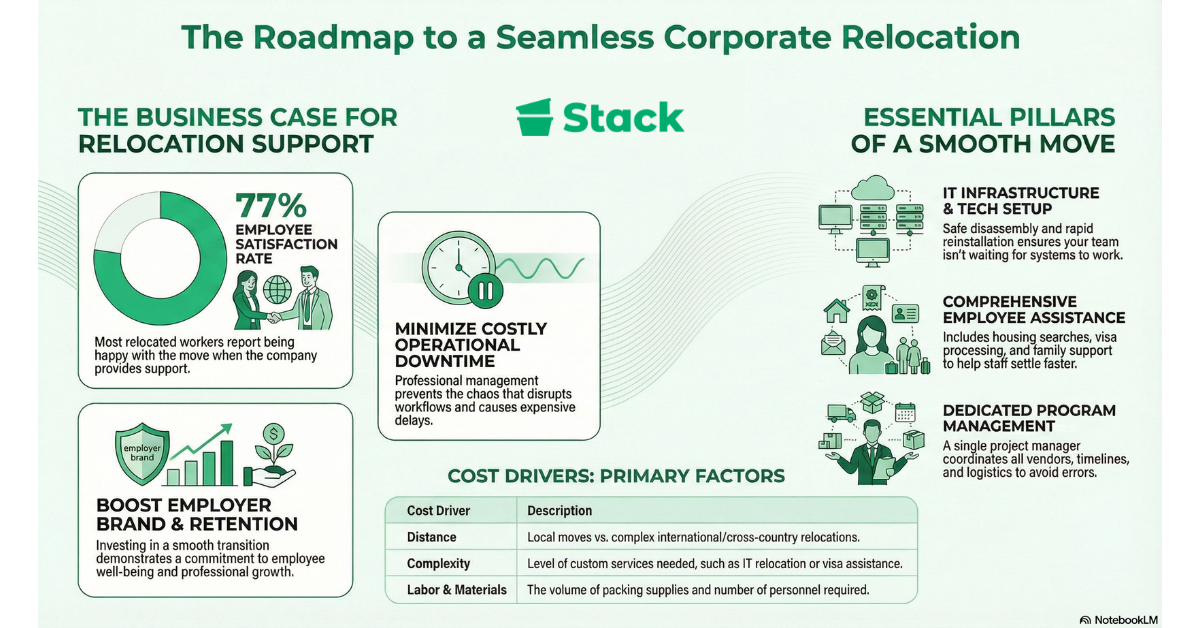
One of the most disruptive parts of any office move is getting your tech back up and running. IT relocation services handle the safe disassembly, transport, and reinstallation of your equipment so your team isn’t sitting around waiting for the internet to work.

Employee Relocation Assistance
This service covers everything from housing search assistance and temporary accommodation to school searches for families and expense management. The goal is to make sure your people feel supported, not stranded.

Temporary Storage Solutions
Sometimes your new space isn’t ready when the old one needs to be cleared out. Temporary storage options keep your equipment and furniture secure in the gap, so nothing gets lost or damaged in the shuffle.

Cultural Training and Settling-In Support
This service helps employees adapt to a new environment. It covers everything from language support to navigating local systems like healthcare and banking.

Home Search and Housing Assistance
Relocation specialists help employees find suitable housing quickly, whether that’s a short-term rental or a permanent home, so they can settle in and get to work faster.

Immigration and Visa Solutions
For international moves, navigating visa applications, work permits, and compliance with local labor laws can be a minefield. Relocation providers with international experience handle the paperwork and ensure everything is above board before your employee sets foot in a new country.

Expense Management and Relocation Budgeting
Tracking and managing relocation costs across multiple employees or departments can get messy fast. This service helps businesses set relocation budgets, reimburse employees correctly, and keep the entire move financially organized.

Spouse and Family Career Support
When an employee relocates, their partner’s career is disrupted too. Some relocation packages include job search assistance and career coaching for spouses, which significantly improves employee retention post-move.

Pet Relocation Services
This covers transportation, health certifications, and any quarantine requirements. It’s especially critical for international moves.

Program Management
Think of this as having a dedicated project manager for your entire relocation. They coordinate every vendor, timeline, and moving part so nothing falls through the cracks.

Post-Move Support and Follow-Up
The job isn’t done when the last box is unpacked. Post-move support checks in with employees, addresses any lingering issues, and ensures everyone has fully settled into the new location.

Why Do Businesses Invest in Corporate Relocation Services?

Consider a mid-sized tech company relocating its 50-person team from New York to Austin. Without a structured relocation program, they risked losing key employees unwilling to manage the move themselves. But with the assistance of a full-service corporate relocation company, they can streamline the entire process and hadve their team operational in as little as two weeks from moving day.

Corporate relocation services are designed to make job-related moves easier for the company and its employees. While some people might see corporate relocation services as a nice extra service to consider when relocating, they’re actually an investment in your business. And it should be an integral part of your long-term global mobility program.

According to SHRM, 77% of workers who relocated reported being happy with the move and not regretting the decision. Companies that support their staff in terms of relocation tend to enjoy smoother onboarding and lower staff turnover. A well-supported move helps your employees settle in faster and makes them feel valued.

Relocation support also boosts your employer brand. When potential hires see that you invest in your team’s smooth transition, it shows that you care about their well-being and are committed to supporting them both professionally and personally.

On top of that, turnover and downtime can be costly for your business. With a structured relocation program in place, you can cut both. When your employees settle in comfortably, they can contribute to the company sooner. Plus, they’re less likely to leave due to the stress of a poor relocation experience.

Ultimately, businesses that invest in relocation services see returns in terms of productivity, loyalty, and long-term talent growth. And businesses that don’t have to continuously cover the costs associated with repeatedly onboarding employees.

Types of Corporate Relocation

What’s Included in Corporate Relocation Services?

Each type of corporate relocation comes with its own set of challenges. Whether you’re relocating employees or offices or expanding internationally, a good understanding of what these moves entail can help you plan more effectively.

Employee Relocation

Employee relocations are the most common type of relocation. It involves moving an employee (sometimes with their family) to a new location. This usually happens when the company hires someone from out of town or promotes or transfers them to a new role in another branch.

The biggest hiccup with relocating employees is the stress and uncertainty they have to go through during the move. A poorly managed move can lead an employee to question if the job is worth the trouble, which is a major risk, especially after months of recruitment efforts.

This move can impact the employee’s job performance and even their employee satisfaction. Beyond the physical move, employees also have to adjust to a new commute, find new schools for their children, and adapt to a potentially different culture. All of which can affect their job satisfaction and performance.

Office or Facility Relocation

This type of move involves moving an entire team or business to a new space. This typically happens when the business needs to upgrade to a larger and more functional office or expand its operations.

A major challenge with office relocations is the downtime and the impact it has on your business. If things don’t go well, it can throw off internal workflows, frustrate employees, and confuse your clients. Coordinating furniture, IT systems, and important documents alone can get overwhelming fast without the right help.

Understand that for a move like this, you’re not just moving desks – you’re relocating your entire operation. Key services for this kind of move typically include office packing and unpacking, furniture and equipment moving, IT infrastructure setup and tech support, temporary storage solutions, pre-move planning, and post-move support.

Domestic vs. International Moves

You might be tempted to think “a move is a move,” but cross-country relocations are an entirely different ball game. Domestic moves involve relocating employees or offices within the same country and tend to be more straightforward logistically.

International moves are more complicated than that. Factors like visa requirements, cultural adaptation, and managing relocation benefits under international labor laws must be considered. Some of the key support areas here include immigration assistance and visa processing, cultural training and language support, international shipping and customs coordination, school search for families, and guidance on navigating a new country’s systems.

A major roadblock with international moves is culture shock. Employees often face overwhelming changes, from healthcare to daily communication. That’s why comprehensive relocation services are critical in ensuring a positive relocation experience.

How to Choose the Right Corporate Relocation Services Provider

The success of your move largely depends on who you entrust it to. A top relocation company will do more than help you move around your furniture. Because every relocation comes with its unique challenges, these companies will help you design a moving plan that meets your company’s needs. We advise you to look for an industry leader with a reputation for delivering seamless moves across borders and departments. A few non-negotiable things to consider when looking for a corporate relocation partner are:

  • Industry Experience and Specialization: Confirm that they have a proven track record in your industry and that they can handle the scale of the move you’re planning.
  • Client Testimonials and Case Studies: Look for verified feedback from people with similar needs as yours who have used these companies.
  • Pricing Models and Package Options: Find out if their packages suit your budget and whether they cover employee relocation expenses.
  • Technology and Tracking Tools: Work with a partner who uses advanced tools for tracking, planning, and staying on top of the relocation process. These tools help avoid delays, as you can monitor the move’s progress in real-time.
  • Employee Support Programs: Moving can be a stressful experience for employees. With a strong relocation partner, you can provide support for your team members throughout the process by providing them with the resources needed to settle in quickly and confidently.

Best Corporate Relocation Companies

The best providers offer a range of services designed to meet the complex needs of every business they come across. We’ve put together a list of the top 10 corporate relocation companies, based on industry reputation, service offerings, and client reviews.

  1. Cartus
  2. Graebel
  3. SIRVA
  4. Aires
  5. Weichert Workforce Mobility
  6. Altair Global
  7. Xonex
  8. Crown Relocation
  9. Atlas Van Lines
  10. Move Solutions

How Much Do Corporate Relocation Services Cost?

How Much Do Corporate Relocation Services Cost?

Corporate relocation costs vary significantly due to several factors, including the size of the office, the distance of the move, and the relocation services required. On average, a full-scale office move can range from $5,000 to over $100,000.

If you’re trying to create a realistic budget, our breakdown on the cost of moving an office is a great place to start. And if you’re working with a relocation Management Company (RMC), they may offer lump-sum pricing options to make planning ahead and staying on top of your expenses easier.

A couple of things that could skyrocket your office-moving cost include the following:

  • Labor Costs: How many people do you need to pack and for how long?
  • Materials and Supplies: What type of boxes and how many of them do you need to get everything boxed up?
  • Distance: Is your move local or global?
  • Complexity of the Move: Will custom services like IT relocation or employee travel be required?
  • Downtime: How long will your business be offline, and what will the financial impact be?

Tips to Budget Corporate Relocation More Effectively

A smart way to cut costs without compromising on quality is to start planning early. When you plan ahead, you get a chance to compare multiple quotes and secure the best deal available. You also get to create a relocation policy that will guide your team on what is expected of them throughout the move.

Another way to reduce your moving costs is to work with a relocation partner that offers tailored solutions. This will help you avoid paying for services that you don’t need. Another simple way to keep your moving costs low is to control your moving supply expenses. Boxes, packing materials, and containers can quietly eat into your relocation budget, especially for larger moves. A simple way to bring that cost down is to rent your moving boxes rather than buying them.

Corporate Relocation Packing Checklist

Every move should start with a plan. To keep things on track, you should:

  • Set a relocation budget and timeline,
  • Organize packing materials ahead of time,
  • Assign move-related tasks across departments,
  • Create a packing schedule and communicate key dates,
  • Inform key stakeholders about your move,
  • Transfer your utilities to your new location.

For a more comprehensive, step-by-step breakdown of everything you need to do before, during, and after your move, check out our office moving checklist.

Ready to Make Your Corporate Relocation Stress-Free?

Whether you’re relocating a single employee or your entire headquarters, without the right support, your move will be slow and stressful. With the help of an experienced Relocation Management Company (RMC), you can cut down on relocation expenses and preserve productivity without impacting your employees’ experience.

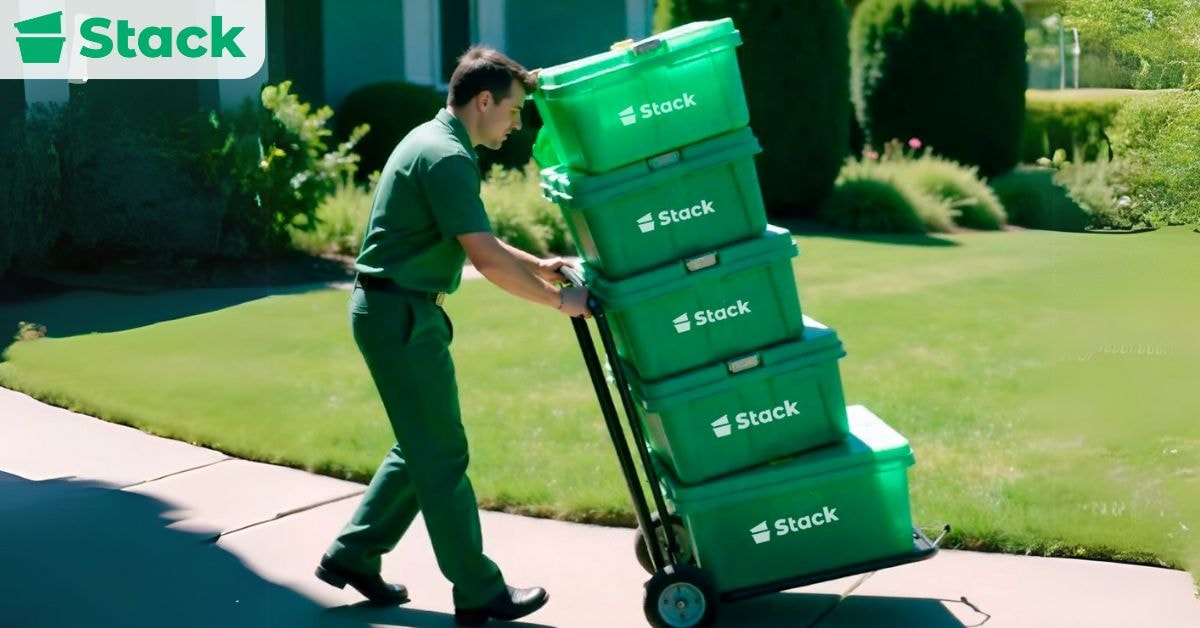
At Stack, we focus on providing exceptional service through our sturdy moving crates. Our team is here to help you choose the right moving boxes for your needs. After you’ve made your choice, they can be delivered to your office and picked up at your new one to make your move smoother. Let’s get your relocation strategy in motion. Contact us today!

Frequently Asked Questions

Got questions about corporate relocation services? We’ve answered the most common ones below to help you plan your next move.

What Is a Corporate Relocation Service?

A corporate relocation service is a professional solution that manages the entire relocation process for businesses. Whether you’re handling a domestic office move or a global corporate relocation, these services are designed to keep your operations running smoothly throughout the transition.

What Does a Corporate Relocation Program Typically Include?

A corporate relocation program usually covers a wide range of customized services, including office logistics, employee housing assistance, visa and immigration support, and post-move follow-up. The best providers offer personalized service tailored to your business size, industry, and specific moving needs.

How Do Corporate Relocation Services Handle International Moves?

International relocation involves a lot more than just shipping boxes overseas. An experienced team will manage everything from visa processing and customs coordination to cultural training and family support, making global relocation as seamless as possible for your employees.

How Can Businesses Control Costs During a Corporate Move?

Cost control starts with early planning and working with a relocation partner that offers flexible, tailored packages so you’re not paying for services you don’t need. Transparent pricing, detailed budgeting tools, and smart decisions like renting moving boxes instead of buying them can all make a significant difference to your bottom line.

How Is Corporate Relocation Different From a Regular Commercial Move?

While commercial moving focuses primarily on the physical transportation of office furniture and equipment, corporate relocation is a much broader service. It encompasses the entire relocation process, completely managed by an experienced team.

How Long Does a Corporate Relocation Typically Take?

The timeline varies depending on the size and complexity of the move, but most corporate relocations take anywhere from a few weeks to several months to plan and execute. A well-structured corporate relocation program with clear milestones and dedicated project management will keep things on track and avoid unnecessary delays.

Can Corporate Relocation Services Be Customized for Our Business?

Absolutely. The best providers understand that no two moves are alike and will work with you to build a package that fits your specific needs and budget. From single-employee international relocation to full-scale global corporate relocation for entire departments, a good provider will always lead with personalized service over a one-size-fits-all approach.

Average Moving Cost for a 1 Bedroom Apartment

For local moves, the cost of relocating a one-bedroom apartment typically ranges from $300 to $1,500. This price is influenced by several factors, like transportation fees, the cost of packing materials, such as cardboard boxes, labor charges for professional movers, and any additional services you may need.

Even for a one-bedroom apartment move, the total cost of the move can still be surprisingly high. And while cardboard packaging is readily available and inexpensive, it may not always be the most eco-friendly or cost-effective choice in the long run.

At Stack Moves, we offer sturdy, eco-friendly plastic bin rentals to help you move out of your 1-bedroom apartment with ease and peace of mind. Made for stacking and able to endure a cross-country move, our bins are the perfect choice for getting your belongings to your ne*w home in one piece. Contact us now, and let us make moving easier for you!

In this article, we will explain everything you need to know about the average moving cost for a one-bedroom apartment and other factors to consider.

How Much Does It Cost to Move a One-Bedroom Apartment?

How Much Does It Cost to Move a One Bedroom Apartment?

The average cost to move a 1-bedroom apartment ranges from $300 to $1,500 for local moves and $2,000 to $5,000 for long-distance relocations. Several factors can affect the price of your move, including the distance of your move, the number of movers required, and what services are part of your package.

When planning for a move, here are a few things you need to consider:

  • Size and Weight of Items: Larger, heavier items are more expensive to move.
  • Distance of the Move: Long-distance moves are considerably more expensive.
  • Amount of Items You Need to Move: More items take more resources.
  • Level of Assistance: Full-service moves cost more.
  • Time of Year: Peak-season moves (usually May through September) are often pricier.
  • Storage: Renting storage space can add to the cost.

Careful planning can keep costs down. For example, using tools like a moving box calculator during the planning process takes the guesswork out of packing, so you get exactly what you need without overspending or running out mid-move.

Average Moving Cost for a 1-Bedroom Apartment in 2025

The average cost to move a 1-bedroom apartment largely depends on the distance of your move, the level of service you opt for, and the amount of belongings you’re moving. For local Los Angeles movers, the average moving cost for a 1-bedroom apartment typically ranges from $300 to $1,500, which includes labor, transportation, and basic packing materials. Long-distance moves can range from $2,000 to $5,000+, influenced by the total weight of your items and how far you’re relocating.

If you’re planning a DIY move, renting a moving truck is a common alternative. Daily rates can range from $20 to $40, with additional charges for mileage and fuel costs depending on the duration and distance of your move. While this option may seem cheaper upfront, it tends to be more expensive after factoring in hidden costs, such as moving insurance.

The packing process requires an assortment of materials, including boxes, packing paper, bubble wrap, and tape. While some may opt for free moving boxes from local stores or community sites, investing in high-quality packing supplies can safeguard your belongings, especially for long-distance moves.

The average cost for packing supplies for a 1-bedroom apartment can range from $50 to $200, depending on the quantity and quality of the materials. Eco-friendly options, such as rented plastic bins or boxes made from recycled materials, offer a sustainable alternative that can minimize the environmental impact while potentially saving money.

Type of MoveEstimated Cost RangeNotes
DIY (Truck Rental Truck)$300 – $700Includes truck rental, gas, and labor
Local Movers$400 – $1,500Full-service with 2-3 movers
Long-Distance Moves$1,000-$3,500Based on mileage and volume

The Hidden Costs of Moving

The Hidden Costs of Moving

In busy, dynamic environments like Los Angeles, the price of moving is often greater than you’d expect. Beyond the anticipated expenses of professional movers, truck rentals, and packing supplies, hidden costs can catch you off guard and affect your overall moving budget.

Here are some of the most common hidden costs to budget for:

Moving Insurance

Insurance is one of the hidden costs involved in moving. While hiring professional moving companies often includes basic coverage, they often do not fully cover the value of belongings if anything is lost or damaged. 

If something gets lost, broken, or damaged during the move, you may be left paying out of pocket. Consider third-party moving insurance or upgrading to full-value protection to avoid surprise expenses.

Extra Fees for Heavy Items

Many movers charge additional fees for heavy or oversized items like pianos, safes, gym equipment, or large furniture. These aren’t always disclosed upfront, so it’s important to ask during the quote process. Even a short move can become costly if specialty handling is required.

Last Minute Packing Supplies

Even with careful planning, most people end up needing more boxes, bubble wrap, or tape than expected. This can lead to rushed purchases at higher prices. It’s best to overestimate your packing needs or rent reusable plastic bins that include everything you need upfront.

Cost of Cardboard Boxes

On average, purchasing enough cardboard boxes for a 1-bedroom apartment move can range from $50 to $100, depending on the quality and quantity of boxes needed. This estimate does not include additional supplies such as tape, bubble wrap, and packing paper, which can further increase the cost. That is why you should opt for Stack Move’s affordable option of plastic bins that do not require these additional supplies. 

Durability and Security Risks

Cardboard boxes, while cost-effective, are susceptible to damage from moisture and tearing, and can easily be crushed, risking the safety of the contents inside. Plastic bins, on the other hand, offer superior durability, better protection against environmental factors, and added security with the ability to lock or seal the bins. These features make plastic bins a preferable option for ensuring the safety of your belongings during a move.

While it may seem like the initial cost of renting plastic bins is higher than purchasing cardboard boxes, this isn’t the case. When you factor in the reduced risk of damage to your belongings and the potential for multiple uses, plastic bins can be more cost-effective in the long run.

Environmental Concerns

The environmental impact of using new cardboard for each move adds up, contributing to deforestation and waste. Here, the significance of eco-friendly packing options becomes evident. Renting eco-friendly plastic bins presents a cost-effective and environmentally friendly solution. By opting for these sustainable packing options, you not only save money but also contribute to a healthier planet.

Planning Your Move With the Right Steps

Planning your Move with the Right Steps

Planning your move with the right steps can make the difference between a stressful relocation and a smooth transition. Here’s a step-by-step guide on how to prepare your things for a move:

1. Create a Moving Checklist

Begin by drafting a comprehensive moving checklist that covers every aspect of your move, from hiring movers or renting a moving truck to purchasing packing supplies. This checklist should include important dates, such as your moving date, deadlines for changing your address, and when to cancel or transfer utilities.

2. Budget Your Move

Calculate the expected costs for professional movers, truck rental, packing supplies, movers’ cost, and additional services like packing and storage units. Use a moving cost calculator to estimate expenses for both local and long-distance moves. Don’t forget to set aside money for unexpected costs like last-minute supplies or additional moving insurance.

3. Declutter and Donate

Reduce the volume of items you need to move by decluttering. Sell, donate, or dispose of things you no longer need. This not only simplifies your move but can also reduce the cost of moving services and packing supplies.

4. Gather Packing Supplies

Invest in quality packing supplies. While free-moving boxes can be tempting, ensure they are sturdy enough to protect your belongings. Consider eco-friendly options like rented plastic bins for a sustainable move and to save on the costs associated with buying new cardboard boxes.

5. Start Packing Early

Begin packing non-essential items well in advance. Label each box clearly with its contents and the room to which it belongs, which will simplify the unpacking process. For valuable items, consider professional packing services to ensure they are securely packed.

6. Plan for Moving Day

Confirm arrangements with your moving company or truck rental. Prepare an essentials box with items you’ll need immediately upon arrival at your new home, such as toiletries, a change of clothes, and important documents.

Tips for Saving Money and Reducing Costs

Tips for Saving Money and Reducing Costs

There are several things you can do to save money on your move.

1. Plan Ahead

Failing to plan ahead can lead to underestimating the requirements for your move, resulting in common mistakes such as:

  • Not Having Enough Packing Supplies: Leads to last-minute, often expensive purchases.
  • Overlooking the Need for Specialty Movers for Heavy Items: This often adds last-minute costs.
  • Misjudging the Time It Takes to Pack and Move: May lead to rushed packing and damaged belongings.

By meticulously planning each step of your move, you can avoid the pitfalls of moving and save costs. One way to save money while moving is by comparing quotes from multiple moving companies or truck rental services to find the best deal. You can also use a moving box calculator to avoid overspending on packing materials.

You should also book movers or rental trucks well in advance, especially during peak moving season, to avoid higher rates. In addition, use towels, bedding, and clothing to wrap and protect fragile items, saving money on bubble wrap and packing paper.

2. Consider Reusable Moving Boxes

Cardboard moving boxes are a popular packing choice. However, once you’ve arrived and unpacked, you must figure out how to break them down and dispose of them. Durable, plastic moving bins like those provided by Stack Moves allow you to pack your items using fewer materials.

3. Start by Decluttering

The fewer items you have to move, the less costly the move will be. You may be able to offset the moving costs by selling unneeded items.

4. Pack Your Items Yourself

Packing before the movers get there can greatly reduce the cost.

5. Only Hire Movers to Help With What You Can’t Move Yourself

You can save money by loading most of your items, such as clothes, books, and miscellaneous keepsakes, on your own and only hiring movers to help with heavy appliances and unwieldy furniture like sofas, refrigerators, bookcases, etc.

Eco-Friendly Plastic Bins as a Cost-Effective Alternative

Eco-Friendly Plastic Bins as a Cost-Effective Alternative

Opting for eco-friendly plastic bins as a packing solution for moving offers a practical and environmentally conscious alternative to traditional packing methods. The process of renting eco-friendly plastic bins is straightforward and designed to alleviate the stress and waste typically associated with moving. 

Here are a few key reasons why plastic bins are a smart choice for your next move:

  1. Easy Rental Process: Many moving companies now offer plastic bin rentals. These bins are delivered to your door before your move and picked up once you’re done. No breakdown, cleanup, or trips to recycling centers.
  2. Durable: Unlike cardboard, which can be crushed, torn, or collapse under heavy or fragile items, plastic bins are designed to withstand heavy weights. They’re waterproof, stackable, and far better suited to protecting your belongings during long-distance or cross-city moves.
  3. No Extra Packing Supplies Needed: With plastic bins, you don’t need to buy as much tape, bubble wrap, or reinforcement materials. That can save you $50–$100 or more, especially if you’re figuring out how many boxes you need to move and planning for the risk of breakage.
  4. Better for the Environment: Each move with cardboard boxes contributes to landfill waste and deforestation. Reusable plastic bins are designed to be used dozens (or even hundreds) of times, offering a more sustainable option that aligns with eco-conscious values.
  5. Time Saving: Plastic bins are a uniform size, which makes loading trucks, stacking in storage, and unpacking at your new place much easier. It’s a cleaner, more organized process, especially helpful if you’re hiring movers or using storage containers for moving.
  6. Cost-Effective: While the upfront rental fee may seem higher than that of free or low-cost cardboard or plastic bins, they often pay for themselves by reducing packing material waste, time spent packing, and the risk of damaged items that need to be replaced.

Looking to make a residential move soon? Reach out to Stack Moves now for your plastic bins and dollies! You will be amazed by the affordability of these supplies.

If you’re looking for ways to save on your move, consider renting plastic bins. They’ll protect your belongings better than cardboard boxes, which will help you save on potential costs for repair or replacement.

And thanks to the convenience of company-provided delivery and pickup, you’ll save plenty of time and energy, ensuring you have everything you need for a successful move without having to hunt down several dozen boxes.

Ready to save time and money on your move and make an eco-friendly choice, too? Schedule with Stack Moves today!

FAQ

Still have questions about the cost of moving a one-bedroom apartment? We’ve answered some of the most common ones to help you plan your move more effectively.

What Is the Average Cost to Move 1-Bedroom Apartments?

Local moves usually cost between $300 and $1,500. Long-distance moves can be $2,000 to $5,000 or more.

How Much Should I Budget for a Local Move?

For most local moves, you should budget between $300 and $1,500, depending on the size of your home, the distance of your move, and the type of moving service you need. Choosing the best storage containers for moving can help protect your items and reduce damage-related costs.

Are Moves Cheaper During the Week or Weekend?

Weekday moves are generally cheaper because there’s less demand compared to weekends. Planning ahead, such as knowing how many boxes you need to move, can also help avoid last-minute fees and secure lower weekday rates.

Does the Number of Movers Affect the Final Price?

Yes, the more movers you hire, the faster the job goes, but the overall cost will be higher. If you’re short on time, hiring professionals to help with packing is a smart move. Many moving companies pack for you as part of their full-service options, but it comes at a higher cost.

Is Tipping the Movers Necessary, and How Much Should I Tip?

Tipping isn’t required, but it’s a common way to show appreciation for a job well done. Most people tip between 10% and 20% of the total cost, or an hourly rate per mover per hour. Whether you should tip your mover or not depends on the quality of service you received. Meaning you don’t have to leave a tip if you aren’t satisfied with the job.

Office Moving Labels – How to Organize Your Office Move

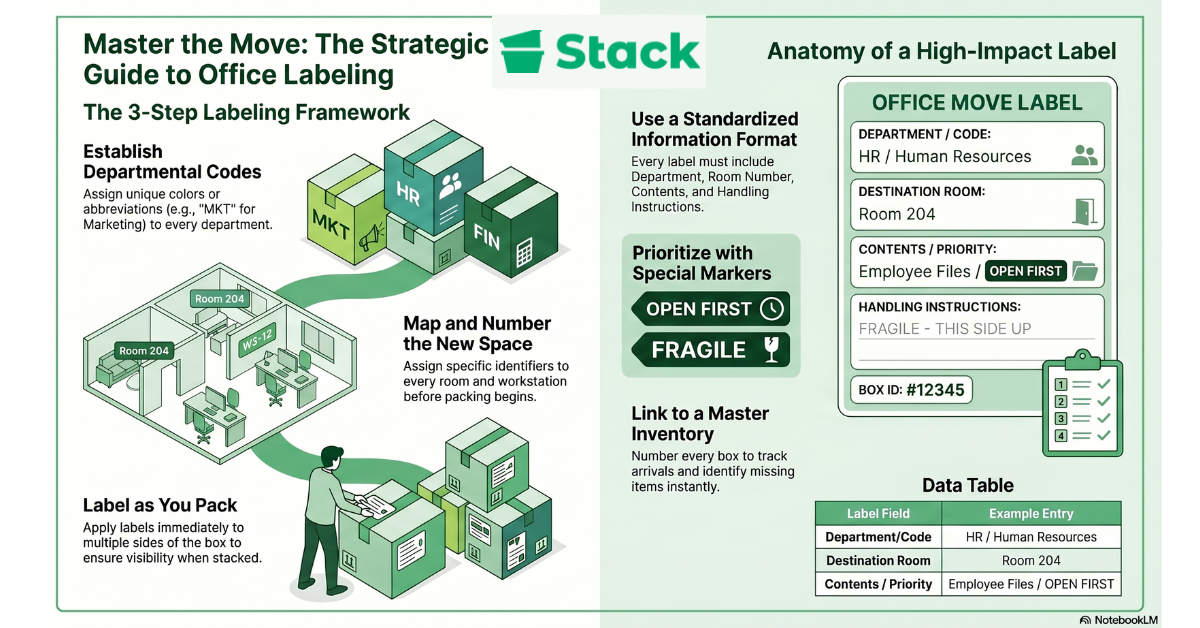
Office moving labels are a simple yet efficient way of keeping your relocation organized and trouble-free. By clearly labeling boxes and contents, they simplify the process, ensure that everything ends up in the right place, and make unpacking much less chaotic.

To organize your office move with labels, include key information such as the destination, contents, and handling instructions for each box on your labels. This way, everyone involved in the move knows exactly where each box goes and what’s inside.

At Stack Moves we understand that labeling is an important part of any move, be it corporate or residential. That’s why every rental comes with a corresponding number of labels to help you stay organized. You’re also welcome to ask for more labels if you want, we’re happy to provide extras. Contact us today get started.

This blog will cover why you should use labels when preparing for a move and provide the best techniques for labeling your items for a smoother move.

What Are Office Moving Labels?

What Are Office Moving Labels

An office moving label is a sticker or tag placed on your moving box to show you where each item belongs during a move. It’s similar to a name tag in a busy gathering—it instantly lets you know who (or in this case, what) something is and where it belongs, so everything runs more smoothly and efficiently.

The purpose of a label is to make identification easy at a glance. With one look, it should tell you what’s in the box and where it should go at the very least. Some labels will even tell you whether the boxes should be unpacked first or later, or who is responsible for their content.

Benefits of Using Moving Labels Pack

Using moving labels helps reduce any confusion that could arise since everyone knows what goes where. It also speeds up the unpacking process because the boxes are placed where they should be without the need to get confirmation each time.

If you’re using numbered or color-coded boxes, labels make it easier to track your belongings. Because they account for everything being moved, you can immediately spot when something is missing. Similarly, storage boxes labeled based on priority can help your team set up important workstations quickly and get back to work faster.

What Are the Different Types of Office Moving Labels?

What Are the Different Types of Office Moving Labels

The type of label you use for your move should fit the type of moving box you’re using to pack. Here are some common types of labels and how to use them for a smoother move.

  • Color-Coded Labels – These are ideal for large moves because they speed up room-to-room sorting. It works by assigning a color to a department or floor to make drop-off possible without having to read the label.
  • Pre-Printed vs. Blank Labels – Pre-printed labels are a great choice for maintaining consistency across your team. If you’re pressed for time or just want to standardize your labeling, consider using pre-printed labels. Blank labels, on the other hand, are better for making last-minute changes.
  • Waterproof and Tamper-Proof Labels – Although slightly more expensive than the average label, they’re a great investment for moves that involve extended periods in open environments. These labels are resistant to smudging, moisture, and peeling, keeping them legible no matter the weather or handling conditions.
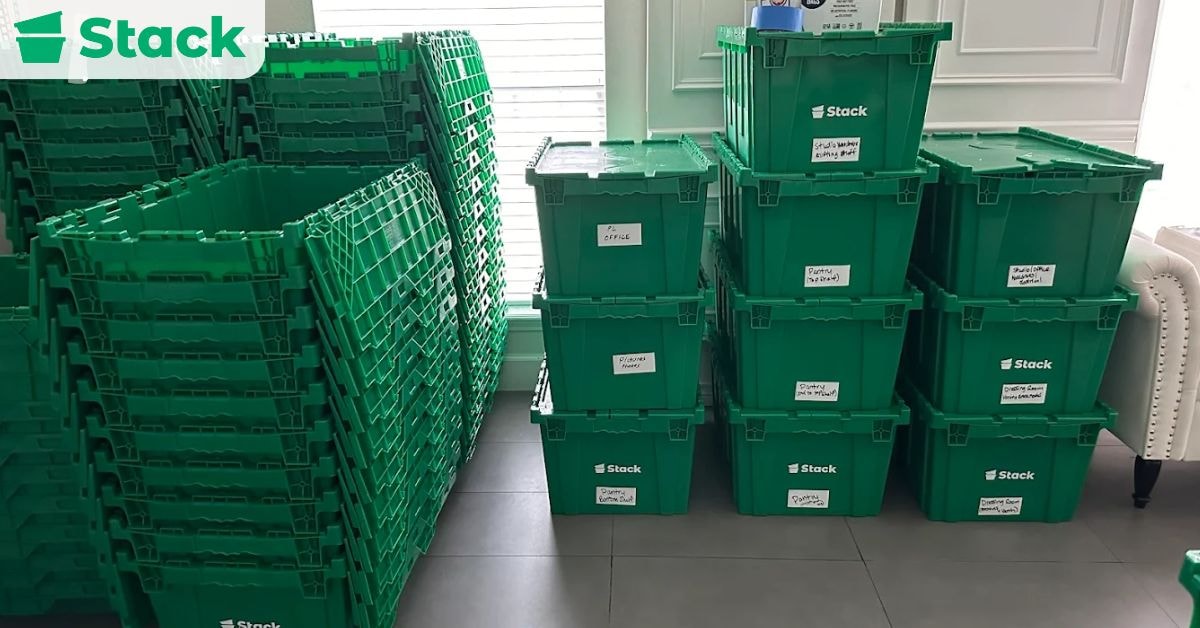
  • Labels for Plastic Bins vs. Cardboard Boxes – Most adhesives work well with cardboard boxes, but plastic bins require labels with stronger adhesive properties. If you’re using an office moving crate, we recommend using a removable label with non-permanent adhesive that won’t leave residue when peeled off.

How Do You Label Boxes for Maximum Efficiency?

How Do You Label Boxes for Maximum Efficiency?

If you don’t label properly, you risk wasting time searching for your things and even damaging fragile items. It goes without saying that there’s a correct way to label your boxes for a move. To help you avoid any confusion during the moving process, we’ve outlined 3 important considerations for labeling boxes efficiently.

Label Placement Matters

Knowing where to place your labels is just as important as knowing what to write on them. Place your labels on at least two sides of your moving container for better visibility, ideally the front and the top of the box. This way, your labels can be seen whether they’re stacked or placed side by side.

Use Consistent Labeling Across Teams

To avoid confusion, create a standard format for everyone to follow. For example, you could say that each label should include the department name, content, and the destination room. When everyone uses the same format, it makes it easier for the movers and even employees to know where each box should go without second-guessing.

Include Contact or Department Info

Most guides will advise you to always include a department name on your labels, but alternatively, you can also include a contact person. The advantage of labeling your boxes like this is that it’s easier to track missing items and avoid mix-ups, especially in shared spaces.

What Are Smart Labeling Techniques for Office Moves?

What Are Smart Labeling Techniques for Office Moves

A clear labeling system reduces confusion and makes it easier to unpack important items first. These labeling techniques will ensure key items don’t get lost in the shuffle and your workflow resumes quickly.

Label by Room for Quick Setup

Label your boxes with their destination, i.e, where the items in them should be placed, instead of where you packed them from. Write things like “HR-File Cabinet” so that movers can place the boxes exactly where they need to be in the new space. This quickens the unpacking process and makes it easier for team members to find their belongings right away.

All our rental packages are designed to match the size of your move, making sure you have the right number of bins for your move. You can even use our moving bin calculator to determine the best bin package for your needs.

Use Numbering to Track Every Bin

Another way to label your boxes is to number them and link the boxes to your moving checklist. For example, Box 12 could be “Admin-Printer Toner”. An advantage to using this method is that if the box goes missing or arrives late, you know exactly what’s inside it.

Prioritize What Gets Unpacked First

You can also try labeling your boxes according to priority so that high-priority boxes are unpacked first. Use tags like “Priority 1 or Unpack First” so that your essential operations aren’t held up while the rest of the office is still being set up.

Combine Methods for Better Organization

To really stay on top of things, you can combine different methods. A bin labeled “Box 8 – Marketing – Priority 2 – Event Supplies” tells your movers what to do and when to do it. Small details like this make the transition easier for everyone involved.

Why Box Labels Are Key to a Smooth Office Relocation

Why Box Labels Are Key to a Smooth Office Relocation

Imagine a truckload of boxes without labels – You’d probably have no clue where anything needs to go, and things would quickly spiral out of control. One of the easiest ways to guarantee a hassle-free move is to label your boxes correctly. By clearly marking each box with its content and location, your movers can place them in the right rooms without constantly asking for directions.

Labeling your boxes also contributes to your move’s efficiency because it speeds up the unpacking process. There’s no need to second-guess or backtrack anything. This means your office can be up and running again with minimal downtime.

Not to mention, clearly labeling your boxes can help you prevent damage. When you mark your boxes with handling instructions like “fragile”, “this side up”, or “do not stack”, you’re communicating the best way to handle the contents in the box so they don’t break. A few minutes spent labeling can save you from costly repairs or replacements.

What Should You Avoid When Labeling for an Office Move?

What Should You Avoid When Labeling for an Office Move?

The most important thing to keep in mind when labeling is that clarity matters. Avoid vague labels like “wires” and be more specific. For example, “Marketing-Desk Supplies.” Clearly labeling your boxes helps your team settle in faster, thanks to all the time saved during the unpacking process.

Another thing to pay attention to is consistency in your labeling. Try to stick to one label format and placement. The best location to place your labels is on each side and the top of the bin; this way, movers can see the label from any angle.

Labeling Works Best With the Right Moving Bins

One way to save time and enjoy a stress-free move is to organize it properly with the help of labels. Your moving supplies should include good-quality bins and moving stickers to ensure everything is clearly marked and easy to locate.

At Stack Moves, we only rent out high-quality moving containers, and each one comes with labels to help you stay organized from start to finish. Book a consultation to learn more about how we can make your move as simple as 1, 2, 3.

FAQ

Why Should I Use Moving Labels During an Office Relocation?

It’s important to label your moving containers because it helps you stay organized. When your boxes are properly labeled, you know where each should be placed, which automatically means less time spent setting up the office. Plus, you’re less likely to misplace anything because it’s easy to find.

What Should I Include on a Moving Label?

Include at least the department name, what’s in the box, where it should be placed, and how the box should be handled. Feel free to also color-code your labels to make identifying them even easier.

Do You Offer Labels With Your Plastic Bin Rentals?

Yes, we do! Every moving bin rental comes with complimentary labels and even dollies to make moving them around effortless.

Rent Boxes!