
Moving in NYC Checklist
Moving to NYC comes with challenges you wouldn’t find in most cities. Just one wrong step and your move-in day can fall apart before you’ve unloaded a single box. This NYC moving checklist walks you through exactly what to do and when, so nothing catches you off guard.
Our mission at Stack Moves is to make moving easier with our sturdy, reusable plastic moving boxes. Made from recycled plastic and backed by 1,100+ Trustpilot reviews, our bins are a simpler, more sustainable way to safely move your belongings. We deliver and pickup across all five boroughs. Contact us today to book your moving boxes.
This guide walks you through each step of moving in NYC and breaks it down into actionable steps.
Table Of Contents
- Ultimate Moving Checklist for NYC
- 8 Weeks to Moving Day
- 1. Research Neighborhoods
- 2. Set a Moving Budget
- 3. Start Apartment Hunting Early
- 4. Decide on Your Move Date
- 7 Weeks to Moving Day
- 5. Notify Your Current Landlord or Building Management
- 6. Book Professional Movers or Reserve a Moving Truck
- 6 Weeks to Moving Day
- 7. Apply for NYC Moving Permits
- 8. Reserve Elevator and Loading Dock Time
- 9. Get a Certificate of Insurance (COI) From Your Movers
- 10. Check Your Building’s Move-In/Move-Out Window
- 5 Weeks to Moving Day
- 11. Declutter and Donate Unwanted Items
- 12. Gather Packing Supplies
- 4 Weeks to Moving Day
- 13. Pack Smart and Label Everything
- 14. Notify Important Parties of Your Change of Address
- 3 Weeks to Moving Day
- 15. Transfer or Set Up Utilities
- 16. Prepare an Essentials Box
- 2 Weeks to Moving Day
- 17. Confirm Moving Day Logistics
- 1 Week to Moving Day
- 18. Do a Final Walk-through
- 19. Unpack Essentials First
- 20. Register With NYC Services (If You Are a New Resident)
- How Much Does Moving in NYC Cost?
- Ready to Make Your NYC Move Stress-Free?
- FAQs
- When Is the Best Time to Move in NYC?
- How Can I Make Moving Day Less Stressful?
- Should I Hire Movers or Do It Myself?
- How Far in Advance Should I Book Movers?
- Do I Need a Certificate of Insurance (COI) to Move in NYC?
- What Happens If My Building Doesn’t Allow Weekend Moves?
- How Much Should I Tip My Movers in NYC?
- Do I Need Storage Services for My NYC Move?
Ultimate Moving Checklist for NYC

We’ve been privileged to be a part of a few NYC moves, and we’ve seen the same things trip people up everytime. No COI on file, a missed elevator reservation, or even a late application for a parking permit. That’s why we put together this beginner-friendly checklist to help movers like you navigate the ups and downs of relocating in NYC.
Keep in mind that the cost, timelines, and regulations in this blog are general guidelines and can vary by borough or building. Confirm specific details with your moving company, city agencies, and building management before finalizing your move.
8 Weeks to Moving Day
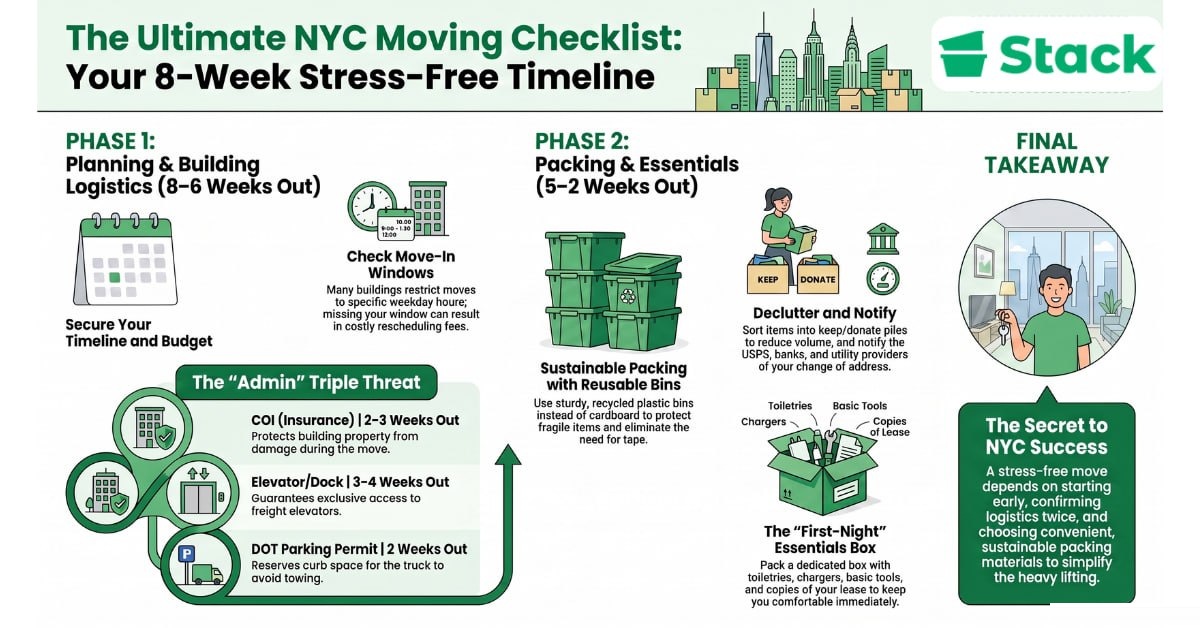
This is your research and planning stage where the goal is to lock in your neighborhood, budget, and apartment before anything else can move forward. Getting these right now saves you from costly changes later.
1. Research Neighborhoods
Do your research about the neighborhood before falling in love with an apartment listed there. Also, compare rent prices and lease terms in each area. One good way to assess each neighborhood is to visit it at different times of the day so you can get a clear picture of what life is like there.
While you are exploring the environment, also consider practical things like access to public transportation, grocery stores, and other essentials. Remember that your daily routine will depend on how connected your new area is to your needs.
2. Set a Moving Budget
To start your budget, just list all your potential moving expenses and how much you’d be willing to spend on them. How much you set aside heavily depends on whether you’re moving within the same borough or across the city.
It’s also important to leave some wiggle room in your budget for unexpected expenses like last-minute repairs and storage fees. Some essential expenses you shouldn’t forget when planning your budget include your professional movers, cleaning services, and packing supplies, because these can take up a large chunk of your budget. Be sure to get quotes from multiple companies so you can compare prices and services.
3. Start Apartment Hunting Early
The earlier you start, the more time you have to compare options and make an informed decision. In NYC, it’s common practice for landlords to request documents like your credit card report and proof of income. Having these ready shows that you’re serious and can help you stand above the competition.
If you’re planning to see multiple places in a day, schedule your apartment viewings in advance. It’s helpful to carry along a checklist of must-haves so you can stay focused during these inspections. You’re bound to see so many places during your search, and the details may blur together. So remember to take notes and, if permitted, photos.
4. Decide on Your Move Date

Choosing the wrong date can make your moving experience a stressful and even more expensive one. For example, when moving out of a house, if you leave too early, you could end up stuck with unnecessary storage fees.
Another thing to confirm before you fix a date is your new apartment’s move-in/move-out policies. Many NYC buildings have strict rules about when people can move. Having an idea of these rules can help you book a time that will guarantee you and your movers have access to the building.
7 Weeks to Moving Day
With your move date roughly set, this week is about giving notice and locking in your movers before NYC’s booking calendar fills up. Both of these tend to take longer than people expect, so don’t leave them for later.
5. Notify Your Current Landlord or Building Management
It’s important to notify your current landlord since most leases require a written notice. Giving proper notice helps you protect your security deposit. It also helps you maintain a good relationship with your landlord, which can be helpful if you need a reference in the future. Also, ask about the procedures for returning your keys, disconnecting utilities, and accessing the building for moving day.
Some important things to include in your written notice are your rental address and intended move-out date. Be sure to ask when and how your security deposit will be returned. New York law requires landlords to return it within 14 days, but delays can happen if there’s any confusion about damages or unpaid rent.
6. Book Professional Movers or Reserve a Moving Truck
Both options have their advantages, but it’s best to make a decision based on which one aligns best with your budget and time constraints. Before you book any moving company, confirm they are licensed and insured. Also, take the time to read their online reviews and see what past clients have said about them.
Get at least three quotes from different moving companies and ask questions about what’s included in the quote. Ask specifically about how they handle walk-ups, stairs, and long carries. One customer moving from a walk-up to a doorman building had to budget an extra $150 for stair carriers, which her movers hadn’t quoted upfront.
6 Weeks to Moving Day
NYC buildings run on paperwork, so this week is about clearing the admin your building and the city require before moving day. Skip these and you risk your movers getting turned away at the door.
7. Apply for NYC Moving Permits
New York is densely populated, and it’s unrealistic to think you can just pull up a truck and start moving. Depending on your neighborhood, you may have to apply for a temporary parking permit through the NYC Department of Transportation. These permits will help you legally reserve a space for your moving truck, which can help you avoid parking fines, delays, or even getting your truck towed.
If your move falls on a weekend or towards the end of the month, plan to apply for your permit in advance. You’ll be required to provide some information like your address, the duration of your move, and the size of your vehicle to process your application. Once approved, print and post your permit as needed.
8. Reserve Elevator and Loading Dock Time

NYC apartments tend to have strict building rules when it comes to move-ins and move-outs. This means you might have to reserve the loading dock or elevator in advance, especially if you’re moving into a large or shared building. These systems are in place to prevent congestion and minimize damage to shared spaces.
Reach out to both your current and new building management to find out exactly what’s required. Some buildings may ask you to submit a reservation form, pay a refundable deposit, or provide proof of insurance from your moving company. Having these details sorted out ahead of time will help your movers stay on schedule while also keeping things smooth for other tenants.
9. Get a Certificate of Insurance (COI) From Your Movers
One of the most common mistakes we’ve seen is people forgetting to confirm their building’s move requirements before making any arrangements. For instance, most NYC buildings won’t let your movers in the door without a COI on file. Yet plenty of folks don’t know this isn’t optional paperwork they can skip.
Ask your movers for this as soon as you book them, since buildings can take a few business days to review and approve it. If your new building has specific coverage minimums, get those requirements from building management early and pass them along to your movers so the COI is done right the first time.
10. Check Your Building’s Move-In/Move-Out Window
Many NYC buildings give you a fixed window, often just a few hours, to complete your entire move in or out. Miss that window and you could be charged a fee, bumped to another day, or left waiting in a lobby with a truck full of boxes.
Some buildings also restrict moves to weekdays only, so don’t assume a weekend move is an option until you’ve confirmed it. Call both your current and new building management to get their exact rules, then make sure your movers know the window so they can plan the day around it.
|
Document / Requirement |
Target Timeline |
Why Building Management Requires It |
Action Item |
|---|---|---|---|
|
Certificate of Insurance (COI) |
2–3 weeks out |
Covers lobby, elevator, or hallway property damage |
Send building specs to movers for processing |
|
Elevator Reservation |
3–4 weeks out |
Locks in exclusive use of the freight elevator |
Reserve a strict 2- to 4-hour window with the super |
|
DOT Parking Permit |
2 weeks out |
Reserves curb space for the truck; avoids parking fines |
Apply via NYC DOT portal or confirm movers handle it |
|
Move-In / Move-Out Deposit |
1–2 weeks out |
Refundable fee to cover potential common-area damage |
Submit check to management prior to move day |
5 Weeks to Moving Day
With the logistics locked in, it’s time to start deciding what actually makes the trip. Decluttering now means less to pack, less to pay for, and less to unpack later.
11. Declutter and Donate Unwanted Items
A move is the perfect time for a fresh start, and one way to go about it is to declutter your home before you start packing. You might be surprised how much stuff you’ve accumulated over the years, from clothes that no longer fit to random kitchen gadgets.
Before you start boxing things up, sort them into four piles: keep, sell, donate, and discard. This process not only saves you time during packing, but it can also significantly reduce your moving costs. Creating an inventory list can help you track what you’re taking and what you’re giving away. Remember, the fewer items you move, the less you have to pay for packing materials, labor, and transport.
12. Gather Packing Supplies
Without the right supplies, packing would be a disaster. You should start by gathering moving boxes of different sizes so that you can fit in your different-sized items, from books to bedding. Bubble wrap, packing peanuts, and any other material will be useful when packing fragile or valuable items.
If you’re using cardboard moving boxes, you’ll need to get tape for extra reinforcement, as these boxes can sometimes buckle under heavy weight. To keep things organized, also get some labels and markers so that you can mark each box with its content and the room it belongs to. Now that you’ve gathered all your supplies, this is where learning how to organize moving boxes really comes in handy. Lighter boxes should go on top of heavier ones, and boxes should be stacked when loaded into the moving truck to maximize space.
4 Weeks to Moving Day
This week is where packing really begins, along with making sure the people and institutions who need your new address receive it early. The earlier you start both, the less rushed your final weeks will feel.
13. Pack Smart and Label Everything
Focus your effort on being able to find what you need once you’ve arrived at your new address and not just getting everything into a box. A smart way to pack is to pack room by room to help you maintain order throughout the packing process.
When packing delicate items like glass, use plenty of padding and avoid overstuffing your boxes so you don’t break anything. Label each box with its content and the room it should be taken to. This can be really helpful to the movers when unloading because it will guide them on what goes where.
Another way to pack your belongings is to keep a master inventory list, then pack and number your boxes according to the list. This is a great way to keep track of all your belongings, and it also helps you know what to search for if anything goes missing. There are also various ways to label your boxes when you’re moving. For example, you can label your boxes by room or content, depending on what works for you.
14. Notify Important Parties of Your Change of Address
Another crucial part of your move is updating your address. A missed notification can affect your coverage or credit history, so be thorough with this step. Start with the USPS to ensure your mail gets forwarded to your new address without interruption.
The next set of people to notify is your bank, credit card company, and insurance provider, especially if your renter’s insurance is tied to your old apartment. Don’t forget to let your employer, subscription services, and medical offices like your doctor or dentist know about your change of address.
3 Weeks to Moving Day
With three weeks left, focus on making sure your new place is livable the moment you arrive. Utilities and an essentials box are easy to forget until you actually need them.
15. Transfer or Set Up Utilities
Coordinating utilities might not be the most exciting part of the moving process, but without it, your first night could be frustrating and uncomfortable. Imagine arriving at your new apartment with no electricity, water, or other utilities, and it can be a turn-off. This is what makes it important to transfer or set up your utilities before moving in.
Confirm installation appointments well ahead of time, especially for electricity, gas, water, internet, and cable. Arrange for your current services to be disconnected the day after your move out and schedule your new services to begin a day before you move in.
16. Prepare an Essentials Box

An essentials box should contain everything you’ll need to comfortably get by on the first day of your move before you unpack the rest of your things. To prepare your essentials box, think about what you’ll want access to as soon as you arrive. This should include things like toiletries, medications, chargers, a set of clothes, basic kitchen utensils, and any important paperwork.
|
Category |
Must-Have First-Night Items |
|---|---|
|
Personal & Hygiene |
Prescription medications, basic toiletries, shower curtain & rings, towels, 2 outfits |
|
Document Wallet |
Signed lease, COI copies, IDs, cash for tips, moving contracts |
|
Apartment Prep |
Cleaning wipes, trash bags, box cutter, toilet paper, basic tool kit |
|
Electronics & Power |
Phone chargers, extension cords, power strip, laptop/work gear |
2 Weeks to Moving Day
This is your last real window to confirm every detail before things get busy. A quick round of reconfirmations now can save you from last-minute surprises.
17. Confirm Moving Day Logistics
As moving day draws closer, go over all your arrangements to be sure they are still in full swing. Reconfirm your moving company or truck reservation and make sure they have the correct move-in date and address. Double-check building requirements like reserved elevator time or parking permits; it’s best not to assume that your new apartment will be flexible.
You’ll also want to set aside some cash for tips if you’re satisfied with your movers’ service. Go through your checklist one last time so that you’re confident nothing’s missing. These few extra minutes of organization can spare you hours of stress later.
1 Week to Moving Day
This is the home stretch, where the last of the packing wraps up and you close out your old place for good. By the end of this week, you should be ready to hand over the keys.
18. Do a Final Walk-through

Don’t hand over the key without doing a final walk-through of your old apartment. Even with careful planning, you’d be surprised how often people end up forgetting something when moving out.
Check storage spaces like your closet and cabinet because they’re the easiest places to forget things. It helps to work with a comprehensive checklist because it can prevent you from missing anything in the last minute.
It’s good practice to take a photo of your apartment before leaving, especially if you’re expecting your security deposit back. Documenting how you left the place can come in handy in case there are any disputes with your old landlord or building management. Also, clean your apartment according to your lease’s expectations. This can help you get back your deposit and create a good final impression.
19. Unpack Essentials First
The first place to set up is your bedroom and bathroom, so you can rest and freshen up after a long day. Then start unpacking basic kitchen items like your pots, plates, and utensils so that you can enjoy a quick meal while you’re settling in. Once those are done, move on to high-use spaces like your closet or work desk.
Taking these small steps prevents you from feeling overwhelmed and makes the unpacking process less stressful. Plus, it ensures that your routine isn’t disrupted, even if you’ll need a couple of days to fully unpack.
20. Register With NYC Services (If You Are a New Resident)
If you’re new to NYC, you shouldn’t skip this step because it can help you settle in faster by connecting you to local resources within your community. One of the first things you should do is get a public library card. With it, you can gain access to events and local programs. Think of it as a low-effort way to start blending into your new community.
The next thing you should do is to register to vote or update your voter registration to reflect your new address. You’ll also want to notify agencies like the DMV and update tax records to match your new living situation.
How Much Does Moving in NYC Cost?

The cost of moving in NYC can vary depending on a lot of factors, but you’d generally spend around $500-$3,500 on a local move, while long-distance moves can cost as much as $10,000.
Hiring professional movers costs more, but it can save you a lot of time, stress, and even damage to your items. On the other hand, DIY moves are great if you’re on a budget, but if you forget to factor in costs like moving permits, tips, and parking tickets, they can turn out to be more expensive.
To save money on your upcoming move, start packing early so you don’t have to rush and overpay for last-minute help. Also, declutter your belongings so that you can reduce the number of boxes you’ll need to move, which in turn lowers both labor and truck size fees.
Ready to Make Your NYC Move Stress-Free?
Moving in NYC comes with more moving parts but none of it has to catch you off guard. If you work through this checklist week by week, you’ll find yourself fully prepared for your move. While certain variables like permits and parking are out of your hands to some degree, there’s still a lot you can do to make your relocation hassle-free.
One thing you can simplify right now is what you’re packing everything in. Grab a reusable plastic moving box for your next move. They’re sturdier, better for fragile items, and more convenient. Cardboard still works fine if you’re only moving once and don’t mind breaking down the boxes afterward.
But if convenience matters more to you, plastic bins are a better option. Contact us today to book your boxes and check one more thing off your NYC moving checklist.
FAQs
We answered the most common questions we got asked about moving in NYC. Use these quick answers to clear up any confusion before moving day arrives.
When Is the Best Time to Move in NYC?
The best time to move to NYC is usually during the off-season, between October and March. During this time, rental prices tend to be lower, and local movers may offer more cost-effective rates since demand is down. If you’re really keen on saving money, February is often the cheapest month to move, thanks to low demand.
How Can I Make Moving Day Less Stressful?
Plan ahead, pack early, and use a moving checklist to avoid surprises. Hire experienced movers if you can, since they know how to navigate different neighborhoods, tight hallways, and limited parking better than a first-time crew would. Keep essentials like documents and keys easily accessible, and get a clear breakdown of moving expenses upfront so nothing catches you off guard on the day.
Should I Hire Movers or Do It Myself?
Your choice should come down to your budget, your timeline, and how much physical work you’re willing to take on. Hiring movers saves you time and effort, especially in a city where stairs, elevators, and street parking make DIY moves harder than they look. It also shifts the risk of injury or damage onto professionals who do this daily.
How Far in Advance Should I Book Movers?
Book at least 4–6 weeks before your move-in date, especially during peak season (May through September) when NYC movers get booked out fast. If your move falls on a weekend or at the end of the month, the two busiest windows in the city, book even earlier to avoid getting stuck with limited availability or higher rates
Do I Need a Certificate of Insurance (COI) to Move in NYC?
Most NYC apartment buildings require a COI from your moving company before they’ll let them into the building. It’s a document that proves your mover carries liability and workers’ comp insurance, and it usually needs to name your building’s management company as an additional insured party. Ask your movers to prepare this as soon as you book them, since buildings can take a few days to review and approve it.
What Happens If My Building Doesn’t Allow Weekend Moves?
Many buildings restrict moves to weekdays only, so it’s worth checking this before you lock in a date with your movers. If your building only allows weekday moves, you may need to take time off work or coordinate with your building’s management for an exception. Confirming this early avoids having to rebook your movers on short notice.
How Much Should I Tip My Movers in NYC?
The standard is $5–$10 per mover per hour, or a flat amount split between the crew at the end of the move. Tip toward the higher end if your move involves walk-ups, heavy furniture, or extra care with fragile items. Cash is preferred, so have it ready before moving day.
Do I Need Storage Services for My NYC Move?
Storage services are worth considering if your move-in and move-out dates don’t line up or if you’re downsizing and need somewhere to keep items you’re not ready to part with. Many moving companies offer short-term storage as an additional service, which can be more convenient than coordinating a separate storage unit. If your timeline is tight or still uncertain, ask your movers about storage options when you book so you’re not scrambling to arrange it later.
Rent Plastic Bins for Your Move!
Moving with cardboard boxes is a pain. Get pre-assembled bins delivered to your door and move hassle-free with Stack!
Stack eliminates the need for you to source, break down, or fill up your trash can with cardboard boxes.