
The Ultimate Moving Across the Country Checklist
If you’re planning a cross-country move, a solid checklist could be the only thing standing between you and a smooth transition. Without one, it would be nearly impossible to organize your move without any last-minute hiccups. This guide will give you a step-by-step cross-country moving checklist covering everything from the pre-move prep to settling into your new home.
Our mission as Stack Moves is to make moving easier with our sturdy, reusable plastic moving boxes. Made from recycled plastic and backed by 1,100+ Trust Pilot reviews, our bins are simpler, more sustainable way to safely move your belongings. Contact us today to book your moving boxes.
This guide takes you through each stage of a cross-country move and breaks it down into manageable steps. You’ll find practical advice on early preparations, from researching your new location to budgeting effectively.
Table Of Contents
- Week-by-Week Cross-Country Moving Checklist
- 8 Weeks to The Move
- 7 Weeks to The Move
- 6 Weeks to The Move
- 5 Weeks to The Move
- 4 Weeks to The Move
- 3 Weeks to The Move
- 2 Weeks to The Move
- 1 Week to The Move
- How Far in Advance Should You Plan a Cross-Country Move?
- How Much Does It Cost to Move Cross-Country?
- How to Save Money on a Long-Distance Move
- Still Wondering How to Simplify Your Move?
- Frequently Asked Questions
- How Many Moving Boxes Do You Need for a Cross-Country Move?
- What Should I Know Before Moving Across the Country?
- How Far in Advance Should I Book a Moving Company for a Long-Distance Move?
- How Much Money Should You Have Before Moving Across the Country?
- What Should I Pack for Moving Across the Country?
- How Do I Move Across the Country With Pets?
Week-by-Week Cross-Country Moving Checklist

This section breaks down the relocation process for moving across the country into exactly what to tackle and when. We structured it on a week-by-week basis to help you prevent tasks from piling up on top of each other as your moving day approaches.
8 Weeks to The Move
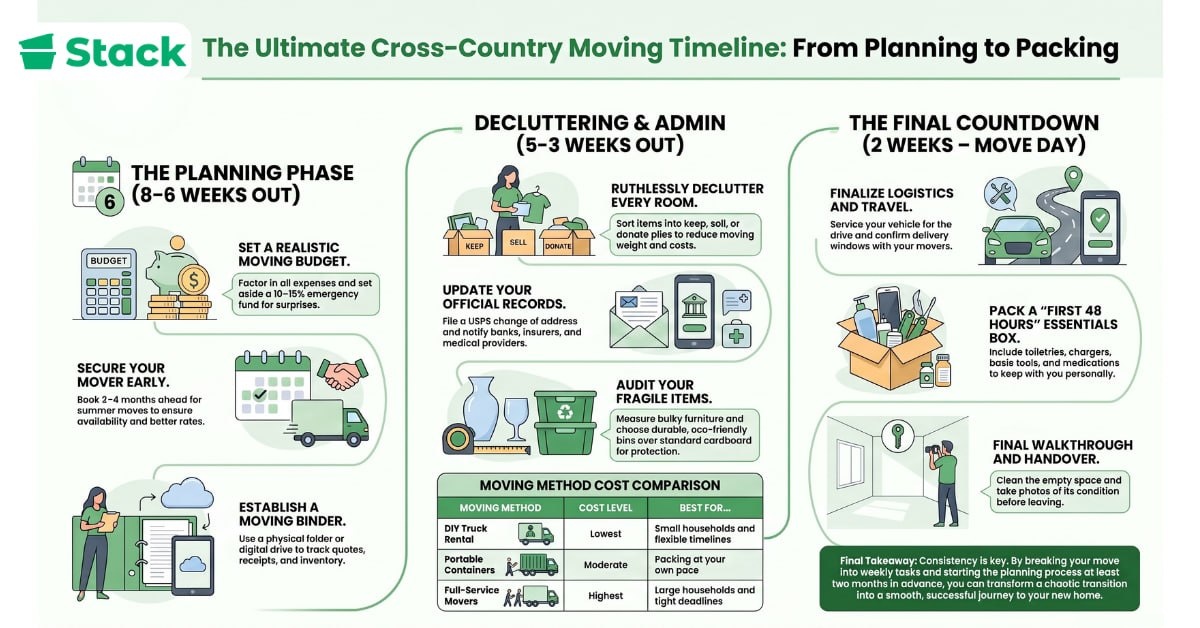
This is your planning stage, where the goal is to lock in the big decisions before anything else can move forward. Get your mover booked and your budget set now, since both tend to take longer than people expect.
1. Set Your Moving Budget
A cross-country move can range from $2,000 to over $9,000 depending on the distance of your move alongside other factors. To create a realistic budget, map out every expense you would have to incur for the move to be a success.
Some of these moving expenses include cleaning, packing supplies, utility deposits, and more. Building a full picture now saves you from any unwanted surprises in the future. But to be on the safe side, make sure to set aside an emergency fund. It’s common practice to set aside 10% to 15% of your total budget for this purpose.
2. Create a Moving Binder or Digital Drive
A moving binder is an accessible folder used to store important information relating to your move. It could be either physical or digital. Having a moving binder makes it easier to track your expenses and resolve any issues that arise during the move.
If you are keeping a digital copy, consider using apps like Google Drive, Evernote, or moving-specific planners. These tools can help you store documents, create to-do lists, and track your inventory digitally.
3. Get Quotes and Compare Moving Companies
If you’ve opted to work with movers, now is the best time to start requesting their quotes. It’s best practice to get a quote from at least three companies. Many cross-country movers are open to negotiating their prices, so it’s worth asking whether you qualify for a discount.
If possible, look for long-distance moving companies or at least someone with experience handling this type of move. Be sure to watch out for any red flags, like issuing you an estimate without a physical or online inspection.
In the United States, interstate movers are mandated to carry a US DOT number and operate under federal consumer protection rules. You can check a company’s registration status directly through the government’s Protect Your Move tool before committing to anyone.
7 Weeks to The Move
With the big decisions made, this week is about starting the physical work of sorting through your belongings. What you keep, sell, or donate now will directly shape how much you end up packing and paying to move.
4. Decide on Your Moving Service Level
Working with professional movers allows you to take your mind of the heavy lifting associated with a move. But they come with high price tags and strict delivery windows.
A DIY move with truck rental is usually cheaper but needs more of your time and energy. You also have the option of renting portable moving containers, which allows you to pack your belongings at your own pace.
If you have a large household or are working with a tight deadline, it’s often a better idea to work with professional movers. You’ll be under less stress and the risk of damaging your precious belongings is reduced significantly.
5. Conduct a Room-by-Room Audit
Sometimes in a cross-country move, you end up paying to haul items you might end up replacing anyway. Walk through low-traffic areas of your home, like attics, basements, and closets, first to ruthlessly categorize items into keep, sell, donate, or trash piles.
Measure bulky furniture to confirm it fits into your new floor plan before paying hundreds of dollars to transport it. Every item you eliminate now directly lowers your total estimate and cuts down your packing time.
6. Research Your New Destination

Start researching about the cost of living in your new city to help you shape your budget for the coming months. It’s best to work with real estimates instead of assumptions because even the littlest price difference could put a dent in your wallet.
If you have kids, start looking up local schools now. This will help you find out what documentation you’d need to register them in advance. Also look at how safe the neighborhood is as well as other factors that will affect the quality of your life.
6 Weeks to The Move
This week is where you start locking in the details around your new place and giving notice on your current one. The earlier you handle these, the fewer surprises you’ll run into as moving day gets closer.
7. Book Your Movers or Rental Truck
Long-distance movers tend to get booked fast, especially during peak seasons like summer. To ensure you get to use your preferred movers, lock in your moving date and get your deposit documented in writing. If you live in an apartment building, reserve the service elevator and loading dock for both your move-out and move-in dates right away.
8. Request for Your Official Records
Because you are crossing state lines, there’ll be a need for you to open new accounts with schools, medical providers, etc. Contact your primary care doctors to obtain complete medical histories and prescription transfers. If travelling with pets, request updated rabies certificates and medical records, as these are required for airline travel and state line inspections.
9. Gather Packing Supplies
Standard cardboard boxes often collapse under the weight and vibration of long-distance transit. Invest in moving boxes, specialized wardrobe boxes, industrial packing tape, and bubble wrap. Renting reusable, eco-friendly plastic moving bins offers superior crush protection for fragile goods while eliminating box assembly entirely. Make sure you stock up on permanent markers and color-coded labels to keep track of room destinations.
5 Weeks to The Move
With a month left, it’s time to start notifying the people and institutions who need your new address. Getting ahead of this now means less cleanup and fewer missed bills or statements after the move.
10. Declutter Your Belongings

A cross-country move can be quite expensive. Anything you don’t truly need should be sold, donated, or discarded before the move.
One of the best ways to declutter your belongings is to go room by room and make an honest call about what should come with you. Items you’d rather let go off can either be sold on online marketplaces or in a garage sale.
11. Start Packing Non-Essentials

This is the time to start packing items you will not miss over the next month. Some of these include seasonal clothing, wall decor, books, and extra linens. Remember that heavy items belong in small boxes so they remain manageable to carry without tearing through the bottom.
To keep unpacking simple, clearly label at least two sides of every box with its destination room and a brief summary of the contents. If you can get at least a third of your home boxed up now, you’ll thank yourself when move-out day arrives. The last week of a move is usually busier than people expect, so a head start gives you room to handle delays without falling behind.
12. Notify Banks, Insurers, and Credit Card Companies
Update these early enough so that your first statement after the move goes to the right place. Most institutions let you update this online in a few minutes, so there’s no reason to put it off once you’ve settled on a moving date.
4 Weeks to The Move
This week is about locking in the logistics of actually getting yourself, not just your things, across the country. Between travel bookings and paperwork, there’s a fair amount to coordinate before the final stretch begins.
13. Plan Your Travel Route and Book Accomodation
Map out your route and estimate how many days you’ll be in transit. Then book a hotel for every overnight stop once you’ve got an idea of what your movement looks like. During busy season, hotels tend to fill up faster so it’s better to sort this out now or else you’ll end up paying more or driving further than you’d like to secure a room.
If your rental truck will be moving with you, double-check with the hotel to know if they allow overnight truck parking. Also confirm that their property is big enough for a truck to park in. Look up pet policies too in case you’re traveling with any.
14. Book Flights and Arrange Airport Transport
Some parts of your move might involve flying. Lock in your flights early enough to book at reasonable prices. Be sure to check how much the airline charges to make any changes to your flight. If your move date shifts, you’d have to move your flight as well. Most airlines will let you do this for a fee, so it’s worth checking their policy before you book.
This is also a good time to arrange how you will move from the airport to your destination. Don’t wait until the day you land before to sort this out.
15. File an Official Change of Address
It only takes a few minutes to set up your change of address through the USPS official change of address page. It’s also important for you to notify the IRS using Form 8822, since the agency sends notices and refund checks to whatever address it has on file. Each country has its own process and deadlines, so it’s worth checking your new location’s government website directly to know how things worked.
3 Weeks to The Move
With three weeks left, the focus shifts to disconnecting from your current home and getting a head start on packing. Utilities, movers, and everyday boxes all need attention this week so the final stretch feels less rushed.
16. Schedule Utility Disconnection and Transfer
Call your current utility provider to schedule a date for disconnecting your utilities the day after you leave. We don’t recommend cutting it the day of your move incase your move runs late. Some providers need a few weeks’ notice to avoid early termination fees, so check the terms of your contract to plan your new date appropriately. At the same time, make arrangements for your utility company to set up your new place a day before you arrive.
17. Confirm Pickup Details with Movers
Confirm your pickup date with your moving company. Give them any important decision they may need to know, like parking restrictions and elevator access. This is also the best time to confirm your inventory list with the moving company and get a written confirmation of your quote. If anything about your move has changed since when you booked, tell them now so they can plan accordingly.
18. Start Packing Everyday Items
Start with the things you use occasionally; it’s still too early to pack the things that are part of your daily routine. Leave your daily essentials for the final week so you’re not living out of boxes longer than you have to. Label every box with the room it belongs to and a general list of what’s inside. You’ll be glad you did when you’re unpacking. Keep a running list of everything you pack in case you need to find something quickly before the move.
2 Weeks to The Move
This week is your last real chance to confirm the details and handle anything time-sensitive before things get hectic. A little diligence now, especially with logistics and vehicle prep, saves you headaches in the final days.
19. Confirm Moving Logistics

Check in with your movers to confirm all your arrangements one last time. Ask specifically about their delivery estimate for a cross-country move, since long-distance moves often have a delivery window (say, 7-14 days) rather than a fixed date. Get a copy of your bill of lading and inventory list before the truck leaves, and make sure you understand how to reach your driver or the company for updates while your things are in transit.
20. Service Your Personal Vehicle
If you’re driving your own car across the country, get it checked out now. A breakdown in an unfamiliar state costs you far more time and money than a $50 inspection would have. If you’re shipping your vehicle instead of driving it, confirm pickup details with the auto transport company and make sure your registration and insurance are current, since carriers usually require both before they’ll load your car.
21. Dispose of Non-Transportable Items
Movers don’t transport everything. A good example of some items movers won’t move are propane tanks, paint, cleaning chemicals, aerosols, and anything flammable or hazardous. Check your moving company’s list of prohibited items now so you’re not scrambling to get rid of things the night before. Many cities have hazardous waste drop-off days or facilities, so look up your local options ahead of time rather than assuming you can just toss things in the trash.
1 Week to The Move
This is the home stretch, where the last of the packing and paperwork gets wrapped up. By the end of this week, you should be ready to walk out the door with nothing left behind.
22. Pack a Moving Essentials Box
Pack a box with everything you’ll need in the first 24-48 hours at your new place before the rest of your things arrive: toiletries, a change of clothes, phone chargers, medications, basic tools, and any important documents. Keep this box with you rather than loading it onto the truck, since delivery windows for cross-country moves can run several days. Add snacks and water for the road too if you’re driving.
23. Finish Packing Any Remaining Items
Everything except the few items you need to make it past the next couple of days should be boxed up by now. Do a final sweep of closets, drawers, and storage spaces you might have skipped the first time around. Double-check that boxes are sealed and labeled, and set aside anything you’re carrying with you personally (valuables, documents, medications) so it doesn’t accidentally end up on the truck.
24. Schedule a Final Cleaning and Walkthrough

Book a final cleaning for after your things are out, whether you’re doing it yourself or hiring a service. This is especailly important if you’re renting and want your deposit back. Walk through every room, closet, and cabinet one last time to make sure nothing’s left behind and nothing’s damaged that could be blamed on you later. Take photos of the empty space as proof of its condition when you handed it over.
25. Say Goodbye to Your Community
Take the time to see the people who mattered to you before you go. Exchange updated contact info with neighbors, close friends, or coworkers you want to stay in touch with. If you belong to any local groups, clubs, or a place of worship, let them know you’re leaving and ask about how to stay connected or get a referral to a similar community wherever you’re headed.
How Far in Advance Should You Plan a Cross-Country Move?

If you’re moving during peak season (May to September), you should start planning at least three to four months in advance. Summer times are often the busiest time for moving companies, and available slots tend to fill up quickly. So book early enough so that you can secure a reliable mover without spending a fortune for it.
If you plan on moving anytime from October through April, planning one to two months ahead is usually sufficient as fewer people move during the off-season. Lower demand also means lower prices, which give you more room to play around with your options.
No matter the season, giving yourself plenty of time to organize the logistics, compare moving options, and finalize travel arrangements will help reduce stress and unexpected costs.
How Much Does It Cost to Move Cross-Country?

The total cost of moving across the country depends on different variables. Cross-country moving prices fall between $2,500 and $7,500, depending on the total mileage and logistical requirements.
Moving costs are also often based on either the total weight or size of your belongings. The heavier or bulkier your items, the higher the moving expenses. If you choose full-service movers who provide packing, loading, transportation, and unpacking services, you will spend substantially more than somebody who does it themselves. Professionals charge a minimum of $4,000 and a maximum of $9,000 when providing moving services.
Renting a U-Haul or similar moving truck costs between $1,500 and $3,500. You should also consider additional expenses such as fuel, lodging, and hiring workers for loading and unloading.
|
Moving Variable |
Estimated Cost |
Key Factors Influencing Cost |
|---|---|---|
|
Distance & Route |
$2,500 – $7,500 |
Total mileage, gas prices, highway tolls |
|
Full Service Movers |
$4,000 – $9,000 |
Weight/volume of goods, packing services included |
|
DIY Truck Rental |
$1,500 – $3,500 |
Fuel consumption, overnight lodging, ramp equipment |
|
Emergency Fund |
10% – 15% of total budget |
Unexpected delays, extra storage, emergency repairs |
How to Save Money on a Long-Distance Move
Moving cross-country costs money, but with a few smart decisions, you should be able to significantly cut costs without compromising efficiency.
Declutter Before Moving
Moving fewer possessions is the simplest way to decrease moving costs. Critically review all your possessions before the moving process begins to determine the essential items and unwanted items. Items that no longer serve a purpose can be sold, donated, or discarded. Hosting a garage sale or listing furniture and electronics on online marketplaces can even help you earn extra cash to offset moving expenses.
Choose a Cheaper Moving Date
The cost of using renting and reliable moving companies usually rises during peak periods such as summer months, weekends, and the first or last days of a month. Moving during weekdays in the middle of the month provides the best rate because prices are lower and demand is at its lowest.
Rent Moving Boxes Instead of Buying
Renting moving boxes is often times a better choice than using cardboard boxes. Plastic moving bins have proven to be both sustainable and affordable over time because they can be used repeatedly, unlike cardboard boxes. The materials used for plastic moving bins protect your items better than cardboard boxes, thus reducing their susceptibility to damage.
Still Wondering How to Simplify Your Move?

While moving across the country is a major life decision, it doesn’t have to be an overwhelming one. If you break down the move on a weekly basis as shown in this checklist, you can keep the logistics under control every step of the way.
One of the easiest ways to simplify your packing process is to opt for plastic bins. These boxes can be delivered to your door and picked up in your new city once you’re done moving. Contact us today to rent durable moving bins and enjoy a successful cross-country move.
Frequently Asked Questions
Cross-country moves come with questions thatt friends and family can’t always answer. Here’s what people ask us most before making the trip.
How Many Moving Boxes Do You Need for a Cross-Country Move?
How many boxes do you need for a long-distance move? It depends on the size of your home and the number of items you intend to move in with. Smaller apartments, like a studio apartment, typically require 15 bins, and a one-bedroom apartment will require 25 bins, 2 dollies, and 25 labels, while larger homes, like a five-bedroom apartment, may need 100 bins, 5 dollies, and 100 labels. You can obtain a more accurate estimate by using our moving box calculator.
What Should I Know Before Moving Across the Country?
A long-distance move requires careful planning. Consider factors like employer relocation benefits, cost of living in your new location, school districts, and local amenities.
How Far in Advance Should I Book a Moving Company for a Long-Distance Move?
During peak seasons, demand is high, which often means higher costs. However, you can avoid this by booking your move three to four months in advance to secure better rates and availability. If you’re moving during an off-peak period, booking one to two months ahead should be enough.
How Much Money Should You Have Before Moving Across the Country?
Moving long distances typically costs between $2,000 and $10,000. You should also have at least three to six months of living expenses saved up to cover your rent, security deposits, travel expenses, and any unexpected expenses.
What Should I Pack for Moving Across the Country?
Pack a moving essentials box with must-haves, like toiletries, medications, important documents, chargers, a few days’ worth of clothing, and basic kitchen supplies. Label all the boxes clearly and pack by room so that your unpacking is easier.
How Do I Move Across the Country With Pets?
If you are relocating with your pets, you need to plan a little more. First things first, schedule a vet check-up before the move and update your pet’s vaccination records. Invest in a comfortable, well-ventilated carrier. If driving, schedule frequent breaks so your pet can take stretches, do their business, and hydrate. For flights, research pet-friendly airlines and book pet-friendly hotels in advance to avoid last-minute stress.
Rent Plastic Bins for Your Move!
Moving with cardboard boxes is a pain. Get pre-assembled bins delivered to your door and move hassle-free with Stack!
Stack eliminates the need for you to source, break down, or fill up your trash can with cardboard boxes.