
Moving Your Business to a New Location
Moving your business to a new location is like a juggling act. You have to coordinate the transition while keeping your daily operations running. To help you get through this phase with as little stress as possible, we've put together this moving guide to walk you through key steps to moving your business to a new location.
A simple decision like switching from cardboard boxes to plastic boxes can make all the difference in any corporate move. Small businesses and large corporations alike have trusted Stack Moves for plastic moving boxes that protect their tech, speed up packing time, and lower moving costs. Contact us or visit our Los Angeles office to learn more about how we can make relocating your business hassle-free.
In this guide, you'll learn how to plan a successful business relocation and keep operations running with minimal disruption. We'll also cover relocation costs and practical tips for moving your business efficiently and staying organized from start to finish.
Table Of Contents
- The Ultimate Business Relocation Checklist: A Step-by-Step Guide
- 1. Create a Relocation Strategy Before Making Any Commitments
- 2. Build a Realistic Moving Budget
- 3. Make Sure the New Location Actually Supports Your Business
- 4. Review the Lease Carefully Before Signing
- 5. Decide Whether a DIY Move Makes More Sense Than Hiring Movers
- 6. Hire Vendors Long Before You Need Them
- 7. Tell Employees and Partners Early Enough to Prepare
- 8. Create a Detailed Inventory for Everything You're Moving
- 9. Decide What Should Be Moved and What Should Be Replaced
- 10. Set Up Utilities and Technology Before Moving Day
- 11. Update Your Licenses, Registrations, and Business Records
- 12. Let Customers Know Where to Find You
- 13. Test Everything Before Declaring the Move Complete
- Key Legal Considerations When Moving Your Business
- How to Manage an Office Move Without Disrupting Operations
- Ready to Simplify Your Business Move?
- Frequently Asked Questions
The Ultimate Business Relocation Checklist: A Step-by-Step Guide

Over the years of helping businesses move, one thing we noticed was that there was no "single" reason for moving mishaps. It was always a combination of small oversights that could've been avoided with better planning. We used this insight to build a practical office relocation guide.
1. Create a Relocation Strategy Before Making Any Commitments
"Businesses often focus on moving day itself, but most relocation problems actually originate weeks before the truck arrives." — Stack Moves Operations Team
The first step to any relocation is to decide what you want to achieve by it. Are you moving to expand your business? Or maybe you want to be closer to your customers. Your answer to this question should guide every other decision that you make throughout the move.
This is also the best time to create your moving timeline and decide on who is going to be responsible for various aspects of the move. A move committee or internal team should be assigned to oversee the relocation process and manage tasks.
Even if you aren't running a large corporation with dozens of unit heads, you still need some employees to be hands-on in the relocation process. The benefit is that for the rest of the move, your decision-making is faster and more confident.
2. Build a Realistic Moving Budget

Most business owners tend to focus on the obvious expense, like movers and rental trucks, not realizing this is only one slice of the moving expense pie. Your relocation budget should account for every expense that will be incurred as a result of the move. This means utility installations, cleaning services, and even downtime have to be taken into consideration.
It's also wise to build a contingency fund into your budget. Unexpected expenses are common during relocations, and you want to be prepared for them when they show up. It's common practice to reserve an extra 10% to 20% of the budget for these situations.
It's also good idea for every company planning to relocate to conduct a thorough financial analysis that compares their current operating costs with projected expenses in the new locations. This way you have a fair idea of the real cost of doing business in that new location. And while many jurisdictions offer tax incentives for relocating businesses, these often require advance application and commitments to job creation or capital investment.
3. Make Sure the New Location Actually Supports Your Business
Beyond rent and square footage, consider how the location will affect your employees, customers, suppliers, and day-to-day workflows. For example, imagine a 20-person accounting firm relocating to a larger office. While extra space may solve current capacity issues, the new location also adds 30 minutes to employee commutes. It's not surprising that staff satisfaction and retention could suffer. Looking beyond the property itself helps businesses avoid costly surprises after the move.
It's also important to factor in how well the new office will accommodate any growth in the next three to five years. Let's say you start a new product or department; will you have to move again? While you want the location to meet your needs today, it should still have some wiggle room to meet the needs you might have tomorrow. The goal should be to find a location that helps the business operate more effectively over the long term.
4. Review the Lease Carefully Before Signing
Given the financial commitment involved, it's advisable to get a professional legal review of your lease. This will turn out to be far less expensive than discovering an unfavorable clause after you've already moved in.
Commercial leases are far more complex than most business owners realize. This is why two properties with the same monthly payment can have very different renewal terms or early termination penalties. Some leases also restrict certain business activities, renovations, signage, or operating hours.
If you're moving into a new state, lease structures and local regulations may differ from what you're used to. For example, businesses relocating to states like California or New York often run into requirements and costs that wouldn't necessarily arise elsewhere.
5. Decide Whether a DIY Move Makes More Sense Than Hiring Movers
Most blogs will advise you to hire professional movers, but we think there's nothing wrong with managing a move internally if the circumstances are right. A small office with a handful of employees and limited furniture should be able to coordinate its own relocation without much stress.
In those situations, handling the move internally will be cheaper and more flexible. However, while DIY moves can be the most cost-effective, they still require you and your employees to dedicate your time and effort to successfully handle the transition.
Things become less straightforward for large businesses because of the expensive equipment or specialized machinery that will be involved. Professional commercial movers bring experience and logistical expertise that most organizations simply don't have in-house.
It's best to hire commercial movers who specialize in office moves and be sure that they are insured and licensed to operate. And while hiring movers may increase the upfront cost, it often reduces risk and helps businesses resume normal operations much faster.
6. Hire Vendors Long Before You Need Them
Because of how easy it is to get things done at the click of a few buttons, many businesses may assume they'll be able to book their vendors whenever they're ready. Unfortunately, that's not always the case.
In reality, moving companies usually book out weeks or months in advance, particularly during busy seasons. The same can be true for internet providers, furniture installers, and specialized contractors. Early scheduling also gives you time to compare quotes, verify insurance coverage, and coordinate timelines between multiple vendors. Waiting too long may leave you choosing from whoever happens to be available rather than the providers you'd actually prefer to work with.
7. Tell Employees and Partners Early Enough to Prepare
Employees are often among the people most affected by business relocations. A new office can change commute times, transportation costs, and even daily routines. Some employees may welcome the change, while others may have concerns that leadership hasn't considered.
When you let them know early, you give them the chance to plan and get answers to areas that are still uncertain. We suggest communicating with your employees and other stakeholders at least two months before the move.
It also creates an opportunity to gather feedback that could influence decisions before they move is finalized. When employees feel informed and included throughout the process, they're generally more willing to support the transition and help solve problems as they arise.
8. Create a Detailed Inventory for Everything You're Moving
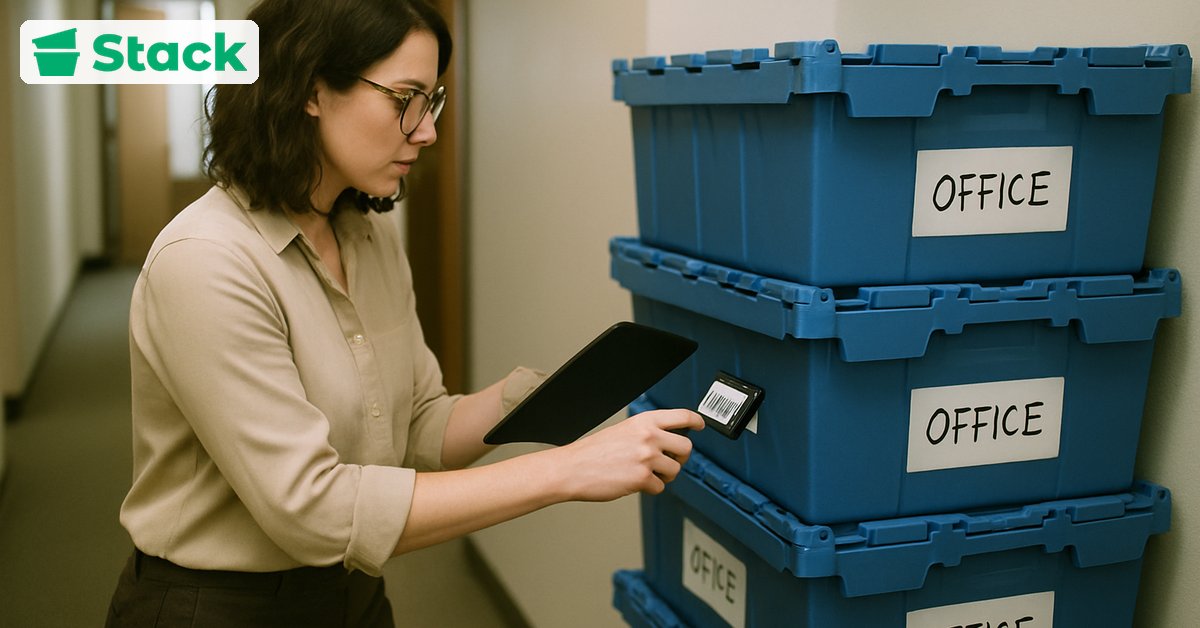
A move is one of the few times a business is forced to account for nearly everything it owns. This is why it's the perfect opportunity to create a complete inventory list of office furniture, equipment, technology, and any other physical assets.
In some cases, companies have reduced moving costs simply by identifying items that were no longer useful before the first box was packed. Beyond helping with packing, this information can prove useful for insurance purposes, budgeting, and asset management.
9. Decide What Should Be Moved and What Should Be Replaced
There are instances where you'll be better off replacing something than trying to relocate it. This is especially true for items like older furniture and obsolete equipment. For example, moving a collection of worn cubicles across state lines may cost nearly as much as simply buying newer ones. Don't be scared to make every item earn its place in the move. If replacing it would cost a little more than transporting it, replacement may be worth considering.
10. Set Up Utilities and Technology Before Moving Day
If we're being honest, not every moving delay is caused by movers. Some of them happen because the business arrives before the infrastructure needed to run it is ready. Your internet service, phone systems, and utilities, among many other things, should be scheduled well in advance. Especially because depending on the provider and location, installation lead times can be longer than expected.
Consider a customer service company that relies on cloud-based phone systems. If internet installation is delayed by even a few days, employees may be unable to communicate with customers, leading to lost revenue.
Businesses that rely heavily on technology should also work with their IT teams to create backup plans and test critical systems before the transition. And if possible, hire a professional moving company that specializes in IT relocation or at least has some experience with moving technology. This gives you the guarantee that all your tech will be handled properly and the chances of any damage are minimal.
11. Update Your Licenses, Registrations, and Business Records
Depending on where you're moving to, you may need to update your local business licenses, tax records, insurance policies, permits, and even banking information. Businesses operating across state lines may face additional requirements related to taxation, employment law, and regulatory compliance.
It's easy to postpone these updates because they don't feel urgent. But it would benefit you greatly if you treated these updates as part of the relocation itself rather than something you'll get around to afterward. For instance, picture something important going to the wrong mailbox. This can lead to your business entity falling out of good standing and even result in hefty fines from the Secretary of State.
12. Let Customers Know Where to Find You
The easier you make the transition for customers, the faster your business can return to normal. Keep in mind that a customer who arrives at your former location may not always make the effort to track down your new one.
Communication should begin before the move and continue afterward through multiple channels. Spread the news of your move through as many channels as possible. Email campaigns, social media updates, website announcements, invoices, newsletters, and even customer service interactions. Nothing is off limits.
13. Test Everything Before Declaring the Move Complete
A relocation should only be considered complete when the business is operating efficiently in its new location, not when the last box comes off the truck. Once you're in the new space, confirm that everything is functioning as expected. Walk through the facility from the perspective of employees, customers, and vendors. Small issues that seem insignificant on day one can become major frustrations if they're allowed to linger for weeks. So it's best to deal with a problem as soon as you discover it.
Key Legal Considerations When Moving Your Business

Many business owners overlook the legal side of a relocation. Missing a filing deadline or failing to register in a new state can lead to fines, delays, or interruptions to your operations. Taking care of these requirements early helps you avoid unnecessary problems and allows your business to continue operating smoothly before, during, and after the move.
Update Licenses and Permits Before Relocating
When you move your business, your existing licenses and permits may no longer be valid, especially if you are relocating to a different city or state. Depending on your industry, you may need to update business licenses, health permits, or professional licenses with the appropriate local or state agencies.
For example, many businesses will need to update records with their Secretary of State's office, local city government, or licensing boards. Taking the time to review your licensing requirements before the move can help you avoid fines and prevent disruptions to your daily operations. It also ensures that you can continue serving customers legally from day one in your new location.
Understand Tax and Regulatory Requirements in Your New Location
Different states have different rules for income tax, sales tax, employment tax, and business reporting requirements. To maintain business continuity, research the requirements in your new state or speak with an accountant who understands multi-state business operations. You may also need to register with a new Department of Revenue or other state tax agencies.
How to Transfer an LLC to Another State
If your business is structured as an LLC, moving to another state may require more than simply changing your address. Some states allow LLC domestication, which lets you transfer your LLC from one state to another without creating a new company. If domestication is not available, you may need to register your existing LLC as a foreign LLC or dissolve the original LLC and create a new one. These processes are usually handled through the Secretary of State's offices in both states.
Hiring Employees in a Different State
Many employers are not aware of just how many changes come with hiring employees in a new state. Employment laws, payroll tax requirements, workers' compensation rules, and minimum wage regulations can vary significantly from one state to another.
Because of this, you may need to register with state labor departments, unemployment insurance agencies, and tax authorities. Taking these steps early makes onboarding employees much easier and helps you avoid compliance issues later. It also gives your team confidence that the business is operating correctly in its new location.
Protect Trademarks and Intellectual Property During Expansion
If your move involves expanding into a new state or market, it is worth confirming that your trademarks are properly registered and protected. You should also update any legal documents, contracts, or registrations that contain your old business address. By keeping these records up to date, you protect your brand and reduce the risk of disputes as your business grows in its new location.
How to Manage an Office Move Without Disrupting Operations

Even with a solid relocation plan, many businesses struggle with downtime during a move. Delayed internet installation, poor communication, and disorganized packing can all interrupt daily operations and impact customer service. By focusing on coordination and business continuity, you can keep your company running smoothly while transitioning to a new location.
Create a Single Point of Contact
One of the easiest ways to keep an office move organized is to appoint a single person to oversee the entire process. This individual should coordinate communication between employees, vendors, movers, and building management. Having one point of contact reduces confusion and ensures that questions and problems are addressed quickly. It also helps prevent important tasks from slipping through the cracks during a busy relocation.
Coordinate Vendors and Internal Teams
An office move often involves multiple parties working on different schedules. Movers, internet providers, utility companies, furniture installers, and employees all need to be aligned to avoid delays. Creating a shared timeline and regularly communicating updates can help everyone stay on the same page. The better your coordination, the less likely you are to experience unexpected disruptions.
Reduce Downtime During the Move
Downtime is one of the biggest hidden costs of business relocation. To minimize interruptions, consider moving in phases rather than relocating every department at once. Critical systems such as internet, phones, and software should be tested before employees begin working from the new location. Planning ahead allows your team to resume normal operations faster and reduces the risk of lost productivity.
Use the Right Packing Equipment
The packing materials you choose can have a significant impact on how efficiently your move goes. Durable moving crates help protect office equipment, simplify stacking and transport, and make unpacking much easier than traditional cardboard boxes. Many businesses also find that reusable moving bins reduce packing time because they arrive ready to use and do not require assembly. Choosing the right equipment helps keep the move organized while reducing the risk of damage to valuable assets.
Ready to Simplify Your Business Move?
Moving your business to a new location is a big step that can feel overwhelming, but with the right preparation, it can be as easy as A-B-C. It all boils down to how well you plan for the move. Your planning will set the tone for how easily you avoid downtime, reduce hidden costs, and keep your team and clients confident throughout the process.
Because business moves are always high stakes, every decision matters, even how you pack. Renting sturdy, reusable office moving crates is the smartest choice for protecting valuable equipment, cutting packing time, and avoiding the waste and hassle of cardboard. Schedule your moving crates today!
Frequently Asked Questions
Relocating a business is a big decision, and it's normal to have questions about how the process works. Below, we've answered some common concerns business owners have when moving to a new location.
How Long Does It Take to Move a Business?
A successful move often starts at least 6 months in advance with a dedicated relocation team. A local move can be completed in a few days, while a long-distance relocation may take several weeks to coordinate. The more organized you are, the faster your business can resume full operations.
How Much Does It Cost to Relocate a Business?
The cost of relocating a business depends on factors such as the size of your office, the distance of the move, and the services you require. Small office moves may cost between $1,500 and $5,000, while larger relocations can exceed $20,000. Additional expenses such as packing supplies, IT relocation, storage, and utility setup fees can also affect your total budget.
Can a Business Stay Open During the Move?
Yes, a business can stay open even when moving from one location to another. Many businesses use a phased approach, where certain departments continue operating while others focus on the relocation. This helps reduce downtime and allows the business to continue serving clients throughout the transition.
How Do I Transfer an LLC to Another State?
Domestication or conversion is the process of transferring your business to a new state. While domestication is typically the easiest process for moving a business, it is not available in every state. The second easiest way to do this is to maintain your LLC in your current state and register a new LLC in a new state. You can also choose to dissolve the current LLC and start a new one in a new state. In some states, you have the option to domesticate your LLC.
What Should I Update After Moving My Business?
After moving your business to a new location, the first thing you should update is your online presence. Your social media accounts, Google Business Page, and website should reflect this new change. In some cases you will be legally required to notify the government of your relocation. Additionally, your new address should be updated on marketing and internal assets such as your letterhead, invoices, and business cards.
Rent Plastic Bins for Your Move!
Moving with cardboard boxes is a pain. Get pre-assembled bins delivered to your door and move hassle-free with Stack!
Stack eliminates the need for you to source, break down, or fill up your trash can with cardboard boxes.